Cat Care NZ: Complete Guide for Kiwi Cat Owners
Cat care NZ pillar guide: kittens, indoor enrichment, grooming, litter, scratching, behaviour and local cat rules.
The quick answer: good cat care in NZ is a mix of the basics done consistently: safe setup, predictable food and litter routines, enrichment, gentle grooming, registered identification, and choices that fit local council rules and New Zealand wildlife realities. This page is the hub. Use it to find the right detailed guide for the stage your cat is in now.
Start here if you have a new kitten or new cat
For a first shopping and setup pass, start with the New Kitten Checklist NZ. It covers the practical first-week items: litter tray, bowls, bed, carrier, toys, scratching options and safe-room setup.
SPCA New Zealand recommends setting up one quiet room when a new cat comes home, with food, water, toys, litter, scratching and hiding places already in place. That matters in Kiwi homes because visitors, tradies, open ranch sliders and shared driveways can all create escape risk before a cat understands the property.
If the cat is joining other cats, do not rush the meeting. The slower plan in How to Introduce a New Kitten NZ and Introducing Cats NZ is much kinder than a hallway ambush. For toileting habits, pair the setup checklist with Kitten Litter Training NZ.
Indoor, outdoor or contained access
The indoor-vs-outdoor decision is one of the biggest NZ cat choices. Roads, dogs, traps, neighbour conflict and native wildlife are real considerations, and the right answer can differ between a quiet rural section, a Wellington townhouse, an Auckland rental and a South Island lifestyle block.
Use Indoor vs Outdoor Cat NZ for the full decision. SPCA supports keeping cats safe at home through enriched indoor living, catios, cat-proof fencing, night curfews or supervised outdoor time. If your cat is indoors, enrichment is not optional: climbing, scratching, hiding, play and window views all help prevent frustration. Cat Toys Guide NZ is a useful next stop.
Food, water and daily routines
This pillar is not a diet prescription, but the pattern matters: consistent meals, clean water, a quiet feeding spot and regular body-condition checks. For the product-level overview, read Cat Food Guide NZ. For kittens, use How Much to Feed a Kitten NZ as a starting point, then follow your vet or food label for your kitten's age, body condition and growth.
If appetite, drinking, weight, toileting or energy changes suddenly, treat that as a vet conversation, not a behaviour puzzle. Cats hide discomfort well.
Litter and scratching
Litter and scratching are not side issues. They are core welfare and household-peace systems. Most litter problems become easier when the tray is easy to access, private, clean and away from food and water. Start with Best Cat Litter NZ, then compare Cat Litter Box Types NZ if the current setup is not working. Use Kitten Litter Training NZ for young cats or newly adopted cats still learning the home.
Scratching is normal cat behaviour, not spite. Cats scratch to stretch, maintain claws and leave scent marks. Give legal scratching outlets before you try to protect the couch. The full buying guide and type comparison is Cat Scratching Post Types NZ, and the training plan is Stop Cat Scratching Furniture NZ.
Grooming and handling
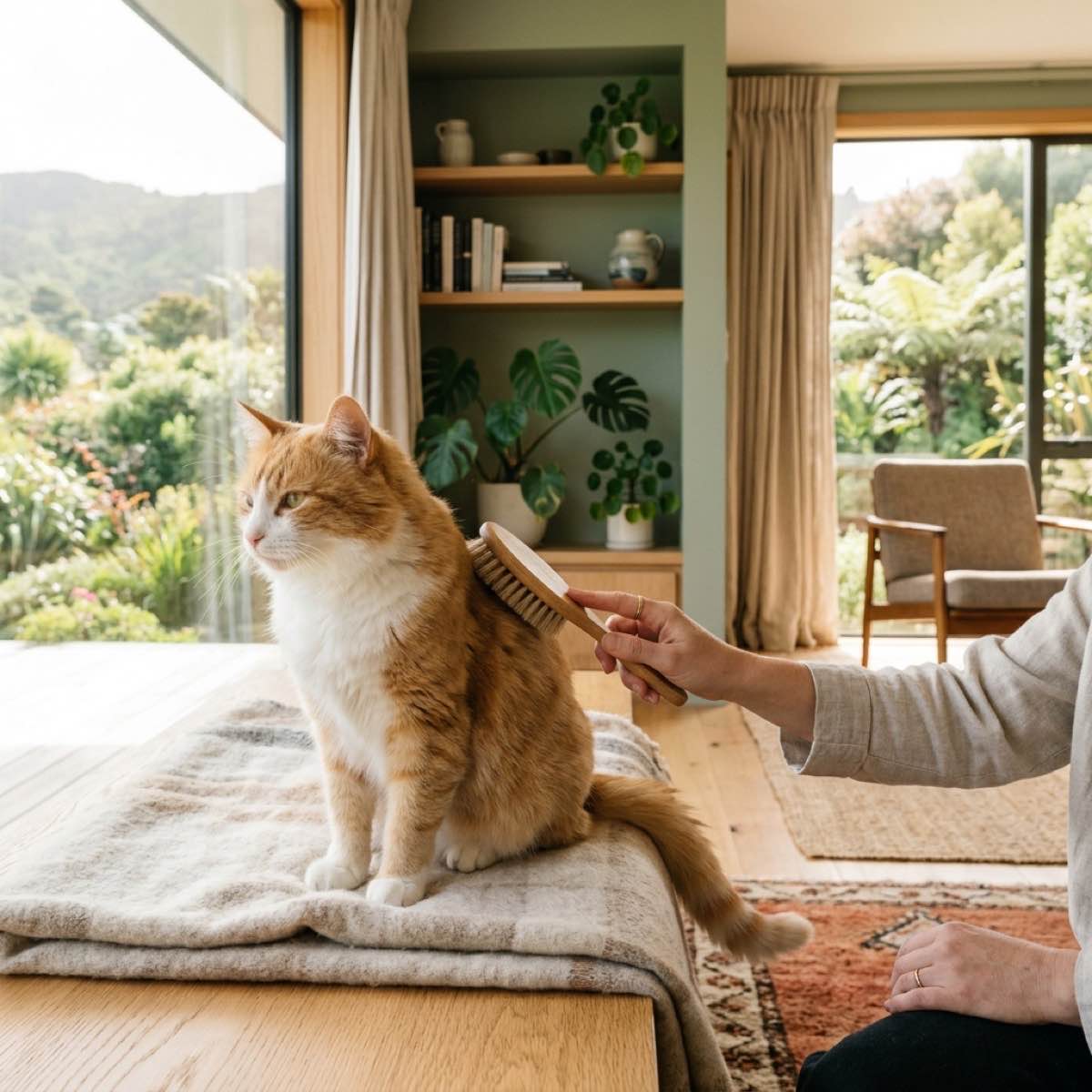
Build grooming as a short, calm habit before there is a mat, burr or panic. Long-haired cats, elderly cats and cats who spend time outside often need more help, but every cat benefits from gentle handling practice.
For the basics, use How to Brush a Cat NZ and Cat Grooming at Home NZ. For claws, use How to Clip Cat Nails NZ. If your cat wants to leave, growls, bites, pants, hides hard afterwards or suddenly refuses handling they used to accept, stop and check whether fear, pain or illness could be involved.
Behaviour: read the whole cat
Cat behaviour makes more sense when you read the whole picture: body posture, tail, ears, context and what changed recently. Start with Do Cats Get Lonely? NZ if your cat is alone for long workdays. For common signals, use Why Do Cats Purr? NZ, Why Does My Cat Stare at Me? NZ, Why Does My Cat Bite Me? NZ, Why Does My Cat Chatter at Birds? NZ and Why Does My Cat Wag Its Tail? NZ.
For a guided next step, try the Cat Behaviour Decoder. It is useful for sorting normal communication from patterns worth discussing with a vet or qualified behaviour professional.
Identification, rules and local responsibility
NZ cat rules are changing council by council. There is no single national cat law equivalent to dog registration, but some councils have cat bylaws requiring microchipping, desexing and registration on the New Zealand Companion Animal Register. Start with Cat Rules in New Zealand, then check your own council.
For identification, Microchip vs Collar ID for Pets NZ explains why a registered microchip is the permanent record while a collar tag is the visible backup. For collar styles and safety choices, read Cat Collar Types NZ. If you are still in the first few weeks, the Kitten First Weeks Checklist can help you keep setup tasks in order.
Quick takeaways
- Cat care in NZ starts with safe setup, routine, enrichment and identification.
- Use a quiet first room for new cats, then expand slowly.
- Indoor or contained living needs real enrichment, not just closed doors.
- Litter and scratching problems usually need better systems, not punishment.
- Behaviour clues need context; sudden changes belong with a vet.
- Council cat rules differ, so always check your own council's current bylaw.
Shop related categories at PetMall
For litter, food, beds, scratching posts, toys and everyday cat basics in New Zealand, browse the PetMall cat range.
Related reading
- Foods Cats Can and Can't Eat: the complete NZ list
- New Kitten Checklist NZ
- Indoor vs Outdoor Cat NZ
- How to Brush a Cat NZ
- Best Cat Litter NZ
- Cat Rules in New Zealand
- Cat Behaviour Decoder
References
- SPCA New Zealand, Bringing your new cat home, checked 2026-06-10: https://www.spca.nz/advice-and-welfare/article/bringing-your-new-cat-home
- SPCA New Zealand, Keeping your cat safe and happy at home, checked 2026-06-10: https://www.spca.nz/advice-and-welfare/article/keeping-your-cat-safe-and-happy-at-home
- SPCA New Zealand, Cat and kitten care, checked 2026-06-10: https://www.spca.nz/cat-care
- New Zealand Legislation, Animal Welfare Act 1999, checked 2026-06-10: https://www.legislation.govt.nz/act/public/1999/0142/latest/DLM49664.html
Important notice
*General cat care information for NZ owners. This is not veterinary advice. Sudden appetite, drinking, toileting, breathing, weight, pain, mobility or behaviour changes should be discussed with a NZ vet.*
Free PetMall tools
Related guides
petmall.co.nz
Shop at PetMall
The products below are practical support items for your pet. PetMall ships across New Zealand.
- Cat FoodStart with food that matches your cat's life stage — change brands slowly over 7–10 days to avoid digestive upset.
- Cat LitterClumping or crystal, most cats prefer an unscented litter and a clean tray — one tray per cat plus one spare is the NZ rule of thumb.
- Cat TreatsGreat for bonding and training — keep treats under 10% of daily calories to protect your cat's waistline.
- Cat ToysA small rotation of toys (feather wand, puzzle feeder, and comfort toy) usually works better than buying many at once.
- Cat GroomingRegular brushing cuts hairballs and shedding — essential for long-haired breeds like Ragdolls and British Longhairs.
- Flea & Worm TreatmentFor NZ conditions, choose protection that fits your cat's weight and lifestyle (indoor vs outdoor) and keep it regular.