Cat Collar Types NZ: Breakaway vs Standard vs GPS vs Microchip — Which Does Your Cat Need?
Not all cat collars are equal. Compare breakaway, standard, microchip-activated, reflective and GPS collars for NZ cats — safety considerations, which type to buy, and what to avoid.
The type of collar you put on your cat matters more than most people realise. The wrong collar can be dangerous. The right one depends on whether your cat goes outdoors, whether they live near native wildlife, and what safety concerns are most relevant for your situation in New Zealand.
Why collar type matters for cats specifically
Cats climb, squeeze through gaps, and can get collars caught on branches, fences, and furniture. A collar that's safe for a dog can be dangerous — even fatal — for a cat. This is not a hypothetical risk: collar-related injuries (including degloving injuries where a cat's leg becomes trapped in a too-loose collar and tries to free itself) do occur. Choosing the right collar type and fit is a genuine safety decision.
The main types of cat collars
1. Breakaway (quick-release) collars — the NZ safety standard
A breakaway collar has a safety buckle that releases under pressure — typically 4–5 kg of force. If your cat's collar gets snagged on something (a branch, a fence wire, the cat's own back leg), the collar snaps open rather than trapping the cat.
This is the type most NZ vets recommend for cats that go outdoors.
- How it works: The buckle looks normal but opens with a firm pull. Humans can open it easily; a cat caught on a fence can usually free itself.
- ID tag compatibility: Most breakaway collars have a D-ring for attaching an ID tag. With microchipping mandatory in NZ for cats from July 2026, a breakaway collar with an ID tag bearing your phone number gives two layers of identification.
- Who it suits: Any outdoor or indoor-outdoor cat in NZ. If your cat spends any time outside, this is the collar type to choose.
Fit: You should be able to slide two fingers comfortably under the collar. Any looser and the collar may slip over the cat's head; tighter and it may cause discomfort or restrict breathing.
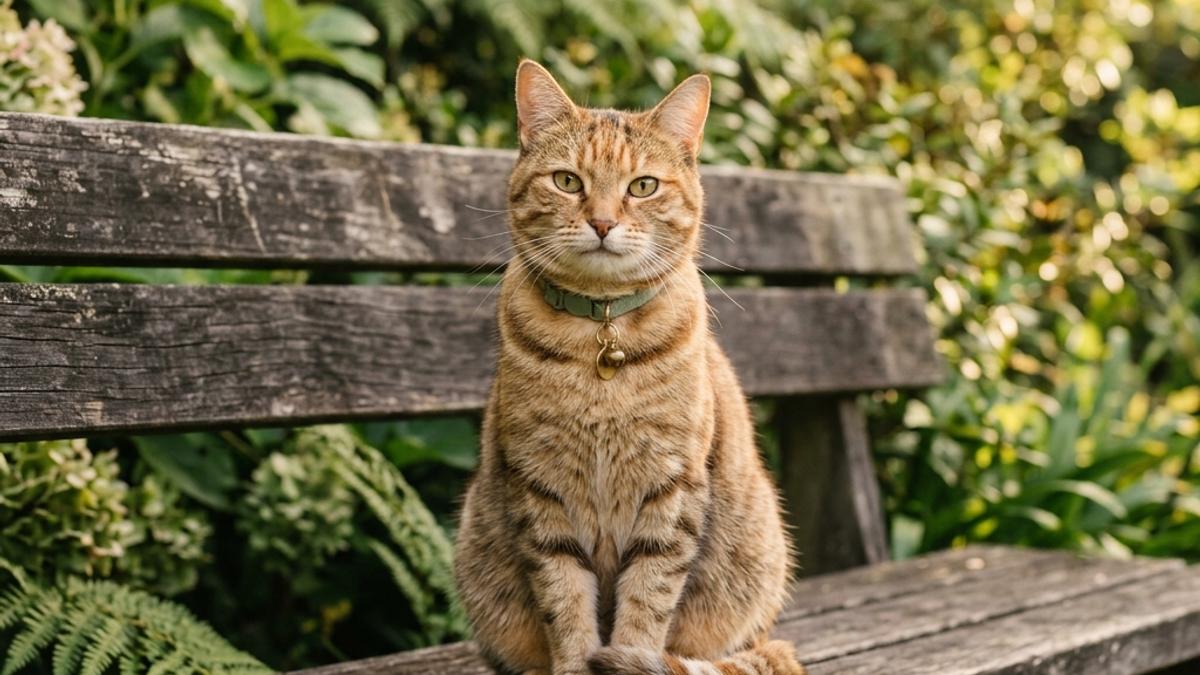
2. Standard (fixed-buckle) collars
Standard collars have a fixed buckle that does not release under pressure. They're typically used where identification is needed and the cat is always supervised or indoor-only.
- Risk: If caught on a fixed object, a cat cannot free itself. This risk is why fixed collars are not recommended for cats that go outdoors.
- When to use: Indoor-only cats that you want to carry a visible ID tag. Even then, a breakaway collar achieves the same purpose more safely.
- Avoid elastic safety sections: Some older-style standard collars have a small elastic section intended to allow the cat to escape. Research suggests these can cause injury (leg entrapment) more reliably than they prevent neck injury — modern breakaway buckles are a better solution.
3. Microchip-activated cat flap collars
These are not traditional collars — they're worn to hold a microchip-reader tag that unlocks a specific brand of cat flap. The actual locking mechanism is in the cat flap; the collar just carries the reader.
- Use case: If you use a microchip cat flap (e.g., SureFlap) that can't read your cat's implanted microchip reliably, some systems offer a collar tag as an alternative reader.
- Better option: Most modern microchip cat flaps read ISO-standard 15-digit microchips directly. If you're buying a new cat flap, opt for one that reads your cat's existing implanted microchip — no collar tag needed.
- NZ note: Microchipping is becoming mandatory for all cats in NZ (phased in from 2026 under the Cat Management Amendment Bill). An implanted microchip is permanent and cannot be lost — a collar tag can.
4. Reflective and hi-vis collars
Reflective strips or hi-vis bands are add-ons or built into some collars to increase a cat's visibility in low light — useful near roads, particularly in NZ's autumn and winter when dusk comes early.
- Best use: As a feature on a breakaway collar in households near busy roads. Not a standalone safety strategy.
- Limitation: Reflective collars help motorists see the cat — they don't reduce the collar's own entrapment risk, which remains the primary concern.
5. GPS and tracking collars
GPS cat collars contain a small GPS unit and allow you to track your cat's location in real time via a smartphone app. Several brands (Tractive, Loc8tor, various others) are available in NZ.
- Use case: Owners of indoor-outdoor cats in NZ who want to know where their cat is, especially if the cat has access to suburban areas with roads, neighbouring properties, or areas near native bird habitat.
- Considerations:
- Weight: GPS collars are heavier than standard collars. Look for units under 35 grams; some are unsuitable for small cats under 4 kg.
- Battery life: Most GPS trackers need recharging every few days to a week — if you forget, the tracker is useless.
- Monthly subscription: Most GPS collar systems require a monthly data plan fee in NZ ($5–$20/month depending on provider).
- Safety buckle: A GPS collar should have a breakaway safety release just like a standard collar — not all do. Check before purchasing.
- NZ native wildlife: GPS tracking can also alert you to whether your cat is accessing conservation areas or roosting sites — useful if you live near native habitat.
6. Bell collars
A small bell attached to a collar is intended to warn native birds and wildlife of a cat's approach. The evidence for their effectiveness is mixed — cats can learn to move in ways that minimise bell sound — but they do provide some alerting effect, particularly for less experienced birds.
- NZ native wildlife context: NZ has many ground-dwelling native birds (kiwi, weka, dotterel) and lizards that are vulnerable to cat predation. Some NZ councils and the Department of Conservation (DOC) recommend bell collars or "Birdsbesafe" colar covers for outdoor cats in areas near native habitat.
- Best use: As an add-on feature to a breakaway collar, not as a standalone solution.
What to look for when buying a cat collar in NZ
- Breakaway buckle first — non-negotiable for outdoor cats
- D-ring for ID tag — always have a tag with your current phone number, even if your cat is microchipped
- Width: Collars 1–1.5 cm wide sit comfortably on most cats; very narrow ribbon-style can create pressure points
- Soft material: Nylon, fabric, or soft neoprene is preferable to stiff plastic-edged collars that can cause hair loss at the collar line
- Check fit monthly — cats change weight seasonally; kitten collars need to be adjusted as the cat grows
NZ microchipping context
From July 2026, microchipping is expected to be compulsory for all domestic cats in New Zealand as part of the Cat Management Amendment legislation. An implanted microchip cannot be lost, doesn't need replacement, and works with council scanners and vet clinics nationwide. A collar with an ID tag is a useful backup, but the microchip is the primary permanent identification method. Check our new kitten checklist NZ for the full first-weeks setup list.
Quick takeaways
- Breakaway collar is the safety standard for any cat that goes outdoors — choose this type first
- Standard fixed collars are only appropriate for permanently indoor cats, and even then a breakaway is safer
- GPS collars are useful for active outdoor cats near roads or native wildlife areas — check for a breakaway buckle and battery life
- Add a bell for areas near native NZ bird and lizard habitat
- Fit: two fingers under the collar; check monthly for growing kittens
- A collar with an ID tag complements (not replaces) microchipping — a lost collar means lost contact details
See also
- New kitten checklist NZ
- Indoor vs outdoor cat NZ
- Cat carrier types NZ
- Cost of owning a cat NZ
- Cats breed profiles
---
References
- Department of Conservation, Feral cats — impact on native wildlife (a feral cat caught in Canterbury in 2020 had 17 skinks in its stomach; feral cats caused 20% of monitored kea deaths at Arthur's Pass 2019-2021), checked 2026-07-28: https://www.doc.govt.nz/nature/pests-and-threats/animal-pests-and-threats/feral-cats/
- MPI New Zealand, Code of Welfare for Companion Cats, checked 2026-06-05: https://www.mpi.govt.nz/animals/animal-welfare/codes/all-animal-welfare-codes/code-of-welfare-companion-cats/
---
*This guide provides general information for NZ cat owners. For advice specific to your cat's health or behaviour, consult a registered New Zealand vet.*
Related guides
petmall.co.nz
Shop at PetMall
The products below are practical support items for your pet. PetMall ships across New Zealand.
- Cat FoodStart with food that matches your cat's life stage — change brands slowly over 7–10 days to avoid digestive upset.
- Cat LitterClumping or crystal, most cats prefer an unscented litter and a clean tray — one tray per cat plus one spare is the NZ rule of thumb.
- Cat TreatsGreat for bonding and training — keep treats under 10% of daily calories to protect your cat's waistline.
- Cat ToysA small rotation of toys (feather wand, puzzle feeder, and comfort toy) usually works better than buying many at once.
- Cat GroomingRegular brushing cuts hairballs and shedding — essential for long-haired breeds like Ragdolls and British Longhairs.
- Flea & Worm TreatmentFor NZ conditions, choose protection that fits your cat's weight and lifestyle (indoor vs outdoor) and keep it regular.