Stop a Cat Scratching Furniture NZ: Redirect Without Punishment
Stop cat scratching furniture NZ guide: why cats scratch, where to put posts, how to protect couches and reward better scratching choices.
To stop a cat scratching furniture in NZ, do not try to stop scratching altogether. Scratching is normal cat behaviour. Give your cat better scratching surfaces, put them where the cat already scratches, protect the furniture temporarily, and reward the cat for using the post. Punishment makes cats wary; good setup changes the habit.
Why cats scratch
Cats scratch to stretch, mark territory, shed claw layers, release energy and feel secure in their space. That means scratching is not revenge, stubbornness or "bad manners".
SPCA New Zealand's cat behaviour advice frames behaviour as communication. If your cat scratches the couch arm, they may be choosing it because it is stable, visible, textured, near a doorway, near your favourite sitting spot, or perfect for a full shoulder stretch. The answer is to give them something equally satisfying.
Match the couch, then beat it
A cat does not care that the new post was expensive. They care whether it meets the scratching job.
Ask:
- Is it tall enough for a full stretch?
- Is it stable enough not to wobble?
- Is the texture satisfying?
- Is it in the right location?
- Can the cat scratch vertically or horizontally as they prefer?
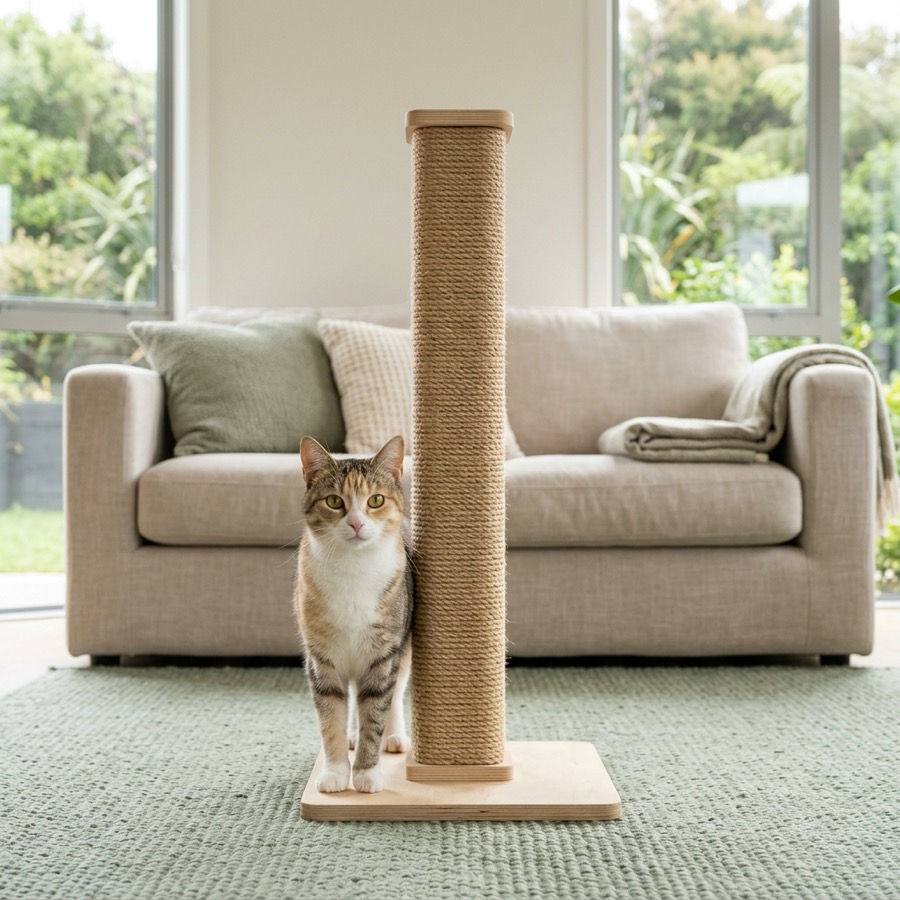
SPCA enrichment guidance recommends scratching posts that are tall enough for a full-body stretch and sturdy enough for the cat to lean against. A tiny kitten post may be useful for a few weeks, but many adult cats ignore short, lightweight posts because the couch works better.
Put the post where the scratching happens
The classic mistake is hiding the scratching post in a spare room while the cat scratches the lounge furniture. Put the new surface beside the problem area first.
Good NZ placement examples:
- Beside the couch arm your cat already uses.
- Near a sunny ranch slider.
- Near the hallway corner where the cat stretches after waking.
- Beside the bed if morning scratching is the problem.
- Near an apartment window perch.
- Near the entry to a catio or enclosed deck.
Once your cat uses the post reliably, you can move it a few centimetres every few days if needed. Move it too fast and the old furniture may win again.
Protect the furniture temporarily
Use temporary protection while your cat learns the new habit. Options include:
- A washable throw or furniture cover.
- Double-sided tape on a test-safe area.
- Plastic corner protectors.
- A scratching mat tied or placed over the favourite couch spot.
- Blocking access when you are not home.
SPCA New Zealand mentions double-sided sticky tape as one option to make unwanted surfaces less appealing. Test first, especially on rental furniture, leather, painted timber or delicate fabric. The aim is not to scare the cat; it is to make the couch less rewarding while the post becomes more rewarding.
Reward the right scratching
When your cat uses the post, reward immediately. Use a calm voice, a treat, a toy toss, or a short play session. Do not pick up your cat and force their paws onto the post. Many cats dislike that and learn the post is weird.
Try these positive setups:
- Sprinkle a little catnip or silvervine if your cat responds to it.
- Play with a wand toy near the post so claws land there naturally.
- Feed a treat beside the post after scratching.
- Put the post near a favourite nap spot.
- Use a horizontal cardboard scratcher if the cat prefers carpets or rugs.
RSPCA and ASPCA advice both focus on providing appropriate scratching outlets and making the unwanted surface less appealing rather than punishing the cat.
Texture matters
Different cats like different materials:
| Preference | Try |
|---|---|
| Couch arm | Tall sisal post or fabric-covered vertical post |
| Rug or carpet | Horizontal cardboard or carpet-style scratcher |
| Door frame | Tall post near the doorway |
| Bed base | Low mat beside the bed |
| Window area | Cat tree with scratching surfaces |
If your cat ignores one option, try a different orientation before assuming they are being difficult. Indoor cats often need multiple surfaces because scratching is part of daily enrichment.
Claw care helps but does not replace posts
Regular claw checks can reduce snagging on fabric, but trimming claws does not remove the need to scratch. Ask your vet, groomer or SPCA for help if you are not confident trimming claws safely.
Do not declaw. Declawing is not a normal scratching solution and is not compatible with humane behaviour management.
Multi-cat homes
In multi-cat homes, one post may not be enough. Cats may avoid a post if another cat guards the area. Place scratching options in more than one room, especially near sleeping spots and pathways.
For apartments and townhouses, vertical space matters. A cat tree, wall shelves or window perch can reduce furniture scratching because the cat gets more legal places to stretch, scratch and observe.
Put scratching surfaces into your NZD setup budget alongside litter, food, toys and vet care. A sturdy post that your cat actually uses is cheaper and calmer than repeated couch repairs.
What not to do
Do not yell, spray water, throw things or chase the cat. Punishment can make cats avoid you while still scratching when you are not watching.
Do not remove all scratching surfaces to protect furniture. That removes a normal cat need and can make stress-related behaviour worse.
Do not rely only on one product. The winning plan is usually post placement, couch protection, reward timing, play and patience.
A 7-day reset
Day 1: Map the scratching
Write down where, when and what texture your cat scratches.
Day 2: Add the closest match
Place a tall or horizontal scratcher right beside the furniture.
Day 3: Protect the couch
Use a throw, tape, cover or blocker on the problem area.
Day 4: Reward post use
Keep treats or a toy nearby and reward every correct scratch.
Day 5: Add play
Use a wand toy near the post so the cat's claws land there.
Day 6: Add a second surface
Try the opposite orientation: vertical if you started horizontal, or horizontal if you started vertical.
Day 7: Review
If the post is being used, slowly move it only if you must. If the couch still wins, improve stability, height, texture or location.
When to get help
Ask for help if scratching is sudden, paired with hiding or aggression, or part of a wider behaviour change. Use the Cat Behaviour Decoder to map the context, and speak with your vet or a qualified cat behaviour professional if something feels unusual.
For kittens, build scratching into the first-week setup using the New Kitten Checklist NZ so the couch never becomes the main post.
Key takeaways
- Scratching is normal; the goal is redirection, not suppression.
- Put the post beside the furniture first.
- Choose height, stability, texture and orientation your cat actually likes.
- Protect furniture temporarily while rewarding the new choice.
- Do not punish, spray or force paws onto the post.
- Multi-cat and indoor-only homes often need more than one scratching surface.
Related reading
- Cat Behaviour Decoder
- New Kitten Checklist NZ
- Cat Scratching Posts Guide NZ
- Cat Toys Guide NZ
- Best Cat Litter NZ
- Cat Food Guide NZ
- Kitten Litter Training NZ
---
Reference sources
- SPCA New Zealand: Understanding your cat's behaviour, checked 2026-06-04. https://www.spca.nz/advice-and-welfare/article/understanding-your-cats-behaviour
- SPCA New Zealand: Enrichment tips for cats, checked 2026-06-04. https://www.spca.nz/advice-and-welfare/article/enrichment-tips-for-cats
- RSPCA Australia Knowledgebase: Why does my cat scratch the furniture?, checked 2026-06-04. https://kb.rspca.org.au/categories/companion-animals/cats/behaviour/why-does-my-cat-scratch-the-furniture
- RSPCA Victoria: Scratching, checked 2026-06-04. https://rspcavic.org/learn/scratching/
- ASPCA: Destructive Scratching, checked 2026-06-04. https://www.aspca.org/pet-care/cat-care/common-cat-behavior-issues/destructive-scratching
- PetMD: How to curb destructive cat scratching behaviours, checked 2026-06-04. https://www.petmd.com/cat/training/how-curb-destructive-cat-scratching-behaviors
- Henli NZ: Scratching Pole product page, checked 2026-06-04. https://www.henli.co.nz/products/scratching-pole
Free PetMall tools
Related guides
petmall.co.nz
Shop at PetMall
The products below are practical support items for your pet. PetMall ships across New Zealand.
- Cat ToysA small rotation of toys (feather wand, puzzle feeder, and comfort toy) usually works better than buying many at once.
- Cat FoodStart with food that matches your cat's life stage — change brands slowly over 7–10 days to avoid digestive upset.
- Cat LitterClumping or crystal, most cats prefer an unscented litter and a clean tray — one tray per cat plus one spare is the NZ rule of thumb.
- Cat TreatsGreat for bonding and training — keep treats under 10% of daily calories to protect your cat's waistline.
- Cat GroomingRegular brushing cuts hairballs and shedding — essential for long-haired breeds like Ragdolls and British Longhairs.
- Flea & Worm TreatmentFor NZ conditions, choose protection that fits your cat's weight and lifestyle (indoor vs outdoor) and keep it regular.