Cat Scratching Posts NZ: Why Cats Scratch & How to Choose the Right Post
Cat scratching post NZ guide: choose sisal, cardboard, carpet or cat trees, place posts well and protect furniture in Kiwi homes.
The right cat scratching post NZ homes need is tall or long enough for a full stretch, sturdy enough not to wobble, and placed where your cat already wants to scratch. Cats scratch because it is normal behaviour, not because they are being spiteful about the couch.
If your cat ignores a new post, the post is usually the wrong shape, texture, height or location. Fix those before blaming the cat.
Quick Match Table
| Scratcher type | Best for | Watch-outs |
|---|---|---|
| Sisal vertical post | Cats scratching couch corners, chair legs or door frames | Needs a heavy base and enough height |
| Cardboard scratcher | Cats that like shredding and horizontal scratching | Messy, wears out faster in damp homes |
| Carpet post | Cats already scratching carpeted surfaces | Can confuse some cats if it matches your flooring too closely |
| Cat tree | Indoor cats, apartments, multi-cat homes | Must be stable and fit the room |
| Wall-mounted scratcher | Small flats and narrow hallways | Check rental-friendly mounting options |
| Scratch mat | Rugs, carpet edges, older cats | Must not slide around under the cat |
Why Cats Scratch
SPCA New Zealand describes scratching as a natural behaviour cats use to sharpen claws and scent-mark. That means the goal is not to stop scratching. The goal is to give your cat a better legal target.
Scratching also helps cats stretch. That is why a tiny post beside a full-height sofa often fails. The cat chooses the sofa because it lets them dig in, pull, stretch and leave scent in a socially useful place.
This matters even more for stay-at-home cats. SPCA's guidance for keeping cats safe and happy at home says cats need places to scratch and mark by rubbing, plus enrichment that lets them express normal feline behaviours. In New Zealand, where more owners are using indoor-only routines, catios or night curfews to protect cats and local wildlife, scratchers are not optional decor. They are part of the welfare setup.
Vertical, Horizontal or Both?
Watch what your cat already scratches:
| Current target | Likely preference | Try first |
|---|---|---|
| Sofa arms, chair legs, door frames | Vertical stretch | Tall sisal post or vertical board |
| Rugs, carpet edges, doormats | Horizontal pull | Cardboard pad or scratch mat |
| Bed base or low ottoman | Angled or low stretch | Ramp scratcher or low board |
| Curtains or tall furniture | Height and climb | Cat tree with scratch columns |
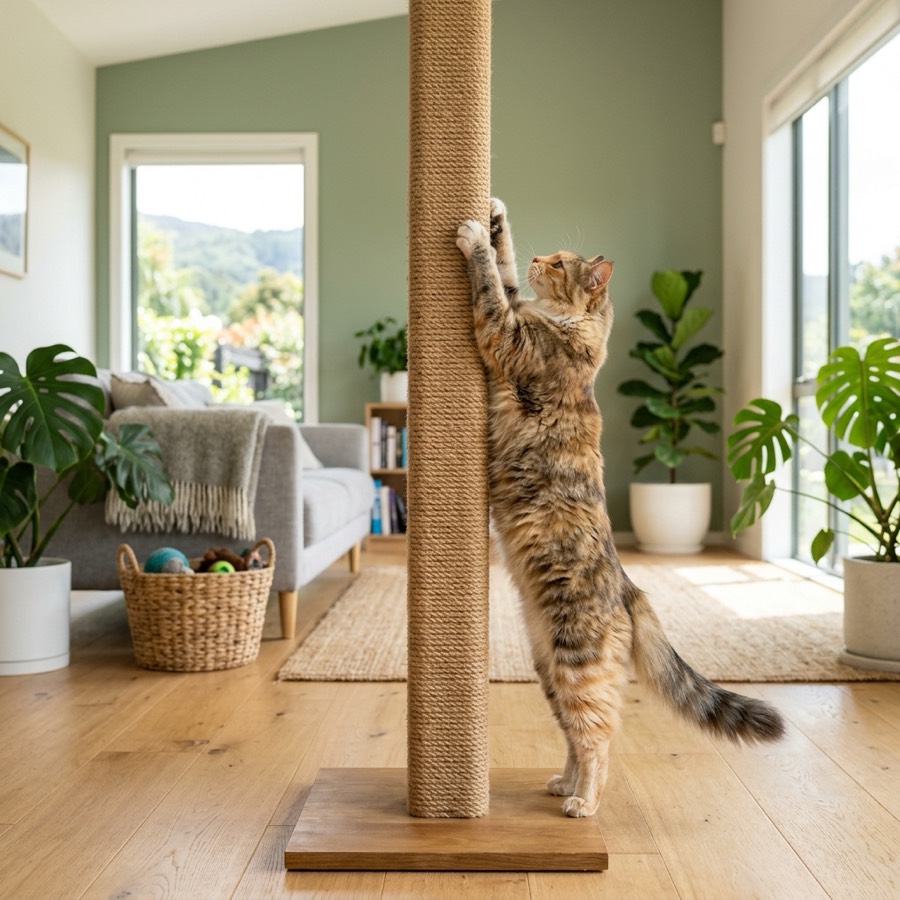
The Indoor Pet Initiative at Ohio State University gives the same practical rule: cats scratching chair legs or couch corners may prefer vertical posts, while cats scratching rugs may prefer horizontal scratchers or mats. Most homes do best with both.
For one adult cat, think at least two to three scratching options in different spots. SPCA's stay-at-home cat advice suggests multiple resources, including three different types of scratching surfaces for one cat. Multi-cat households need more, especially if one cat guards the favourite sunny spot.
Height and Stability Matter
A good vertical scratching post should let your cat stand tall and stretch through the shoulders. For many adult cats, that means a post taller than the cute kitten-sized one near the checkout. SPCA's enrichment advice says posts should be sufficiently tall for a full stretch and sturdy enough for the cat to lean against.
The wobble test is simple: push the top of the post with your hand. If it rocks like a cheap bedside lamp, a confident cat may avoid it. Choose a broad base, heavier build, or a cat tree with weight low down.
For Wellington apartments, narrow Auckland townhouses or rental bedrooms, a tall post with a small footprint can work, but only if it is stable. If you have toddlers, dogs or a very athletic cat, place tall furniture where it cannot tip into a doorway, heater or window glass.
Material: Sisal, Cardboard, Carpet or Wood?
Sisal is the safest all-round recommendation for most cats. It is rough, satisfying and durable. Cardboard is excellent for cats that like shredding, and it is often cheaper to replace. Carpet posts suit some cats, but they can blur the line between "scratch here" and "scratch the rental carpet".
Coastal and humid homes, especially around Auckland and Northland, can make cheap cardboard soften faster. If your scratcher sits near a damp ranch slider, rotate it out before it collapses or grows stale-smelling.
The texture should match your cat's preference. If the cat is destroying a woven dining chair, a smooth plastic toy will not solve it. If the cat is pulling at a jute rug, a horizontal sisal or cardboard mat may beat a tall tower.
Where to Put a Scratching Post
Location is where many good posts fail. Cats scratch in socially important places: near resting areas, room entrances, windows, couches and the path between feeding and sleeping zones.
SPCA New Zealand recommends placing the scratch pole near where the cat wants to scratch, encouraging use, and rewarding the cat when they use it. So put the new scratcher beside the damaged couch arm first, not hidden in the laundry.
Once your cat uses it reliably, you can move it a little at a time if needed. Move it too fast and the couch becomes the best option again.
Good NZ placements include:
- Beside the sofa arm your cat already targets.
- Near a sunny window, especially for indoor cats watching the street.
- Beside a sleeping spot, because many cats scratch after waking.
- Near a catio door or enclosed balcony route.
- In each main zone for a multi-cat home, not just one shared corner.
Protecting Furniture Without Punishment
Do not yell, spray water or force your cat's paws onto the post. That can make the cat avoid you, the post, or both. Make the legal target better and the illegal target less satisfying.
Use a three-part reset:
1. Put the right scratcher directly beside the problem area. 2. Reward every voluntary scratch on the post with praise, play or a treat. 3. Temporarily cover the furniture target with a deterrent surface such as double-sided tape while the new habit builds.
SPCA New Zealand specifically mentions double-sided sticky tape as a way to make unwanted surfaces less appealing while you train the cat to use a scratching post. Test tape first on delicate fabric, painted timber and rental furniture.
For leather couches, add a throw or furniture guard while training. For landlords' curtains, lift or tie them back if your cat is climbing them. If scratching suddenly changes alongside hiding, spraying, appetite changes or aggression, talk to your vet or a qualified behaviour professional; behaviour can change when a cat is stressed or unwell.
Choosing for Kittens, Seniors and Multi-Cat Homes
Kittens need easy wins. Start with low cardboard, a stable short post and one taller option they can grow into. Put scratchers in the kitten room before the kitten discovers the couch.
Senior cats may prefer horizontal or angled scratchers because stiff joints can make a full vertical stretch harder. Keep surfaces non-slip and easy to approach.
Multi-cat homes need duplicates. One impressive cat tree in the lounge is not enough if one cat owns it. Add separate scratchers near separate resting spots so shy cats do not have to negotiate every time they need to mark.
NZD Cost Planning
You do not need the most expensive cat furniture first. Start with the scratcher most likely to match the behaviour you see.
| Setup | Rough NZD planning range | Good fit |
|---|---|---|
| Cardboard pad or mat | NZD $8-$25 | Trial option, kittens, horizontal scratchers |
| Basic sisal post | NZD $20-$60 | First adult cat post |
| Tall post or tower | NZD $60-$160 | Indoor cats needing stretch and height |
| Large cat tree | NZD $120-$350+ | Apartments, multi-cat homes, catio-adjacent rooms |
| Wall or window setup | NZD $30-$200+ | Small spaces and climbing routes |
If budget is tight, buy one sturdy vertical post and one cheap horizontal cardboard scratcher. That combination solves more real homes than one flimsy decorative tower.
Key takeaways
- A cat scratching post NZ cats actually use must match height, texture, orientation and location.
- Scratching is normal behaviour; redirect it rather than punishing it.
- Sisal suits many cats, while cardboard and mats suit horizontal scratchers.
- Put the post near the furniture or carpet your cat already targets.
- Indoor and stay-at-home cats need multiple scratching surfaces as part of enrichment.
- Use tape or covers temporarily while rewarding the post.
Related reading
- Indoor Cat Enrichment NZ
- New Kitten Checklist NZ
- Cost of Owning a Cat in NZ
- Best Cat Food NZ Guide
- How to Read Pet Food Labels NZ
---
Reference sources
- SPCA New Zealand, Enrichment tips for cats, checked 2026-06-04: https://www.spca.nz/advice-and-welfare/article/enrichment-tips-for-cats
- SPCA New Zealand, Understanding your cat's behaviour, checked 2026-06-04: https://www.spca.nz/advice-and-welfare/article/understanding-your-cats-behaviour
- SPCA New Zealand, Keeping your cat safe and happy at home, checked 2026-06-04: https://www.spca.nz/advice-and-welfare/article/keeping-your-cat-safe-and-happy-at-home
- MPI, Code of Welfare: Companion Cats, checked 2026-06-04: https://www.mpi.govt.nz/dmsdocument/46021/direct
- Indoor Pet Initiative, Scratching, checked 2026-06-04: https://indoorpet.osu.edu/cats/basic-indoor-cat-needs/scratching
Free PetMall tools
Related guides
petmall.co.nz
Shop at PetMall
The products below are practical support items for your pet. PetMall ships across New Zealand.
- Cat FoodStart with food that matches your cat's life stage — change brands slowly over 7–10 days to avoid digestive upset.
- Cat LitterClumping or crystal, most cats prefer an unscented litter and a clean tray — one tray per cat plus one spare is the NZ rule of thumb.
- Cat TreatsGreat for bonding and training — keep treats under 10% of daily calories to protect your cat's waistline.
- Cat ToysA small rotation of toys (feather wand, puzzle feeder, and comfort toy) usually works better than buying many at once.
- Cat GroomingRegular brushing cuts hairballs and shedding — essential for long-haired breeds like Ragdolls and British Longhairs.
- Flea & Worm TreatmentFor NZ conditions, choose protection that fits your cat's weight and lifestyle (indoor vs outdoor) and keep it regular.