How to Read Pet Food Labels NZ: Ingredients, AAFCO & What to Ignore
Pet food marketing is full of buzzwords. Learn how to decode labels, AAFCO statements, and ingredient red flags.
Kia ora, fellow Kiwi pet parents! Navigating the aisles of your local PetMall or supermarket, you're faced with an overwhelming array of pet food options. Each bag or can promises optimal health, shiny coats, and boundless energy for your furry whānau member. But how do you cut through the marketing fluff and truly understand what’s inside that bag?
As experts in pet nutrition here in Aotearoa, we know that reading pet food labels can feel like deciphering a secret code. There's jargon, tiny print, and sometimes, a lot of vague promises. But don't worry, we're here to empower you with the knowledge to make informed choices for your beloved dog or cat. This comprehensive guide will help you confidently choose the best food, ensuring your pet thrives on a diet tailored to their needs. Let's dive in!
Why Labels Are Confusing
It’s easy to feel lost when looking at pet food labels. You might see terms like "holistic," "premium," "grain-free," "natural," or "human-grade" splashed across packaging. While these words sound appealing, they often have no legal definition in New Zealand pet food regulations. Unlike human food, which has strict standards enforced by MPI (Ministry for Primary Industries), the pet food industry in NZ operates with far fewer mandatory rules. This means manufacturers have a lot of leeway in how they describe their products.
The primary goal of a pet food label is to inform you, but it's also a powerful marketing tool. Companies want to highlight what they believe makes their product stand out, often using appealing imagery and buzzwords. This can create confusion, making it difficult to discern genuine nutritional quality from clever marketing.
Another layer of complexity comes from the global nature of pet food manufacturing. Many brands sold in NZ are produced overseas, primarily in North America (USA, Canada) or Europe. These foods adhere to the regulations of their country of origin, which might then be adapted for export. While this can offer some reassurance, it also means you'll encounter different standards and terminology, particularly regarding nutritional guidelines like AAFCO or FEDIAF, which we'll discuss shortly.
Understanding that pet food labels are a blend of legal requirements (minimal in NZ), nutritional information, and marketing strategy is the first step. Our goal is to equip you to look beyond the pretty pictures and catchy slogans, and instead, focus on the factual information that truly impacts your pet's health.
The Ingredient List
The ingredient list is arguably the most crucial part of any pet food label. It tells you exactly what’s in the food, and importantly, the order matters! Ingredients are listed by weight, from the heaviest to the lightest. This means the first few ingredients make up the largest proportion of the food.
Let’s break down what you might see:
Protein Sources
High-quality protein is essential for your pet's muscle development, organ function, and overall health. Look for *named* meat sources as the first or second ingredient.
- Named Meats: "Chicken," "lamb," "beef," "salmon," "turkey." These are excellent, identifiable sources of protein.
- Meat Meal: "Chicken meal," "lamb meal," "fish meal." Don't let the word "meal" scare you! Meat meal is rendered meat (cooked down to remove water and fat), resulting in a concentrated protein source. It’s often a very high-quality ingredient, and because the water content has been removed, it can actually contribute more protein by dry weight than fresh meat listed first (which is mostly water).
- By-products: "Chicken by-product meal," "meat by-products." This is where it gets a bit controversial. By-products can include organ meats (like liver, heart, kidney), which are highly nutritious, or less desirable parts like feet, beaks, and feathers. A *named* by-product (e.g., "chicken by-product meal") is generally preferable to a generic "meat by-product meal," as it gives you some idea of the source. While some by-products are highly nutritious, vague "meat by-products" can be a red flag as their quality is inconsistent.
- Plant-based Proteins: "Pea protein," "potato protein," "corn gluten meal." While plants contain protein, they often lack the complete amino acid profile that pets, especially cats (obligate carnivores), need. If these are very high on the ingredient list, especially above named meat sources, it might mean the food relies too heavily on less digestible or less complete protein for your pet.
Carbohydrates, Fats & Fibres
These provide energy, essential fatty acids, and aid digestion.
- Carbohydrates: "Brown rice," "oats," "sweet potatoes," "peas," "barley," "potatoes." These are good sources of energy and fibre. "Corn" and "wheat" can also be good carbohydrate sources for many pets, though some pet owners prefer to avoid them due to perceived sensitivities (which are less common than often believed).
- Fats: "Chicken fat," "salmon oil," "flaxseed oil." Fats are crucial for energy, skin and coat health, and nutrient absorption. Named fats are always better than generic "animal fat" or "vegetable oil." Omega-3 and Omega-6 fatty acids are particularly beneficial.
- Fibre: "Beet pulp," "chicory root," "psyllium husk." Fibre aids digestion and promotes gut health.
Vitamins, Minerals & Supplements
You'll see a long list of these towards the end of the ingredient list. They ensure the food is nutritionally complete. Look for chelated minerals (e.g., "zinc proteinate," "iron chelate") as they are more easily absorbed by your pet.
A quick tip: If the first ingredient is a "fresh meat" (e.g., chicken), remember that it contains a lot of water. Once that water is removed during processing, its actual contribution to the *dry weight* of the food might be less than a "meat meal" listed second or third. It's often better to see a named meat *meal* high on the list, or a combination of fresh meat followed by a meat meal.
Protein Sources: Quality Over Quantity
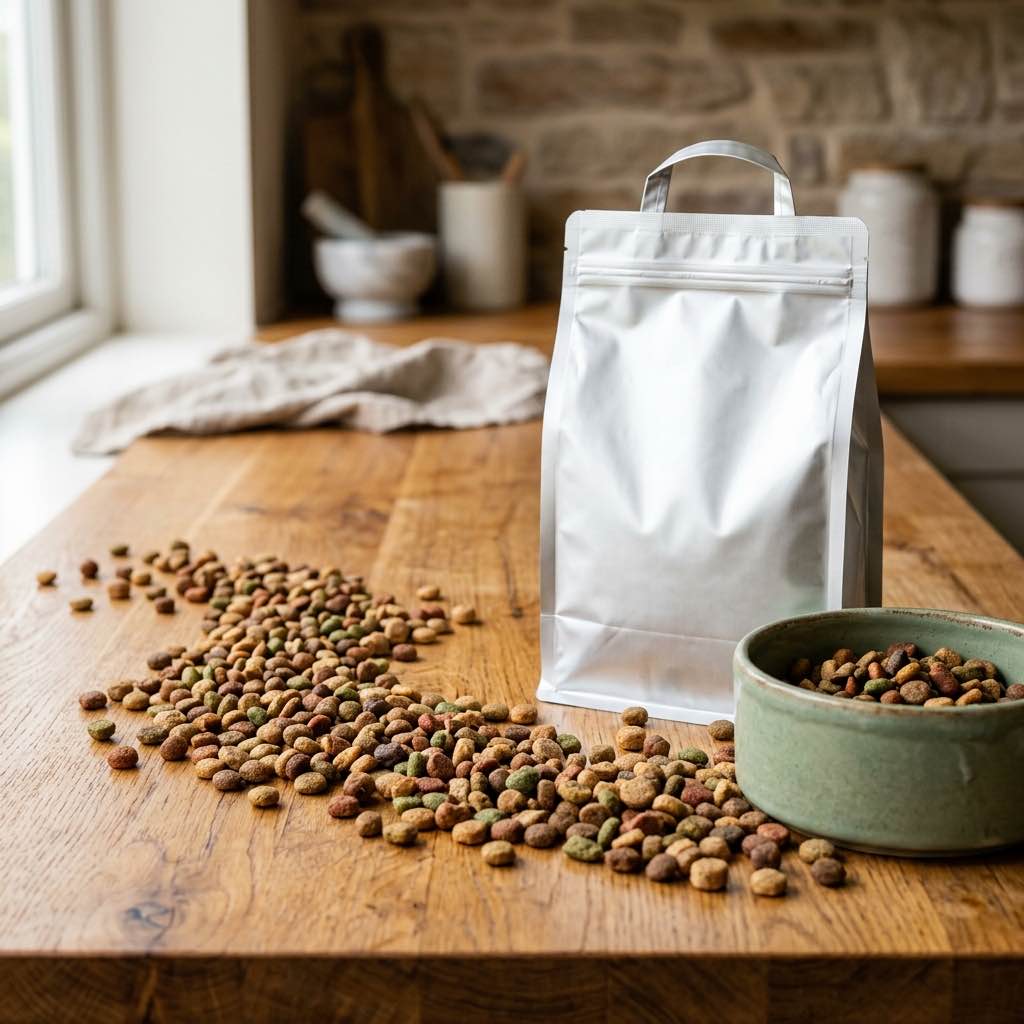
When it comes to protein, it’s not just about the percentage on the guaranteed analysis – it’s about the *quality* and *digestibility* of that protein. A food might boast 30% protein, but if that protein comes from sources your pet can’t easily digest or utilise, it’s not as beneficial.
Digestibility: This refers to how much of the protein your pet can actually absorb and use. High-quality animal proteins like chicken, lamb, beef, and fish are generally highly digestible for dogs and cats. Plant proteins, while contributing to the overall protein percentage, often have a lower biological value and can be harder for pets to digest efficiently. Cats, being obligate carnivores, have a higher requirement for animal-based protein and specific amino acids like taurine, which are abundantly found in animal tissues.
Named vs. Unnamed Sources: This is a critical distinction.
- Named sources (e.g., "chicken," "lamb meal," "salmon") are transparent. You know exactly what type of animal protein your pet is consuming. This is particularly important for pets with sensitivities or allergies, as it allows you to identify and avoid specific proteins.
- Unnamed sources (e.g., "meat and bone meal," "animal digest," "poultry by-products") are vague. "Meat and bone meal" could come from any animal, and its quality can vary wildly. "Animal digest" is a flavouring agent often made from rendered animal parts, and while it's generally safe, it doesn't contribute significant nutritional value and its origin is obscure. These vague terms are often used in lower-quality foods because they allow manufacturers to use whatever animal protein is cheapest at the time.
The "First Ingredient" Myth: While seeing a named meat as the first ingredient is a good sign, remember our earlier discussion about water content. A food that lists "Chicken" (70% water) as the first ingredient, followed by "corn" and "wheat," might actually have less *dry weight* protein from chicken than a food that lists "Chicken Meal" (5-10% water) as the second ingredient, preceded by a carbohydrate.
A robust protein profile often includes a combination: perhaps fresh meat followed by a high-quality meat meal, and then smaller amounts of plant-based proteins or other ingredients. This ensures a broad spectrum of amino acids and sustained protein content.
When choosing a food, aim for one where the first one or two ingredients are clearly identified animal proteins or meat meals. If plant-based proteins like "pea protein" or "corn gluten meal" appear very high on the list, especially before any named animal protein, it might indicate a lower-quality protein source. Your pet deserves the best, and that means highly digestible, named animal protein as the cornerstone of their diet.
AAFCO & FEDIAF Standards
This is where the NZ-specific context really comes into play. You’ll often see references to AAFCO or FEDIAF on pet food labels, and understanding what they mean (and don't mean) in New Zealand is crucial.
AAFCO (Association of American Feed Control Officials)
AAFCO is a voluntary organisation in the United States that establishes model regulations and ingredient definitions for animal feeds, including pet food. While AAFCO itself has no regulatory authority and doesn't test products, its guidelines are widely adopted by US states and are considered the gold standard for pet food nutrition and labelling in North America.
What AAFCO means for NZ pet food: Many pet foods sold in New Zealand are imported from the US or Canada, and these products will often state that they meet AAFCO nutritional standards. Even some NZ-made or Australian-made foods choose to formulate to AAFCO standards because they are globally recognised.
Crucially, AAFCO standards are NOT legally binding in New Zealand. There is no specific, comprehensive pet food legislation or regulatory body in NZ that mandates adherence to AAFCO or any other specific nutritional standard. However, reputable manufacturers choose to follow these guidelines because they represent sound nutritional science and demonstrate a commitment to quality.
FEDIAF (European Pet Food Industry Federation)
FEDIAF is the equivalent organisation for the European pet food industry. Like AAFCO, FEDIAF provides nutritional guidelines and best practice recommendations for pet food manufacturing in Europe. If you're buying a pet food imported from Europe, it's likely to state that it adheres to FEDIAF guidelines.
What FEDIAF means for NZ pet food: Similar to AAFCO, FEDIAF guidelines are not legally binding in NZ. However, for European-sourced pet foods, seeing a FEDIAF statement indicates that the product meets the stringent nutritional and safety standards expected within the European Union.
The Lack of Specific NZ Regulation
This is a key takeaway for Kiwi pet owners. While human food in NZ is regulated by MPI, pet food is largely self-regulated by the industry. This means it’s up to manufacturers to ensure their products are safe and nutritionally adequate.
What to look for: Despite the lack of legal mandate, you *should* still look for a statement on the label indicating adherence to either AAFCO or FEDIAF nutritional profiles. A statement like:
- "\[Product Name] is formulated to meet the nutritional levels established by the AAFCO Dog Food Nutrient Profiles for All Life Stages."
- "Meets FEDIAF nutritional guidelines for adult maintenance."
This statement is your best assurance that the food provides a complete and balanced diet for your pet. If a food doesn't have such a statement, proceed with caution. It might be a supplementary food, or it might not have been formulated to recognised nutritional standards. Always discuss any concerns with your vet.
Complete & Balanced
This phrase is probably the most important claim on a pet food label, and it's directly linked to AAFCO or FEDIAF standards. When a pet food is labelled "complete and balanced," it means it contains all the essential nutrients (proteins, fats, carbohydrates, vitamins, and minerals) in the correct proportions to meet a pet's daily nutritional needs for a specific life stage.
Without this claim, a pet food should be considered a "treat" or "supplemental" food and should not form the sole basis of your pet's diet. Feeding a diet that isn't complete and balanced can lead to serious nutritional deficiencies or excesses over time, impacting your pet's long-term health.
Life Stages
The "complete and balanced" claim will always be qualified by a life stage. This is critical because a puppy or kitten has very different nutritional requirements than an adult or a senior pet.
- Growth/Puppy/Kitten: Formulated for young, rapidly growing animals. These foods are typically higher in protein, fat, and certain minerals (like calcium and phosphorus) to support development.
- Adult Maintenance: Designed for healthy adult pets with moderate activity levels.
- Gestation/Lactation: For pregnant or nursing females, who have significantly increased energy and nutrient demands. Often, "All Life Stages" foods are also suitable for gestation/lactation.
- All Life Stages: This means the food meets the nutritional requirements for *all* life stages, including growth and reproduction. While convenient, some vets recommend specific puppy/kitten or senior formulas if available, as "All Life Stages" foods are often formulated to meet the highest nutritional demands (growth), which might be excessive for some adult or senior pets, potentially contributing to obesity.
- Senior/Weight Management: These foods are often lower in calories and fat, sometimes with added joint support ingredients. They are specifically formulated to address the changing needs of older or less active pets.
How to check: Look for a clear statement like: "Animal food provides complete and balanced nutrition for adult dogs" or "Formulated to meet the nutritional levels established by the AAFCO Dog Food Nutrient Profiles for growth and reproduction."
If you’re unsure whether a food is suitable for your pet's specific needs, always consult your local vet. They can provide tailored advice based on your pet's age, breed, activity level, and any specific health conditions.
Artificial vs Natural Preservatives
Preservatives are essential in pet food to prevent spoilage, rancidity of fats, and the growth of mould and bacteria. Without them, dry kibble would spoil very quickly. The debate often centres on whether artificial or natural preservatives are better.
Artificial Preservatives
These are synthetic chemicals designed to be highly effective at preserving food. Common ones you might see on labels include:
- BHA (Butylated Hydroxyanisole)
- BHT (Butylated Hydroxytoluene)
- Ethoxyquin
- Propyl Gallate
These preservatives have been approved for use in pet food by regulatory bodies in many countries (including the US and EU), and they are generally considered safe at the low levels used. However, some pet owners and holistic vets express concerns about their long-term effects, particularly BHA and BHT, which have been linked to potential health issues in very high doses in some animal studies. Ethoxyquin, while effective, has also raised some eyebrows, leading many premium brands to avoid it.
If these artificial preservatives are listed, they will usually be towards the end of the ingredient list due to the small amounts used.
Natural Preservatives
These are derived from natural sources and are increasingly favoured by pet owners. They are generally considered safer and gentler, though they may not have as long a shelf life as foods preserved artificially, and can sometimes be more expensive for manufacturers to use.
Common natural preservatives include:
- Mixed Tocopherols (Vitamin E): A powerful antioxidant.
- Ascorbic Acid (Vitamin C): Another antioxidant.
- Rosemary Extract: A natural antioxidant and flavour enhancer.
- Citric Acid: Often used in combination with other natural preservatives.
Why choose natural? Many Kiwi pet owners opt for foods with natural preservatives to avoid synthetic chemicals in their pet's diet. While scientific evidence definitively proving harm from approved levels of artificial preservatives in pets is limited, the preference for "natural" aligns with a broader trend towards cleaner eating for both humans and their pets.
Cost Implications: Pet foods preserved with natural ingredients often sit at a slightly higher price point. For example, a 2kg bag of a premium dry dog food with natural preservatives might cost you around \$40-\$60, whereas a similar size with artificial preservatives could be \$30-\$50. This is a general range, of course, and depends heavily on brand, ingredients, and where you shop (PetMall always aims for competitive prices!).
Our Recommendation: Whenever possible, choose pet foods that use natural preservatives like mixed tocopherols or rosemary extract. This is a common "green flag" for higher-quality, more thoughtfully formulated foods.
Five Red Flags
Knowing what to avoid is just as important as knowing what to look for. Here are five red flags that should make you pause and reconsider a pet food:
- Vague "Meat" or "Animal" Ingredients: If you see terms like "meat and bone meal," "animal by-products," "poultry by-product meal," or simply "animal fat" high on the ingredient list, it's a red flag. These generic terms mean the manufacturer can use whatever animal source is cheapest or most available at the time, leading to inconsistent quality and making it impossible to identify potential allergens. Always look for *named* protein and fat sources.
- Artificial Colours, Flavours, or Controversial Preservatives High on the List: While some artificial preservatives (like BHA/BHT) are approved in small amounts, if you see artificial colours (e.g., Red 40, Blue 2, Yellow 5, Yellow 6), artificial flavours, or ethoxyquin listed, especially if they are not at the very end of the ingredient list, it's a sign that the food might be prioritising aesthetics or palatability over natural, wholesome ingredients. Pets don't care what colour their food is!
- Excessive Fillers or "Empty Calories": Ingredients like "corn gluten meal," "wheat middlings," or large amounts of "brewers rice" appearing as the first few ingredients can be concerning. While grains and plant-based ingredients aren't inherently bad, if they dominate the list over named animal proteins, it suggests the food is bulked up with less nutritionally dense components. These can contribute to a feeling of fullness without providing adequate high-quality protein and nutrients.
- Lack of a "Complete & Balanced" Statement or AAFCO/FEDIAF Reference: As discussed, this is a critical red flag. If a pet food doesn't clearly state that it meets AAFCO or FEDIAF nutritional profiles for a specific life stage, it is not guaranteed to provide all the nutrients your pet needs. It should only be fed as a treat or supplement. Don't assume; always look for the explicit statement.
- Unrealistic Price for Claims: Be wary of foods that make grand claims ("human-grade," "ancestral diet," "super premium") but are priced unusually low compared to other foods with similar ingredient quality. While PetMall always strives for competitive pricing, if a 10kg bag of "premium, single-source protein, grain-free" dog food costs a mere \$40-\$60, it's worth questioning how they achieve that price point while maintaining high-quality ingredients. Quality ingredients, especially named meats and natural preservatives, come at a cost.
Five Green Flags
Now for the good stuff! Here are five green flags that signal a high-quality, nutritious pet food:
- Named, High-Quality Animal Protein as the First Ingredient: Look for "chicken," "lamb meal," "salmon," "beef," or "turkey" as the very first ingredient. This indicates that a significant portion of the food's protein comes from an identifiable, good-quality animal source. A combination of fresh meat followed by a named meat meal is also an excellent sign.
- Whole, Identifiable Fruits and Vegetables: Ingredients like "sweet potatoes," "carrots," "spinach," "blueberries," "apples," or "cranberries" are great. They provide natural vitamins, minerals, antioxidants, and fibre. Seeing a variety of these further down the ingredient list indicates a well-rounded diet.
- Named Fats and Healthy Oils: Look for "chicken fat," "salmon oil," "flaxseed oil," or "sunflower oil." These provide essential fatty acids (Omegas 3 and 6) crucial for skin and coat health, brain function, and overall vitality. Salmon oil, in particular, is a fantastic source of Omega-3s.
- Natural Preservatives: As discussed, seeing "mixed tocopherols" (Vitamin E), "rosemary extract," or "ascorbic acid" (Vitamin C) listed as preservatives is a strong indicator of a higher-quality food that avoids synthetic chemicals.
- Clear AAFCO/FEDIAF Statement for Appropriate Life Stage: This is non-negotiable for a complete and balanced diet. A statement like, "Formulated to meet the nutritional levels established by the AAFCO Dog Food Nutrient Profiles for adult maintenance" or "Meets FEDIAF guidelines for growing kittens" gives you confidence that the food provides all the necessary nutrients for your pet's specific needs.
Bonus Green Flags:
- Prebiotics and Probiotics: Ingredients like "chicory root," "fructooligosaccharides (FOS)," "mannanoligosaccharides (MOS)," or specific bacterial strains (e.g., *Lactobacillus acidophilus*) support a healthy gut microbiome, which is vital for digestion and immunity.
- Chelated Minerals: Minerals listed as "zinc proteinate," "iron chelate," or "copper amino acid complex" are bound to amino acids, making them more easily absorbed by your pet's body.
- Glucosamine and Chondroitin: For large breed dogs, senior pets, or breeds prone to joint issues, the inclusion of these supplements can be beneficial for joint health.
---
Understanding Ingredient Types: A Quick Comparison
To help you quickly distinguish between quality ingredients and those that might raise questions, here's a handy comparison table:
| Ingredient type | Green flag examples | Red flag examples | Why it matters |
|---|---|---|---|
| Protein | "Chicken", "lamb meal", "salmon", "beef" | "Meat and animal derivatives", "meat by-products", "animal protein" with no species named | A named species tells you what you are actually buying. Unnamed collective terms can change between batches without the label changing |
| Fat | "Chicken fat", "salmon oil", "flaxseed oil" | "Animal fat", "vegetable oil" with no source named | Fat is where the omega-3 and omega-6 come from, and the source determines the fatty-acid profile |
| Carbohydrate | "Brown rice", "oats", "barley", "kūmara / sweet potato" | "Cereals", "cereal by-products", "vegetable derivatives" | Named grains and vegetables are traceable; the collective terms tell you nothing about quality or consistency |
| Preservative | "Mixed tocopherols (vitamin E)", "rosemary extract", "ascorbic acid" | Preservatives that are present but not named on the label | You cannot assess what you cannot see. A brand that names its preservative system is telling you more, not less |
| Adequacy statement | "Formulated to meet the nutritional levels established by the AAFCO Dog Food Nutrient Profiles for adult maintenance" | "For intermittent or supplemental feeding only" on a food you intend to feed as the whole diet | AAFCO calls the nutritional adequacy statement "perhaps the most important part of a label" — it is what matches the food to your pet's life stage |
Three mechanics behind that table are worth knowing, because they are the things brands rely on you not knowing.
Ingredients are listed in descending order by weight — including their water. AAFCO is explicit that the first ingredient is the one accounting for the most weight in the product. Fresh chicken is roughly 70% water, so "chicken" can top an ingredient list while contributing less actual protein than a dry "chicken meal" further down. Neither is a trick in itself; you just cannot read position alone as a quality ranking.
The guaranteed analysis is a floor and a ceiling, not a measurement. AAFCO requires four guarantees: minimum crude protein, minimum crude fat, maximum crude fibre and maximum moisture. "Crude" refers to the laboratory method, not the quality of the nutrient — a point worth remembering before paying a premium for a slightly higher protein percentage.
"Complete and balanced" is a real claim with a real test behind it. Complete means the product contains all the required nutrients; balanced means they are present in the right ratios. Merck notes that products meet AAFCO nutrient profiles either by formulation or by feeding trials, and cautions that laboratory analysis does not address the bioavailability of the nutrients — that is, whether the animal can actually absorb what the analysis says is in the bag. A food validated by a feeding trial has cleared a higher bar than one validated only on paper.
Sources
- AAFCO, *Reading Labels* — "The nutritional adequacy statement is perhaps the most important part of a label"; ingredients "must be listed in descending order according to their weight" and "the first ingredient listed is the one that accounts for the most weight in a product"; the four required guarantees are minimum crude protein, minimum crude fat, maximum crude fibre and maximum moisture, with "crude" referring to the analytical method rather than quality; "complete" means all required nutrients are present and "balanced" means they are in the correct ratios, checked 2026-07-24: https://www.aafco.org/consumers/understanding-pet-food/reading-labels/
- Merck Veterinary Manual, *Dog and Cat Foods* — complete and balanced products must meet AAFCO nutrient profiles either through formulation or through feeding trials, and the manual cautions that "laboratory analysis does not address the issue of bioavailability of nutrients" and that some requirements are based on studies using purified ingredients, checked 2026-07-24: https://www.merckvetmanual.com/management-and-nutrition/nutrition-small-animals/dog-and-cat-foods
- Ministry for Primary Industries (NZ), *Manufacturing pet food, animal feed, and nutritional supplements* — NZ manufacturers must provide specified information on the product label and must not make misleading statements, particularly therapeutic claims; products containing animal material must meet both the ACVM Act 1997 and the Animal Products Act 1999, which is the closest New Zealand equivalent to the AAFCO framework referenced on most labels sold here, checked 2026-07-24: https://www.mpi.govt.nz/animals/pet-food-animal-feed-nutritional-supplements/manufacturing-pet-food-animal-feed-and-nutritional-supplements