Dog Harness Types NZ: Front-Clip, Back-Clip, Head Halter & No-Pull — Which to Choose
Front-clip, back-clip, head halter or no-pull harness in NZ? Compare control, comfort and which suits pullers, small dogs and beach walks.
The quick answer: a back-clip harness suits calm dogs that already walk nicely; a front-clip harness is the best everyday choice for dogs that pull; a head halter gives the most steering control for strong pullers (with training); and most "no-pull" harnesses are really front-clip designs (we compare specific models in our best dog harnesses NZ guide). Fit matters more than the label — a harness that rubs or slips is worse than the right size in a simpler style.
This is the focused harness guide. For collars and leads too, see our dog leads, harnesses & collars guide.
Quick comparison
| Harness type | Best for | Watch out for |
|---|---|---|
| Back-clip | Calm walkers, small dogs, relaxed strolls | Can encourage pulling (sled-dog effect) on strong dogs |
| Front-clip | Everyday choice for dogs that pull | Lead can tangle under legs if too loose |
| Head halter | Strong pullers, big dogs, max steering | Needs gradual positive intro; not a muzzle |
| Dual-clip | Flexibility (front for training, back for relaxed) | Costs a bit more; still needs correct fit |
Back-clip harness — simple and comfortable
The lead attaches between the shoulder blades. It's comfy, easy to put on, and good for calm dogs, small dogs and those with delicate necks. The downside: for a dog that pulls, a back clip can actually encourage pulling (the same way a sled dog leans into a harness). For relaxed neighbourhood walks with a dog that already walks well, it's ideal.
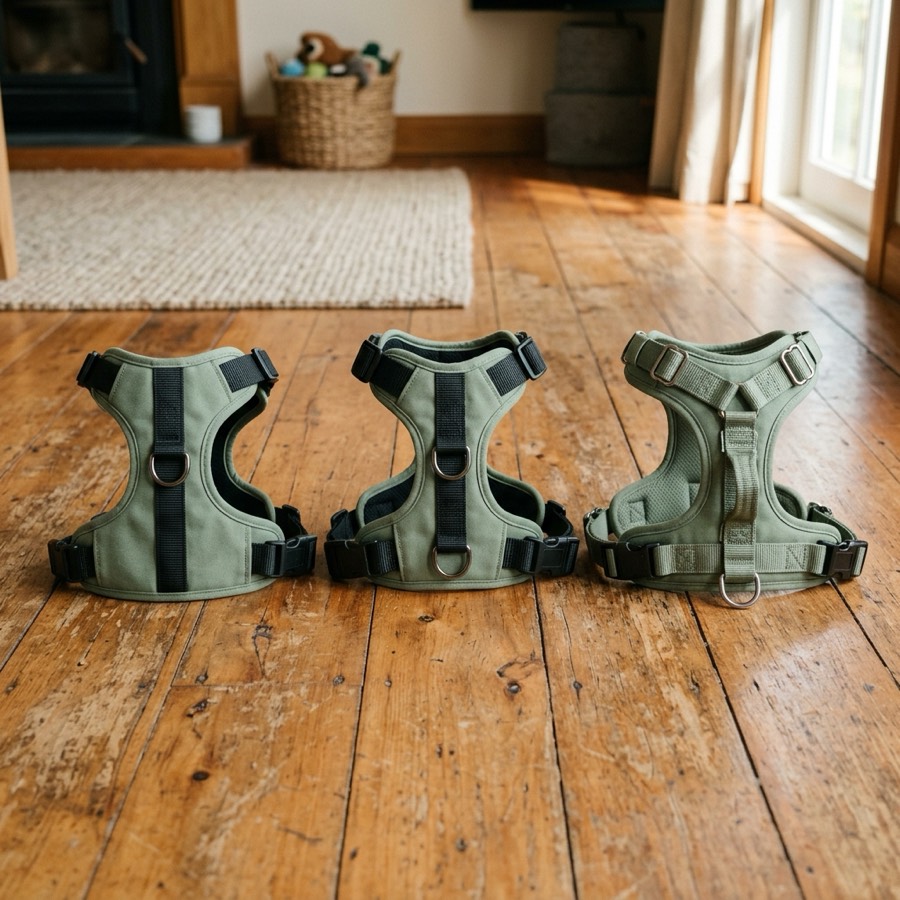
Front-clip harness — the everyday pick for pullers
The lead attaches at the chest, so when the dog pulls, they're gently turned back toward you instead of being able to drive forward. For most Kiwi owners with a dog that pulls, this is the best everyday harness. Pair it with reward-based loose-lead training — the gear helps, but training is what fixes pulling. See how to stop your dog pulling on the lead.
Head halter — most control, needs a gentle intro
A head halter sits over the muzzle and behind the ears, giving you control of the head (where the body follows). It offers the most steering for strong or large dogs. It is not a muzzle — the dog can still pant, drink and eat. Dogs usually dislike it at first, so introduce it slowly with treats over several sessions; never jerk the lead with a head halter.
"No-pull" harnesses — mostly front-clip
Most products marketed as "no-pull" are front-clip harnesses, sometimes with a tightening action. They can reduce pulling, but none replace training, and some tightening designs can be uncomfortable if poorly fitted. Look for padded, adjustable, front-clip designs and judge by fit, not marketing.
Fit matters more than type
A harness should sit snugly but let you slide two fingers under the straps. Check it doesn't rub under the front legs (a common sore spot), sit on the throat, or let the dog reverse out of it. Measure your dog's chest girth and check the brand's size chart — especially for deep-chested or barrel-chested breeds where a "medium" varies a lot.
NZ context: padded contact points and adjustable fit reduce rubbing on longer walks and tramping weekends; rinse and dry harnesses after beach and river swims so salt and sand don't irritate skin.
How to choose, quickly
- Calm walker / small dog: padded back-clip harness.
- Dog that pulls: front-clip harness + reward-based training.
- Strong/large puller, want most control: head halter, introduced gradually — or a front-clip plus a trainer's help.
- Want flexibility: a dual-clip harness.
Quick takeaways
- Back-clip = comfy for calm dogs; can encourage pulling in strong dogs.
- Front-clip = best everyday choice for pullers.
- Head halter = most control, gentle intro, not a muzzle.
- "No-pull" is usually just front-clip — judge by fit.
- Correct fit (two-finger rule, no rubbing) beats any label.
Shop related categories at PetMall
Looking for dog harnesses, leads and collars in New Zealand? Browse the PetMall category for current options and nationwide delivery.
-> Browse Dog Collars, Leads & Harnesses
Related reading
- Dog Leads, Harnesses & Collars Guide NZ
- How to Stop Your Dog Pulling on the Lead NZ
- Retractable vs Standard vs Long-Line Leads NZ
- Dog breeds in NZ
References
- American Veterinary Society of Animal Behavior (AVSAB), Position Statement on Humane Dog Training — lists no-pull harnesses among the humane management tools, and advises against prong, choke and electronic collars, checked 2026-07-24: https://avsab.org/wp-content/uploads/2021/08/AVSAB-Humane-Dog-Training-Position-Statement-2021.pdf
- RSPCA, Creating a Good Home For Your Dog — walking equipment and everyday welfare guidance, checked 2026-07-24: https://www.rspca.org.uk/adviceandwelfare/pets/dogs/environment
Important notice
*This guide provides general information for NZ pet owners. For a dog that lunges, reacts or is hard to control, work with a registered NZ vet or a qualified force-free trainer.*
Related guides
petmall.co.nz
Shop at PetMall
The products below are practical support items for your pet. PetMall ships across New Zealand.
- Leads & HarnessesComfort matters: padded contact points and adjustable fit help reduce rubbing on longer walks or tramping weekends.
- Dog FoodStart with food that matches your dog's life stage and activity level — and change brands slowly over 7–10 days.
- Dog TreatsTraining rewards and everyday treats — small, soft pieces work best for consistent reinforcement.
- Dog ToysA small rotation of chew, fetch, and puzzle toys usually works better than buying a large variety at once.
- Dog GroomingA gentle brush and the right shampoo make maintenance easier — especially for dogs that get muddy on walks.
- Flea & Worm TreatmentFor NZ conditions, look for protection that fits your routine (monthly vs longer-lasting) and your dog's weight range.