Cat Bed Types NZ: Flat Mats, Donut Beds, Caves, Hammocks and Heated Beds Compared
Which type of cat bed suits your NZ cat? Compare flat mats, bolster beds, igloo caves, window perches and heated options — what each does, who it suits, and what to consider for NZ winters.
Cats sleep between 12 and 16 hours a day. A bed that suits your cat's sleeping style — and your home's layout and climate — means your cat actually uses it rather than defaulting to the back of your couch. Here's what each main type offers for NZ homes.
Why bed type matters
Cats choose sleeping spots based on three things: warmth, security, and vantage point. An open mat offers visibility; a cave offers security. Get the wrong type for your cat's personality and you'll have an expensive cat bed being ignored while your cat sleeps on your clean laundry.
NZ climate note: Auckland winters are damp and cool but not extreme. South Island winters — especially Otago and Canterbury — can be genuinely cold. Heated or cave-style beds make a bigger difference in southerly climates.
The main types
1. Flat/mat beds
A cushioned rectangle or oval that sits on the floor, a shelf, or a cat tree platform.
Pros:
- Simple and easy to wash — most fit in a standard household washing machine
- Low entry and exit — suits kittens, senior cats, and any cat recovering from a vet visit
- Good for NZ summer: the flat design allows heat to dissipate; a breathable cover stops your cat overheating in an Auckland or Northland summer
Cons:
- Minimal warmth retention — not ideal as a sole bed for South Island winters
- No sense of enclosure — nervous or anxious cats usually prefer more shelter
Best for: Confident cats, warm-climate NZ households, and as a secondary surface on a cat tree or shelf.
2. Donut/bolster beds
A round or oval bed with padded raised sides — sometimes called a "nest" or "bolster" bed.
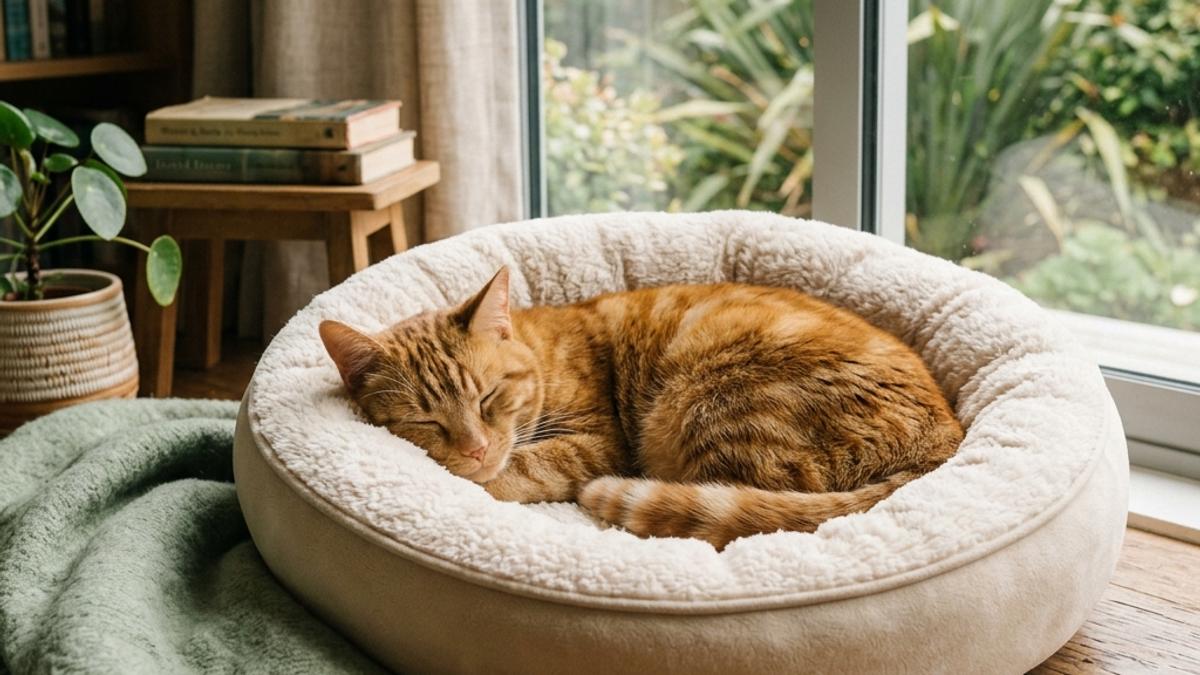
Pros:
- The raised edges give a physical sense of enclosure without being fully covered — many cats curl against the sides while still being able to monitor the room
- Good heat retention: the bowl shape traps warmth around the cat's body
- Deeply popular with cats who like to tuck their chin over an edge while sleeping (a very common posture for cats that feel secure)
Cons:
- Large breeds (Maine Coon, Ragdoll, British Shorthair) need a generously sized donut — standard sizes may feel cramped for a cat over 6 kg
- Still relatively open, so provides less security than a cave for very anxious cats
Best for: Most cats, especially those that like to feel "hugged" while retaining some visual access to the room. One of the most universally accepted bed types.
3. Cave/igloo beds
A fully enclosed bed with a small entrance opening — sometimes called an igloo, cave, or hooded bed.
Pros:
- Maximum warmth: body heat is retained inside the enclosed space
- High sense of security: cats that sleep in a curled position, hide when stressed, or seek out small tucked-away spaces usually take to cave beds readily
- Ideal for NZ winter — particularly for thin-coated or low-body-fat breeds like Sphynx, Rex cats, Oriental Shorthairs, or senior cats
Cons:
- Not suitable for cats that like to stretch out or keep an eye on the room while sleeping
- Large breeds often won't fit: a Maine Coon at 9 kg needs a big cave, and most standard sizes are designed for cats up to 5–6 kg
- The enclosed space traps dander and needs washing more often
Best for: Anxious cats, cold-climate NZ homes, thin-coated breeds, and senior cats that feel the cold.
4. Hammock beds
A suspended fabric bed — often mounted on a radiator, a cat tree level, or hung between brackets on a wall.
Pros:
- Radiator hammocks are popular in NZ winters — the gentle warmth from a wall-mounted heater or oil column radiator rises through the mesh, creating a warm sleep surface without the cost of an electric heated bed
- Elevated position satisfies the cat's instinct for vantage points — many cats prefer sleeping where they can observe the room
- Breathable mesh-style hammocks are cool enough for summer use too
Cons:
- Some cats refuse the swaying motion — introduce gradually by holding it stable initially
- Radiator-mounted types depend on having the right radiator style (flat panel or oil column)
- Not suitable for large or heavy cats unless the mounting is specifically rated for their weight
Best for: Cats that seek elevated sleeping spots. Radiator hammocks are particularly practical and energy-efficient for NZ winters.
5. Heated beds
Cat-specific heated beds come in two main varieties:
- Microwaveable heat pads: A pad with a thermal insert you microwave for 8–10 minutes; stays warm for several hours. No ongoing electricity cost. Good for occasional use or travel.
- Electric heated beds (low-voltage): A mat or bed with a built-in element that warms to around 38°C — just below normal cat body temperature. Draws very low wattage (typically 4–10 W). Designed for safe continuous use.
Who needs a heated bed:
- Senior cats (7 years+) — joints ache in cold and damp; warmth genuinely helps
- Cats recovering from illness or surgery — ask your vet for guidance
- Very lean breeds (Sphynx, Devon Rex, Cornish Rex, Oriental Shorthair) that have minimal insulating coat or body fat
Safety note: Only use beds designed for cats. Human heating pads operate at temperatures unsafe for prolonged pet contact. Look for products with auto-off features or temperature limits designed for animals.
NZ availability: Heated cat pads are available from most NZ pet stores and online. Expect to pay $30–$80 NZD for a microwaveable pad and $60–$150 NZD for an electric mat.
Best for: Senior cats, post-surgical recovery, thin-coated breeds, and South Island homes during winter.
6. Window perches / wall-mounted perches
A shelf or platform that mounts to a windowsill or wall, typically via suction cups or a bracket system.
Pros:
- Satisfies the cat's need for an elevated perch and a vantage point
- Allows indoor cats to watch native wildlife (birds, lizards) outside — relevant enrichment for NZ cats kept indoors under cat curfews
- Takes no floor space — useful in NZ apartments and townhouses
Cons:
- Suction-cup models need a smooth, clean window surface — dust and condensation (common in NZ winters) reduce adhesion; check regularly
- Bracket-mounted versions require wall anchoring — suitable for owned homes but not typical rentals
- Not warm in winter unless positioned above a heat source
Best for: Indoor cats in NZ homes with good window light, especially where floor space is limited.
How to get your cat to use a new bed
- Place it in a spot already used. If your cat sleeps on the couch corner or a particular shelf, put the new bed there.
- Add familiar scent. A worn t-shirt or the cat's existing blanket laid in the bed speeds up acceptance.
- Don't force it. Placing a cat in a new bed rarely works — let them discover it themselves.
- For cave beds: leave the entrance clearly visible and accessible; some cats need a few days to investigate before entering.
Quick picks for NZ conditions
| Condition | Recommended type |
|---|---|
| Auckland/Northland (mild winter) | Donut or flat mat |
| South Island / cold climate | Cave, heated mat, or radiator hammock |
| Senior cat | Heated electric mat or cave |
| Anxious / shy cat | Cave/igloo |
| High-energy visual cat | Window perch or elevated hammock |
| Large breed (Maine Coon, Ragdoll) | Oversized donut — check max weight rating |
Related guides
- Indoor cat enrichment NZ
- Best first cat breeds NZ
- New kitten checklist NZ
- Cost of owning a cat NZ
- Cat curfew and keeping cats indoors NZ
---
References
- MPI Code of Welfare: Companion Cats: https://www.mpi.govt.nz/animals/animal-welfare/codes/all-animal-welfare-codes/code-of-welfare-companion-cats/
- Merck Veterinary Manual, Osteoarthritis in Dogs and Cats — one of the most common chronic painful conditions in cats, frequently under-recognised because cats mask pain, checked 2026-08-03: https://www.merckvetmanual.com/musculoskeletal-system/osteoarthritis-in-dogs-and-cats/osteoarthritis-in-dogs-and-cats
---
*This guide provides general product information for NZ cat owners. For senior cats with joint or health conditions, discuss sleeping arrangements with a registered New Zealand vet.*
Related guides
petmall.co.nz
Shop at PetMall
The products below are practical support items for your pet. PetMall ships across New Zealand.
- Cat FoodStart with food that matches your cat's life stage — change brands slowly over 7–10 days to avoid digestive upset.
- Cat LitterClumping or crystal, most cats prefer an unscented litter and a clean tray — one tray per cat plus one spare is the NZ rule of thumb.
- Cat TreatsGreat for bonding and training — keep treats under 10% of daily calories to protect your cat's waistline.
- Cat ToysA small rotation of toys (feather wand, puzzle feeder, and comfort toy) usually works better than buying many at once.
- Cat GroomingRegular brushing cuts hairballs and shedding — essential for long-haired breeds like Ragdolls and British Longhairs.
- Flea & Worm TreatmentFor NZ conditions, choose protection that fits your cat's weight and lifestyle (indoor vs outdoor) and keep it regular.