Bird Toy Types NZ: Foraging, Chew, Bell and Puzzle Toys for Pet Birds Explained
Which toys do pet birds actually need? Compare foraging toys, chew toys, swings, bells, foot toys and puzzle feeders for NZ budgies, cockatiels and parrots — what each provides and what to avoid.
Pet birds are intelligent animals that need mental and physical stimulation every day. Without adequate enrichment, parrots and parakeets in particular develop behavioural problems — feather plucking, screaming, and biting are most often signs of boredom or under-stimulation, not personality defects. Toys are a primary tool for addressing this. Here's what each type provides and how to use them effectively.
Why toy type matters
Different toys serve different functions. A swing provides movement and balance practice. A foraging toy provides problem-solving and food motivation. A chew toy provides beak exercise and satisfies the natural urge to destroy. Providing variety across types — and rotating toys regularly — is more enriching than providing many toys of the same type.
The specific species matters too: a budgerigar's beak strength and toy preferences differ significantly from an African grey parrot's. Size, material safety, and complexity should all match your bird's species and individual personality.
The main toy types
1. Foraging toys
Toys that require the bird to work to access food — pulling apart materials, turning wheels, opening compartments, or digging through a substrate to find hidden treats.
What they provide: Foraging behaviour is a core natural activity for wild birds — they spend 4–6 hours a day finding food. A pet bird fed from a bowl has no foraging outlet. Foraging toys partially substitute for this, providing both mental engagement and time-occupation.
Types:
- Compartment foragers: Lidded cups, drawers, or puzzle boxes where treats are hidden
- Foraging skewers and kabobs: Natural materials (palm bark, bamboo tubes, vine balls) threaded with food
- Shreddable foragers: Paper, palm leaves, or bamboo tubes stuffed with food that must be torn apart to access
- Puzzle feeders: Multi-step toys requiring several actions to reach a treat
Best for: All species; critical for medium to large parrots (African greys, amazons, cockatoos, eclectus) that need high cognitive engagement. Also suitable for cockatiels, budgies, and conures.
NZ tip: Foraging can be improvised with minimal cost — fold treats into newspaper, tuck pellets inside a paper cup, or hide seeds in a small cardboard box. Cardboard from cereal boxes or toilet rolls is safe for most birds to shred.
2. Chew toys
Items designed to be destroyed — typically made from natural materials including untreated wood, bamboo, palm, cork, leather (vegetable-tanned), and certain natural fibres.
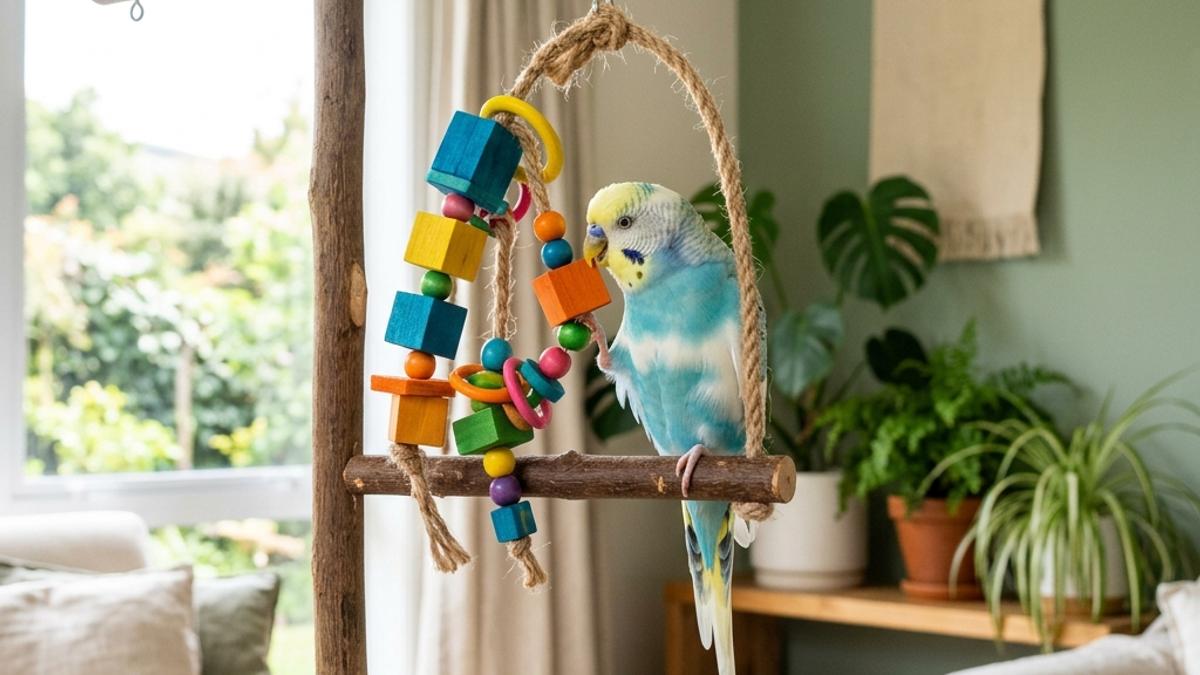
What they provide: Beak maintenance and the satisfaction of destruction. Birds' beaks grow continuously and self-wear against appropriate objects. Chewing also releases tension and provides occupation.
Types:
- Wood blocks and slices: Untreated softwoods (pine, balsa, cork) are most commonly used
- Bamboo tubes and shredders
- Palm leaf and natural fibre bundles
- Vegetable-tanned leather strips
Best for: Medium to large parrots (cockatoos, eclectus, amazons, macaws) that have significant beak strength. Cockatiels and budgies also chew, though they need smaller, softer materials. Canaries and finches rarely engage with heavy chew toys but may shred soft paper or natural fibre.
Safety note:
- Only use untreated wood — treated, painted, or stained wood can contain toxic compounds
- Avoid toys with thin chain or small wire loops that could catch toes
- Check NZ pet toys for country of origin — some imported toys (particularly those made cheaply without certification) may contain unsafe dyes or materials. Look for bird-safe certification or buy from specialist avian retailers.
3. Foot toys
Small handheld objects the bird can grip, toss, and manipulate with their feet — small enough for the bird to pick up and carry.
What they provide: Foot dexterity, coordination, and independent play without human interaction. Particularly engaging for species that are "foot-feeder" types — those that naturally hold food in one foot to eat.
Types: Small wooden blocks, cork pieces, wooden rings, small metal bells (large enough not to be swallowed), small wooden spoons, and natural seed pods.
Best for: Medium parrots (conures, caiques, cockatiels, quakers) and larger species. Caiques are particularly known for their love of foot toys. Less relevant for budgies, canaries, and finches, which don't grip objects with their feet in the same way.
4. Swings and motion toys
Perches or platforms that swing, spin, or move when the bird interacts with them.
What they provide: Balance training, vestibular stimulation, and a preferred resting/napping spot for many birds. A swing in a familiar position often becomes a favourite resting spot, not just an active play tool.
Types:
- Classic rope swings: Knotted cotton rope or sisal
- Wooden platform swings
- Spinning tops: Mounted toys that rotate
- Bungee perches: Elastic perches that bounce when the bird lands
NZ climate note: Swings and bungee perches positioned near a window where birds watch native birds (waxeyes, sparrows, starlings) outside can provide significant visual enrichment for indoor NZ birds. Use as a combination swing/window-watching perch.
Safety note: Rope toys must use unravelled-safe fibre — cotton and sisal are acceptable; synthetic fibres can fray into strands that can entangle toes. Inspect rope toys weekly for fraying and replace when threads are loose enough to wrap around a toe.
5. Bell toys
Toys with attached metal bells that ring when touched or moved.
What they provide: Auditory stimulation and interactive play. Many birds become fascinated with bells and will ring them repeatedly. This provides active engagement, though some birds become obsessive about bells to the exclusion of other enrichment — in this case, rotating bells in and out of the cage prevents over-fixation.
Safety note: Bell size matters — the bell must be large enough that the bird cannot fit its beak inside. A bird that fits its beak into a bell can get the lower mandible trapped. This is a genuine risk with small cheap bells; use appropriately-sized, solidly-constructed bells only. Avoid bells with clappers (the internal ball) small enough to be detached and swallowed.
Best for: Budgies, cockatiels, and small to medium conures often respond enthusiastically. Most species appreciate bells to some degree.
6. Puzzle and treat-dispensing toys
Multi-step or interactive toys where the bird must solve a problem to access a reward.
What they provide: Cognitive challenge, extended engagement, and a goal-reward loop that's important for intelligent species.
Types:
- Sliding bead/drawer puzzles: Requires moving parts to access a hidden compartment
- Rotary disc puzzles
- Cups-within-cups: Nesting cups where treats are buried under several layers
- Screwable caps: Bottles or containers where the cap must be unscrewed to access food
Difficulty levels: Start with simpler versions and increase complexity as the bird demonstrates competence. A bird that can't solve a puzzle and doesn't know where the reward is will give up and disengage.
Best for: Highly intelligent species — African greys, eclectus, Amazon parrots, cockatoos, and caiques. Also suitable for clever cockatiels and budgies with appropriate simpler versions.
How to introduce new toys safely
- Don't put a new toy directly in the cage. Many birds are initially frightened by new objects inside their territory. Instead, place the toy near the cage for a few days first.
- Show the bird the toy works — interact with it yourself, making it move or ring, while the bird watches from the safety of the cage.
- Move it progressively closer until the bird shows curiosity rather than alarm, then place it in the cage.
- Rotate toys regularly — removing and reintroducing toys (every 2–3 weeks) maintains novelty. A toy that's been in the cage for months becomes invisible.
How many toys and how to arrange them
Most cages should contain 3–5 toys simultaneously — enough for variety, not so many the cage is overcrowded and movement is restricted. Ensure toys don't block the bird's ability to move freely between perches.
Position:
- Foraging toys near food area or mid-cage where the bird already spends time
- Swings at a comfortable height — birds prefer to sleep at the highest point
- Foot toys on a flat platform or at the cage bottom for tossing
- Bell/chew toys hanging from the cage top
Toy safety checklist
- [ ] No toxic materials (treated wood, galvanised metal, unsafe dyes)
- [ ] No parts small enough to swallow
- [ ] No tight loops or rings that could trap a foot or beak
- [ ] Rope toys inspected weekly for dangerous fraying
- [ ] Appropriate size for the species
Related guides
- Bird cage setup guide NZ
- Budgie and cockatiel beginner setup NZ
- Bird food types NZ
- Bird hub — all NZ bird guides
---
References
- Merck Veterinary Manual, Management of Pet Birds — housing, cage furnishing, enrichment and social management of companion psittacines, checked 2026-07-28: https://www.merckvetmanual.com/exotic-and-laboratory-animals/pet-birds/management-of-pet-birds
- RSPCA Knowledgebase, What kind of enclosure does my bird need? — enclosure size, perching and enrichment requirements for companion birds, checked 2026-07-28: https://kb.rspca.org.au/categories/companion-animals/other-pets/birds/what-kind-of-enclosure-does-my-bird-need
---
*This guide provides general enrichment information for NZ pet bird owners. Individual species and individual birds vary significantly — observe your bird's responses and adjust accordingly.*
Related guides
petmall.co.nz
Shop at PetMall
The products below are practical support items for your pet. PetMall ships across New Zealand.
- Bird Food & TreatsA quality seed or pellet base plus fresh veg keeps cage birds healthier than seed alone.
- Bird ToysForaging and chew toys prevent boredom — rotate a few rather than crowding the cage all at once.
- Bird SuppliesA well-sized cage with the right perch variety helps long-term comfort — aim for space to fully stretch wings.