Bird Food Types NZ: Seed Mix, Pellets and Fresh Food — Which Should Your Pet Bird Eat?
Seed mix, pellets, or fresh food for your NZ pet bird? Understanding each type helps you give your budgie, cockatiel, parrot or lovebird a balanced, healthy diet.
The type of food you feed your pet bird has a direct impact on their long-term health. Many NZ bird owners default to seed mix — it's what pet shops prominently stock and what birds enthusiastically eat. But seed-only diets are widely recognised by avian vets as nutritionally incomplete for most pet bird species. Here's what you need to know about each food type and how to feed a healthy diet.
Why bird food type matters more than it might seem
Birds that eat only seed mix often develop nutritional deficiencies over time — particularly Vitamin A, calcium, and protein deficiencies. These deficiencies contribute to:
- Feather problems (abnormal feather growth, plucking, poor condition)
- Respiratory issues
- Liver disease
- Reduced lifespan
A bird that eats enthusiastically is not necessarily eating well. Seeds are high in fat and carbohydrate and many birds will preferentially eat their favourites and leave the rest — which makes a "balanced seed mix" less balanced in practice than it looks in the bag.
The three main food types
1. Seed mixes
Seed mixes are blends of dried seeds — typically millet, canary seed, sunflower seeds, oats, and other grains depending on the species blend.
What they're good for:
- Foraging enrichment — picking through seeds mimics natural feeding behaviour
- Calorie-dense fuel for active birds
- Highly palatable — birds almost always eat them readily
What they lack:
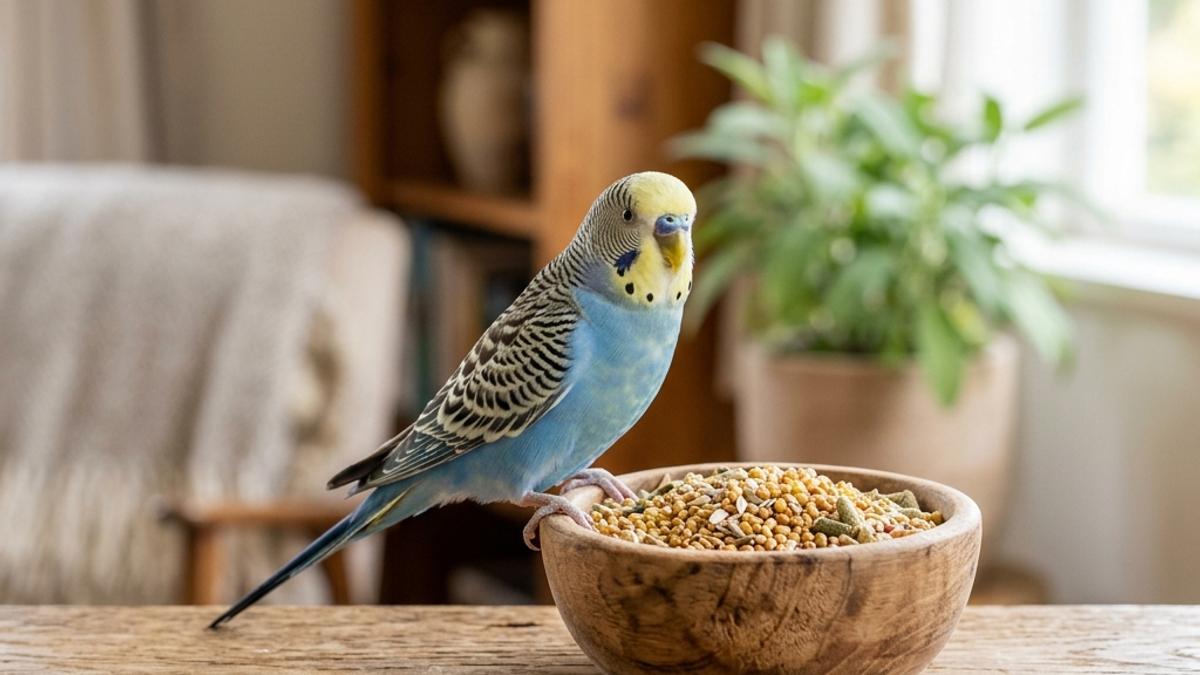
- Most seed mixes are high in fat and low in protein, vitamins, and minerals
- Sunflower seeds in particular are extremely high in fat; budgies and cockatiels that eat large amounts of sunflower become overweight
- Vitamin A is typically deficient in seed-based diets (Vitamin A is found in orange and dark green vegetables, not seeds)
- Seed mixes are not a complete diet for budgies, cockatiels, lovebirds, or parrots
How to use them correctly:
- Feed seed mix as a component of the diet, not the entire diet
- Control portions — don't fill the bowl and leave it topped up all day
- Pair with pellets and fresh food to cover nutritional gaps
2. Formulated pellets
Pellets are compressed, nutritionally complete biscuits formulated to meet the full dietary requirements of specific bird species. They're recommended by most avian vets in NZ as the dietary foundation for pet birds.
Benefits:
- Nutritionally balanced — designed to prevent the deficiencies that seed-only diets cause
- Eliminates the "cherry-picking" problem — since each pellet has the same composition, birds can't eat only their favourites
- Available in species-specific formulations (budgie/small parrot, cockatiel, large parrot, etc.)
- Long shelf life; less spoilage than fresh food
Limitations:
- Many birds — particularly those that grew up eating only seeds — initially refuse pellets. Transitioning takes patience (sometimes weeks to months).
- Less behavioural enrichment than foraging through seed
- Quality and formulation vary between brands; choose reputable, avian-vet-endorsed formulations
Species notes:
- Budgies and cockatiels: Pellets should ideally form 40–70% of the total diet with the remainder fresh food and a small amount of seed
- Lorikeets: Lorikeets are nectarivores and need a specialised nectar-based formulated diet — standard seed or parrot pellets are not appropriate for them. See our budgie and cockatiel beginner setup guide for more species context.
- Parrots (larger species): Pellets + fresh food + limited seed is the widely recommended approach
NZ availability: Several avian-vet-recommended pellet brands are available through NZ pet shops and online specialty suppliers. Ask your avian vet which brand they recommend for your bird's species.
3. Fresh food (fruits and vegetables)
Fresh food — vegetables, fruits, leafy greens, and some grains — is an important part of the diet for most pet bird species and provides nutrients not easily delivered by pellets or seed.
Particularly valuable foods:
- Dark leafy greens (kale, silverbeet, spinach in moderation, bok choy, watercress): High in Vitamin A, calcium, and iron. These are among the most nutritionally valuable foods for most pet birds.
- Orange and yellow vegetables (carrot, kumara/sweet potato, pumpkin): High in beta-carotene (Vitamin A precursor) — especially important for species prone to Vitamin A deficiency
- Capsicum (peppers): High in Vitamin C and Vitamin A; most birds enjoy these
- Cooked legumes (lentils, chickpeas — unseasoned): Good protein source for larger parrots
Fresh foods to limit or avoid:
- Avocado — toxic to birds; do not feed under any circumstances
- Onion, garlic, leeks — toxic
- Chocolate — toxic
- High-sugar fruits (grapes, dried fruit) — in small amounts only; high sugar contributes to yeast overgrowth and obesity
- Caffeine — toxic (no coffee or tea)
NZ produce: Feijoa, passionfruit, and kiwifruit (gold or green) are all safe and well-received by many birds. NZ-grown silverbeet, kale, and capsicum from your garden or the supermarket are excellent choices.
Practical notes:
- Offer fresh food in a separate bowl from pellets/seed
- Remove uneaten fresh food within 2–3 hours — bacteria multiply quickly in warm NZ conditions, especially in summer
- Introduce new foods gradually — birds are often neophobic (fearful of new food) and may need to see you eat it first before accepting it
How to balance all three types
There's no single formula that applies to all species, but a general guide for budgies and cockatiels:
- 40–60% pellets (by volume consumed)
- 20–30% fresh vegetables and some fruit
- 10–20% seed mix (as foraging enrichment and palatability)
For larger parrots, avian veterinary guidance tends toward even higher fresh food proportions.
The exact balance matters less than having all three present and limiting seed to a supplemental role rather than the dietary foundation.
Water quality in NZ
Birds need fresh water daily. NZ tap water is generally safe, but in some regions with higher chlorination or hardness, filtered water may be preferred by sensitive birds. Change water at least daily — birds often contaminate their water bowl with food almost immediately.
Species-specific resources
Different bird species have different dietary needs:
- See our budgie and cockatiel beginner setup guide NZ for small companion bird basics
- See our bird cage setup guide NZ for housing that supports foraging enrichment
- Visit the birds hub for all bird breed and care content
Quick takeaways
- Seed-only diets are nutritionally incomplete for most pet birds — use seed as a supplement, not a foundation
- Pellets provide nutritional completeness; introduce them gradually if your bird resists
- Fresh dark leafy greens and orange/yellow vegetables address common Vitamin A and calcium deficiencies
- Avocado, onion, chocolate and caffeine are toxic — never feed these to any pet bird
- Remove fresh food within 2–3 hours in NZ's warm conditions to prevent bacterial growth
- Offer water fresh daily in a separate bowl
---
References
- Merck Veterinary Manual, Nutritional Diseases of Pet Birds — seed-only diets are suboptimal for psittacines because seeds are deficient in vitamin A, calcium and the amino acids lysine and methionine; birds pick out the tastier seeds and ignore pellets, so any change to a formulated diet must be gradual, checked 2026-07-28: https://www.merckvetmanual.com/exotic-and-laboratory-animals/pet-birds/nutritional-diseases-of-pet-birds
- RSPCA Knowledgebase, How should I care for my birds? — general welfare requirements for companion birds including diet, housing and social contact, checked 2026-07-28: https://kb.rspca.org.au/categories/companion-animals/other-pets/birds/how-should-i-care-for-my-birds
---
*This guide provides general nutrition information for NZ pet bird owners. For advice specific to your bird's species, health, or transitioning diet, consult a registered NZ avian or exotic vet.*
Related guides
petmall.co.nz
Shop at PetMall
The products below are practical support items for your pet. PetMall ships across New Zealand.
- Bird Food & TreatsA quality seed or pellet base plus fresh veg keeps cage birds healthier than seed alone.
- Bird ToysForaging and chew toys prevent boredom — rotate a few rather than crowding the cage all at once.
- Bird SuppliesA well-sized cage with the right perch variety helps long-term comfort — aim for space to fully stretch wings.