Budgie or Cockatiel Setup NZ: A Beginner Bird Owner Checklist
Budgie or cockatiel setup NZ guide for beginners: cage, perches, daily care, rental checks, enrichment and verified bird links.
The right budgie or cockatiel setup NZ beginners need is a safe, roomy indoor bird station with daily cleaning, fresh food and water, varied perches, enrichment, quiet sleep time and a realistic plan for noise, rent, heat and holidays. A bird is lower-space than a dog, but not low-responsibility.
Budgie or cockatiel: which beginner bird fits?
Start by comparing the actual profiles for Budgerigar and Cockatiel. Budgies are smaller, busy and social. Cockatiels are larger, often very people-focused and can be louder. Both need daily care, patient handling and a cage setup that supports movement, rest and natural behaviour.
If you are still choosing, read Beginner Pet Birds NZ first, then use this guide to set up the home. If you already know you want a budgie, keep Budgie Care NZ open alongside this checklist.
Quick setup checklist
| Setup area | What beginners should plan | NZ watch-out |
|---|---|---|
| Cage position | Bright room, away from kitchen fumes, draughts and direct all-day sun. | Auckland humidity and South Island cold mornings both need stable indoor placement. |
| Space | Choose the largest practical cage, not the smallest cage label that says "budgie". | Rentals and flatting rooms still need room for cleaning access. |
| Perches | Vary perch width and texture; avoid making every perch identical. | Keep droppings away from food and water stations. |
| Food and water | Fresh water daily; food dishes washed often; gradual diet changes. | Budget in NZD for quality food, greens, toys and replacement perches. |
| Enrichment | Foraging, safe chew items, toys rotated weekly and supervised out-of-cage time. | Keep windows, doors, fans and other pets managed. |
| Sleep | Predictable dark, quiet sleep routine. | Busy shared flats may be too noisy for a bird station in the lounge. |
| Rental consent | Ask before bringing a bird home. | Tenancy Services pet consent rules apply to pets, not only cats and dogs. |
1. Put the cage where daily life is calm
Birds are social, but they also need predictable rest. A good beginner setup puts the cage in a room where the bird can see household life without being trapped in constant noise.
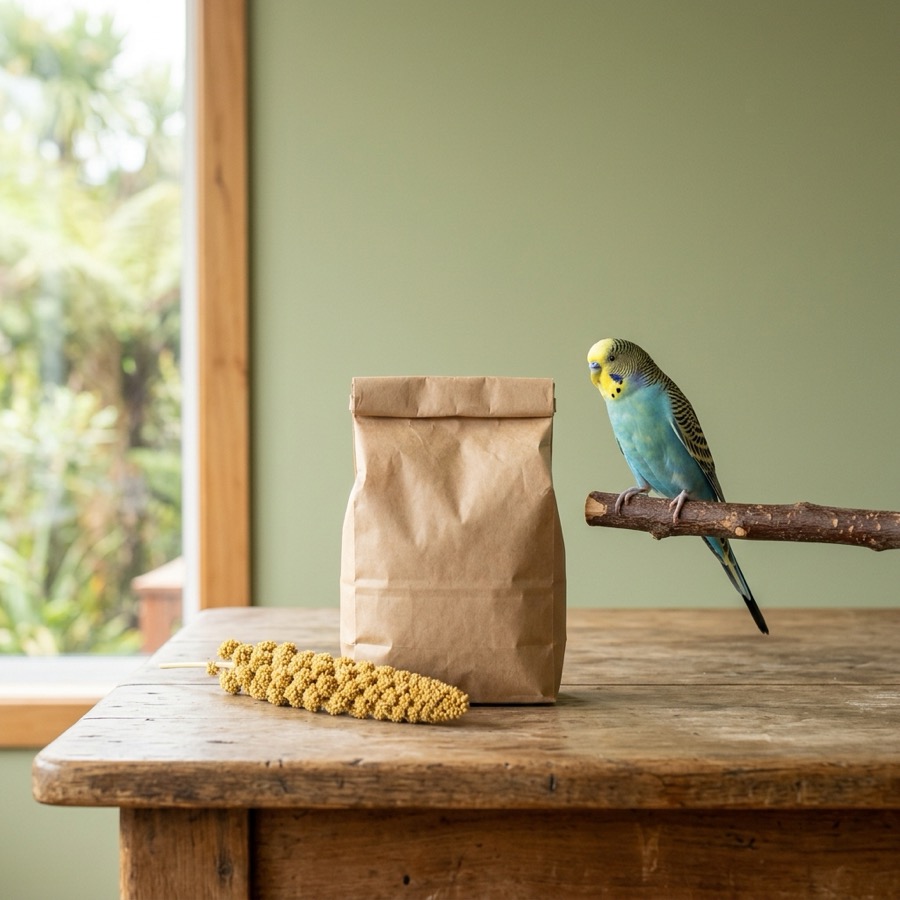
Avoid kitchens because fumes, steam and sudden temperature changes are risky for birds. Avoid direct all-day sun through glass, draughty ranch sliders and chilly laundry corners. In a Wellington flat, think about wind and heating. In a Northland or Auckland home, think about humidity and airflow.
2. Buy for flight, cleaning and access
For both budgies and cockatiels, the cage needs to allow movement, not just sitting. The Bird Cage Setup Guide NZ goes deeper on sizing and bar-spacing thinking, but the short version is: choose the largest practical cage you can keep clean and place safely.
Cleaning access matters. If trays are awkward, doors are tiny or the cage is wedged into a corner, the routine will fail. A beginner-friendly cage is one an adult can clean properly on a wet weeknight after work.
3. Set up perches and stations thoughtfully
Use multiple perches rather than one straight plastic line. Varying perch width gives feet a better range of positions. Keep food and water where droppings are less likely to fall into them, and place perches so the bird can move without being forced through clutter.
Do not overfill the cage on day one. Start with a few useful items, then watch how the bird moves. Add enrichment as you learn its preferences.
4. Make enrichment part of the setup, not an extra
SPCA New Zealand recommends foraging and environmental enrichment for companion birds. For beginners, this can be simple: safe shredding materials, food hidden in easy foraging spots, rotated toys and supervised out-of-cage time once the bird is settled and the room is safe.
The goal is not a cage full of colourful plastic. The goal is a bird that can chew, explore, rest, climb and choose. That is especially important if the bird will be indoors full-time in an apartment or townhouse.
5. Keep the starter kit boring and useful
Bird starter kits can tempt new owners into buying a lot of small, mismatched gear. A better beginner setup is boring but workable: a safe cage, several sensible perches, easy-clean food and water dishes, a travel carrier, cleaning cloths, spare paper or cage liners, a few chewable enrichment items and a place to store food away from damp.
Skip anything that makes daily care harder. Fancy covers, awkward feeders, tiny novelty cages and toys with loose threads are not worth it. If a perch, dish or toy cannot be cleaned or checked easily, it will become a problem on a busy weeknight.
6. Think about noise before the bird arrives
Budgies and cockatiels are small, but they are not silent. Morning calling, contact calls and flock-style chatter are normal bird behaviour. In a standalone house this may be fine; in a thin-walled flat it may be the thing that annoys neighbours or flatmates.
Before you commit, test the room honestly. Where will the cage sit during online meetings, shift-work sleep, study and school mornings? Can the bird have a predictable sleep routine without being parked beside the television every night? If the answer is no, wait or choose a quieter pet category.
7. Plan the first week
Bring the bird home when the household can be quiet. Keep handling minimal at first. Let the bird learn where food, water, perches and safe hiding spots are before asking it to step up or interact.
Children should observe more than handle in week one. Other pets should be separated. Windows, mirrors, doors, ceiling fans, hot pans and open toilets all need adult management before any flight time.
8. Sort rental and holiday care early
If you rent, request pet consent before buying the bird. A small bird can still create noise, mess and damage, so written approval protects everyone. Keep any conditions with your tenancy documents.
Also plan holidays. Birds need daily care. A weekend away still needs someone competent to refresh water, check food, clean obvious mess and notice if anything is wrong. Do not rely on "extra seed" and hope.
Key takeaways
- Budgies and cockatiels can be good beginner birds, but they need daily care and social attention.
- Link your decision to the real profiles: Budgerigar and Cockatiel.
- Cage placement, cleaning access, perches and enrichment matter more than a cute starter kit.
- NZ rentals need pet consent; do that before purchase.
- Budget in NZD for cage, food, perches, toys, cleaning gear, travel carrier and holiday care.
- For broader species fit, compare the Birds hub and Find a Breed.
Related reading
- Birds hub
- Budgerigar profile
- Cockatiel profile
- Budgie Care NZ
- Beginner Pet Birds NZ
- Bird Cage Setup Guide NZ
- Find a Breed
Sources
- PetMall breed/species profile data linked in this draft, checked 2026-06-04: https://wiki.petmall.co.nz/birds/breeds/budgerigar, https://wiki.petmall.co.nz/birds/breeds/cockatiel
- PetMall internal guide and hub pages linked in this draft, checked 2026-06-04.
- SPCA New Zealand: Caring for budgies - checked 2026-06-04.
- SPCA Kids Education: Animal Care for Birds - Environment - checked 2026-06-04.
- MPI: Bringing pets to NZ other than cats and dogs - checked 2026-06-04.
- MPI: Code of Welfare: Temporary Housing of Companion Animals - checked 2026-06-04.
- Tenancy Services: Requesting pet consent - checked 2026-06-04.
Related guides
petmall.co.nz
Shop at PetMall
The products below are practical support items for your pet. PetMall ships across New Zealand.
- Bird Food & TreatsA quality seed or pellet base plus fresh veg keeps cage birds healthier than seed alone.
- Bird ToysForaging and chew toys prevent boredom — rotate a few rather than crowding the cage all at once.
- Bird SuppliesA well-sized cage with the right perch variety helps long-term comfort — aim for space to fully stretch wings.