Leopard Gecko Care Guide NZ: Housing, Heating & Diet
Welcome to the definitive New Zealand guide for caring for Leopard Geckos (Eublepharis macularius)! Learn about housing, heating, diet, and legal...
Welcome to the definitive New Zealand guide for caring for Leopard Geckos (Eublepharis macularius)! These captivating, docile reptiles are renowned for their striking patterns, expressive 'smiles', and relatively straightforward care, making them an excellent choice for beginner reptile enthusiasts in Aotearoa. However, like all pets, they have specific needs that must be met to ensure a long, healthy, and happy life. This comprehensive guide, tailored for the unique conditions and regulations of New Zealand, will walk you through everything from initial setup and costs to diet, health, and legal considerations.
Are Leopard Geckos Legal in New Zealand?
This is often the first question for any exotic pet in NZ, and it's a crucial one. Leopard Geckos are *not* native to New Zealand. Like all non-native reptiles, their presence in the country is strictly controlled by the Ministry for Primary Industries (MPI) under the Biosecurity Act 1993.
The good news is: Leopard Geckos that are *already in New Zealand* are legal to own, buy, and sell within the country. They have been established in the pet trade here for many years.
The crucial caveat is: Importing new Leopard Geckos into New Zealand is virtually impossible for private individuals due to MPI's stringent biosecurity regulations designed to protect our unique native flora and fauna from exotic diseases and invasive species. This means the gene pool for Leopard Geckos in NZ is closed, and responsible breeding practices are vital to maintain healthy populations.
Key takeaway: If you're looking to get a Leopard Gecko, you'll need to source it from a reputable breeder or pet shop already operating within New Zealand. Never attempt to import a reptile, and always be aware of the origins of any animal you purchase. Releasing any non-native pet into the wild is illegal and incredibly damaging to our environment.
Understanding Your Leopard Gecko
Leopard Geckos are nocturnal, ground-dwelling lizards native to the arid and semi-arid grasslands and deserts of Afghanistan, Pakistan, north-west India, and parts of Iran. They are insectivores, meaning their diet consists solely of insects. They are known for their ability to store fat in their tails, which serves as an energy reserve – a healthy gecko will have a thick, plump tail. With proper care, Leopard Geckos can live for 15-20 years, sometimes even longer, so they are a significant long-term commitment.
Initial Setup: What You'll Need & Estimated Costs (NZD)
Setting up a suitable habitat for your Leopard Gecko requires a one-off initial investment. While costs can vary, here's an estimate for essential items in New Zealand dollars:
- Enclosure (Terrarium): A 40-gallon breeder tank (approx. 90x45x45cm) is ideal for an adult. Expect to pay $250 - $500+ for a good quality glass terrarium with a secure mesh lid. Second-hand options can be cheaper but ensure they are clean and secure.
- Heating Pad (Under Tank Heater - UTH): Essential for belly heat. $50 - $100.
- Deep Heat Projector (DHP) or Ceramic Heat Emitter (CHE): For ambient heat and basking spot. $60 - $120 (bulb only).
- Dome Fixture for DHP/CHE: $40 - $80.
- Thermostat: Absolutely non-negotiable for safety and temperature regulation. A good quality digital thermostat is $80 - $150.
- Digital Thermometers/Hygrometers (2-3): To monitor hot spot, cool side, and ambient temperatures/humidity. $30 - $60.
- Substrate: Paper towel or slate tiles for initial setup. $10 - $30.
- Hides (3 minimum): Warm, cool, and moist. $50 - $150 (can be DIY with plastic containers).
- Water Dish: Shallow, sturdy. $10 - $25.
- Food Dish (for mealworms): $5 - $15.
- Calcium Powder (without D3): $15 - $30.
- Calcium Powder (with D3): $15 - $30.
- Multivitamin Powder: $20 - $40.
- Live Feeder Insects: Initial supply. $20 - $50.
- Optional UVB Lighting: Small T5 fixture and bulb. $80 - $150.
- Decor (branches, artificial plants): $30 - $100+.
Total Estimated Initial Setup Cost: $800 - $1,700+ NZD (excluding the gecko itself, which can range from $100 - $400+ depending on morph and age).
Housing Your Leopard Gecko
Creating the right environment is paramount for your gecko's well-being. Think about replicating their natural arid environment with appropriate temperature gradients and hiding spots.
Enclosure Size & Type
- Minimum Size: For an adult Leopard Gecko, a minimum of a 40-gallon breeder tank (approximately 90cm long x 45cm deep x 45cm high) is recommended. Larger is always better, especially for active individuals. Juveniles can start in smaller enclosures (e.g., 20-gallon long) but will quickly outgrow them.
- Type: A glass terrarium with a secure, well-ventilated mesh top is ideal. Avoid tanks that are too tall as Leopard Geckos are terrestrial and don't climb extensively. The mesh lid is crucial for ventilation and to support heating/lighting fixtures.
Substrate
Choosing the right substrate is critical to prevent impaction and maintain hygiene.
- Safe Options (Especially for Beginners/Juveniles):
- Paper Towel: Excellent for hygiene, easy to clean, and eliminates impaction risk. Ideal for quarantine, juveniles, or sick geckos.
- Non-Adhesive Shelf Liner: Easy to clean, reusable, and comes in various patterns. Ensure it's not textured in a way that could catch claws.
- Slate Tile/Ceramic Tile: Great for heat retention, easy to clean, and provides a natural feel. Ensure tiles are smooth and don't have sharp edges. You can place a UTH underneath.
- Advanced Options (Use with Caution & Experience):
- Arid Substrate Mixes: A 70/30 mix of organic topsoil (no fertilisers/pesticides) and play sand (not calcium sand) or coco fibre can be used by experienced keepers to create a more naturalistic, bioactive setup. This requires careful monitoring of humidity and cleanliness. *Never use loose substrate with juveniles or geckos under 6 months old.*
- Substrates to AVOID:
- Loose Sand (especially calcium sand): High risk of impaction if ingested, and calcium sand can cause digestive blockages. It's often marketed for reptiles but is generally unsafe.
- Walnut Shells/Crushed Corn Cob: Abrasive and can cause impaction.
- Pine/Cedar Shavings: Contain aromatic oils harmful to reptiles.
Hides & Enrichment
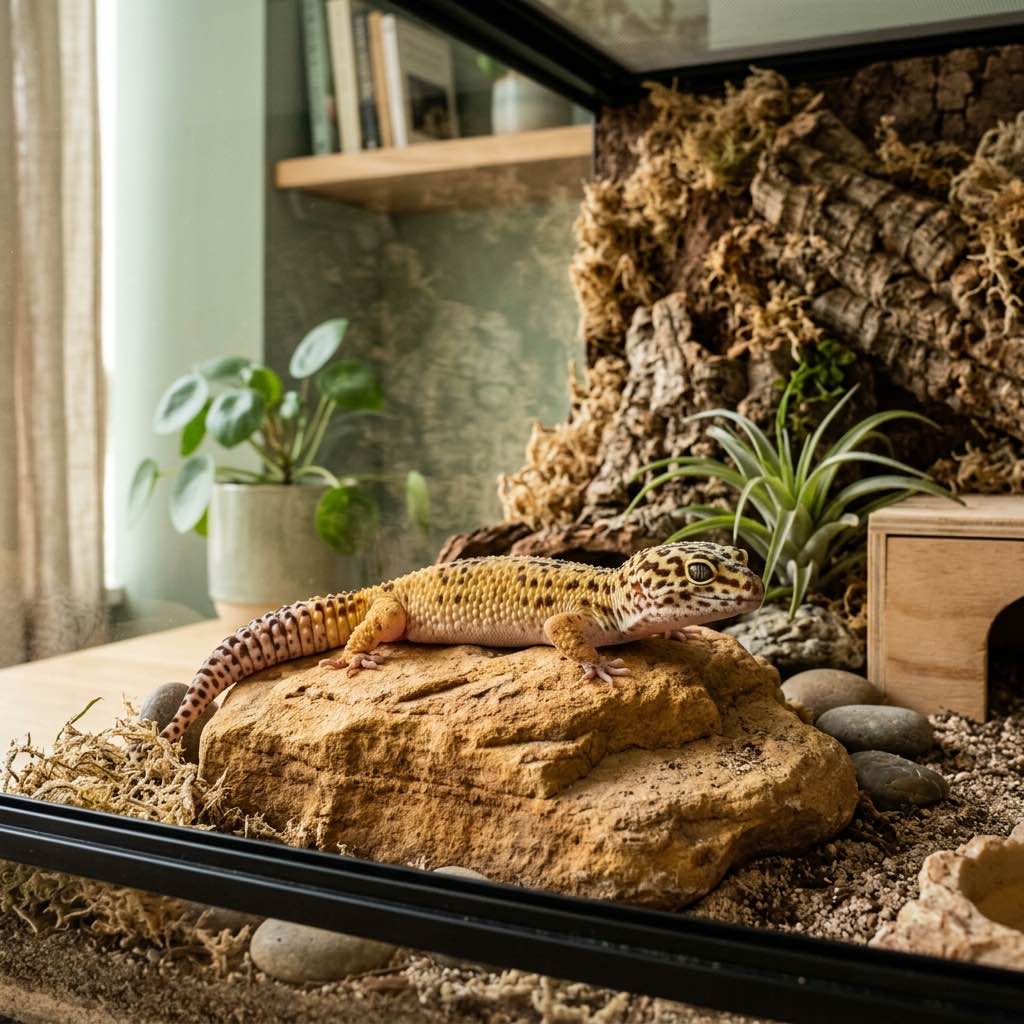
Leopard Geckos are crepuscular/nocturnal and need secure places to hide and feel safe. Provide at least three distinct hides:
- Warm Hide: Placed over the under-tank heater on the warm side. This allows them to digest food properly.
- Cool Hide: Placed on the cool side of the enclosure, offering a retreat from the heat.
- Moist Hide: Crucial for shedding. This can be a plastic container with a small entrance, filled with damp sphagnum moss, coco fibre, or paper towel. Keep it consistently moist but not soaking wet. This helps prevent stuck shed, especially on toes and eyes.
Enrichment: Add branches, cork bark, smooth rocks (securely placed to prevent tipping), and artificial plants (ensure they are reptile-safe and cleaned regularly) to provide climbing opportunities, visual barriers, and mental stimulation. Rearranging decor occasionally can also offer enrichment.
Water Dish
A shallow, sturdy water dish should be available at all times on the cool side of the enclosure. Clean it daily and refill with fresh, dechlorinated water. Leopard Geckos often drink standing water, especially after shedding.
Heating & Lighting
Temperature is critical for Leopard Geckos as they are ectotherms (cold-blooded) and rely on external heat sources to regulate their body temperature and digest food.
Temperature Gradient
Your enclosure needs a distinct temperature gradient:
- Warm Side (Basking Spot/Belly Heat): 30-32°C
- Cool Side: 24-26°C
- Night-time Ambient Temperature: Should not drop below 18-20°C.
Heating Sources
- Under-Tank Heater (UTH): This is the primary source of belly heat, essential for digestion. Place it under one end of the terrarium, covering about 1/3 to 1/2 of the tank floor. ALWAYS connect your UTH to a thermostat to prevent overheating and burns. A simple on/off thermostat is suitable for UTHs.
- Deep Heat Projector (DHP) or Ceramic Heat Emitter (CHE): These provide ambient heat without emitting visible light, making them ideal for night-time heating or boosting daytime ambient temperatures. DHPs are generally preferred as they penetrate tissues more effectively, mimicking natural infrared-A and B radiation. Place it in a dome fixture over the warm side. ALWAYS connect to a dimming or pulse-proportional thermostat for precise control.
NEVER use heat rocks. They are notorious for malfunctioning and causing severe burns to reptiles.
Monitoring Temperatures
Accurate temperature monitoring is non-negotiable. Use digital thermometers with probes to measure the surface temperature of the hot spot (inside the warm hide) and the ambient air temperature on both the warm and cool sides. Avoid stick-on analogue thermometers as they are often inaccurate.
NZ Climate Considerations for Heating
- South Island Winters: Can be very cold. You might need higher wattage DHPs/CHEs or even supplementary room heating to maintain adequate night-time ambient temperatures, especially in uninsulated homes.
- Auckland & North Island Humidity: While Leopard Geckos prefer arid conditions, Auckland's humidity can be higher. Ensure good ventilation in the enclosure to prevent stagnant air and potential mould growth, which can lead to respiratory issues. Monitor humidity levels with a hygrometer; aim for 30-40% ambient humidity, with the moist hide providing a localised higher humidity spot (70-80%).
- NZ Summer Heatwaves: During hot New Zealand summers, particularly in areas like Hawke's Bay or Canterbury, enclosure temperatures can rise significantly. You may need to turn off heating elements during the day, use cooling fans (not blowing directly on the gecko), or move the enclosure to a cooler room to prevent overheating. Overheating can be fatal.
Lighting
- Day/Night Cycle: Provide a consistent 12-14 hour light cycle during the day and 10-12 hours of complete darkness at night. A simple LED strip light can be used for ambient light and viewing, but it's not a primary heat source.
- UVB Lighting (Optional but Recommended): While Leopard Geckos are nocturnal, studies suggest they do benefit from low-level UVB exposure. This aids in natural D3 synthesis, strengthening bones and overall health. A low-output T5 UVB bulb (e.g., Arcadia ShadeDweller or Zoo Med T5 5.0) covering about 1/2 to 2/3 of the enclosure, on the same timer as your ambient light, is beneficial. Ensure there are shaded areas for the gecko to retreat from the light.
Diet & Nutrition
Leopard Geckos are insectivores, and their diet should consist solely of live feeder insects. Variety is key to ensure a balanced nutritional intake.
Staple Feeder Insects
- Crickets: Widely available, good staple.
- Mealworms: Easy to keep, readily eaten by most geckos.
- Black Soldier Fly Larvae (BSFL / CalciWorms): Excellent calcium-to-phosphorus ratio, very nutritious.
- Dubia Roaches: Highly nutritious, easy to keep, but availability in NZ can be limited due to import restrictions on new species. If you find a supplier, ensure they are legally bred within NZ.
Occasional Treats
- Waxworms: High in fat, offer sparingly (e.g., once a week or as a treat).
- Silkworms: Very nutritious, but can be harder to source and more expensive.
Feeding Schedule
- Juveniles (under 6 months): Feed daily or every other day, offering 5-7 appropriately sized insects per feeding. Insects should be no longer than the distance between your gecko's eyes.
- Adults (over 12 months): Feed 2-3 times a week, offering 6-10 appropriately sized insects per feeding.
Gut Loading & Supplementation
This is arguably the most critical aspect of Leopard Gecko nutrition.
- Gut Loading: Always feed your feeder insects a nutritious diet (e.g., fresh vegetables like carrots, leafy greens, specialised gut-loading diets) for at least 24-48 hours before feeding them to your gecko. This ensures the gecko receives maximum nutrition.
- Calcium without D3: Keep a small, shallow dish of pure calcium powder (without D3) in the enclosure at all times. Your gecko will self-regulate its calcium intake.
- Calcium with D3: Dust feeder insects with a calcium supplement containing D3 2-3 times a week. If using UVB, you might reduce D3 supplementation slightly, but it's still generally recommended.
- Multivitamin: Dust feeder insects with a high-quality reptile multivitamin (containing essential vitamins and trace minerals) once a week.
Important: Never feed wild-caught insects, as they may carry parasites or pesticides. Avoid feeding pinky mice, as they are too high in fat and can cause health issues.
Handling Your Leopard Gecko
Leopard Geckos are generally docile and tolerate handling well once accustomed to it. However, they are not a pet for constant handling.
- Start Slowly: Allow your new gecko several days to a week to settle into its new home before attempting handling.
- Gentle Approach: Approach slowly and calmly. Scoop them up gently from underneath, supporting their entire body. Avoid grabbing them from above, which can trigger a predator response.
- Support: Always support their body fully. They don't have sticky pads like some geckos, so they can't cling.
- Short Sessions: Keep handling sessions short (5-10 minutes) initially, gradually increasing as your gecko becomes more comfortable.
- Tail Drop: Leopard Geckos can drop their tails as a defence mechanism if startled or grabbed by the tail. While it will regrow, it will look different and deplete their fat reserves. Never grab a gecko by its tail.
- Hygiene: Always wash your hands before and after handling any reptile to prevent the spread of bacteria like Salmonella.
Health & Common Ailments
Regular observation of your gecko's behaviour, appetite, and appearance is key to early detection of health issues.
Shedding (Ecdysis)
Leopard Geckos shed their skin regularly as they grow. Juveniles shed more frequently than adults. Signs include dull skin, milky eyes, and reduced appetite. The moist hide is crucial during this time. They usually eat their shed skin, which is normal. If you notice stuck shed, especially around the toes or eyes, gently increase humidity in the moist hide or give a shallow, lukewarm bath (supervised) to help loosen it. Persistent stuck shed can lead to constriction and loss of digits.
Metabolic Bone Disease (MBD)
This is a common and often fatal disease caused by insufficient calcium, vitamin D3, or an improper calcium-to-phosphorus ratio in the diet. Symptoms include:
- Weak, rubbery bones
- Shaking or tremors
- Lethargy
- Swollen limbs or jaw
- Difficulty walking or lifting themselves
Prevention is key: Ensure proper gut loading, correct calcium and D3 supplementation, and appropriate UVB lighting (if used).
Impaction
Occurs when a gecko ingests indigestible material (like unsafe substrate) or overly large prey, leading to a blockage in the digestive tract. Symptoms include lethargy, loss of appetite, straining to defecate, and a hard lump in the belly. Prevention: Use safe substrates and appropriately sized feeder insects.
Parasites
Leopard Geckos can suffer from internal (e.g., worms, protozoa) or external (e.g., mites) parasites. Symptoms vary but can include weight loss despite eating, lethargy, abnormal faeces, or visible external parasites. A vet visit and faecal test are needed for diagnosis and treatment.
Respiratory Infections (RIs)
Caused by incorrect temperatures, high humidity, or poor ventilation. Symptoms include open-mouth breathing, bubbling from the nose or mouth, lethargy, and wheezing. RIs require immediate veterinary attention.
Anorexia/Loss of Appetite
Many factors can cause a gecko to stop eating, including incorrect temperatures, stress, illness, impaction, or even just a mood. If your gecko refuses food for more than a week (adult) or a few days (juvenile) and shows other symptoms, consult a vet.
Vet Access in New Zealand
Finding a vet experienced with reptiles in New Zealand can sometimes be a challenge, as not all clinics have exotic pet specialists. It is highly recommended to locate a reputable "exotic vet" or "reptile vet" in your area *before* you need one in an emergency. Ask local reptile groups or pet shops for recommendations. Major cities like Auckland, Wellington, Christchurch, and Dunedin are more likely to have vets with exotic animal expertise.
Common Mistakes to Avoid
- Using Sand as Substrate: High risk of impaction. Stick to safe options.
- No Thermostat: Leads to dangerous temperature fluctuations and burns. Always use a thermostat with all heating elements.
- Relying on Heat Rocks: Unreliable and dangerous.
- Improper Supplementation: Leads to MBD and other nutritional deficiencies.
- Overhandling: Can stress your gecko. Respect their need for quiet time.
- Co-habitation: Do not house multiple Leopard Geckos together unless you are an experienced breeder and understand the risks of aggression, especially between males or mixed sexes.
- Releasing Exotic Pets: Illegal and devastating to NZ's ecosystem. If you can no longer care for your gecko, rehome it responsibly.
Product Guidance & Where to Find Them
Petmall.co.nz offers a wide range of products suitable for your Leopard Gecko. Here are some categories to explore:
- Terrariums: Find suitable glass enclosures for your gecko's home. [Link to Terrariums category]
- Heating Equipment: Browse our selection of under-tank heaters, deep heat projectors, and ceramic heat emitters. [Link to Heating category]
- Thermostats: Essential for safety and temperature regulation. [Link to Thermostats category]
- Substrates: Discover safe and appropriate substrate options. [Link to Substrates category]
- Supplements: Stock up on calcium (with and without D3) and multivitamin powders. [Link to Supplements category]
- Live Food: Find a variety of feeder insects to keep your gecko well-fed. [Link to Live Food category]
Conclusion
Leopard Geckos are truly rewarding pets, offering years of companionship with their unique personalities and relatively manageable care requirements. By understanding their needs for proper housing, heating, diet, and health management – all within the unique context of New Zealand's biosecurity and climate – you'll be well-equipped to provide an enriching and healthy life for your scaly friend. Remember, responsible pet ownership is a commitment, and doing your research, like reading this guide, is the first excellent step!
Quick Summary
- Legality: Leopard Geckos already in NZ are legal to own; importing new ones is prohibited by MPI.
- Lifespan: 15-20+ years, a long-term commitment.
- Enclosure: Minimum 90x45x45cm glass terrarium for an adult.
- Substrate: Paper towel, non-adhesive shelf liner, or slate tile are safest. Avoid sand.
- Heating: Under-tank heater for belly heat (30-32°C) and DHP/CHE for ambient heat. ALWAYS use thermostats.
- Lighting: 12-14 hour day/night cycle. Low-level UVB is beneficial but optional.
- Hides: Provide warm, cool, and moist hides.
- Diet: Insectivores. Feed gut-loaded crickets, mealworms, BSFL. Supplement with calcium (with/without D3) and multivitamin.
- Water: Fresh, dechlorinated water in a shallow dish daily.
- Handling: Gentle, supportive handling. Avoid grabbing the tail.
- Health: Watch for MBD, impaction, and shedding issues. Locate an exotic vet proactively.
- NZ Climate: Account for South Island cold, North Island humidity, and summer heatwaves in your setup.
- Mistakes: Avoid sand, heat rocks, and improper supplementation.
Sources
- RSPCA, Leopard Gecko Husbandry and Welfare Guidelines, checked 2026-07-21: https://www.rspca.org.uk/adviceandwelfare/pets/other/leopardgecko
- Merck Veterinary Manual, Common Disorders and Diseases of Reptiles, checked 2026-07-21: https://www.merckvetmanual.com/all-other-pets/reptiles/disorders-and-diseases-of-reptiles
- Ministry for Primary Industries (MPI), Importation of Live Animals and Pets, checked 2026-07-21: https://www.mpi.govt.nz/import/importing-live-animals/
Related guides
petmall.co.nz
Shop at PetMall
The products below are practical support items for your pet. PetMall ships across New Zealand.
- Food & FeedingMatch diet to species — feeders, supplements, and the right calcium/D3 dusting keep NZ reptiles healthy.
- Heating & LightingUVB and a proper heat gradient are the foundation of reptile health — get this right before anything else.
- Reptile SuppliesSubstrate, hides, and enclosure gear — stable conditions are the foundation of reptile health in NZ.