Bird Cages & Setup NZ: How to Choose a Safe Cage for Pet Birds
Bird cage setup NZ guide: choose cage size, bar spacing, perches, bowls, toys and safe placement for Kiwi homes.
The best bird cage setup NZ owners can choose gives the bird room to move, stretch and fly between perches, with safe bar spacing, varied perches, clean food and water stations, and a quiet spot away from fumes, predators and direct harsh sun.
If there is one rule, it is this: buy the biggest safe cage you can genuinely fit and maintain. A cage is not just storage for a bird. It is the bird's bedroom, dining room, playground and safety zone.
Quick Match Table
| Setup choice | Best for | Watch-outs |
|---|---|---|
| Large flight cage | Budgies, canaries, finches, small parrots | Check bar spacing and door security |
| Tall narrow cage | Climbing birds only | Poor for birds that need horizontal flight |
| Aviary | Multiple small birds, outdoor space | Needs weather, predator and escape planning |
| Travel cage | Vet visits and short transport | Not a daily home |
| Natural perches | Foot health and variety | Use bird-safe wood, clean regularly |
| Stainless or ceramic bowls | Food and water stations | Place away from droppings |
Cage Size: Bigger, But Also Better Shaped
SPCA New Zealand's budgie care advice says budgies should ideally be housed in aviaries, or in large cages if an aviary is not possible. It also says cages must allow enough room for birds to fly between perches, at least two wing beats, and fully extend their wings without touching the cage or objects.
That principle works beyond budgies. A bird needs room to move in the way its species moves. Finches and canaries need horizontal flying room. Parrots need space to climb, flap and interact with toys. A tall skinny cage can look large in the shop but still fail a small bird that mostly flies side to side.
For a first Kiwi bird owner, avoid novelty cages, round cages and cramped decorative cages. They may look tidy in a lounge, but they often make cleaning, perching and safe movement harder.
Bar Spacing and Door Security
Bar spacing is a safety issue. Gaps that are too wide can let a head, wing or body part get stuck, or let a small bird escape. Gaps that are too narrow can make climbing awkward for some species.
Match bar spacing to the actual bird, not the cage label alone. A budgie, cockatiel, lovebird, conure and canary do not belong in the same cage design. If you are unsure, ask an avian vet, experienced rescue or specialist bird retailer before buying.
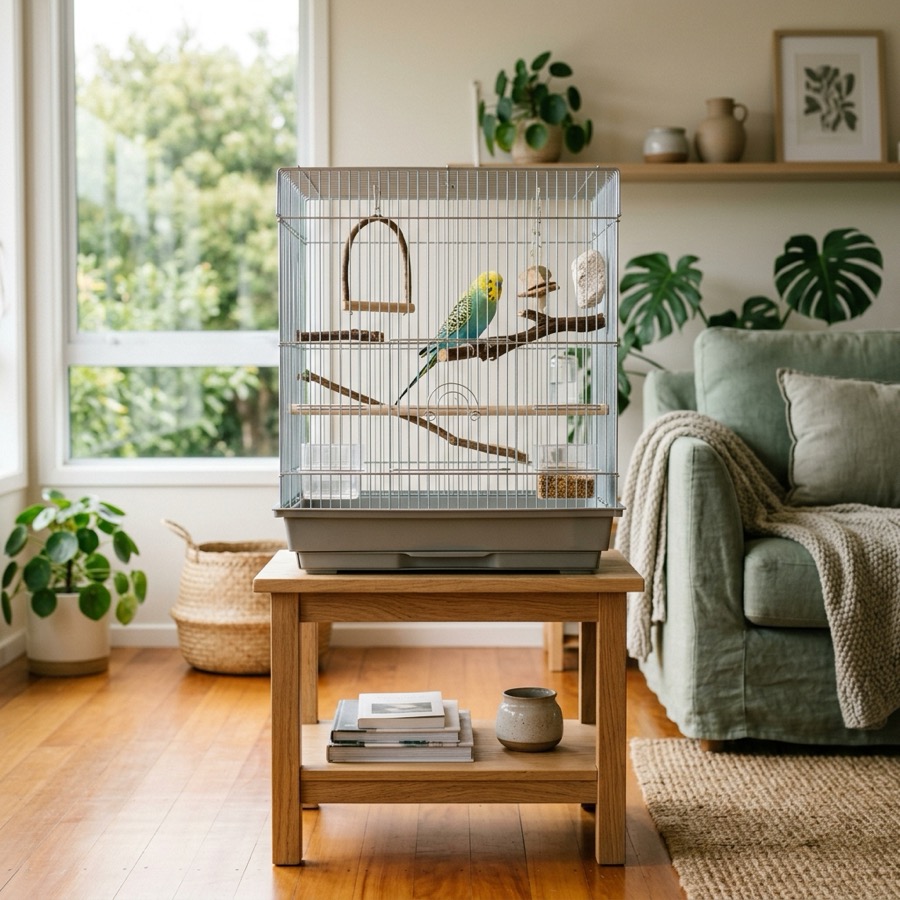
Check doors and feeder hatches. Clever parrots can learn latches quickly. Use secure clips if needed, but avoid anything sharp, zinc-coated or easy to chew apart.
Where to Put the Cage in a NZ Home
SPCA New Zealand recommends thinking carefully about cage location, including protection from predators, shade and shelter from weather, room temperature, ventilation and sound. Cages should be in a quiet area and away from cooking fumes, which can be toxic to birds.
Good placement:
- Near family activity, but not in the loudest traffic lane.
- Away from kitchens, non-stick cookware fumes, aerosols and smoke.
- Out of direct midday sun, especially in Northland and Auckland summers.
- Away from draughty windows and heat pump blasts in winter.
- Safe from cats, dogs, toddlers and open doors.
- With one side near a wall so the bird has a secure-feeling retreat.
NZ homes vary: a sunny Christchurch conservatory, damp Wellington flat and breezy beach bach create different risks. Use a thermometer near the cage and watch how the bird behaves, not just how the room feels to you.
Perches: Variety Beats One Dowel
MPI's temporary housing code for companion animals says sufficient perches of varying diameter, roosting areas, and feed and water stations must be provided for birds in a cage or aviary. SPCA New Zealand also recommends multiple perches of varied textures, diameters and lengths, placed apart to encourage flying.
That means the standard identical dowel perches that come with a cage are not enough as a long-term setup.
Use a mix:
- Natural wood perches of different diameters.
- A higher sleeping perch away from food bowls.
- A lower perch near the door for easy training and handling.
- Rope or platform perches only if your bird does not chew fibres or soil them badly.
Do not place perches directly above food or water bowls. Droppings should not fall into breakfast.
Bowls, Food Stations and Cleaning
Food and water bowls should be easy to remove, wash and replace without letting the bird escape. SPCA's budgie care advice says fresh clean water must be available at all times and food and water dishes should be washed daily in hot soapy water and rinsed thoroughly.
Use at least two stations if you have more than one bird, and more if birds compete. Place bowls where the bird can stand naturally and where droppings will not land in them.
For busy households, make cleaning visible: keep a small brush, spare paper liner, rubbish bag and clean cloth near the cage. If cleaning feels hard, it will be skipped.
Toys and Enrichment
Birds need things to do. SPCA New Zealand recommends toys with different textures, materials, colours and shapes, plus foraging options such as hiding food inside bird-safe toys or treat boxes.
Choose toys for the species and the individual bird:
| Toy type | Good for | Check |
|---|---|---|
| Shredding toys | Budgies and parrots that chew | No toxic dyes, staples or loose threads |
| Foraging toys | Mental stimulation | Start easy so the bird succeeds |
| Swings and ladders | Climbing and movement | Stable attachment |
| Bath dish | Many small birds | Change water and remove when dirty |
| Bells and beads | Some parrots | No small parts that can be swallowed |
Rotate toys rather than packing the cage full. A cluttered cage can block flight and make a nervous new bird feel trapped.
Indoor Cage or Outdoor Aviary?
An outdoor aviary can be excellent if it is secure, sheltered and big enough. It also needs serious NZ planning: cats, rats, stoats, wind, rain, heat, cold snaps, escape risk, and neighbour noise.
Indoor cages are easier for many beginners because you can monitor the bird closely. But indoor birds still need safe out-of-cage time if species-appropriate and if the room is secure.
Before free flight indoors, SPCA advises closing windows and doors, keeping other pets out, removing hazards, turning off ceiling fans, hiding electrical cords and covering large mirrors and glass windows. That checklist is worth taking seriously. Escaped pet birds in New Zealand are often hard to recover and may face weather, predators and traffic quickly.
NZD Cost Planning
Bird setup costs vary with species and cage size. The cage is the big purchase, but perches, bowls and toys are ongoing.
| Item | Rough NZD planning range | Notes |
|---|---|---|
| Starter small-bird cage | NZD $80-$220 | Check usable flight space, not just height |
| Large flight cage | NZD $180-$500+ | Better for active small birds and pairs |
| Perches and bowls | NZD $20-$90 | Budget for variety and spares |
| Toys and foraging | NZD $15-$80 to start | Rotate and replace damaged items |
| Travel cage | NZD $40-$150 | Vet trips and emergency evacuation |
| Cleaning supplies | NZD $10-$40 | Brush, liners, safe cloths, spare bowls |
If budget is tight, spend more on cage size and safe perches before decorative extras.
Key takeaways
- A good bird cage setup NZ birds can thrive in gives room to fly, stretch and perch safely.
- Avoid tiny, round or decorative cages that limit movement.
- Place cages away from cooking fumes, direct harsh sun, draughts and predators.
- Use varied perches and keep droppings away from food and water bowls.
- Toys and foraging are welfare essentials, not cute extras.
- Outdoor aviaries need serious weather, predator and escape planning.
Related reading
- Best Pet Birds for NZ Beginners
- Budgie Care NZ
- Pet Birds in NZ: Legal Guide
- Best Pets for Kids NZ
- Birds Hub
---
Reference sources
- SPCA New Zealand, Caring for Budgies, checked 2026-06-04: https://www.spca.nz/advice-and-welfare/article/caring-for-budgies
- MPI, Code of Welfare: Temporary Housing of Companion Animals, checked 2026-06-04: https://www.mpi.govt.nz/animals/animal-welfare/codes/all-animal-welfare-codes/code-of-welfare-temporary-housing-of-companion-animals
- MPI, Code of Welfare: Temporary Housing of Companion Animals PDF, checked 2026-06-04: https://www.mpi.govt.nz/dmsdocument/36753/direct
- SPCA Kids Education, Companion birds environment, checked 2026-06-04: https://kids.spcaeducation.org.nz/animal-care/companion-birds/environment/
- New Plymouth Vet Group, Your Bird's Cage, checked 2026-06-04: https://www.npvet.co.nz/pets/animal-info-pets/bird-rabbit-turtle-articles/your-birds-cage/
Related guides
petmall.co.nz
Shop at PetMall
The products below are practical support items for your pet. PetMall ships across New Zealand.
- Bird Food & TreatsA quality seed or pellet base plus fresh veg keeps cage birds healthier than seed alone.
- Bird ToysForaging and chew toys prevent boredom — rotate a few rather than crowding the cage all at once.
- Bird SuppliesA well-sized cage with the right perch variety helps long-term comfort — aim for space to fully stretch wings.