Budgerigar Care Guide NZ: Housing, Diet & Health Tips for Kiwi Owners
Discover essential budgie care NZ tips for Kiwi owners. Learn about housing, diet, health, and costs to keep your budgie happy and healthy.
Welcome to the ultimate guide for budgerigar care in New Zealand! Budgies, or common parakeets, are vibrant, intelligent, and affectionate birds that make wonderful companions for Kiwis of all ages. Their cheerful chirps and playful antics can bring immense joy to any home. This comprehensive guide will walk you through everything you need to know to provide a happy, healthy, and enriching life for your feathered friend, from setting up their home to understanding their dietary needs and common health concerns, all tailored for the unique New Zealand context.
Why a Budgie for Kiwi Owners?
Budgies are relatively small, easy to care for, and don't require vast amounts of space, making them suitable for many New Zealand households, including apartments. They are social creatures, and with patience, can be hand-tamed, taught to talk, and form strong bonds with their owners. Their relatively long lifespan (5-10 years, sometimes more with excellent care) means they are a significant commitment, but one that offers years of companionship.
Legal & Biosecurity Notes in NZ
In New Zealand, budgerigars are common domestic pets and you do not need any permit to own or breed one — every budgie here comes from the long-established domestic population. Note the flip side, which catches out people moving to New Zealand: MPI has prohibited the import of live birds since 1997, budgerigars included, and there is no import health standard that would let you bring one in. A budgie already in New Zealand is unrestricted; a budgie overseas cannot legally follow you here. However, all pet owners in New Zealand are expected to adhere to the Animal Welfare Act 1999, which ensures all animals receive proper care, including adequate food, water, shelter, and freedom to express normal patterns of behaviour. The Ministry for Primary Industries (MPI) oversees animal welfare, and while budgies are low-risk, responsible pet ownership is paramount. Always source your budgie from a reputable breeder or pet store to ensure you're getting a healthy bird and to avoid inadvertently supporting unethical practices.
Initial Setup: Creating Your Budgie's Kiwi Home
Setting up your budgie's environment correctly from day one is crucial for their well-being. Think about their cage, its placement, and the essential accessories.
1. Cage Selection: Size Matters!
Many first-time owners underestimate the size of cage a budgie truly needs. While small, budgies are active fliers and climbers. A good rule of thumb is to provide the largest cage you can reasonably afford and accommodate. For a single budgie, the Merck Veterinary Manual gives a minimum cage of 20 × 20 × 30 inches — about 51cm (W) x 51cm (D) x 76cm (H) — with bar spacing no wider than 1.25cm (0.5in). Treat that as the floor, not the target: bigger is always better, and width matters more than height because budgies fly horizontally. If you plan on having two budgies, double these dimensions.
- Bar Spacing: Ensure the bar spacing is no more than 1.25 cm (0.5 inches) to prevent your budgie from getting their head stuck or escaping.
- Material: Stainless steel or powder-coated wire cages are best. Avoid cages with chipped paint or rust, as these can be toxic.
- Shape: Rectangular or square cages are generally preferred over round ones, as they offer more usable space and corners for the bird to feel secure.
2. Cage Placement: Considering the NZ Climate
Where you place the cage in your home is vital, especially given New Zealand's varied climate. Budgies are sensitive to drafts, extreme temperatures, and sudden changes.
- Temperature: Maintain a consistent room temperature, ideally between 18-25°C. Avoid placing the cage directly in front of windows or doors where drafts are common. In colder regions like the South Island during winter, ensure the room is adequately heated, or consider a cage cover at night to help retain warmth. Conversely, during hot New Zealand summers, particularly in places like Auckland with its humidity, ensure the cage is not in direct sunlight to prevent overheating. Provide shade and good ventilation.
- Humidity: Auckland's higher humidity can sometimes contribute to mould growth if not managed, so good air circulation is key. In drier areas, a shallow water bath can help your budgie maintain feather health.
- Location: Choose a spot in a busy part of your home (e.g., living room) where your budgie can feel part of the family, but not directly in front of a TV or speaker, which can be too noisy. Avoid kitchens (fumes from non-stick cookware are toxic) and bedrooms (unless you want to be woken up at dawn!). Ensure it's out of reach of other pets like cats or dogs.
3. Essential Accessories
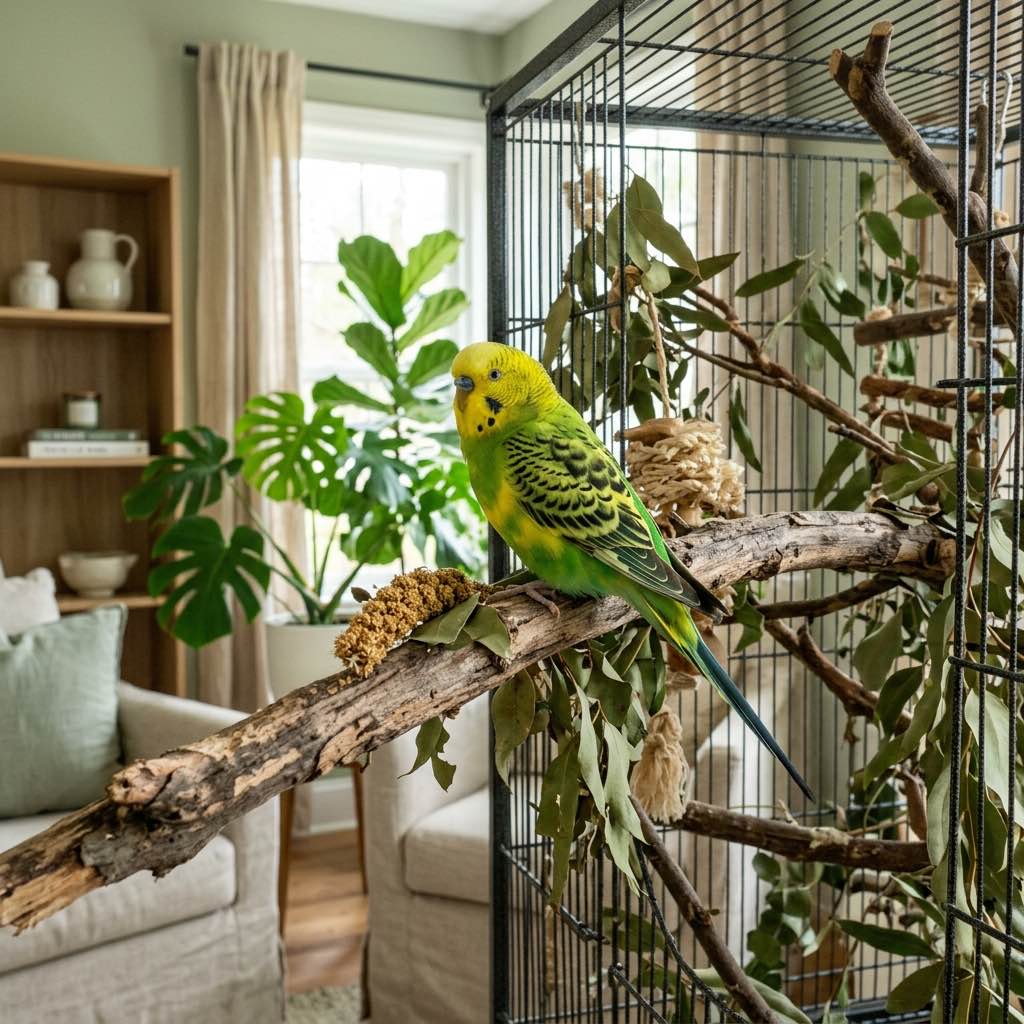
- Perches: Provide a variety of perches made from natural wood (e.g., Manuka, Pohutukawa – *ensure they are bird-safe and pesticide-free*). Varying diameters will help keep their feet healthy and prevent pressure sores. Avoid dowel perches as the sole option. Sandpaper perches are generally not recommended as they can cause foot irritation.
- Food & Water Dishes: Stainless steel or ceramic dishes are easy to clean and more hygienic than plastic. Place them where droppings won't fall into them. Provide at least two food dishes (one for pellets/seeds, one for fresh produce) and one water dish.
- Toys: Budgies are intelligent and need mental stimulation. Offer a variety of toys: shreddable toys, bells, ladders, swings, and foraging toys. Rotate toys regularly to keep them engaged. Ensure all toys are bird-safe and free from small parts that can be ingested.
- Bird Bath: A shallow dish of water or a clip-on bird bath encourages bathing, which is essential for feather health. Some budgies prefer a light misting with a spray bottle.
- Cuttlebone & Mineral Block: These provide essential calcium and minerals and help keep their beaks trimmed.
Initial Costs (NZD)
Here's an estimate of what you might expect to spend on initial setup for a single budgie in New Zealand:
- Budgie: $30 - $80 (from a reputable pet store or breeder)
- Cage: $100 - $300 (for a decent-sized, quality cage)
- Perches (natural): $15 - $40
- Food & Water Dishes: $20 - $50
- Toys (initial set): $30 - $80
- Quality Budgie Pellets/Seed Mix: $15 - $30
- Cuttlebone/Mineral Block: $10 - $20
- Vet Check-up (initial): $60 - $100 (highly recommended for a new bird)
Total Estimated Initial Cost: $280 - $700+
Bringing Your Budgie Home: Acclimatisation & Taming
Your new budgie will need time to adjust to its new surroundings. Place the cage in its permanent spot and allow your bird a few days to settle in before attempting interaction. Speak softly to them, offer treats through the bars, and spend time near the cage without forcing interaction. Patience is key to building trust. For more detailed taming tips, check out our Budgerigar Profile Page.
Diet: What to Feed Your Kiwi Budgie
A proper diet is the cornerstone of your budgie's health. Many common budgie health issues stem from poor nutrition, often a seed-only diet.
1. Staple Diet: Pellets Over Seeds
While budgies love seeds, a seed-only diet is akin to a human eating only fast food – it's high in fat and low in essential nutrients. It can lead to obesity, liver disease, and a shortened lifespan.
- High-Quality Pellets: These are formulated to provide complete nutrition. Gradually transition your budgie from seeds to pellets by mixing them and slowly increasing the pellet ratio. Brands like Harrison's, Zupreem, or Vetafarm are often recommended. Look for premium budgie pellets at your local pet store or online at Petmall.co.nz.
- Seed Mix (as a treat): If you must offer seeds, choose a high-quality budgie seed mix with a variety of seeds, and offer it sparingly as a treat, not the main diet.
2. Fresh Foods: A Taste of New Zealand
Offer a variety of fresh fruits and vegetables daily. Always wash produce thoroughly to remove pesticides. Introduce new foods slowly to see what your budgie enjoys.
Safe Vegetables:
- Silverbeet (chard)
- Kūmara (sweet potato)
- Carrot (grated or finely chopped)
- Broccoli (florets and stems)
- Spinach (in moderation due to oxalates)
- Capsicum (bell pepper)
- Corn on the cob (fresh)
- Kale
- Pumpkin
- Green beans
Safe Fruits (in moderation due to sugar content):
- Apple (seeds removed, they are toxic)
- Pear
- Berries (strawberries, blueberries, raspberries)
- Melon (cantaloupe, watermelon)
- Orange (small amounts)
- Kiwi fruit
Grains & Legumes (cooked and cooled):
- Cooked brown rice
- Cooked lentils
- Whole grain pasta
3. Supplements
- Cuttlebone & Mineral Block: As mentioned, these are vital for calcium and trace minerals. Ensure they are always available.
- Grit: Budgies never need grit — regardless of what they eat. Grit helps birds that swallow seeds whole (pigeons, doves, some finches), but parrots including budgies remove the husk before swallowing, so there is nothing for grit to grind. Offering it risks crop or gizzard impaction. If you want to supply minerals, use a cuttlebone or mineral block instead.
4. Foods to Avoid (Toxic to Budgies)
NEVER feed your budgie these items:
- Avocado
- Chocolate
- Caffeine (coffee, tea, soft drinks)
- Alcohol
- Onion and garlic
- Rhubarb
- Fruit seeds/pits (apple seeds, cherry pits, etc.)
- Mushrooms
- Salty or sugary human snacks
- Dairy products (birds are lactose intolerant)
5. Fresh Water
Provide fresh, clean water daily. Change it at least once, preferably twice, a day. A water bottle can keep water cleaner than an open dish, but ensure your budgie knows how to use it.
For more detailed information on avian nutrition, see our Bird Food Guide.
Health & Well-being: Keeping Your Budgie Chirpy
Regular observation of your budgie's behaviour and appearance is your best tool for early detection of health issues. Budgies are masters at hiding illness, so any subtle change warrants attention.
Signs of a Healthy Budgie
- Active & Alert: Bright, curious eyes, engaging with toys, flying/climbing.
- Smooth Feathers: Clean, well-groomed, lying flat against the body.
- Clean Vent: No faecal staining around the vent area.
- Clear Eyes & Nostrils: No discharge or crusting.
- Good Appetite & Thirst: Eating and drinking regularly.
- Normal Droppings: Small, firm, with a white urate cap and green/brown faecal matter.
Signs of Illness (Contact a Vet Immediately)
- Lethargy/Ruffled Feathers: Sitting hunched, constantly fluffed up, sleeping more than usual.
- Changes in Droppings: Watery, discoloured, or unusually large/small droppings.
- Discharge: From eyes, nostrils, or beak.
- Difficulty Breathing: Tail bobbing, open-mouthed breathing, sneezing.
- Loss of Appetite/Weight Loss: Not eating or drinking, visible weight loss (check keel bone).
- Changes in Behaviour: Aggression, self-mutilation, unusual quietness.
- Lumps or Swellings: Anywhere on the body.
- Limping or Inability to Perch: Sign of injury or illness.
Common Health Issues in Budgies
- Iodine-deficiency goitre (thyroid hyperplasia): The classic budgie illness of an all-seed diet. An enlarged thyroid presses on the syrinx, so the giveaway sign is a clicking, wheezing or squeaky sound when breathing, sometimes with laboured breathing or regurgitation — not the sneezing you might expect. It is far less common now that fortified and pelleted diets are available, which is one more reason not to feed seed alone. It is treatable, but see an avian vet promptly: breathing changes in a small bird are always urgent.
- Mites: Scaly face mites (Knemidocoptes pilae) cause crusty lesions around the beak, cere, and legs. Feather mites can cause itching and feather damage. Easily treatable by a vet.
- Psittacosis (Chlamydiosis): A bacterial infection that can affect birds and humans. Symptoms vary but can include respiratory issues, lethargy, and green droppings. Highly contagious and requires veterinary intervention.
- Yeast Infections: Often affecting the crop, causing regurgitation, loss of appetite. Can be secondary to antibiotic use.
- Overgrown Beak/Nails: Can be due to lack of appropriate perches, toys, or underlying health issues. Requires professional trimming.
- Splay Leg: A developmental condition in chicks where one or both legs splay outwards. Can sometimes be corrected with early intervention.
- Tumours: Budgies are prone to various tumours, particularly lipomas (fatty tumours) and kidney tumours.
Finding an Avian Vet in NZ
It's crucial to have an avian-specialist veterinarian identified *before* you need one. Not all vets are experienced with birds. Ask your regular vet for a referral, or search for clinics that advertise avian or exotic-animal experience. An annual check-up is recommended to catch potential issues early.
Enrichment & Training: Keeping Minds & Bodies Active
Budgies are intelligent and social. They need more than just food and water; they need mental and physical stimulation.
1. Toys & Foraging
Provide a variety of bird-safe toys and rotate them regularly to prevent boredom. Foraging toys, which require your budgie to 'work' for their treats, are excellent for mental stimulation. Hide small pieces of fresh fruit or pellets in safe foraging toys.
2. Socialisation
If you have a single budgie, you are their flock. Spend time talking to them, singing, and offering gentle interaction. If you have two or more budgies, they will entertain each other, but still benefit from human interaction. Consider getting a pair if you're often out of the house, as a lonely budgie can become stressed or depressed.
3. Basic Training
With patience, budgies can be taught to step up onto your finger, come when called, and even mimic words and phrases. Positive reinforcement with treats (like a tiny piece of millet spray) works best. Start with short, consistent training sessions.
Common Mistakes Kiwi Owners Make
Avoiding these common pitfalls will significantly improve your budgie's quality of life:
- Too Small a Cage: This is the most common mistake. A small cage leads to boredom, stress, and physical health issues.
- Seed-Only Diet: As discussed, this is a recipe for malnutrition and illness. Prioritise pellets and fresh produce.
- Lack of Enrichment: A budgie with no toys, no interaction, and no mental stimulation will become bored, stressed, and potentially develop behavioural problems like feather plucking.
- Ignoring Signs of Illness: Budgies hide illness well. Any subtle change in behaviour or appearance should be taken seriously and warrants a vet visit.
- Improper Climate Control: Exposing budgies to drafts, extreme cold (especially in South Island winters), or direct hot sun (common in NZ summers) can lead to illness or heatstroke.
- Using Toxic Products: Non-stick cookware fumes, aerosols, scented candles, and certain household cleaners are highly toxic to birds. Always ensure your budgie is in a well-ventilated area or removed from the house when using such products.
- Clipping Wings Unnecessarily: While some owners clip wings for safety, it can impact a bird's confidence, muscle development, and ability to escape danger. Consult an avian vet if considering this.
Product Guidance for Kiwi Budgie Owners
When shopping for your budgie, look for quality products that prioritise their health and safety:
- Food: Opt for premium budgie pellets as the primary diet. Supplement with a high-quality seed mix for treats. Explore brands available at Petmall.co.nz under our Bird Food section.
- Housing: Invest in the largest cage you can. Look for durable, non-toxic materials. Check out our Bird Cages for suitable options.
- Perches: Prioritise natural wood perches of varying diameters. Avoid plastic or sandpaper perches.
- Toys: Choose a variety of shreddable, foraging, and climbing toys. Ensure they are bird-safe and free from zinc or lead. Rotate them regularly.
- Health Supplements: Cuttlebone and mineral blocks are essential. Consider a bird-safe vitamin supplement if recommended by your avian vet. Find these in our health supplements section.
- Cleaning Supplies: Use bird-safe disinfectants for regular cage cleaning.
Quick Summary: Essential Budgie Care NZ Tips
- Spacious Cage: Provide the largest cage possible, with appropriate bar spacing.
- NZ Climate Awareness: Protect from drafts, extreme heat/cold, and direct sun. Consider Auckland humidity and South Island winters.
- Varied Perches: Offer natural wood perches of different sizes for foot health.
- Pellet-Based Diet: Transition to high-quality budgie pellets, supplemented with fresh, bird-safe NZ fruits and vegetables.
- Avoid Toxic Foods: Never feed avocado, chocolate, onion, garlic, or fruit seeds.
- Fresh Water Daily: Always provide clean, fresh water.
- Mental & Physical Enrichment: Offer a variety of toys, rotate them, and provide daily interaction.
- Observe for Illness: Be vigilant for any changes in behaviour or appearance and contact an avian vet promptly.
- Find an Avian Vet: Identify a bird-experienced vet in your area *before* an emergency arises.
- Responsible Ownership: Adhere to NZ's Animal Welfare Act and source your budgie ethically.
Conclusion
Bringing a budgie into your New Zealand home is a rewarding experience. By understanding their specific needs for housing, diet, and health, and by being mindful of our unique climate and local resources, you can ensure your little feathered friend thrives. With proper care, patience, and love, your budgie will be a cherished member of your whānau for many years to come. Happy budgie keeping, Kiwis!
Sources
- New Zealand Legislation, Animal Welfare Act 1999 (Obligations of Owners), checked 2026-07-20: https://www.legislation.govt.nz/act/public/1999/0142/latest/DLM49664.html
- Merck Veterinary Manual, Knemidocoptiasis (Scaly Face Mites) in Birds, checked 2026-07-20: https://www.merckvetmanual.com/exotic-and-laboratory-animals/pet-birds/parasitic-diseases-of-pet-birds
Related guides
petmall.co.nz
Shop at PetMall
The products below are practical support items for your pet. PetMall ships across New Zealand.
- Bird Food & TreatsA quality seed or pellet base plus fresh veg keeps cage birds healthier than seed alone.
- Bird ToysForaging and chew toys prevent boredom — rotate a few rather than crowding the cage all at once.
- Bird SuppliesA well-sized cage with the right perch variety helps long-term comfort — aim for space to fully stretch wings.