Guppy Breeding in New Zealand: The Complete Guide (2026)
How to breed guppies in New Zealand. Includes tank setup, low-flow filtration, temperature control for NZ winters, fry care, and avoiding inbreeding depression.
Guppies (*Poecilia reticulata*) are among the most vibrant, fascinating, and widely kept tropical fish in New Zealand. Known for their striking colors, diverse fin types, and energetic personalities, they are the go-to species for many Kiwi aquarists. But beyond their popularity as community fish, guppies are famous for another trait: they are incredibly easy to breed. As livebearers, they produce fully formed, free-swimming fry rather than laying eggs, making them an excellent introduction to the joys of fish breeding.
However, while guppies breed readily, successfully raising a large, healthy batch of fry to adulthood in New Zealand requires planning, dedicated equipment, and proper water husbandry. Due to NZ's temperate climate and unique water properties, local hobbyists must follow specific guidelines regarding heating, tank size, and genetic diversity. This comprehensive guide covers everything you need to know about setting up a breeding tank, sexing your fish, caring for fry, and sourcing quality stock. For detailed biological details on their origin and variations, see our full Guppy profile.
---
Why Guppies are So Prolific (Ovoviviparous Biology)
To breed guppies successfully, you must understand their biology. Guppies are ovoviviparous, meaning fertilisation occurs internally, and the embryos develop inside eggs within the female's body. Instead of depositing eggs on plants or rocks where they are vulnerable to predators, the female carries the babies until they are fully developed and gives birth to live, free-swimming fry.
This reproductive strategy is incredibly efficient:
- Gestation Period: Typically ranges from 25 to 30 days, depending on water temperature and nutrition.
- Brood Size: A single mature female can deliver anywhere from 20 to over 100 fry in a single birth. Older, larger females tend to produce much larger broods.
- Sperm Storage: Female guppies can store viable sperm from a single mating for up to six months, allowing them to produce multiple consecutive broods without needing to mate again.
This high rate of reproduction is common among livebearers. If you enjoy keeping livebearing fish and want to learn about similar species that share this fascinating breeding biology, you can read our guide on the closely related Molly profile.
---
Setting Up Your Guppy Breeding Tank in NZ
While guppies will breed in a community aquarium, almost all of the fry will be eaten by larger tank mates unless you set up a dedicated breeding space.
1. Tank Size
For a standard breeding group (one male and two or three females), the minimum recommended tank size is 40 litres. While some international guides suggest tanks as small as 20 litres, a 40-litre aquarium provides much greater water volume stability. In New Zealand, where indoor temperatures can fluctuate significantly between day and night, a larger water volume acts as a buffer, making it much easier to maintain stable parameters.
2. Heating & Temperature Control
Guppies are tropical fish and require warm water to thrive and reproduce. Their ideal breeding temperature range is 24°C to 27°C.
- NZ Climate Warning: Because most New Zealand homes lack ducted central heating, indoor room temperatures can drop to 5°C–10°C during winter, especially in the South Island. Without a high-quality aquarium heater, your tank water will quickly drop to lethal levels.
- Equipment: You must install an adjustable aquarium heater rated at approximately 1 watt per litre of water (e.g., a 50W heater for a 40L tank). Always use a separate glass thermometer to double-check the water temperature, as heater thermostats can become inaccurate over time. For advice on choosing the right model, see our aquarium heater guide.
3. Filtration (Low-Flow is Essential)
Guppy fry are tiny, weak swimmers when first born. Standard power filters or hang-on-back filters have strong intake suction that will easily trap and kill the babies.
- Sponge Filters: The best filtration method for a breeding tank is an air-driven sponge filter. It provides excellent biological filtration, creates oxygen-rich surface agitation, and has zero intake suction, making it 100% safe for fry. Furthermore, the sponge surface accumulates beneficial biofilm, which serves as a highly nutritious first food source for newborn guppies.
4. NZ Water Chemistry & Husbandry
Guppies prefer hard water with a slightly alkaline pH.
- Ideal Parameters: pH of 7.0 to 8.0, general hardness (GH) of 8 to 15 dGH, and carbonate hardness (KH) of 4 to 8 dKH.
- NZ Regional Differences: New Zealand tap water is generally very clean but varies in hardness. In regions like Auckland, tap water is relatively soft (low mineral content). You can raise the GH and KH by adding crushed coral to the filter or using specialty mineral salts designed for livebearers.
- Dechlorination: NZ tap water is treated with chlorine or chloramines. Always use a high-quality water conditioner (such as Seachem Prime) during water changes.
- Maintenance: Livebearer tanks accumulate organic waste quickly. You should perform weekly 25% water changes to keep ammonia and nitrites at 0 ppm and nitrates below 20 ppm. For detailed water changing tips, see our aquarium water changes guide.
---
Distinguishing Males from Females (Sexing)
To manage your breeding program and prevent overpopulation, you must be able to tell the males and females apart. Guppies display extreme sexual dimorphism, meaning the genders look very different.
Male Guppies
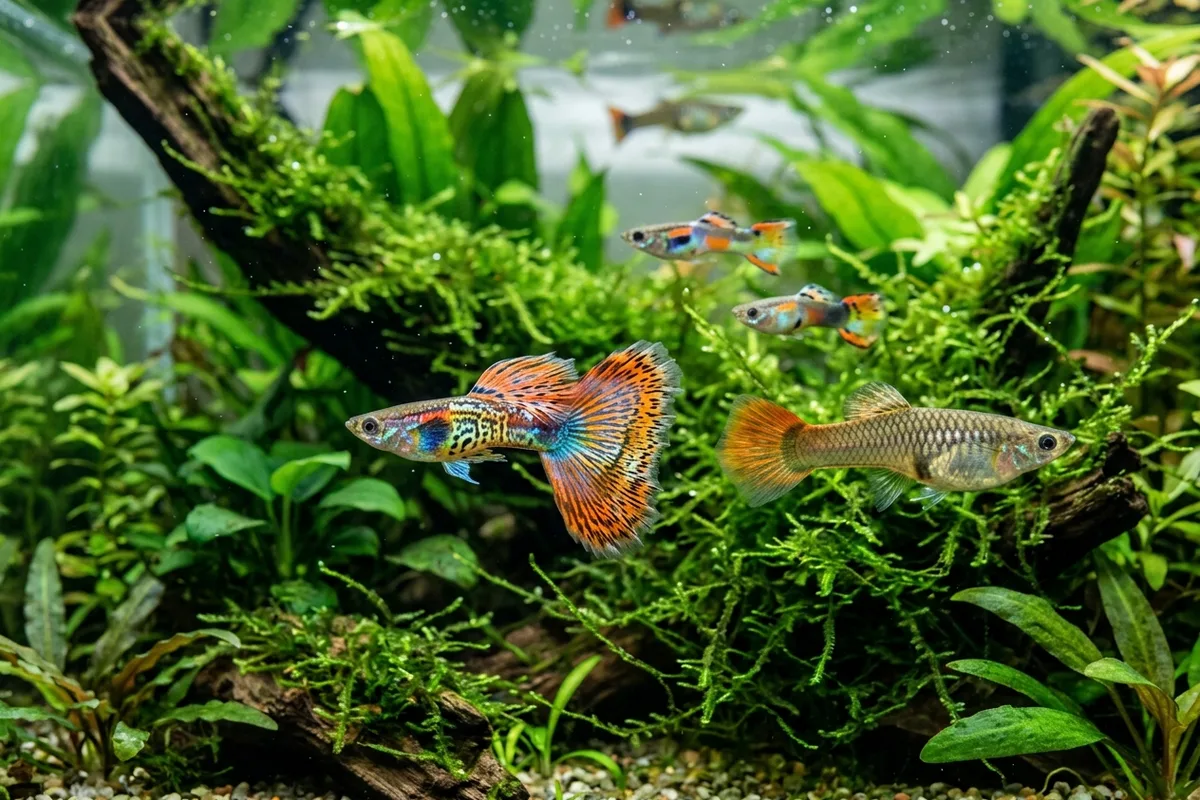
- Size: Smaller, usually reaching 2.5 to 3.5 cm in length.
- Coloration: Intensely colorful, with bright patterns covering their bodies and fins.
- Fins: Large, elongated dorsal and caudal (tail) fins.
- Gonopodium: The most reliable indicator. The male's anal fin is modified into a rod-like organ called a gonopodium, which is used to fertilise the female internally.
Female Guppies
- Size: Larger and rounder, reaching up to 5 or 6 cm.
- Coloration: Generally plain silver or grey, although modern fancy strains may have colorful tail fins.
- Fins: Small, rounded, and fan-shaped fins.
- Gravid Spot: A dark, triangular spot located near the anal fin. This spot is actually the translucent wall of the womb. It turns darker and expands as pregnancy progresses.
---
The Gestation Cycle and Birth
When breeding guppies, keep a ratio of one male to two or three females. Males are relentless in their mating pursuits; if you keep a single pair, the male will constantly harass the female, causing extreme stress, which can lead to disease or miscarriage.
As a female progresses through her 28-day gestation period, her abdomen will swell significantly. A few days before giving birth, she will develop a distinct "boxy" appearance when viewed from the side, as her belly flattens near the head and vent. She may also become lethargic, seek out quiet areas near the bottom of the tank, and aggressively defend her personal space.
---
Protecting and Caring for Guppy Fry
Although guppies are easy to breed, they lack parental instincts. Adult guppies (including the mother) will actively hunt and eat their own fry.
Spawning Setup
- Avoid Breeding Traps: Many pet shops sell small plastic floating breeding traps. However, experienced aquarists advise against using them. Forcing a pregnant female into a tiny, confined space causes immense stress, which often results in premature births or death.
- Use Spawning Mops or Heavy Planting: The safest method is to pack the breeding tank with dense live plants. Floating plants with long, bushy roots like Water Sprite, Hornwort, and dense clumps of Java Moss are perfect. These plants provide excellent hiding spots where the newborns can escape the adults.
Feeding the Fry
Newborn guppies are born hungry and must be fed small, high-protein meals 3–4 times daily to support rapid growth.
- Biofilm: The sponge filter surface is a natural source of micro-organisms for fry.
- Brine Shrimp: Freshly hatched baby brine shrimp (*Artemia nauplii*) is the absolute best food for promoting growth and vibrant colors.
- Commercial Foods: High-quality fry powders or finely crushed tropical flakes (rubbed between your fingers until they form a dust) are convenient and effective.
- Live Cultures: Microworms are easy to culture at home in NZ and make an excellent live food staple for growing fry.
---
NZ Hobbyist Resources and Communities
Breeding guppies is a highly social hobby in New Zealand. If you are looking to trade fish, improve your strains, or seek expert advice, the following resources are invaluable:
- Federation of New Zealand Aquarium Societies (FNZAS): The national body representing local aquarium clubs across New Zealand. They host annual conferences, breed registries, and standard guidelines.
- Aquarium World NZ: The official publication and online hub managed by FNZAS at Aquarium World. It features articles, active forums, and classified directories where NZ hobbyists buy, sell, and share breeding tips.
- Trade Me: The dogs, cats, and fish sections on Trade Me are active marketplaces where local breeders list specialty fancy guppy strains (such as Dumbo Ear, Moscow Blue, or Albino Full Red) that are rarely found in commercial pet stores.
---
Common Breeding Mistakes to Avoid
- Poor Water Quality: Feeding fry multiple times a day leads to rapid waste accumulation. If you neglect weekly water changes, ammonia spikes will quickly wipe out your fry.
- Inbreeding Depression: Because New Zealand is an isolated island nation with strict biosecurity laws, importing new fish strains is incredibly difficult. This narrow genetic pool means NZ guppies are prone to inbreeding depression (crooked spines, weak immune systems, and low fertility) if bred within the same family for too many generations. Always swap stock with other local breeders to keep your lines genetically diverse.
- Overcrowding: A single female can produce hundreds of babies in a few months. Ensure you have a plan to sell or rehome excess stock to local pet shops or other hobbyists before your tanks become overpopulated.
---
References & Further Reading
For authoritative information on genetics, advanced line-breeding methods, and maintaining show-quality fancy livebearer strains, refer to the following resources:
- Practical Fishkeeping's expert guide on livebearer care: How to Breed Perfect Guppies.
- More NZ aquarium guides: Aquariums NZ — complete setup guide.
- FishBase — scientific species summary for *Poecilia reticulata*, confirming gestation length, brood size and gonopodium/gravid-spot biology, checked 2026-08-05: https://www.fishbase.se/summary/Poecilia-reticulata.html
Related guides
petmall.co.nz
Shop at PetMall
The products below are practical support items for your pet. PetMall ships across New Zealand.
- Fish FoodMatch food to your fish — floating pellets for bettas, sinking for bottom feeders. Feed small amounts your fish finish in a couple of minutes.
- Tank Cleaning & MaintenanceA gravel vacuum and an algae scraper do more for water quality than any gadget — most beginner tank problems are maintenance, not equipment.
- Filters & MediaA good filter is the heart of a healthy tank — choose low-flow models for bettas and long-finned fish.
- Heating & LightingA heater is essential for tropical fish through NZ winters — most bettas and community fish want a stable 24–28°C.
- Water TreatmentDechlorinator and test kits are non-negotiable — stable water quality prevents most beginner fish losses.