Aquariums NZ: Complete Guide to Home Aquariums & Fish Tanks (2026)
Setting up an aquarium in NZ? Tank sizes, costs, filters, heaters, cycling, and the best beginner fish — plus where to buy. NZ's complete home aquarium guide.
Setting up a home aquarium is one of the most rewarding and visually stunning hobbies you can undertake. An aquarium brings a piece of natural aquatic beauty into your home, acting as a calming focal point in any room. For New Zealand apartment dwellers or busy families who might not have the space or lifestyle for a dog or cat, keeping pet fish is an incredibly popular alternative.
However, a home aquarium is not just a container filled with water; it is a complex, living micro-ecosystem. Many beginners encounter early failure simply because they do not understand the biochemical processes or equipment required to keep fish healthy. This comprehensive guide serves as your roadmap to starting a successful home aquarium in New Zealand, providing a clear overview of key concepts and directing you to in-depth resources for every step of your fish-keeping journey. For a broad directory of care articles, check out our dedicated fish channel.
---
Choosing Your First Aquarium (Tank Size & Type)
One of the most common mistakes beginners make is starting with a tank that is too small. It might seem intuitive that a smaller tank (like a 10-litre bowl or a small desktop vase) is easier to care for, but the opposite is true. In a micro-aquarium, the volume of water is so small that temperature fluctuations happen rapidly, and toxic waste products build up in minutes. A minor mistake, such as slightly overfeeding, can cause a toxic chemical spike that is immediately fatal to your fish.
1. Recommended Tank Size
For beginners, a tank capacity of 30 to 60 litres (ideally 40+ litres) is highly recommended. This volume offers a safety buffer; waste products dilute more effectively, and water chemistry remains significantly more stable, giving you and your fish a much higher tolerance for minor errors. If you are ready to begin planning your layout, consult our guide on how to set up a first aquarium or read our general beginner aquarium guide for further setup parameters.
2. Glass vs. Acrylic Aquariums
When selecting a tank, you will choose between glass and acrylic:
- Glass Aquariums: Heavy, highly resistant to scratching, and usually more affordable. Standard glass tanks remain clear for decades but can crack under impact, and their silicone joints may degrade over many years.
- Acrylic Aquariums: Lightweight, highly impact-resistant, and offer excellent visual clarity. However, acrylic is very easy to scratch during cleaning (even sand or gravel can leave permanent marks), and premium acrylic displays tend to be more expensive in NZ.
3. Avoid Bowls and Vases
Traditional glass fishbowls and narrow vases are entirely unsuitable for keeping fish. They do not have the space to install essential filtration or heating equipment. Furthermore, the rounded shape offers a very small surface area at the water's line, which severely restricts crucial oxygen exchange, leaving fish slowly suffocating.
---
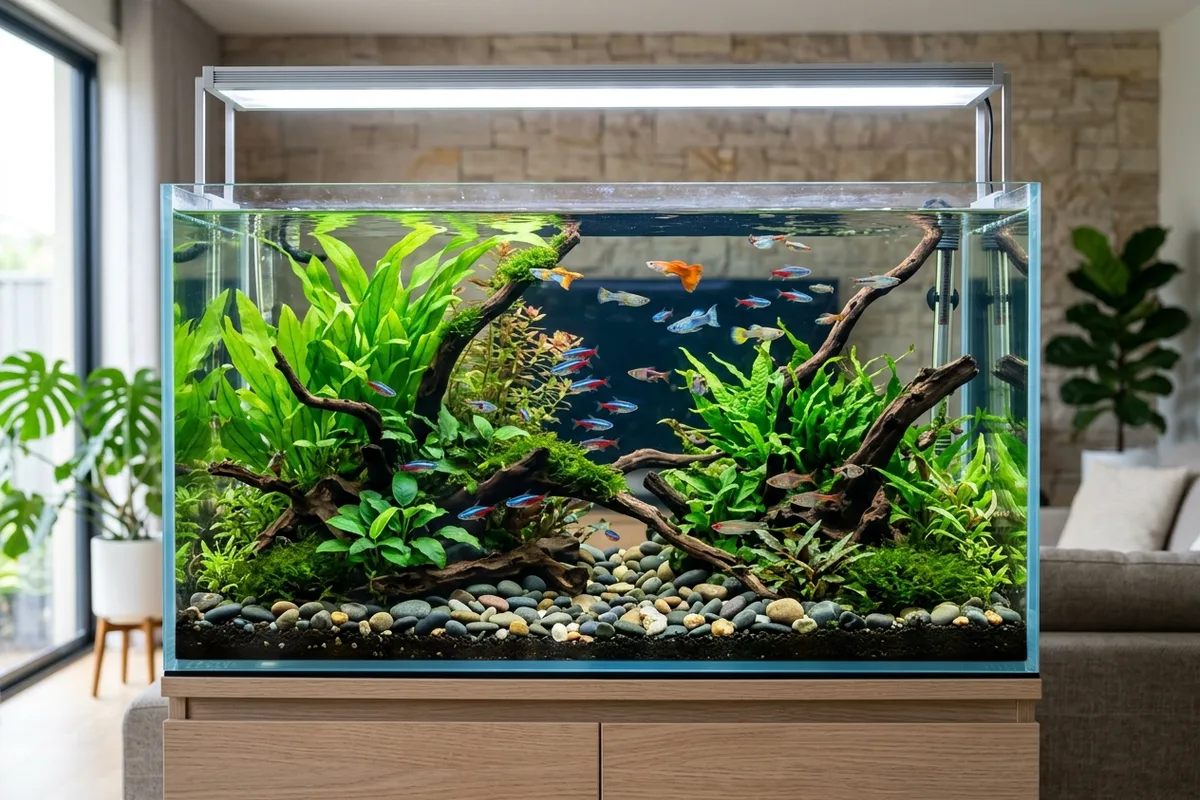
Essential Equipment
To maintain a healthy aquarium, you must replicate a natural habitat using specialized equipment. You cannot rely on a plain glass box and tap water alone.
1. Filtration
A filter is the heart and lungs of your aquarium. It provides physical filtration by trapping floating debris, chemical filtration by removing toxins, and biological filtration by housing colonies of beneficial nitrifying bacteria that convert toxic fish waste into harmless compounds. To choose the right system for your setup, read our detailed comparison of aquarium filter types.
2. Heating
Fish are cold-blooded animals and rely on their surrounding water to regulate their body temperature. Rapid temperature drops stress their immune systems, making them highly susceptible to fatal infections like Ich (white spot disease). Even for temperate species, New Zealand’s chilly winter nights mean a thermostatically controlled heater is essential to prevent temperature drops. For tropical species, keeping water consistently between 24°C and 26°C is non-negotiable. Learn more by reading our aquarium heater guide.
3. Lighting
Aquarium lighting serves two main purposes: illuminating the tank for viewing and supporting plant growth. If you choose to keep live aquatic plants, they will require specific light spectrums to perform photosynthesis. However, leaving lights on for too long (beyond 8 to 10 hours daily) will trigger severe algae outbreaks. Explore your options in our guide on aquarium light types.
---
Cycling Your Tank (Don't Skip This)
The single most common reason beginner aquariums fail within the first few weeks is "New Tank Syndrome." This occurs when fish are added to a brand-new tank before a biological filter has been established. Fish release ammonia through their gills and waste. In an uncycled tank, this ammonia rapidly accumulates to lethal levels, causing chemical burns to the gills and organs of the fish.
Establishing a healthy tank requires completing the nitrogen cycle:
- Ammonia Production: Fish waste and decaying food generate toxic ammonia.
- Nitrite Conversion: Beneficial bacteria (Nitrosomonas) convert ammonia into nitrites. Nitrites are also highly toxic to fish, causing brown blood disease by preventing oxygen transport.
- Nitrate Conversion: A second type of beneficial bacteria (Nitrospira) converts nitrites into nitrates. Nitrates are relatively harmless in low concentrations and are removed through regular maintenance and live plant consumption.
To safely cycle a tank, you must run the aquarium with a water source and an ammonia source (without fish) for 3 to 6 weeks, monitoring the chemistry with a liquid test kit until both ammonia and nitrite levels read zero. Do not rush this step. For a complete walkthrough of this critical preparation phase, refer to our guide on how to cycle a new fish tank.
---
Choosing Fish for Your NZ Aquarium
Before selecting your fish, you must decide between a coldwater setup and a heated tropical setup, keeping in mind that New Zealand has strict biosecurity regulations regarding allowable aquatic species.
1. Coldwater vs. Tropical
- Coldwater Fish: Goldfish are the most famous coldwater fish. However, they grow very large (often exceeding 20–30 cm) and produce massive amounts of waste, meaning they require huge tanks and heavy filtration. They are not suitable for small starter tanks.
- Tropical Fish: Small tropical species like Tetras, Guppies, and Platies are highly active, colourful, and thrive in smaller heated environments. They are often much easier to manage in a starter tank than goldfish.
2. Best Species for Beginners
For your first community display, choose hardy, peaceful species that tolerate minor water variations. Excellent choices include Neon Tetras, Harlequin Rasboras, and Guppies. For an in-depth breakdown of compatible species, review our guide to the Best Beginner Fish for a First NZ Tank or learn about the specific requirements of tropical fish NZ.
If you are looking for a single, striking feature fish, a Siamese Fighting Fish is an incredibly popular choice. However, they require careful care: male bettas must live alone as they will fight to the death, and they still require a heated, filtered tank rather than a bowl. Discover their specialized needs in our betta fish care and fighter fish NZ guides, or read the detailed Betta Breed Profile. If you are setting up your very first aquarium, check out our guide on best beginner fish first NZ tank to plan a harmonious tank.
---
Feeding & Maintenance
Once your tank is cycled and stocked, ongoing maintenance is necessary to keep the biological system balanced and prevent disease.
1. Feeding Guidelines
Overfeeding is a primary cause of water pollution. Fish only need to be fed once or twice a day, and only as much food as they can completely consume within two minutes. Any uneaten food will sink to the bottom, rot, and cause ammonia spikes. To understand nutritional requirements, check out fish food types and learn how often to feed fish.
2. Routine Water Changes
Never empty the tank entirely to clean it. Scrubbing the glass and gravel with tap water kills the beneficial bacteria you spent weeks cycling, resetting your tank to zero. Instead, perform a 10% to 25% water change every week or two. Use a gravel vacuum to siphon water from the bottom, pulling out fish waste and debris trapped in the substrate. Always treat the replacement tap water with a water conditioner to neutralize chlorine and heavy metals, which are toxic to fish. For a step-by-step cleaning process, read our guide on aquarium water changes.
---
Aquarium Costs in NZ (2026)
Starting a home aquarium involves both upfront capital investment and minor ongoing operational costs. In New Zealand, a realistic starter budget ranges from $150 to $500+ NZD, depending on the quality and size of your display:
| Expense Category | Estimated NZD Cost | Details |
|---|---|---|
| Tank & Core Equipment | $120 – $300 | Tank, basic HOB or internal filter, LED light, and heater. |
| Substrate & Hardscape | $40 – $100 | Gravel or aquarium soil, rocks, driftwood, and live plants. |
| Livestock & Nutrition | $30 – $100+ | Starter fish, high-quality flake or pellet food. |
| Water Care & Testing | $50 – $80 | Dechlorinator (water conditioner) and a liquid water test kit. |
Winter Heating Considerations
Because electricity prices are high in New Zealand and winters can be cold, running a tropical aquarium heater will add a small increment to your household power bill. To manage costs, purchase a high-quality, shatterproof heater with an accurate built-in thermostat, and place your aquarium away from drafty windows or doors to minimize heat loss.
---
Where to Buy Aquarium Supplies in NZ
New Zealand has a well-established pet retail network where you can purchase equipment and live fish:
- National Pet Chains: Major retailers like Animates and PetStock carry standard aquarium kits, replacement filters, heaters, water conditioners, and common community fish (like guppies, tetras, and goldfish). These stores are excellent for sourcing starter equipment and convenience supplies.
- Specialist Aquarium Stores: For rare fish species, high-end planted tank supplies (like active soils or CO2 systems), and specialized advice, seek out local independent aquarium shops in your major city. Specialist stores typically maintain higher livestock health standards and can offer customized advice based on the water chemistry of your local region.
---
Sources
- Ministry for Primary Industries (MPI). Steps to importing ornamental fish and marine invertebrates, checked 2026-06-28: https://www.mpi.govt.nz/import/live-animals/aquatic-animals/steps-to-importing-ornamental-fish-and-marine-invertebrates/
- Department of Conservation (DOC). Freshwater pests in New Zealand, checked 2026-06-28: https://www.doc.govt.nz/nature/pests-and-threats/freshwater-pests/
Related guides
petmall.co.nz
Shop at PetMall
The products below are practical support items for your pet. PetMall ships across New Zealand.
- Fish FoodMatch food to your fish — floating pellets for bettas, sinking for bottom feeders. Feed small amounts your fish finish in a couple of minutes.
- Tank Cleaning & MaintenanceA gravel vacuum and an algae scraper do more for water quality than any gadget — most beginner tank problems are maintenance, not equipment.
- Filters & MediaA good filter is the heart of a healthy tank — choose low-flow models for bettas and long-finned fish.
- Heating & LightingA heater is essential for tropical fish through NZ winters — most bettas and community fish want a stable 24–28°C.
- Water TreatmentDechlorinator and test kits are non-negotiable — stable water quality prevents most beginner fish losses.