Fish Food Types NZ: Flakes, Pellets, Frozen and Live Food Explained
What type of food should you feed your aquarium fish? Compare flakes, pellets, freeze-dried, frozen and live foods — which suits which species, and what NZ fish keepers should know.
Choosing the right food type is one of the biggest differences between fish that thrive and fish that just survive. The food type — not just the brand — determines whether your fish get adequate nutrition, whether waste builds up in your tank, and whether you're matching how your fish actually feeds in the wild. Here's a practical guide for NZ aquarium keepers.
Why food type matters more than most people realise
Many NZ fish keepers start with one food — usually the flakes sold at their local pet shop — and feed it exclusively. The problem is that most fish aren't natural flake eaters, and a single food rarely provides complete nutrition for the lifespan of the fish.
Understanding your fish's feeding position (do they eat at the surface, mid-water, or the bottom?) and their natural diet (do they eat insects, algae, smaller fish, crustaceans?) makes choosing food type much simpler.
The six main food types
1. Flake food
Thin, dried flakes that float briefly before slowly sinking.
Best for: Surface and mid-water feeders — guppies, tetras, mollies, platies, danios, rasboras, and most tropical community fish.
Pros:
- Widely available in NZ pet shops
- Affordable
- Easy to portion
- Nutritionally complete when bought from a reputable brand
Cons:
- Sinks and decomposes quickly if uneaten — contributes to ammonia spikes if overfed
- Not suitable for bottom dwellers (who rarely reach the surface in time)
- Some brands are nutritionally poor — look for fish or seafood as the first ingredient, not grain or filler
- Flakes exposed to air lose vitamin C and other nutrients over time; keep lids on and replace containers within 6 months of opening
Feeding tip: Feed only what fish consume in 2–3 minutes. Uneaten flakes are the primary cause of water quality issues in new tanks.
2. Pellets (floating and sinking)
Compressed cylinders or spheres of food — denser and slower to break down than flakes.
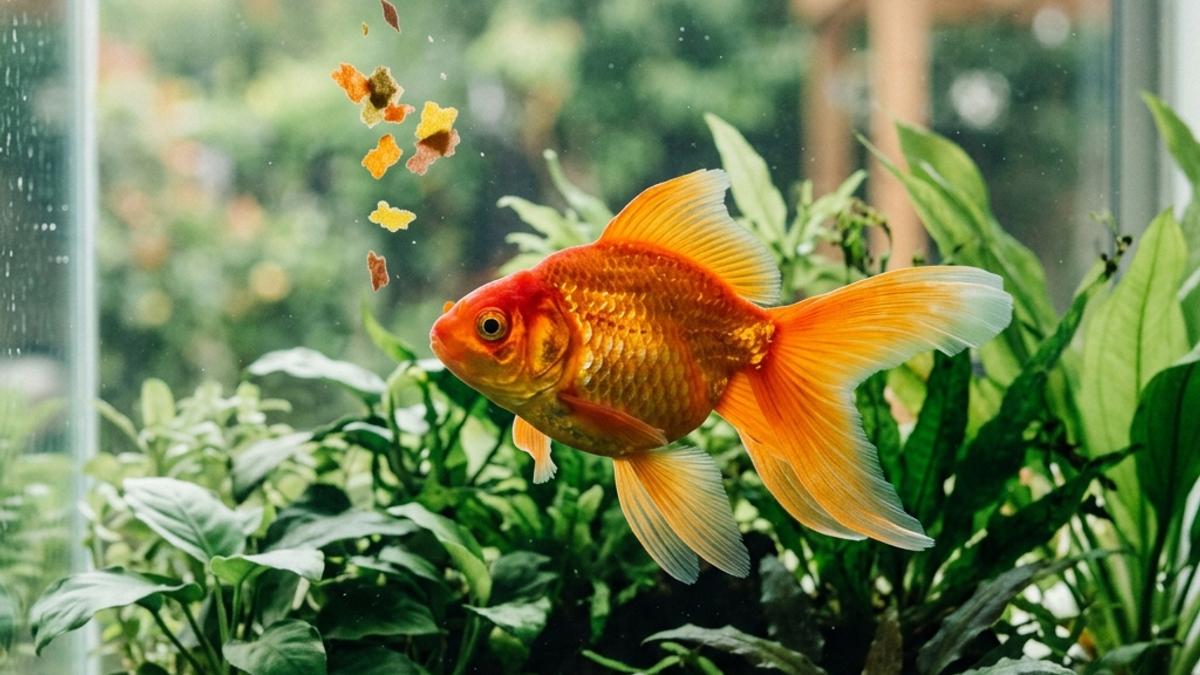
Floating pellets: Stay at the surface — suited to surface feeders and mid-water fish trained to come to the top. Used widely for goldfish and cichlids.
Sinking pellets: Drop through the water column and rest on the substrate — essential for bottom-dwelling fish that don't naturally feed at the surface.
Micro pellets: Very small-diameter sinking or floating pellets for small-mouthed fish (nano fish, small tetras, ember tetras, celestial pearl danios).
Best for:
- Sinking pellets: corydoras, loaches, plecos, most catfish, and any bottom dweller
- Floating pellets: goldfish, koi (for pond use), larger cichlids, large tropical fish
- Micro pellets: nano tanks, small-mouthed tropical fish
Pros:
- More nutritionally dense than flakes, with less water-polluting surface area
- Sinking pellets make sure bottom feeders actually receive food (they often miss out entirely in flake-only tanks)
- Pellets absorb less moisture during storage and stay nutritionally stable longer than flakes
Cons:
- Uneaten pellets still decompose — don't overfeed
- Some small-mouthed fish can't take standard pellet sizes
3. Freeze-dried foods
Live foods (bloodworms, brine shrimp, daphnia, tubifex) that have been freeze-dried to remove moisture while preserving nutrition and palatability.
Best for: As a supplement or treat for most carnivorous and omnivorous tropical fish, bettas, and goldfish. Not suitable as a sole diet.
Pros:
- Convenient: long shelf life, easy to handle, no refrigeration required
- Highly palatable — most fish respond enthusiastically
- Closer to the natural diet of carnivorous and insectivorous species than dry-only foods
Cons:
- Nutritionally inferior to frozen foods — the freeze-drying process degrades some nutrients
- Freeze-dried bloodworms and tubifex are associated with constipation if fed too frequently — feed 1–2 times per week as a maximum
- Some fish refuse them (particularly fussy feeders like discus or some cichlids)
NZ tip: Rehydrate freeze-dried foods in a small amount of tank water before feeding — this softens the food and reduces the risk of fish gulping air alongside it.
4. Frozen foods
Aquatic organisms (bloodworms, brine shrimp, mysis shrimp, white mosquito larvae, daphnia, krill) that are preserved by freezing rather than drying.
Best for: Carnivorous and protein-demanding species: bettas, discus, cichlids, marine fish, and most fish as a significant dietary component alongside a staple dry food.
Pros:
- Nutritionally superior to freeze-dried: freezing preserves proteins, amino acids, and fatty acids that drying degrades
- Bettas, in particular, thrive on a varied diet that includes frozen bloodworm or brine shrimp 3–4 times per week
- Variety of species available from most NZ aquarium shops: bloodworm and brine shrimp are the most common; mysis and white mosquito larvae are less widely stocked
Cons:
- Requires a freezer — not practical for everyone to store multiple types
- Blood-based frozen foods (bloodworm) can cloud tank water if the cube isn't fully thawed and rinsed before feeding
- Slightly more expensive than freeze-dried
- Shelf life once open: typically 2–3 months in a home freezer
Feeding tip: Defrost a small portion in a cup of tank water, then pour gently into the tank or spot-feed with a turkey baster.
5. Live foods
Live organisms fed directly to fish — typically available from specialist aquarium shops or cultured at home.
Common live foods in NZ:
- Live brine shrimp (artemia): The gold standard enrichment food for marine and tropical fish; can be hatched at home from eggs
- Live daphnia: Small freshwater crustaceans — excellent for digestive health, particularly in goldfish
- Microworms / vinegar eels: For fry (baby fish) that are too small to take standard foods
- Black soldier fly larvae (BSFL): Increasingly available; high-protein option for omnivorous fish
Best for: Breeding tanks (stimulates spawning behaviour in many species), fry nutrition, and boosting appetite in fish that have gone off food.
Cons:
- Live foods can introduce parasites or disease if not sourced carefully — wild-caught or poorly maintained live foods are a disease risk
- Culturing your own (brine shrimp eggs, microworms) requires some equipment and commitment
- Availability in NZ varies by region
NZ note: Live foods are available from specialist aquarium shops in Auckland, Wellington, Christchurch, and Hamilton. Check local fish-keeping clubs (most cities have an aquarium society) for hobbyist sources.
6. Algae wafers and vegetable-based foods
Compressed wafers or discs that sink and provide plant matter and algae.
Best for: Herbivorous and algae-eating bottom dwellers — bristlenose plecos, otocinclus, loaches, and any fish with a plant-based diet component.
Pros:
- Essential for plecos and algae eaters — without supplemental plant food, these fish become malnourished even if algae grows in the tank
- Sinks and stays in place, allowing slow grazers to eat at their own pace
- Blanched vegetables (zucchini, cucumber, spinach — weighed down with a fork or suction-cupped veggie clip) achieve the same purpose and are cheaper than commercial wafers
Cons:
- Uneaten wafers decompose and foul the substrate — remove any uneaten portions after a few hours
Matching food type to species
| Species | Primary food | Supplement |
|---|---|---|
| Guppies, tetras, mollies | Flakes or micro pellets | Frozen brine shrimp 2–3×/week |
| Goldfish | Floating pellets | Daphnia, occasional frozen bloodworm |
| Bettas | Micro pellets (floating) | Frozen bloodworm or brine shrimp 3–4×/week |
| Corydoras, loaches | Sinking pellets | Frozen bloodworm, algae wafers |
| Bristlenose pleco | Algae wafers | Blanched vegetables |
| Discus | Frozen/live foods | High-quality pellets |
| Cichlids | Pellets (species-specific) | Frozen protein foods |
How much and how often
- Twice daily, small amounts is the standard recommendation for most tropical fish — what they can consume in 2–3 minutes
- Goldfish can be fed once or twice daily; overfeeding goldfish is the most common beginner mistake (it rapidly degrades water quality)
- Bettas can safely be fasted one day per week — this reduces constipation, which is common in betta fish
Related guides
- Beginner aquarium setup NZ
- Beginner betta and goldfish care NZ
- Betta fish care NZ
- Aquarium water changes NZ
- Fish hub — all NZ fish guides
---
References
- Merck Veterinary Manual — Nutrition in Fish, checked 2026-07-08: https://www.merckvetmanual.com/management-and-nutrition/nutrition-exotic-and-zoo-animals/nutrition-in-fish
- MPI New Zealand, regulations on importing aquarium fish food and live organisms: https://www.mpi.govt.nz/biosecurity/border-clearance/bringing-items-to-new-zealand/
---
*This guide provides general nutrition information for aquarium fish keepers. Individual species may have specific dietary needs — consult a specialist aquarium retailer or aquarist community for species-specific advice.*
Related guides
petmall.co.nz
Shop at PetMall
The products below are practical support items for your pet. PetMall ships across New Zealand.
- Fish FoodMatch food to your fish — floating pellets for bettas, sinking for bottom feeders. Feed small amounts your fish finish in a couple of minutes.
- Tank Cleaning & MaintenanceA gravel vacuum and an algae scraper do more for water quality than any gadget — most beginner tank problems are maintenance, not equipment.
- Filters & MediaA good filter is the heart of a healthy tank — choose low-flow models for bettas and long-finned fish.
- Heating & LightingA heater is essential for tropical fish through NZ winters — most bettas and community fish want a stable 24–28°C.
- Water TreatmentDechlorinator and test kits are non-negotiable — stable water quality prevents most beginner fish losses.