Setting Up Your First Aquarium in NZ: Fish Tank Guide for Beginners
Aquarium setup guide NZ: choose tank size, filter, heater, cycle safely, test water and avoid biosecurity mistakes.
This aquarium setup guide NZ beginners should follow starts with the same rule every good fishkeeper learns: set up and cycle the tank before you buy fish. A bigger tank, reliable filter, water test kit and patient setup will save more fish than any last-minute rescue product.
The common mistake is buying a tiny tank, adding water, then adding fish the same day. Fish need stable water quality, correct temperature, oxygen, hiding places and compatible tank mates. The gear matters because the environment is the pet's whole world.
Quick Setup Checklist
| Step | What to buy or do | Why it matters |
|---|---|---|
| Choose tank size | Prefer 60L+ for most beginners | Larger water volumes are more stable |
| Place tank safely | Level stand, away from direct sun | Prevents algae swings, heat stress and cracking risk |
| Add filter | Match to tank size and fish load | Supports oxygen and biological filtration |
| Add heater if tropical | Use a thermostat heater and thermometer | Tropical fish need stable warm water |
| Condition tap water | Use aquarium water conditioner | Chlorine or chloramine can harm fish and filter bacteria |
| Cycle the tank | Establish the nitrogen cycle before stocking | Reduces ammonia and nitrite risk |
| Test water | Ammonia, nitrite, nitrate, pH | Guessing is how new tanks fail |
| Stock slowly | Add a few compatible fish at a time | Lets filtration adjust |
Tank Size: Bigger Is Easier
Small tanks look beginner-friendly because they are cheaper and fit on a desk. In practice, they are harder. A tiny volume changes temperature and water chemistry quickly, so one missed water change or overfeed can become a crisis.
For a first freshwater aquarium, a 60 litre or larger tank is usually more forgiving than a 20 litre novelty tank. It gives the filter, plants, fish and owner more margin. SPCA New Zealand says fish should be kept in aquariums that maintain species-appropriate water quality, lighting and temperature, and it opposes fishbowls and other aquariums that are not aerated, filtered or enriched.
For apartments and rentals, check floor strength, stand stability and access to power. Water is heavy: a filled tank, stand, gravel and decor can weigh much more than the empty box suggests. Put the tank somewhere level, away from direct summer sun, draughty windows and heat pumps blasting warm air.
Essential Equipment
You do not need every gadget on day one. You do need reliable basics:
| Item | Beginner priority | Notes |
|---|---|---|
| Tank and lid | Essential | Lid helps reduce jumping and evaporation |
| Filter | Essential | Match capacity to the real tank size and fish load |
| Heater | Essential for tropical fish | Use with a separate thermometer |
| Light | Useful | Keep on a predictable day/night schedule |
| Substrate | Useful | Rinse before use; choose fish-safe gravel or sand |
| Water conditioner | Essential | Treat tap water before it enters the tank |
| Test kit | Essential | Liquid kits are often easier to read accurately |
| Gravel cleaner/siphon | Essential | Makes partial water changes practical |
| Net and bucket | Essential | Keep aquarium buckets separate from household cleaners |
Buy the test kit before fish. If you cannot test ammonia and nitrite, you are driving without a dashboard.
The Nitrogen Cycle in Plain English
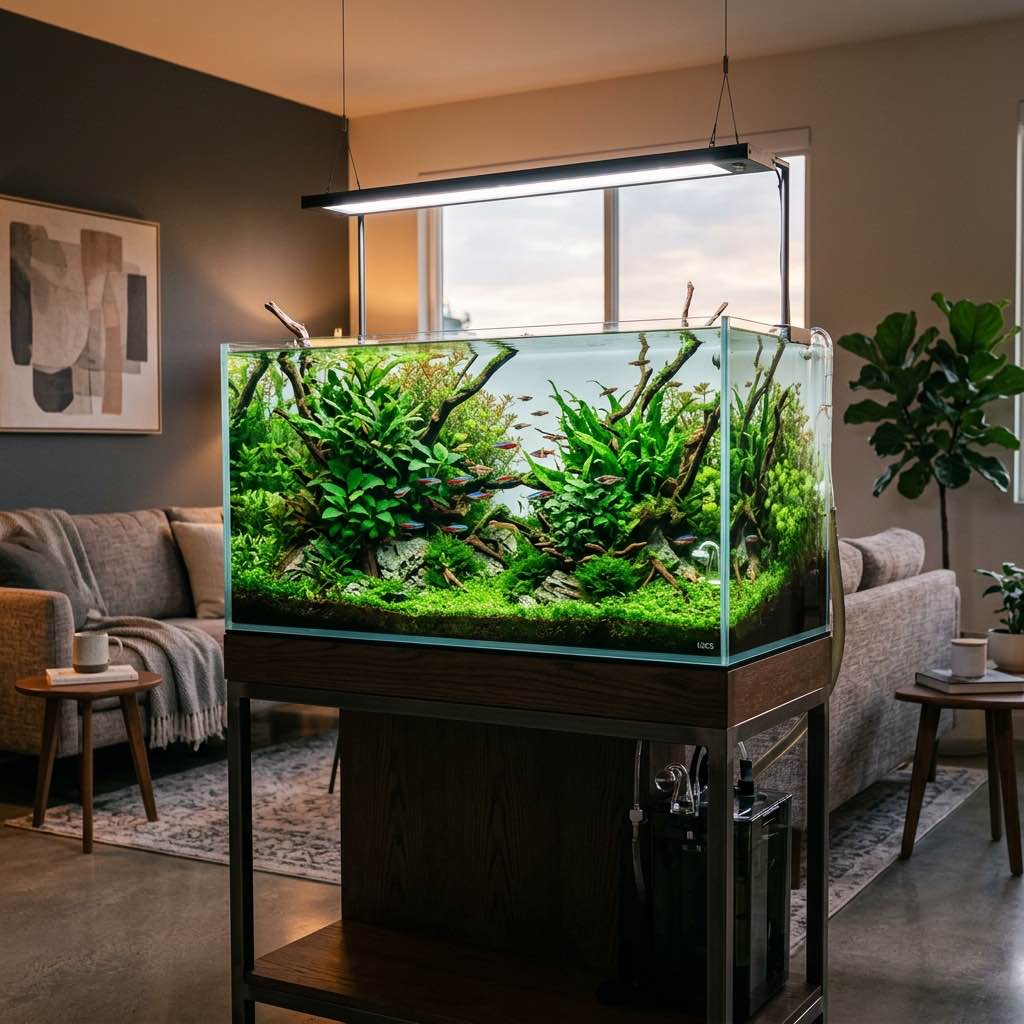
Fish produce waste. Uneaten food and decaying plant matter also break down. That waste can produce ammonia, which is dangerous to fish. A mature filter grows helpful bacteria that convert ammonia to nitrite, then nitrate. Nitrate is managed with water changes and plants.
That process is the nitrogen cycle. A new tank does not have enough bacteria yet, so it needs time and testing before fish are added. SPCA's fish care guidance tells owners to regularly use a test kit to monitor ammonia or nitrite and change water more often if those spike.
A fishless cycle is kinder than using fish as test subjects. Ask a specialist aquarium retailer for a current fishless cycling method and keep notes of test results. Only add fish once ammonia and nitrite stay at safe levels and you understand how to keep nitrate under control.
NZ Tap Water and Regional Differences
New Zealand tap water is not one uniform thing. Auckland, Wellington, Christchurch, rural tank water and small-town supplies can differ in pH, hardness, chlorine treatment and seasonal behaviour. That does not make fishkeeping impossible; it means you should test your source water and avoid chasing perfect numbers with random chemicals.
Use a water conditioner every time new tap water goes into the tank. Match water temperature during water changes, especially in winter. In South Island homes, a heater failure can chill a tropical tank quickly overnight. In sunny Northland rooms, direct sun can push temperature and algae up fast.
If you are on rainwater tanks, bore water or a rural supply, test before choosing fish. Some species cope with a wider range than others, but sudden changes are hard on almost all aquarium fish.
Coldwater, Tropical or Marine?
Most beginners should start with freshwater. Marine tanks are beautiful, but the equipment, water mixing, stocking rules and cost make them a much bigger project.
Coldwater does not mean "no care". Goldfish need large, filtered tanks and produce a lot of waste. A tiny bowl is not a goldfish home. Tropical community tanks can be easier than people expect if the tank is cycled and heated consistently.
Good beginner planning questions:
- How big is the adult fish, not the baby in the shop?
- Does it need a school or does it live alone?
- Does it eat tank mates, nip fins or need fast water?
- Does it suit your tap water?
- Is it legally and ethically available in New Zealand?
Biosecurity: Do Not Release Fish
New Zealand's biosecurity rules matter for aquarium owners. MPI says imported ornamental fish and marine invertebrates must meet import health standards and go through MPI-approved transitional facilities before release into New Zealand. That is a reminder that aquarium species and their water can carry real biosecurity risk.
Never release aquarium fish, plants, snails, live food or tank water into streams, ponds, stormwater drains or the sea. If you cannot keep a fish, ask a specialist retailer, local fish club or experienced keeper about responsible rehoming.
Do not collect wild fish, plants, rocks or driftwood from local waterways unless you are certain it is legal, safe and suitable. "Free decor" can introduce pests, contaminants or sharp surfaces.
Heating and Winter Planning
Tropical fish need stable warm water, not just warm afternoons. Use a heater sized for the tank and a separate thermometer so you can catch faults early. In older NZ homes, power points, cold windows and winter heat loss matter.
Place the tank away from external doors and windows. If you live somewhere with regular outages, think about an air pump backup or at least a plan to keep filter media wet and oxygen moving during a short power cut.
Do not make fast temperature corrections. Sudden changes can be worse than a small temporary drift.
Substrate, Plants and Hiding Places
SPCA New Zealand says fish environments should include space and enrichment, and anything added to the aquarium should be fish safe with smooth edges. That rules out sharp gravel, rough ornaments and random objects from the garage.
Live plants help many freshwater tanks by giving shelter and using nutrients, but artificial plants can work if they are soft and safe. Fish need places to retreat. A bare tank is easy to clean but poor as a home.
For bottom-dwelling fish, substrate matters even more. Sharp gravel can damage delicate barbels and fins. Choose the tank around the fish you plan to keep, not the other way around.
Stocking: Go Slowly
Do not fully stock the tank in one weekend. Add a small number of compatible fish, test water often, and let the filter bacteria adjust. Overcrowding and overfeeding are beginner tank wreckers.
Avoid the old "one inch per gallon" rule as your main stocking guide. Fish shape, adult size, waste output, swimming style, social needs and filter capacity all matter. A long, active fish needs room to swim even if it looks small in the shop.
If you want bettas, research them specifically. They can be wonderful first fish, but they need heated, filtered water and careful tank mate choices.
NZD Cost Planning
Aquarium costs are front-loaded. The tank is only one part of the setup.
| Setup item | Rough NZD planning range | Notes |
|---|---|---|
| Starter tank kit | NZD $120-$350 | Check whether filter, light and heater are included |
| Stand or cabinet | NZD $80-$400+ | Must safely hold full tank weight |
| Water test kit | NZD $25-$80 | Essential before fish |
| Heater and thermometer | NZD $25-$80 | Tropical tanks only, but vital |
| Substrate and decor | NZD $30-$150 | Choose fish-safe, smooth materials |
| Water conditioner and siphon | NZD $20-$60 | Ongoing maintenance basics |
| First fish and food | NZD $20-$100+ | Stock slowly, not all at once |
Budget for replacement filter media, conditioner, test reagents, power use and occasional equipment failure. A cheap setup that kills fish is not cheap.
First-Month Routine
| Frequency | Task |
|---|---|
| Daily | Check fish behaviour, temperature, filter flow and uneaten food |
| 2-3 times weekly in new tanks | Test ammonia and nitrite |
| Weekly | Partial water change if tests and tank plan require it |
| Weekly | Rinse algae from glass and check plants/decor |
| Monthly | Inspect heater, plugs, hoses, impeller and spare supplies |
Use aquarium water, not tap water, when gently cleaning filter media, unless the manufacturer and your aquarium adviser say otherwise. Chlorinated tap water can damage the bacteria you are trying to protect.
Key takeaways
- A good aquarium setup guide NZ beginners can trust starts with cycling before fish.
- A 60L+ freshwater tank is usually easier than a tiny novelty tank.
- Filters, water conditioner and test kits are essential, not optional extras.
- NZ tap water varies by region, so test before choosing fish.
- Never release aquarium fish, plants or water into NZ waterways.
- Stock slowly and watch water quality through the first month.
Related reading
- Beginner Betta and Goldfish Care NZ
- Fish Hub
- Betta Fish profile
- Goldfish profile
- Pet Bowls & Feeders NZ
- Find a Breed
---
Sources
- SPCA New Zealand, Welfare Guidelines for Keeping Fish, checked 2026-07-20: https://www.spca.nz/advice-and-welfare/article/fish
- SPCA New Zealand, Caring for Pet Fish in Aquariums, checked 2026-07-20: https://www.spca.nz/advice-and-welfare/article/caring-for-fish
- Ministry for Primary Industries (MPI), Steps to Importing Live Aquatic Animals, checked 2026-07-20: https://www.mpi.govt.nz/import/importing-live-animals/aquatic-animals/steps-to-importing-aquatic-animals
- Ministry for Primary Industries (MPI), Ornamental Fish and Marine Invertebrates Import Health Standard, checked 2026-07-20: https://www.mpi.govt.nz/dmsdocument/47605/direct
- RSPCA, Choosing a Suitable Aquarium for Pet Fish, checked 2026-07-20: https://www.rspca.org.uk/adviceandwelfare/pets/fish/environment
Free PetMall tools
Related guides
petmall.co.nz
Shop at PetMall
The products below are practical support items for your pet. PetMall ships across New Zealand.
- Fish FoodMatch food to your fish — floating pellets for bettas, sinking for bottom feeders. Feed small amounts your fish finish in a couple of minutes.
- Tank Cleaning & MaintenanceA gravel vacuum and an algae scraper do more for water quality than any gadget — most beginner tank problems are maintenance, not equipment.
- Filters & MediaA good filter is the heart of a healthy tank — choose low-flow models for bettas and long-finned fish.
- Heating & LightingA heater is essential for tropical fish through NZ winters — most bettas and community fish want a stable 24–28°C.
- Water TreatmentDechlorinator and test kits are non-negotiable — stable water quality prevents most beginner fish losses.