Betta Fish Care NZ: Tank Setup, Heating, Diet & Costs
How to keep a betta healthy in NZ: tank size and setup, why a heater is essential, feeding, common mistakes, and what it all costs in NZD.
Kia ora, fellow pet lovers! Welcome to the ultimate guide for keeping Betta fish in Aotearoa. Often admired for their vibrant colours and flowing fins, Betta fish (Betta splendens), also known as Siamese Fighting Fish, are truly stunning aquatic companions. However, despite their small size, they are not 'starter fish' that can thrive in a tiny bowl. Providing proper care for a Betta requires understanding their unique needs, especially within New Zealand's diverse climate and biosecurity regulations.
This comprehensive guide will walk you through everything you need to know to give your Betta fish a long, healthy, and happy life, from initial setup costs in NZD to diet, health, and common mistakes to avoid. Let's dive in!
Understanding Your Betta Fish: The Basics
Betta fish originate from the shallow, slow-moving waters of Southeast Asia, such as rice paddies and drainage ditches. This natural habitat means they are accustomed to warm, still water, but also to relatively stable water parameters – not the cramped, unheated conditions often mistakenly provided. They are known for their striking beauty and, particularly the males, for their aggressive territorial nature towards other male Bettas, hence the 'fighting fish' moniker. While generally solitary, with proper care, they can become quite interactive with their human companions.
Legal and Biosecurity Notes in New Zealand (MPI)
It's important to understand New Zealand's strict biosecurity regulations. The Ministry for Primary Industries (MPI) plays a crucial role in preventing the introduction of exotic pests and diseases that could harm our unique ecosystem. Thankfully, Betta fish are well-established and legal to own in New Zealand. You'll find them readily available at reputable pet stores across the country.
However, this doesn't mean you can introduce any aquatic species you like. Always purchase fish from licensed retailers to ensure they are healthy and legally imported. Never release any pet, including fish, into New Zealand's waterways, as this can have devastating impacts on native species and ecosystems. Responsible pet ownership is key to protecting our beautiful country.
Housing: Creating the Perfect Betta Home in NZ
The most critical aspect of Betta care is providing an appropriate living environment. Forget the tiny vases and bowls; these are simply not suitable for a Betta's long-term health and wellbeing.
Tank Size: Bigger is Always Better
For a single Betta fish, a minimum tank size of 20 litres (approximately 5 US gallons) is recommended. However, a 30-40 litre (8-10 gallon) tank is even better, providing more stable water parameters and more swimming space. Larger tanks are easier to maintain as they dilute waste more effectively, making it simpler to keep water quality pristine.
Filtration: Gentle Flow is Key
Bettas prefer still or very slow-moving water. A strong filter current can stress them out, tear their delicate fins, and make swimming difficult.
- Sponge filters are an excellent choice for Betta tanks. They provide gentle biological and mechanical filtration and are easy to maintain.
- Hang-on-back (HOB) filters can also work, but look for models with adjustable flow or consider baffling the output with a sponge or plastic bottle to reduce the current.
Ensure your filter is always running; turning it off can lead to a build-up of harmful ammonia and nitrite.
Heating: Essential for NZ's Climate
This is non-negotiable in New Zealand. Bettas are tropical fish and require stable water temperatures between 24°C and 27°C (75-80°F). Our climate, from the humid summers of Auckland to the chilly winters of the South Island, means that ambient room temperature alone is rarely sufficient or stable enough.
- Adjustable submersible heaters are a must-have. Choose a heater appropriate for your tank size (e.g., 25W for a 20L tank, 50W for a 40L tank).
- Always use a reliable thermometer to monitor the water temperature. Fluctuations can severely stress your Betta and make them susceptible to illness.
Substrate: What to Put on the Bottom
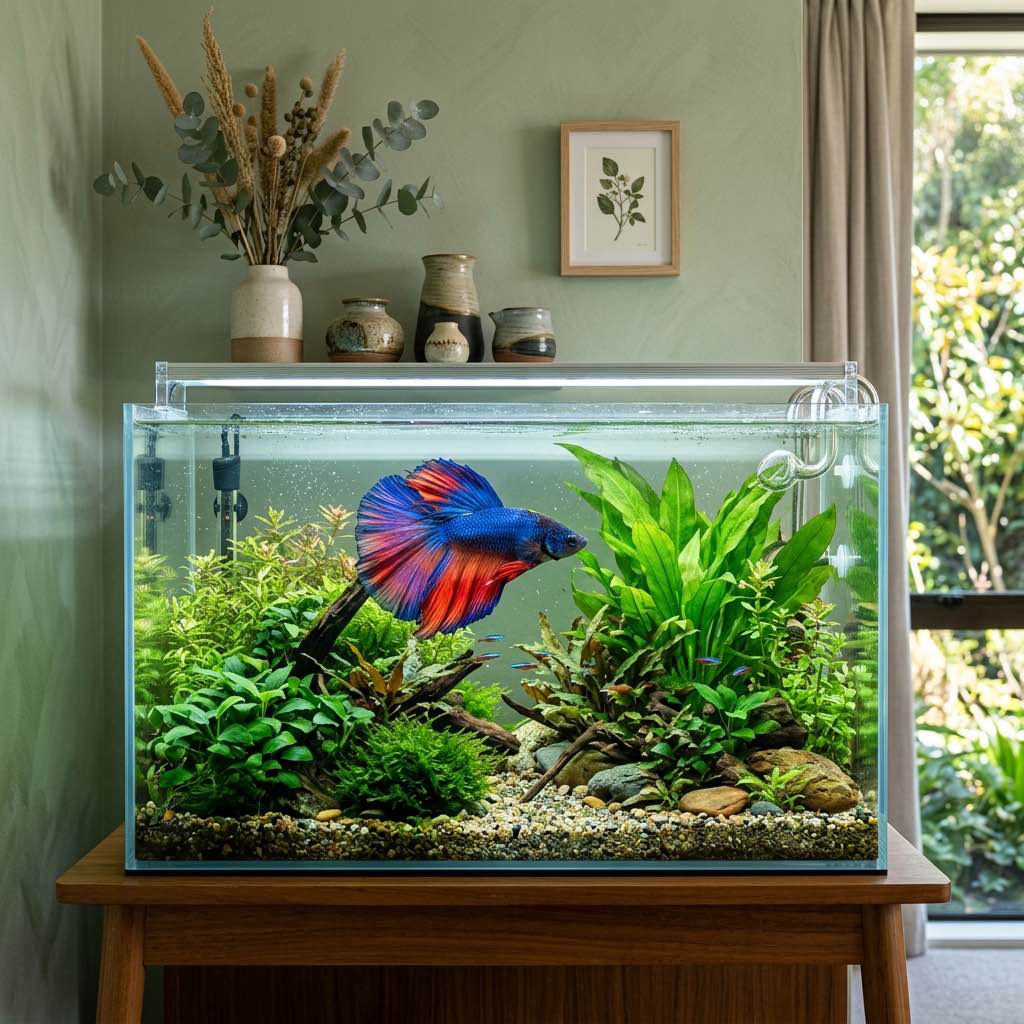
Opt for a smooth substrate like fine gravel or aquarium sand. Avoid sharp or rough gravel that could injure your Betta's delicate fins or mouth. Darker substrates can also help to bring out your Betta's colours.
Decorations: Hiding Spots and Enrichment
Bettas love to explore and have places to rest and hide.
- Live Plants: Anubias, Java Fern, Amazon Swords, and Cryptocorynes are excellent choices. They help with water quality, provide natural hiding spots, and look beautiful. Ensure they are well-rooted or attached to decor.
- Silk Plants: If live plants aren't your thing, high-quality silk plants are a safe alternative. Avoid plastic plants with sharp edges, as these can easily tear a Betta's fins.
- Driftwood and Rocks: Ensure any driftwood is properly cured (soaked to remove tannins) and rocks are inert (won't alter water chemistry) and have no sharp edges.
- Betta Hammocks: These are specific leaves (often plastic or silk) that attach to the side of the tank, allowing your Betta to rest near the surface. They love them!
- Caves and Tunnels: Provide safe, smooth-edged caves for your Betta to retreat into.
Lighting
Moderate lighting for 8-10 hours a day is usually sufficient. A timer can help maintain a consistent light cycle, which is beneficial for your fish and any live plants. Avoid direct sunlight, as this can cause algae blooms and rapid temperature fluctuations.
Tank Placement
Choose a stable, level surface for your tank. Keep it away from direct sunlight, heating/cooling vents, and high-traffic areas where sudden movements or noises could startle your fish.
Water Quality: The Foundation of Health
Maintaining pristine water quality is paramount for Betta health. This involves understanding the nitrogen cycle and performing regular maintenance.
The Nitrogen Cycle: Your Tank's Invisible Hero
Before you even think about adding a fish, your tank needs to be 'cycled'. This is the process where beneficial bacteria establish themselves in your filter and substrate, converting toxic ammonia (from fish waste and uneaten food) into less toxic nitrite, and then into even less toxic nitrate.
- Ammonia (NH3): Highly toxic. Should always be 0 ppm.
- Nitrite (NO2): Highly toxic. Should always be 0 ppm.
- Nitrate (NO3): Less toxic, but high levels are still harmful. Keep below 20 ppm (ideally below 10 ppm).
Cycling a tank typically takes 4-6 weeks and can be done 'fishless' using an ammonia source. This is crucial for a healthy, stable environment. Never put a fish into an uncycled tank – this is known as 'new tank syndrome' and is often fatal.
Water Parameters & Testing
Regularly test your water parameters using a liquid test kit (strips are less accurate).
- pH: Bettas prefer a slightly acidic to neutral pH, typically between 6.5 and 7.5.
- Temperature: As mentioned, 24-27°C.
Water Changes: Regular Maintenance
Once your tank is cycled, perform weekly partial water changes of 25-30%. This removes nitrates and replenishes essential minerals.
- Always use a good quality dechlorinator/water conditioner when adding tap water to neutralise chlorine and chloramines, which are harmful to fish.
- Use a gravel vacuum to siphon out waste from the substrate during water changes.
Diet: What to Feed Your Betta
Bettas are carnivorous, primarily insectivores in the wild. A varied, high-quality diet is crucial for their health and vibrant colours.
Staple Diet
- High-quality Betta pellets or flakes: Look for brands specifically formulated for Bettas, with a high protein content (e.g., fish meal, shrimp meal) and minimal fillers. Feed 2-3 small pellets, 1-2 times a day.
Treats and Variety
- Frozen or freeze-dried foods: Bloodworms, brine shrimp, and daphnia are excellent supplementary foods. Feed these 2-3 times a week, in moderation.
- Live foods: If you have access to clean, disease-free live foods like daphnia or brine shrimp, these are a fantastic treat, but be cautious about introducing pathogens.
Feeding Frequency and Avoiding Overfeeding
Feed your Betta small amounts, twice a day, or a slightly larger amount once a day. Only feed what they can consume in 2-3 minutes. Overfeeding is a common mistake that leads to several problems:
- Bloat and digestive issues: Bettas are prone to constipation and bloat.
- Poor water quality: Uneaten food decays, releasing ammonia and nitrite, stressing your fish and causing algae blooms.
Consider fasting your Betta one day a week to aid digestion.
Health & Wellness: Spotting and Preventing Issues
Healthy Bettas are active, have bright colours, clear eyes, and intact fins. Regular observation is key to early detection of problems.
Common Betta Ailments
- Fin Rot: Often caused by poor water quality or injury. Fins appear ragged, torn, or have white/black edges. Treat with clean water and sometimes antibiotics.
- Ich (White Spot Disease): A parasitic infection appearing as tiny white spots (like salt grains) on the body and fins. Highly contagious. Treat by slowly raising water temperature (to 28-30°C if fish can tolerate) and using Ich medication.
- Dropsy: A severe bacterial infection, often a symptom of underlying organ failure. The fish's scales will stick out, making it look 'pineconed'. Often fatal.
- Swim Bladder Disease: Affects the fish's ability to swim normally (floating, sinking, swimming on side). Often caused by overfeeding, constipation, or poor diet. Treat with fasting, feeding blanched pea (deshelled), and clean warm water.
- Velvet: A parasitic infection appearing as a dusty, yellowish-gold coating on the fish. Treat with specific velvet medication.
- Popeye: One or both eyes protrude. Can be bacterial, parasitic, or due to injury/poor water quality. Treat underlying cause.
Prevention is the Best Cure
- Excellent Water Quality: The single most important factor. Regular water changes and a cycled tank prevent most diseases.
- Proper Diet: A varied, high-quality diet prevents digestive issues and boosts immunity.
- Stable Temperature: Avoid fluctuations.
- Low Stress: Appropriate tank size, hiding spots, and gentle filtration reduce stress.
- Quarantine New Fish: If you're adding other fish (though generally not recommended for beginners with Bettas) or even new plants, quarantine them in a separate tank for 2-4 weeks to ensure they aren't carrying diseases.
Vet Access for Fish in NZ
While exotic pet vets are becoming more common in New Zealand, finding a vet specifically experienced with fish can be challenging. Many general vets may not have the specialised knowledge or equipment. For serious or persistent issues, you might need to consult an online fish health forum or a very experienced local fish store owner for advice. The best approach is always prevention.
Setting Up Your Betta Tank: A Step-by-Step Guide
- Choose Your Location: Select a stable, level surface away from direct sunlight and drafts.
- Clean Your Tank: Rinse the tank thoroughly with water only (no soap or chemicals!).
- Add Substrate: Rinse your chosen gravel or sand thoroughly until the water runs clear. Add it to the tank.
- Install Decor: Arrange your plants, driftwood, and caves. Ensure everything is smooth and stable.
- Fill with Water: Place a plate or plastic bag on the substrate and pour dechlorinated tap water gently to avoid disturbing your decor. Fill to about 2-3 cm from the top.
- Install Equipment: Place your heater and filter. Plug in the heater, but don't turn on the filter until it's fully submerged.
- Add Water Conditioner: Add the appropriate amount of dechlorinator for your tank volume.
- Cycle the Tank: This is the most crucial step! Follow a fishless cycling method. This will take several weeks. Use your liquid test kit to monitor ammonia, nitrite, and nitrate levels. Only when ammonia and nitrite are consistently 0 ppm, and nitrates are present, is your tank ready for a fish.
- Acclimate Your Betta: Once the tank is cycled and stable, bring your Betta home. Float the sealed bag in the tank for 15-20 minutes to equalise temperature. Then, slowly introduce tank water into the bag over another 30-60 minutes before gently netting your Betta into its new home. Discard the bag water.
Costs in NZD: What to Expect
Setting up a proper Betta tank involves an initial investment, followed by ongoing maintenance costs. Here's a breakdown in New Zealand Dollars:
Initial Setup Costs (Estimates)
- Aquarium (20-40 litres): $50 - $150 (depending on brand, material, and whether it's a kit)
- Heater (25-50W): $30 - $70
- Filter (Sponge or low-flow HOB): $30 - $80
- Substrate (Gravel/Sand): $20 - $50
- Decorations (Plants, driftwood, caves): $30 - $100+
- Water Conditioner/Dechlorinator: $15 - $30
- Liquid Test Kit (e.g., API Freshwater Master Kit): $50 - $80 (a must-have!)
- Thermometer: $10 - $20
- Gravel Vacuum & Net: $20 - $40
- Betta Fish: $20 - $80 (depending on colour, fin type, and rarity)
Total Initial Setup Estimate: $285 - $700+
Ongoing Costs (Estimates)
- Betta Food: $10 - $20 per month (a good quality container lasts a while)
- Water Conditioner: $10 - $20 every few months
- Filter Media (if applicable): $10 - $30 every few months
- Electricity: Running a heater and filter will add a small amount to your power bill. This varies greatly depending on tank size, room temperature, and electricity provider, but expect an extra $5-$15 per month.
- Treatments/Medications (if needed): Variable
Total Ongoing Estimate: $20 - $50+ per month
Common Mistakes to Avoid with Betta Fish Care NZ
- Too Small a Tank: The biggest mistake. Bowls and tiny tanks are cruel and unhealthy.
- No Heater: In New Zealand, a heater is essential year-round for tropical fish.
- No Filter (or too strong a filter): A filter is vital for water quality, but ensure the flow is gentle.
- Not Cycling the Tank: Adding a fish to an uncycled tank is a recipe for disaster.
- Overfeeding: Leads to bloat, poor water quality, and disease.
- Ignoring Water Parameters: Not testing regularly means you won't catch problems until it's too late.
- Incompatible Tank Mates: While some Bettas can coexist with certain peaceful species in larger, heavily planted tanks, for beginners, a solitary Betta is always the safest and best option. Never house two male Bettas together.
- Sharp Decorations: Plastic plants or rough decor can tear delicate fins.
- Lack of Hiding Spots: Bettas need places to feel secure and rest.
Product Guidance for Your Betta
When shopping for your Betta, look for quality products that will last and genuinely benefit your fish:
- Heaters: Adjustable, submersible heaters from reputable brands (e.g., Eheim, Aqua One, Fluval). Always check reviews.
- Filters: Sponge filters (e.g., Bio Sponge Filter) or low-flow HOBs (e.g., AquaClear 20, Fluval C2 with flow adjustment).
- Water Conditioners: Seachem Prime, API Stress Coat, or AquaSafe are popular and effective choices.
- Test Kits: The API Freshwater Master Test Kit is highly recommended for its accuracy and comprehensiveness.
- Food: Betta-specific pellets (e.g., Hikari Betta Bio-Gold, Fluval Bug Bites Betta Formula) and freeze-dried/frozen bloodworms or brine shrimp.
- Plants: Live plants are always best. If artificial, choose silk over plastic.
Quick Summary: Your Betta Care Checklist
- Tank Size: Minimum 20L, ideally 30-40L for a single Betta.
- Heater: Essential for stable 24-27°C water temperature, especially in NZ's climate.
- Filter: Gentle filtration (sponge filter or baffled HOB).
- Water Quality: Cycle your tank before adding fish. Test water weekly (Ammonia 0, Nitrite 0, Nitrate <20ppm).
- Water Changes: 25-30% weekly, using dechlorinated water.
- Diet: High-quality Betta pellets/flakes, supplemented with frozen/freeze-dried treats. Avoid overfeeding.
- Decor: Smooth substrate, live or silk plants, caves, and a Betta hammock for resting.
- Health: Observe daily, prevent issues with good husbandry. Vet access for fish is limited in NZ.
- Biosecurity: Never release pets into waterways. Purchase from reputable stores.
- Cost: Expect an initial setup of $285-$700+ and ongoing costs of $20-$50+ per month.
Conclusion
Caring for a Betta fish in New Zealand is a rewarding experience when done correctly. By providing a spacious, heated, filtered, and well-decorated environment, maintaining excellent water quality, and offering a nutritious diet, you'll be giving your Betta the best chance at a long, vibrant life. Remember, these aren't just pretty fish; they are intelligent, curious creatures that deserve the best care. Happy fish keeping, and enjoy your beautiful Betta!
Sources
- SPCA New Zealand, "Fish deserve 'Betta' than a Bowl" (SPCA Science Team, Advice & welfare), checked 2026-07-21: https://www.spca.nz/advice-and-welfare/article/fish-deserve-betta-than-a-bowl
- RSPCA, Fish welfare advice (Advice & welfare, pets/fish/behaviour), checked 2026-07-21: https://www.rspca.org.uk/adviceandwelfare/pets/fish/behaviour
- Ministry for Primary Industries (MPI), Importation of Live Aquatic Animals, checked 2026-07-21: https://www.mpi.govt.nz/import/importing-live-animals/
Related guides
petmall.co.nz
Shop at PetMall
The products below are practical support items for your pet. PetMall ships across New Zealand.
- Fish FoodMatch food to your fish — floating pellets for bettas, sinking for bottom feeders. Feed small amounts your fish finish in a couple of minutes.
- Tank Cleaning & MaintenanceA gravel vacuum and an algae scraper do more for water quality than any gadget — most beginner tank problems are maintenance, not equipment.
- Filters & MediaA good filter is the heart of a healthy tank — choose low-flow models for bettas and long-finned fish.
- Heating & LightingA heater is essential for tropical fish through NZ winters — most bettas and community fish want a stable 24–28°C.
- Water TreatmentDechlorinator and test kits are non-negotiable — stable water quality prevents most beginner fish losses.