Tropical Fish NZ: Best Freshwater Species for Beginners (2026)
The best tropical fish for NZ beginners: guppies, tetras, corydoras, mollies and more. What they need, what they cost, and where to buy in New Zealand.
Freshwater tropical fish are the most popular aquarium fish in New Zealand — easy to find at Animates, Petbarn, and specialty fish shops, and well-suited to NZ tap water with basic preparation. This guide covers the best beginner-friendly species, what each one needs, and how to get started without common rookie mistakes.
See also: How to Set Up Your First Aquarium in NZ | Beginner Aquarium Guide NZ
---
What Is a "Tropical Fish"?
In the aquarium hobby, a "tropical fish" refers to species that originate from warm-water environments, typically located in the tropical regions of Africa, South America, Central America, and Southeast Asia. Because these fish come from warm climates, they cannot survive in standard cold-water aquariums. They require a heated tank, with water temperatures maintained consistently between 22°C and 28°C year-round.
Aquarium fish are broadly divided into two categories:
- Freshwater Tropical Fish: These live in rivers, lakes, and streams. They are highly adaptable, generally very hardy, and represent the most beginner-friendly and cost-effective category of fish keeping.
- Marine (Saltwater) Tropical Fish: These originate from ocean coral reefs. They are significantly more sensitive, require complex saltwater chemistry, and demand expensive equipment.
This guide focuses exclusively on freshwater tropical fish — the ideal starting point for New Zealand hobbyists looking to build a beautiful, thriving underwater community.
---
Best Tropical Fish for Beginners in NZ
Choosing the right species is crucial to avoiding early disasters. The following six species are highly recommended for Kiwi beginners due to their hardiness, peaceful temperaments, and ready availability in local pet stores:
1. Guppies (*Poecilia reticulata*)
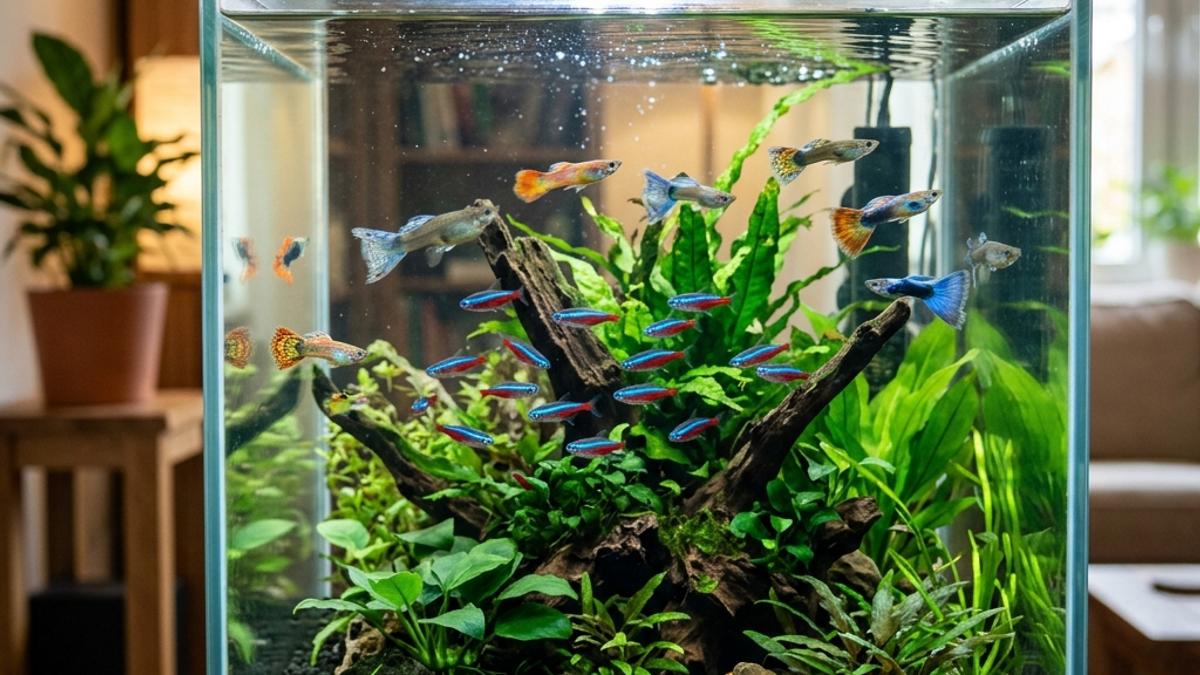
Guppies are arguably the most iconic and widely kept freshwater fish in New Zealand. Known for their active nature and stunning, fan-like tails in an array of brilliant colours, they are incredibly hardy and tolerate minor water parameter fluctuations well. Guppies are livebearers, meaning they give birth to free-swimming fry rather than laying eggs. If you keep males and females together, they will breed readily, which is a fascinating experience for hobbyists but can quickly lead to overcrowding. To manage this, many beginners choose to keep an all-male tank, which also showcases the most colourful fish.
| Tank Size (Min) | Temperature | pH Range | Difficulty | NZ Price |
|---|---|---|---|---|
| 15 Litres | 22°C – 28°C | 6.8 – 7.8 | Very Easy | $5 – $20 per fish |
For a deeper dive into selective breeding, varieties, and detailed care requirements for this species, check our comprehensive Guppy profile.
2. Neon Tetras (*Paracheirodon innesi*)
Neon Tetras are famous for their iridescent blue and bright red horizontal stripes, which shimmer beautifully under aquarium lights. They are classic schooling fish, which means they must be kept in groups of at least 6 to 8 individuals (though a group of 10 or more in a larger tank is highly recommended). Keeping them in schools reduces their stress and encourages natural, synchronized swimming behaviours. In a well-planted tank, a school of Neon Tetras provides a spectacular visual display. They prefer established aquariums with soft, slightly acidic water and plenty of hiding places among plants.
| Tank Size (Min) | Temperature | pH Range | Difficulty | NZ Price |
|---|---|---|---|---|
| 40 Litres | 20°C – 26°C | 6.0 – 7.0 | Easy | $4 – $8 per fish |
3. Corydoras Catfish (*Corydoras spp.*)
Corydoras (commonly called "Corys") are peaceful, bottom-dwelling catfish originating from South America. They are the ultimate community tank mates, spending their day scanning the substrate for leftover food flakes and debris. They have charming personalities, often darting to the surface for a gulp of air before returning to the bottom. Corys are social animals and should be kept in groups of 4 or more of the same species. Because they constantly dig in the substrate with their sensitive facial barbels, it is vital to use sand or smooth, fine gravel to prevent injury and infection.
| Tank Size (Min) | Temperature | pH Range | Difficulty | NZ Price |
|---|---|---|---|---|
| 40 Litres | 22°C – 26°C | 6.5 – 7.5 | Easy | $8 – $15 per fish |
4. Mollies (*Poecilia sphenops / latipinna*)
Mollies are robust livebearers that come in several popular varieties, including Black Mollies, Sailfin Mollies, and Balloon Mollies. They are extremely active and hardy, making them excellent choices for cycling tanks or for new aquarists. Mollies are unique because they are excellent algae eaters, constantly grazing on tank walls and decorations. They prefer slightly hard, alkaline water and can even tolerate brackish (partially salty) water conditions. Ensure their diet includes high-quality plant-based flakes or pellets to satisfy their nutritional needs.
| Tank Size (Min) | Temperature | pH Range | Difficulty | NZ Price |
|---|---|---|---|---|
| 60 Litres | 22°C – 28°C | 7.0 – 8.0 | Very Easy | $8 – $15 per fish |
5. Betta Fish (*Betta splendens*)
Also known as Siamese Fighting Fish, Bettas are prized for their spectacular, flowing fins and intense colouration. Unlike the schooling fish listed above, male Bettas are highly territorial and must be kept solo in their own tank. Keeping two males together will result in fatal fighting, and they should also not be kept with active, fin-nipping tank mates like Tiger Barbs. Despite popular myths that they can live in tiny bowls or flower vases, Bettas require a filtered, heated tank of at least 15 to 20 litres to remain healthy and reach their lifespan of 3 to 5 years.
| Tank Size (Min) | Temperature | pH Range | Difficulty | NZ Price |
|---|---|---|---|---|
| 15 Litres | 24°C – 28°C | 6.5 – 7.5 | Easy | $10 – $80 per fish |
Before purchasing, read the official SPCA guidance on why fish deserve better than a bowl. You can also view our Betta Breed Profile and check out the Fighter Fish NZ Care Guide for specialized tank setup instructions.
6. Platies (*Xiphophorus maculatus*)
Platies are peaceful, colourful, and incredibly active livebearers that are highly compatible with guppies and mollies. They are available in a massive range of colours, from bright red and sunset orange to blue and variegated patterns. Platies are highly tolerant of different water conditions and are very well-suited to the natural parameters of New Zealand tap water. They are excellent community fish, grazing on algae and eagerly accepting standard flake foods.
| Tank Size (Min) | Temperature | pH Range | Difficulty | NZ Price |
|---|---|---|---|---|
| 40 Litres | 20°C – 26°C | 7.0 – 8.0 | Very Easy | $8 – $15 per fish |
---
NZ Water and Tropical Fish
Understanding your local water parameters is essential for successful fish keeping in New Zealand.
- pH and Hardness: Most municipal tap water in New Zealand is slightly alkaline, ranging from pH 7.0 to 7.5, which is ideal for livebearers like guppies, platies, and mollies. However, there are regional variations: Wellington tap water is generally very soft and slightly acidic, which suits tetras, whereas Auckland and Christchurch water tends to have moderate hardness.
- Dechlorination: NZ municipal tap water contains chlorine or chloramine added by councils to kill bacteria. This is highly toxic to fish, burning their gills and destroying the beneficial bacteria in your filter. Always use a high-quality water conditioner, such as Seachem Prime, to neutralise these chemicals before adding any tap water to your aquarium.
- The Winter Factor: Because New Zealand homes are typically not centrally heated and indoor temperatures can drop below 18°C during winter, an aquarium heater is non-negotiable. Tropical fish will quickly go into shock and perish without a reliable heater set to their preferred temperature.
---
What Equipment Do You Need?
To give your tropical fish a healthy, stable environment, you must invest in the correct essential equipment. We recommend reviewing these detailed resources before purchasing:
- The Tank: Choose a tank that matches the minimum volume requirements of the species you want to keep. Larger volumes are actually easier to maintain because water parameters remain more stable.
- Heater: Select a reliable submersible heater. A general rule of thumb is 1 watt of power per litre of water. Learn how to choose the right one in our aquarium heater guide.
- Filter: Essential for mechanical and biological filtration. It processes toxic ammonia from fish waste into harmless nitrates. Check out the options in our aquarium filter guide.
- Substrate, Lid, and Thermometer: You will need sand or gravel for substrate (essential for Corydoras), a tight-fitting lid (Guppies and Bettas are notorious jumpers), and a basic thermometer to monitor temperatures daily.
- Tank Cycling: Never buy a tank and add fish on the same day. You must run the tank for 2 to 4 weeks to establish a colony of beneficial bacteria in the filter — a process known as cycling. Read our guide on how to cycle a new fish tank to avoid "new tank syndrome" which kills millions of pet fish annually.
---
Where to Buy Tropical Fish in NZ
New Zealand has several reliable avenues for sourcing healthy livestock and equipment:
- Animates and Petbarn Chains: These nationwide pet chain stores offer a consistent selection of popular beginner fish, tanks, and supplies. Always check the health of the fish in their display tanks before buying.
- Specialty Aquarium Shops: Dedicated local fish stores (LFS) are the best source for high-quality livestock, rare species, and expert advice. The staff are typically passionate hobbyists who can guide you through complex questions.
- Trade Me: Many private NZ breeders and hobbyists sell high-quality, home-bred strains of guppies, platies, and plants on Trade Me. Verify the seller's feedback and ensure they package fish safely in insulated boxes if shipping is involved.
- Regional Aquarium Societies: Joining a regional aquarium club or attending local society auctions is a fantastic way to acquire healthy, locally-bred fish and meet other Kiwi aquarists.
---
References
- SPCA New Zealand, Fish deserve betta than a bowl — bettas are commonly sold and housed in tiny tanks or vases, which poses serious welfare concerns; tolerating low oxygen does not mean they prefer it, checked 2026-07-24: https://www.spca.nz/advice-and-welfare/article/fish-deserve-betta-than-a-bowl
- SPCA New Zealand, Goldfish Husbandry and Tank Size Specifications, accessed June 2026: https://www.spca.nz/advice-and-welfare/article/caring-for-goldfish
- Ministry for Primary Industries, Importing Live Freshwater Fish Standards, accessed June 2026: https://www.mpi.govt.nz/import/live-animals/ornamental-fish-and-marine-invertebrates/
---
*Disclaimer: This guide is for informational and educational purposes only. Aquarium husbandry, water chemistry, and species compatibility require careful research. For specific health concerns, diagnostic checks, or disease treatment in your aquarium, consult a qualified aquatic animal health professional or specialized fish veterinarian in New Zealand.*
Related guides
petmall.co.nz
Shop at PetMall
The products below are practical support items for your pet. PetMall ships across New Zealand.
- Fish FoodMatch food to your fish — floating pellets for bettas, sinking for bottom feeders. Feed small amounts your fish finish in a couple of minutes.
- Tank Cleaning & MaintenanceA gravel vacuum and an algae scraper do more for water quality than any gadget — most beginner tank problems are maintenance, not equipment.
- Filters & MediaA good filter is the heart of a healthy tank — choose low-flow models for bettas and long-finned fish.
- Heating & LightingA heater is essential for tropical fish through NZ winters — most bettas and community fish want a stable 24–28°C.
- Water TreatmentDechlorinator and test kits are non-negotiable — stable water quality prevents most beginner fish losses.