Lovebird Care NZ: Housing, Diet, Pair Bonds, and What NZ Owners Need to Know
Lovebirds are beautiful, active parrots that require more care than many NZ owners expect. Here's what housing, diet, companionship, and daily interaction actually look like for lovebirds in NZ.
Lovebirds are small parrots (genus *Agapornis*) known for their vivid colouring, active personality, and intensely devoted pair bonds. They are available in NZ from pet shops and breeders, and they're often purchased by people attracted to their appearance without fully understanding their social and care needs. This guide covers the practical reality of lovebird ownership in New Zealand.
The most important thing to understand first: the "lovebird" name is misleading
Lovebirds are named for the strong pair bond they form with their mate — not for automatic affection toward humans. An unbonded lovebird, or one not handled regularly from a young age, is often nippy, territorial, and far less cuddly than the name suggests.
Lovebirds kept with a lovebird partner bond intensely with that bird and become significantly less interested in human interaction. This is natural for the species — but it means a lovebird kept as a pair is often a watch-and-enjoy species, not a hands-on companion.
A lovebird kept singly (not recommended for welfare reasons, but it does happen) with intensive daily human interaction from a young age can become tame and interactive. But this requires daily significant time commitment — the bird is substituting you for the partner they would naturally seek.
Before getting a lovebird, clarify what you want: if you want a hands-on companion bird, a cockatiel or budgie may be a more reliably rewarding choice. If you want a visually spectacular, active pair to watch, lovebirds are excellent.
Housing
Cage requirements
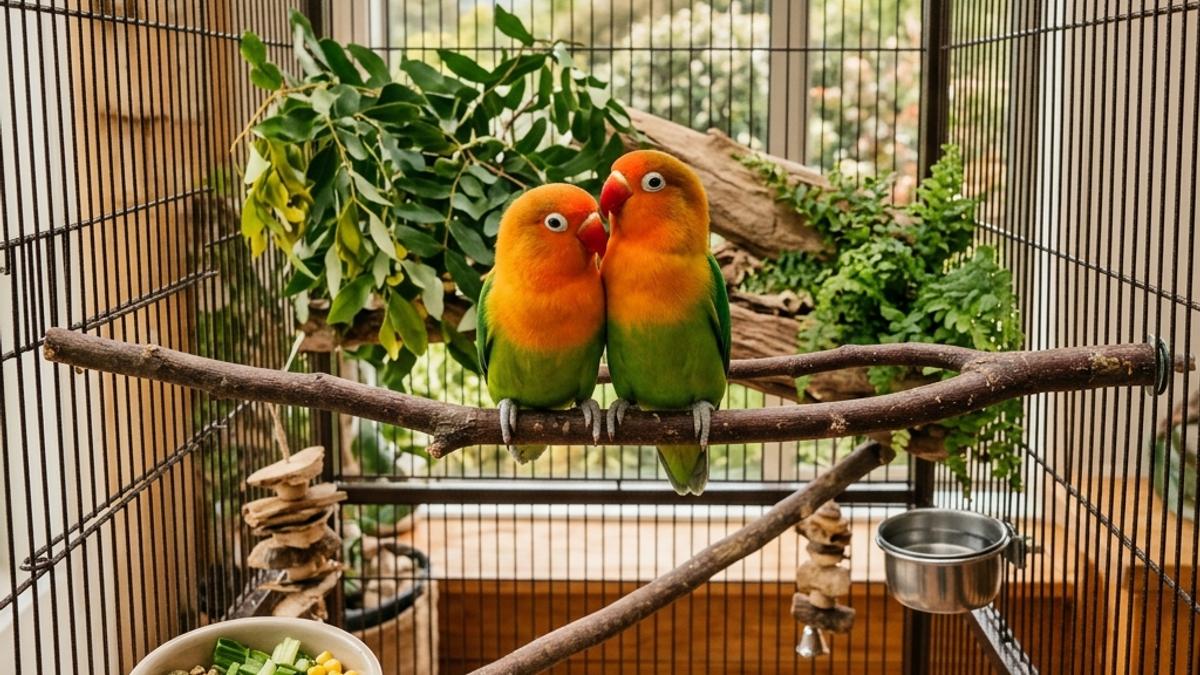
- Minimum cage size for a pair: 60 × 60 × 60 cm; larger is better. Lovebirds are active flyers and need horizontal flying space.
- Bar spacing: Maximum 1.2 cm — lovebirds can fit their heads through wider gaps and injure themselves
- Material: Wire cage with no zinc or lead coatings (galvanised metal can be toxic). Stainless steel or powder-coated steel are safe options.
- Multiple perches at different heights: Natural wood perches of varying diameter (1.5–2 cm) are better than uniform dowel perches — varying diameter exercises foot muscles
Nest boxes
Lovebirds in NZ are often given nest boxes because they "look like" they'd want one. In fact, a nest box without intending to breed is not necessary and may trigger hormonal behaviours — including aggression and persistent egg-laying in females, which carries health risks. Unless you're actively breeding, nest boxes are best avoided.
Temperature
Lovebirds are hardy within 18–30°C. NZ's temperate climate suits them well, though cold drafts and South Island winter temperatures below 15°C require a warm, draft-free indoor location. Auckland's humidity is manageable with good ventilation.
Diet
A lovebird diet in NZ should include:
A quality small parrot seed mix — available from NZ pet shops. Lovebirds do well on a varied seed diet supplemented with pellets and fresh food. However, seed-only diets are nutritionally incomplete over a long lifespan (lovebirds live 10–15 years).
Pellets: Gradually transitioning lovebirds to accept pellets (a process that can take weeks to months) provides a more nutritionally complete base diet. Harrison's or Roudybush small parrot pellets are available through specialist NZ avian retailers.
Fresh foods daily: A small piece of fresh food once or twice daily is valuable:
- Safe options: broccoli, carrot, capsicum, kale, spinach (in moderation), apple (no seeds), mango, papaya
- Avoid: avocado (toxic), onion/garlic, rhubarb, caffeine, salt, chocolate, fruit seeds/stones
- Sprouted seeds provide excellent nutrition and are readily accepted
Grit: Modern avian nutrition research does not recommend adding grit to lovebird diets — it's not necessary for psittacines (parrots) and excessive grit ingestion can cause crop impaction.
Social requirements
As outlined above: lovebirds should be kept in pairs at minimum. Keeping a single lovebird is possible only if the owner can provide very significant daily social interaction.
Same-sex pairs: Two female lovebirds together can work, though both may lay infertile eggs (which can become chronic and lead to health issues — consult an avian vet). Two males can coexist well. Mixed pairs should only be kept together if breeding is intended and managed.
Introduction of new birds: Lovebirds can be territorial and aggressive with unfamiliar birds. New introductions should be done gradually: cages placed beside each other for 1–2 weeks, then slow combined out-of-cage time under supervision before mixing.
Daily care and enrichment
Out-of-cage time: Lovebirds should have at least 1–2 hours of supervised out-of-cage time daily. They fly, explore, and chew — bird-proof the room (no open windows, no toxic plants, no accessible cooking fumes).
Foraging and enrichment:
- Foraging toys (see the bird toy types guide) are important for mental stimulation
- Lovebirds carry nesting material in their feathers — providing strips of palm leaves, paper, or willow gives them an outlet for this instinctive behaviour
- Chew toys (untreated soft wood, cork) satisfy their strong chewing drive
- Rotating toys in and out of the cage maintains novelty
Bathing: Lovebirds enjoy misting with a spray bottle of lukewarm water, or a shallow dish of water to bathe in. Bathing 2–3 times weekly supports feather condition — NZ's climate (particularly Auckland's humidity) generally means this is manageable year-round.
Common lovebird behaviours NZ owners should understand
Feather carrying: Lovebirds carry nesting material in their feathers — strips of paper or leaf are tucked under back feathers. This is normal behaviour, not distress.
Biting: A poorly socialised or stressed lovebird will bite. Their small beaks can break skin. This is why early, consistent handling and socialisation matters if you want a hands-on bird.
Screeching: Lovebirds have a loud contact call. In a NZ apartment, this may be audible to neighbours. Most lovebirds call regularly throughout the day.
Eye-pinning (pupil dilation): Rapid pupil contraction and expansion signals excitement or agitation — a cue that the bird is highly aroused and may bite if approached.
Sourcing in NZ
Lovebirds are available from NZ pet shops and specialist bird breeders. They are domestically bred in NZ — MPI prohibits live bird imports. Prices run NZD $80–$250 per bird, with hand-raised birds costing more than aviary birds.
A hand-raised lovebird that has been regularly handled from a young age is significantly easier to tame and interact with than an aviary-raised bird. Ask breeders about handling history before purchasing.
Lovebirds are present in NZ SPCA occasionally — rehoming is common as owners underestimate care requirements.
Related guides
- Bird cage setup guide NZ
- Bird toy types NZ
- Bird food types NZ
- Budgerigar vs Cockatiel NZ
- Best pet birds for beginners NZ
- Bird hub — all NZ bird guides
---
References
- Merck Veterinary Manual, Management of Pet Birds — housing, cage furnishing, enrichment and social management of companion psittacines, checked 2026-07-28: https://www.merckvetmanual.com/exotic-and-laboratory-animals/pet-birds/management-of-pet-birds
- RSPCA Knowledgebase, How should I house my bird? — most bird species are highly social and live in groups or at least pairs in the wild, so pet birds should be housed in compatible pairs or groups, checked 2026-07-28: https://kb.rspca.org.au/categories/companion-animals/other-pets/birds/how-should-i-house-my-bird
---
*This guide provides general care information for NZ lovebird owners. For health concerns, unusual behavioural changes, or reproductive issues, consult a registered New Zealand avian veterinarian. Not a substitute for professional veterinary advice.*
Related guides
petmall.co.nz
Shop at PetMall
The products below are practical support items for your pet. PetMall ships across New Zealand.
- Bird Food & TreatsA quality seed or pellet base plus fresh veg keeps cage birds healthier than seed alone.
- Bird ToysForaging and chew toys prevent boredom — rotate a few rather than crowding the cage all at once.
- Bird SuppliesA well-sized cage with the right perch variety helps long-term comfort — aim for space to fully stretch wings.