Best Pet Birds for Beginners in NZ (2026): 6 Easy Species
New to pet birds in New Zealand? These six species are the best starting points — manageable care, widely available from NZ breeders, and rewarding to keep.
Pet birds are genuinely different from cats and dogs — they require species-specific knowledge, avian vet care when needed, and an understanding of their social and behavioural needs that many first-time owners don't have at the start. Choosing the right species for your first bird significantly affects how rewarding the experience is. These six are the most accessible starting points for NZ beginners.
What makes a good beginner bird?
A beginner-appropriate bird species in New Zealand is:
- Available from NZ breeders or pet shops without needing to import (MPI prohibits live bird imports)
- Manageable in a standard home or apartment — appropriate noise level, cage size, and care routine
- Hardy and forgiving of early mistakes in diet or husbandry
- Not excessively demanding of specialist care that a new owner hasn't yet learned to provide
- Honest about commitment — the lifespan and care level should match what you're actually prepared for
Large parrots (African greys, macaws, cockatoos) are excluded from this list — they have complex psychological needs, long lifespans (30–80 years), and require experienced handlers. They are not beginner birds, regardless of how appealing they are.
---
1. Zebra Finch
Profile: Zebra Finch | Lifespan: 5–7 years | NZ price: $20–$50 per bird
The zebra finch is arguably the most beginner-friendly bird species available in New Zealand. They are small, hardy, attractive, and have a delightful vocal presence — the chattering and song of a pair of zebra finches is pleasant rather than disruptive.
Why they suit beginners:
- They don't require regular taming or handling — zebra finches are a watch-and-enjoy species rather than a hands-on companion
- Their diet is simple: a good quality finch seed mix supplemented with fresh greens and a cuttlebone
- They must be kept in pairs or small groups (they are strongly social and will decline without companions)
- Small cage footprint — a finch cage of 60 × 40 × 40 cm is adequate for a pair
- Generally robust and tolerant of minor husbandry errors
What they're not:
- They don't learn to interact with humans as individuals the way parrots do
- You watch them — they don't come to you
NZ note: Zebra finches are widely available at NZ pet shops and from breeders. No permit required. Their small size and low noise make them suitable for NZ apartments.
---
2. Budgerigar (Budgie)
Profile: Budgerigar | Lifespan: 5–10 years | NZ price: $30–$100
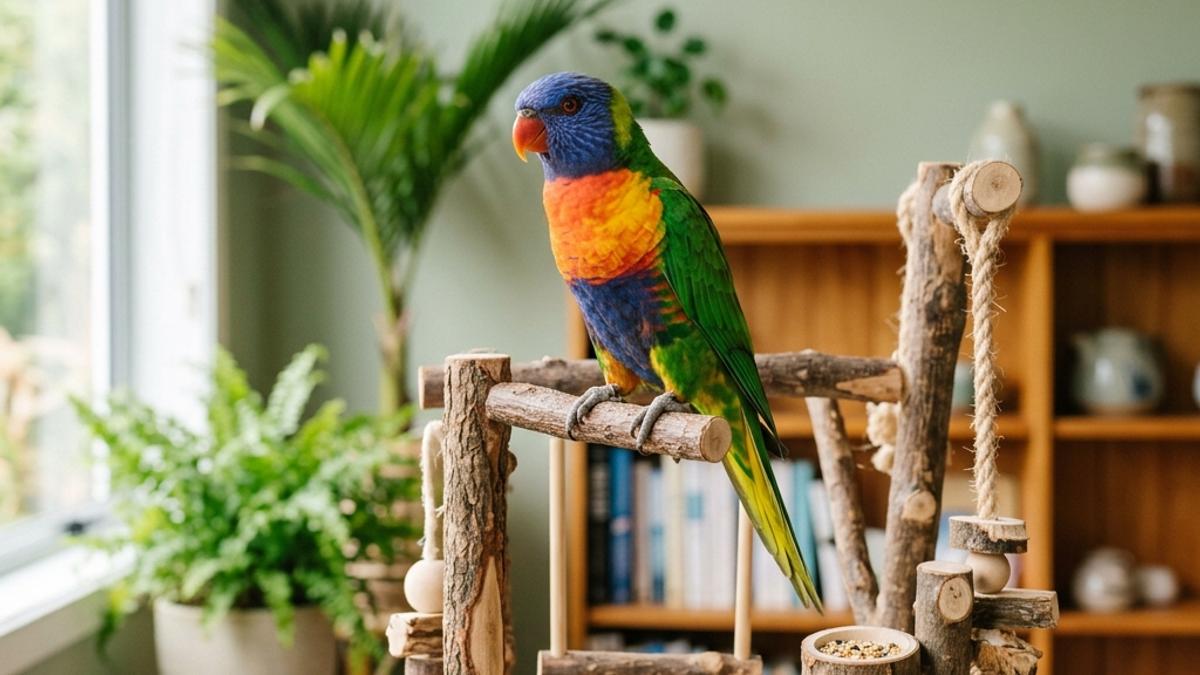
The budgerigar is New Zealand's most popular pet bird — affordable, manageable, widely available, and capable of genuine human interaction when properly socialised.
Why they suit beginners:
- Widely available from NZ pet shops and breeders
- Lifespan (5–10 years) is a manageable first-bird commitment
- With daily patient handling from a young age, budgies can become tame, interactive, and some learn to mimic words
- Cage requirements are reasonable — minimum 60 × 40 × 40 cm, wider is better
- Diet is straightforward: quality budgie seed mix, fresh greens, cuttlebone, and pellets as introduced
What to be aware of:
- A solo budgie needs significant daily interaction from the owner to avoid boredom-related stress behaviours. If you're away from home for long hours daily, keep two budgies together.
- Budgies are not naturally tame — tameness must be earned through daily handling and patience
- Seed-only diets are common but nutritionally incomplete; fresh vegetables and some pellets should be introduced
NZ note: Budgies are the entry-level pet bird for most NZ households. Their manageable noise level works in most apartment settings.
---
3. Canary
Profile: Canary | Lifespan: 10–15 years | NZ price: $50–$150
Canaries are kept primarily for their song (in males) rather than for interaction. A male canary singing is genuinely beautiful. They are independent birds that don't require taming and suit NZ owners who want an auditory experience without a hands-on companion.
Why they suit beginners:
- Low interaction requirement — canaries can be content without daily handling
- A solo canary is fine (unlike budgies or finches that need company)
- The song of a male canary is a consistent source of enjoyment, particularly in a home with a quiet background
- Moderate lifespan (10–15 years) that's longer than a finch but manageable
What to be aware of:
- Male canaries stop singing during moult (typically late summer to autumn in NZ) — this is normal but can be alarming for first-time owners who think something is wrong
- Female canaries don't sing (or sing only quietly)
- Canaries are not birds you handle and interact with in the way you would a parrot or tamed budgie
NZ note: Available from specialist bird breeders and some pet shops. Males cost more than females. Ask breeders to let you hear the bird sing before purchasing.
---
4. Cockatiel
Profile: Cockatiel | Lifespan: 15–25 years | NZ price: $80–$250
Cockatiels are the most people-oriented of the birds on this list and the closest to a parrot experience that a beginner can responsibly take on. A hand-reared, well-socialised cockatiel is affectionate, responsive, and can whistle tunes and learn words.
Why they suit beginners (with caveats):
- Highly interactive and rewarding — they will sit on shoulders, respond to conversation, and seek out company
- Manageable noise level by parrot standards (though male cockatiels can be persistent callers)
- Widely available from NZ breeders and pet shops
- A good bridge species for someone who eventually wants to move to a larger parrot
Important caveat — lifespan: A cockatiel lives 15–25 years. This is an unusually long commitment. Before choosing a cockatiel, assess honestly whether your life situation at 30–50 years old will still accommodate a bird. Many cockatiels in NZ SPCA come from owners who didn't anticipate life changes.
If the long commitment is right for you, a cockatiel is exceptionally rewarding.
NZ note: Cockatiels produce powder-down feather dust — noticeable in NZ apartments. Regular cage cleaning and ventilation helps.
---
5. Society Finch (Bengalese Finch)
Profile: Society Finch | Lifespan: 5–8 years | NZ price: $30–$80 per bird
Society finches are sociable, low-maintenance, and among the most docile finch species available in NZ. They tolerate handling better than most finch species and are reliably good-natured. They are typically kept in pairs or small groups.
Why they suit beginners:
- More tolerant of handling than zebra finches — society finches are among the calmest finch species
- Hardy and forgiving of beginner-level husbandry
- Low noise: pleasant chattering, not disruptive
- Widely available
What to be aware of:
- Like all finches, they need pairs or groups — a solo society finch is not appropriate
- Their small size means they need appropriately small-mesh cage bars (standard finch cages work; large-gap parrot cages do not)
6. Turquoisine Parakeet
Profile: Turquoisine Parakeet | Lifespan: 10–15 years | NZ price: $80–$200 per bird
The Turquoisine Parakeet (*Neophema pulchella*) is a small grass parakeet (20–23 cm) and one of the more peaceable species a first-time bird keeper can start with. The voice is soft chirping and chatter rather than squawking, so noise rarely dominates a household.
Why they suit beginners:
- Temperament is gentle and seldom nippy
What to be aware of:
- Primarily aviary or flight birds that need horizontal flying room rather than tight indoor cage confinement
- Not a hands-on cuddly bird; they prefer gentle observation over direct handling
---
Species to avoid as a first bird
- Lovebirds: Often sold as beginner birds, but lovebirds that are not properly handled from a young age can become bitey and difficult. They also need a companion bird or intense daily handling. Not the most forgiving first choice.
- [Galah Cockatoo](/birds/breeds/galah) (Rose-breasted Cockatoo): While undeniably striking, Galahs are demanding medium cockatoos with an extraordinary lifespan of 40–60 years. They are also loud, particularly at dawn and dusk or when after attention, which can be a challenge in close-knit neighbourhoods or apartments. They need several hours of direct interaction daily plus rotating toys and foraging tasks, or boredom turns into destructiveness and feather plucking; they are best suited to homes that can offer ample space, ideally a large aviary or a dedicated bird room. Combined with NZ breeder prices of $1,000–$3,500+, they require an extensive lifelong commitment beyond novice capabilities.
- Conures, Amazons, Eclectus, other cockatoos, Macaws, African Greys: All require significantly more experience, time, space, and specialist knowledge than a first-time bird owner has.
General beginner checklist
- [ ] Have you sourced an avian vet in your area? (General small-animal vets often have limited bird experience)
- [ ] Is your cage size appropriate for the species? (Birds need horizontal space to fly, not just tall cages)
- [ ] Are you sourcing from a reputable NZ breeder or pet shop? (MPI prohibits live bird imports)
- [ ] Have you read up on the specific dietary needs of your species?
- [ ] Do you have a quiet, temperature-stable location for the cage away from kitchen fumes (Teflon cookware fumes are toxic to birds)?
Related guides
- Bird cage setup guide NZ
- Budgie and cockatiel beginner setup NZ
- Bird toy types NZ
- Bird food types NZ
- Budgerigar vs Cockatiel NZ
- Bird hub — all NZ bird guides
---
References
- Merck Veterinary Manual, Management of Pet Birds — housing, cage furnishing, enrichment and social management of companion psittacines, checked 2026-07-28: https://www.merckvetmanual.com/exotic-and-laboratory-animals/pet-birds/management-of-pet-birds
- RSPCA Knowledgebase, How should I care for my birds? — diet, housing and social-contact requirements for companion birds, checked 2026-07-28: https://kb.rspca.org.au/categories/companion-animals/other-pets/birds/how-should-i-care-for-my-birds
---
*NZ prices are indicative; check with current local breeders or pet shops. Lifespan ranges reflect well-cared-for individuals. For health concerns or behavioural issues, consult a registered avian veterinarian in New Zealand.*
Free PetMall tools
Related guides
petmall.co.nz
Shop at PetMall
The products below are practical support items for your pet. PetMall ships across New Zealand.
- Bird Food & TreatsA quality seed or pellet base plus fresh veg keeps cage birds healthier than seed alone.
- Bird ToysForaging and chew toys prevent boredom — rotate a few rather than crowding the cage all at once.
- Bird SuppliesA well-sized cage with the right perch variety helps long-term comfort — aim for space to fully stretch wings.