Pet Breed Guide NZ
Canary
The Canary is a classic, low-maintenance pet bird famous for the beautiful, melodic song of the males. They are independent display birds that prefer singing and flying to being handled.
Photo Gallery
NZ Ownership Snapshot
Verified NZ Status- Noise Level
- quiet
- Social Needs
- groups
- Diet Type
- Seeds, pellets, vegetables, fruit, and species-appropriate enrichment foods
- UVB Required
- No
Legal to keep in NZ. Canaries have been kept as cage birds in NZ for over 150 years. No permit required.
Breed Snapshot
- Size
- small
- Lifespan
- 5-10 years
- Origin
- Macaronesian Islands (Canaries, Azores) / NZ established
- Care Focus
- Independent, active, melodic; males sing beautifully; not suited for handling; enjoy flying in aviaries
- NZ Price
- NZD $30–$150 depending on breed (Yorkshire, Gloster, Red Factor, etc.)
- Annual Vet Cost
- $100 - $250 NZD annually. This estimate covers routine health checks and potential minor issues. Emergency care or treatment for more complex conditions could significantly increase costs. It's important to note that access to avian or exotic animal veterinarians in New Zealand can be limited, particularly outside major urban centres, which may impact both availability and cost of specialised care.
Personality Scores
NZ Lifestyle Fit
Canaries are highly suitable for a wide range of New Zealand homes, from city apartments to suburban houses and even rural properties. Their small size and relatively quiet nature, primarily consisting of melodic singing, make them ideal for smaller living spaces where noise might be a concern. They adapt well to New Zealand's varied climate, but owners must ensure their cage is protected from drafts, direct harsh sunlight, and extreme temperatures, whether it's the humid Auckland summers or the chilly South Island winters. While Canaries are generally legal to keep throughout NZ, it is imperative for prospective owners to check with their local council and the Ministry for Primary Industries (MPI) for any specific regional bylaws or biosecurity guidelines before acquiring one. Legally sourced Canaries can be found through reputable pet stores and dedicated avian breeders across New Zealand, ensuring a healthy and compliant start to pet ownership.
Verified NZ domestic pet-bird context: MPI recognises finches as pet birds in NZ. This supports local captive-keeping context only; live bird imports are not allowed, and owners must still check species-specific and regional pest rules.
Overview
The Canary (Serinus canaria), a member of the finch family, has been kept as a popular cage bird in New Zealand for over 150 years. Originally native to the Canary Islands, they have been selectively bred into numerous varieties, classified by their song (like the Roller), color (such as the Red Factor), or shape (such as the Gloster). Unlike parrots, they do not require intense social interaction and are loved for their bright presence and beautiful singing.
NZ ownership fit
Canaries are excellent pets for beginners, busy individuals, or apartment dwellers. They are independent and do not need (or enjoy) human handling. Instead, they are content to fly in a spacious cage and sing. Only male canaries sing, and they do so most vibrantly when kept alone, although they can also be housed in large aviaries in same-sex pairs or with other passive finch species.
Care priorities
Provide a high-quality canary seed mix, supplemented daily with fresh leafy greens (like spinach or dandelion greens) and egg food during the molting and breeding seasons. They require a cage that is wider than it is tall to allow for horizontal flying, as well as a shallow dish for daily bathing, which they enjoy immensely.
Fun Facts
Fact 1
Canaries were first brought to Europe by Spanish sailors in the 17th century, quickly becoming popular pets.
Fact 2
Male Canaries are primarily known for their elaborate songs, which they use to attract mates and mark territory.
Fact 3
There are over 20 different breeds of domestic Canaries, categorised by their song, colour, or physical features.
Fact 4
Historically, Canaries were used in coal mines to detect dangerous gases like carbon monoxide, earning them the phrase 'canary in a coal mine'.
Fact 5
Canaries can learn to mimic certain sounds and melodies, though their natural song is usually preferred by owners.
Related Breeds
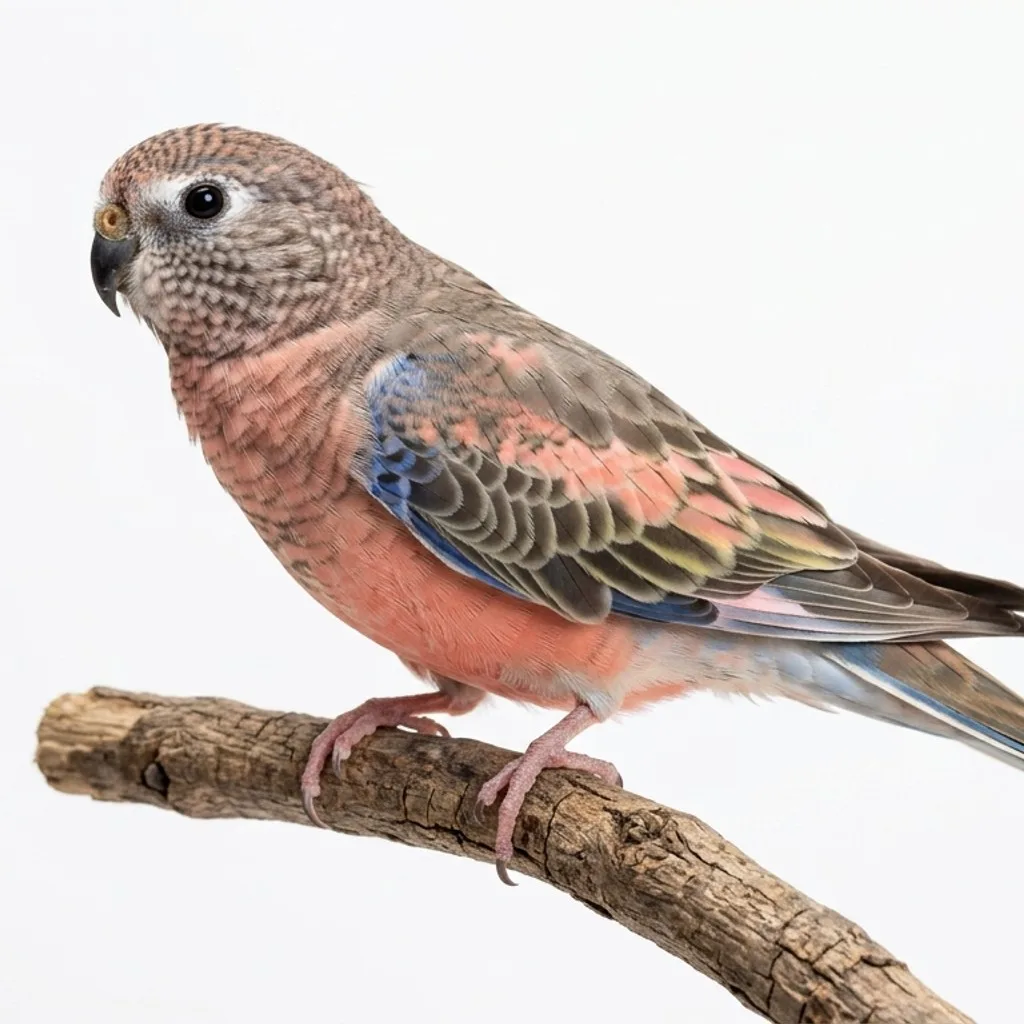
Bourke's Parakeet
Bourke's Parakeet is a small, softly coloured parrot from inland Australia, rosy pink below with a grey-brown back and blue in the wings, and it is one of the gentler options for a first-time bird owner. It is quiet by parakeet standards, offering melodic chirps rather than squawking, and it is crepuscular, so most of its activity falls around dawn and dusk while the day passes in dozing and gentle foraging. Bourkies are docile, rarely bite, and become tame with steady, unhurried handling, though they tend to enjoy company more than cuddling and are not mimics. They do best in pairs or small groups, with a roomy cage, varied perches, chewable toys and supervised flight in a bird-proofed room. A lifespan of 8 to 12 years and soft vocalisations make them workable in flats and quiet homes that want a calm, undemanding bird.
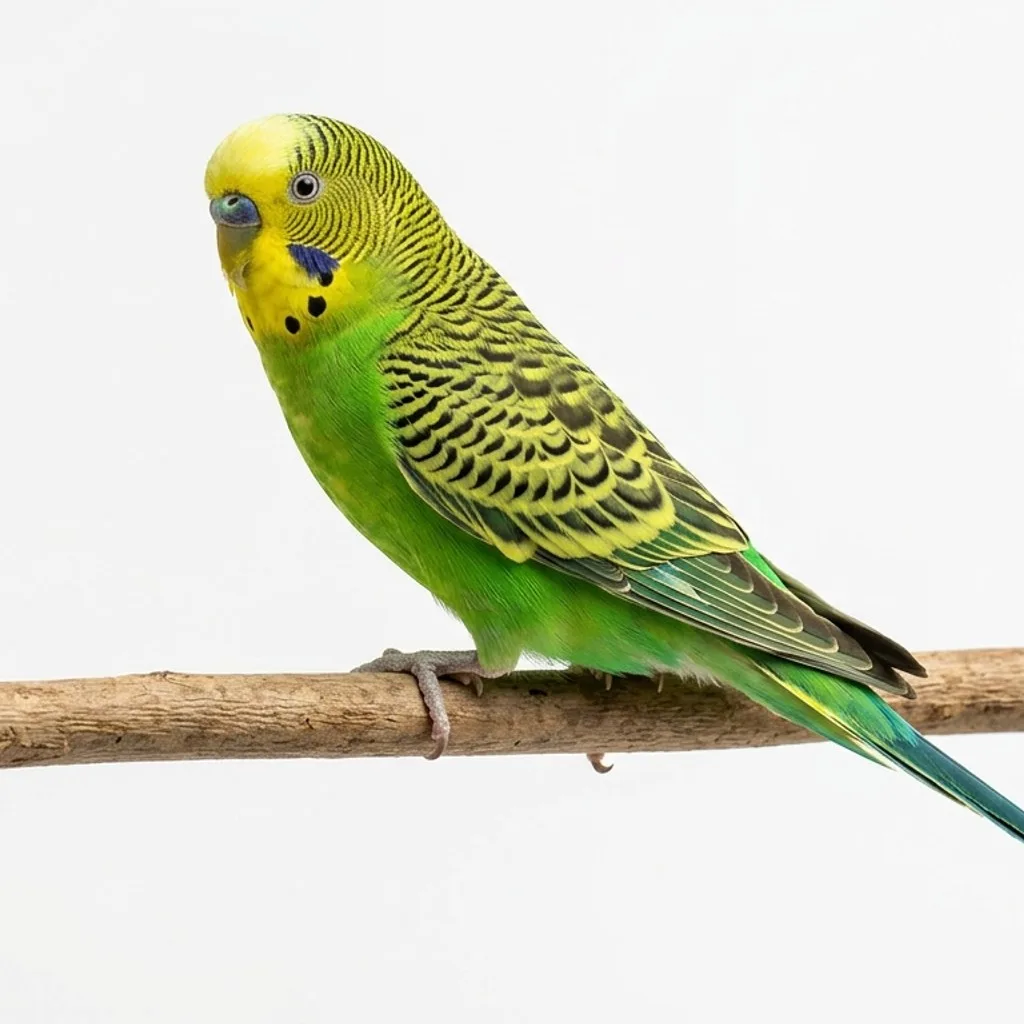
Budgerigar (Budgie)
The Budgerigar, or budgie, is a small long-tailed seed-eating parrot from Australia and one of the most widely kept companion birds in the world. It is lively, inquisitive and intensely social: budgies live in large flocks in the wild, so a single bird needs either a companion budgie or committed daily human interaction to stay settled. They are bright enough to learn to step up, perform simple tricks and mimic speech, males more readily than females. Wild birds are green and yellow with black scalloping on the wings, while selective breeding has produced blue, white, yellow, grey and pied colour mutations. Care is straightforward rather than trivial: fresh food and water twice daily, a pellet-based diet with seed as a treat, spot cleaning, and 30 to 60 minutes of supervised flight in a bird-safe room. Their small size suits apartments, though near-constant chirping makes them a poor match for a noise-sensitive household.
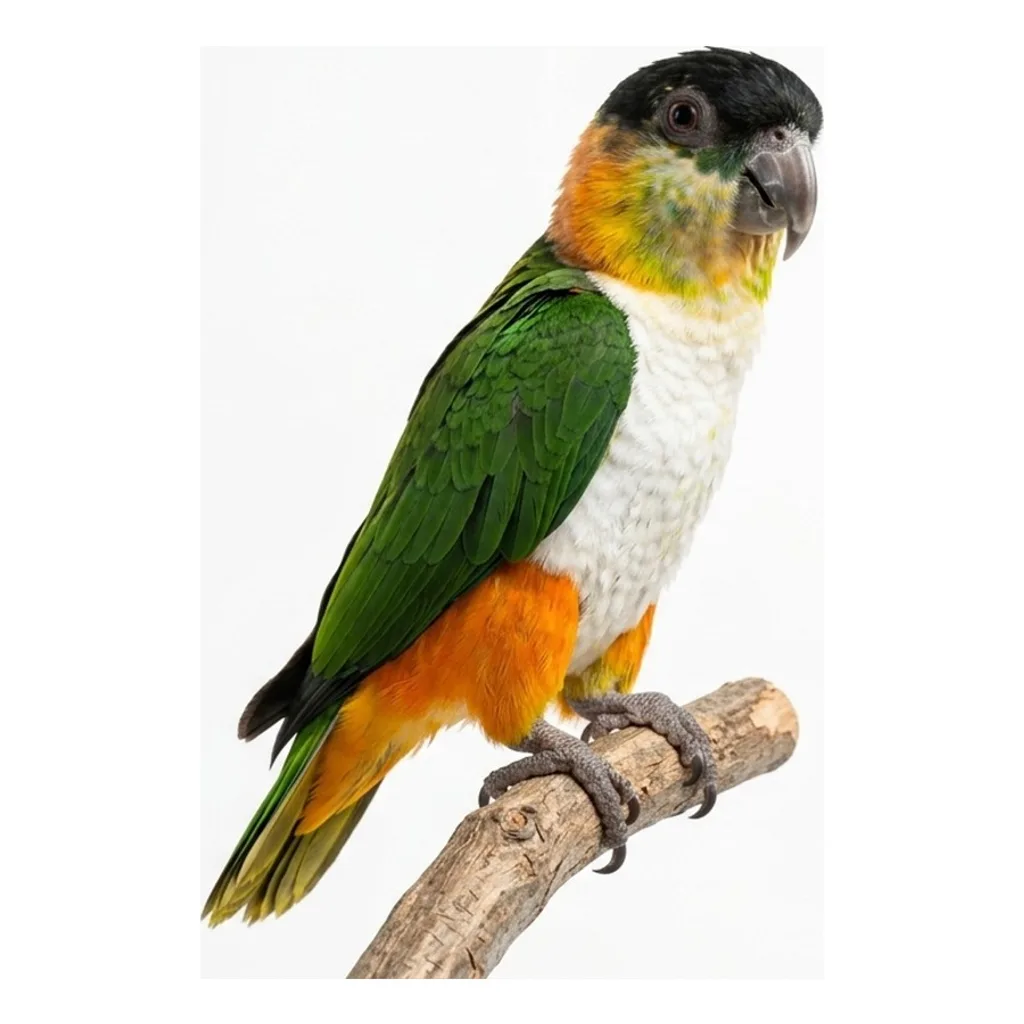
Caique
The Caique is a small, stocky South American parrot represented by two species, the Black-headed and the White-bellied, both bold, comical and relentlessly busy. Roughly 23 to 25 cm long and 150 to 170 grams, it carries a large personality in a compact frame and is better known for its hopping gait across flat surfaces than for talking, although it mimics sounds and chirps freely. Noise sits at a moderate level rather than a piercing one. A Caique needs at least two to four hours of supervised time out of the cage each day, the largest enclosure a home can fit, and a steady rotation of chewable and foraging toys, since a bored bird slides quickly into plucking or aggression. With a lifespan of 25 to 40 years, it fits an active, sociable household that is home often and ready for a decades-long companion.
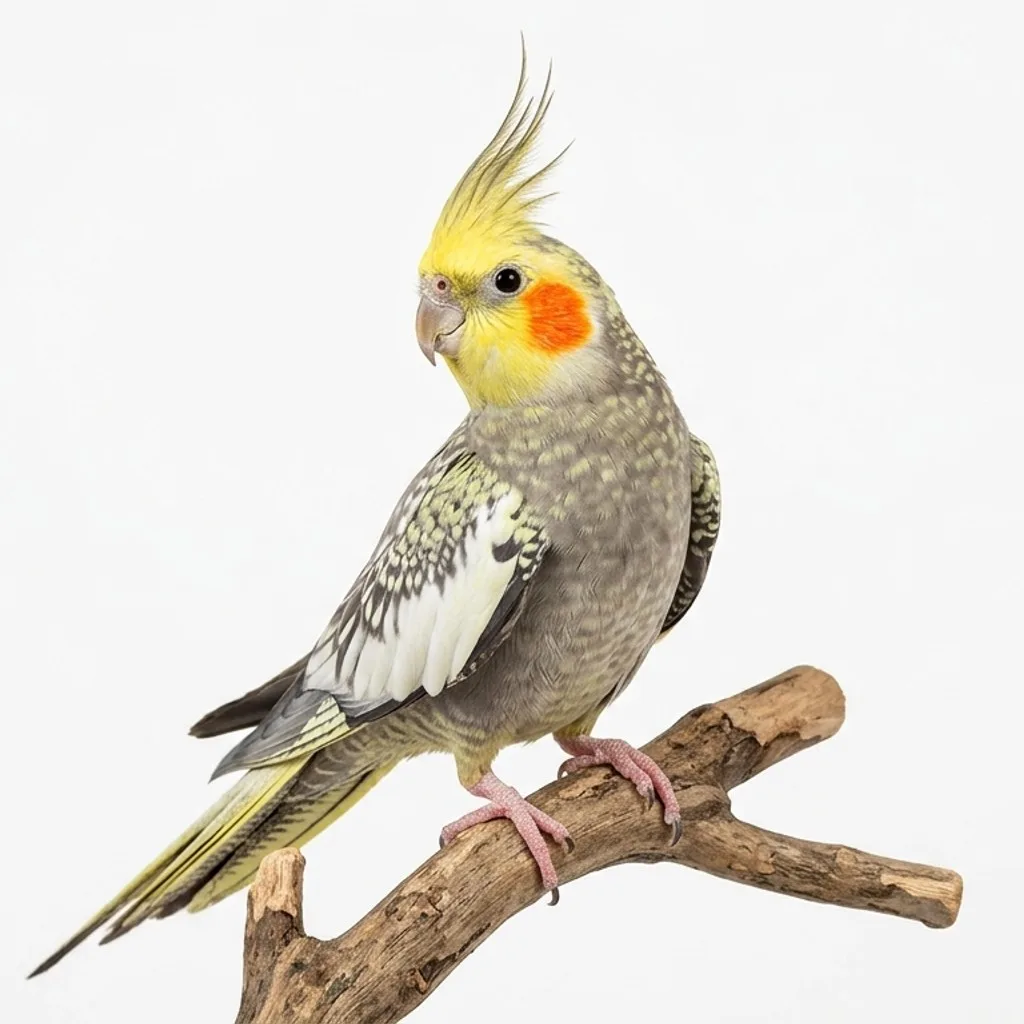
Cockatiel
The Cockatiel is a crested Australian parrot and a member of the cockatoo family, kept for its friendly manner, its moderate voice and its readiness to bond with the people around it. Its movable crest doubles as a mood signal, rising when the bird is excited and flattening when it relaxes. The familiar normal grey has a grey body, white wing patches and an orange cheek patch, with lutino, pearl, pied, cinnamon and white-faced mutations also common. Temperament is affectionate rather than boisterous: cockatiels often enjoy head scratches and shoulder perching, and males in particular pick up whistled tunes and simple mimicry. Noise is moderate and mostly whistling rather than harsh squawking. They need a spacious cage, a pellet-led diet with seed a small part of it, an hour or two of supervised flight daily, and company, since they cope badly when left alone for long stretches. A lifespan of 15 to 25 years makes them a long commitment for families and patient first-time bird owners.