Pet Breed Guide NZ
Bourke's Parakeet
The Bourke's Parakeet, often called a 'Bourkie', is a charming and relatively quiet small bird, making it an excellent choice for first-time bird owners or those seeking a more serene feathered companion. Native to Australia, these gentle parakeets are known for their beautiful soft pink, grey, and blue plumage, and their docile, non-aggressive nature. Unlike many other parakeet species, Bourkies are not prone to loud squawking, instead offering soft, melodic chirps, particularly at dawn and dusk. They are social birds that thrive in pairs or small groups, forming strong bonds with their companions and, with patience, their human caregivers. In New Zealand, Bourke's Parakeets are generally legal to keep, offering Kiwi pet enthusiasts a delightful and manageable avian friend, provided local MPI and council guidelines are followed.
Photo Gallery
NZ Ownership Snapshot
Verified NZ Status- Noise Level
- moderate
- Social Needs
- groups
- Diet Type
- Seeds, pellets, vegetables, fruit, and species-appropriate enrichment foods
- UVB Required
- No
Verified NZ domestic pet-bird context: MPI recognises parrots/parakeets as pet birds in NZ. This supports local captive-keeping context only; live bird imports are not allowed, and owners must still check species-specific and regional pest rules.
Breed Snapshot
- Size
- small
- Lifespan
- 8-12 years
- Origin
- Australia
- Care Focus
- Social and vocal bird that needs daily enrichment, safe handling, and secure housing.
- NZ Price
- NZD $80 - $200 (for a single bird from a reputable breeder or pet store)
- Annual Vet Cost
- NZD $150 - $300+ annually (includes general check-ups, potential medication, and emergency care. Note: Exotic vet availability in NZ is limited, so costs can vary and may be higher due to specialisation).
Personality Scores
NZ Lifestyle Fit
Bourke's Parakeets are well-suited for a variety of New Zealand homes, including apartments, townhouses, or larger sections, provided they have an appropriately sized cage or aviary. Their quiet nature makes them less disruptive than many other parrot species. They adapt well to New Zealand's diverse climate, from Auckland's humidity to the South Island's colder temperatures, but require protection from drafts, extreme cold, and direct harsh sun. An outdoor aviary needs a sheltered, insulated section for cooler months. There are no widespread regional restrictions on Bourke's Parakeets in NZ, but it is always prudent to check with your specific local council for any unique bylaws. Legally sourcing these birds in New Zealand is typically done through reputable local breeders, specialised pet stores, or sometimes via the NZ Bird Society. Always ensure the seller is ethical and the bird is healthy before purchase.
Verified NZ domestic pet-bird context: MPI recognises parrots/parakeets as pet birds in NZ. This supports local captive-keeping context only; live bird imports are not allowed, and owners must still check species-specific and regional pest rules.
About the Bourke's Parakeet
The Bourke's Parakeet (Neopsephotus bourkii) is a delightful and relatively small parrot species native to the arid and semi-arid regions of inland Australia. Known for their gentle temperament and soft, melodic calls, they stand apart from their louder parrot relatives. These charming birds are often recommended for first-time bird owners due to their docile nature and manageable size. They are not typically prone to biting and can become quite tame with consistent, gentle handling. Bourkies form strong bonds with their mates and flock members, making them excellent candidates for keeping in pairs or small groups. Their average lifespan of 8-12 years means they are a long-term commitment, offering years of quiet companionship and beauty to a New Zealand home.
What They Look Like
Bourke's Parakeets are slender, elegant birds, typically measuring around 19-23 cm from head to tail and weighing about 40-50 grams. Their natural 'wild type' colouration is a beautiful blend of soft hues: a rosy pink breast and abdomen, a grey-brown back, and striking blue primary wing feathers. Males often have a distinct blue band above their cere (nostrils), which is absent or much fainter in females. Their eyes are large and dark, giving them a sweet, inquisitive expression. Over the years, various colour mutations have been selectively bred, including 'rosy' (more intense pink), 'cream', 'fallow', and 'pied' variations, offering a range of aesthetic choices for prospective owners. Their subtle beauty and graceful flight make them a joy to observe.
Personality & Behaviour
Bourke's Parakeets are renowned for their calm and docile personalities. Unlike many other parakeets, they are not boisterous or aggressive. They are crepuscular, meaning they are most active during dawn and dusk, when their soft chirps and chattering can be heard. During the day, they tend to be quieter, often napping or engaging in gentle foraging. They are social creatures that thrive in the company of their own kind, and keeping them in pairs or small groups is highly recommended for their psychological well-being. While they can become quite tame and enjoy human interaction, they are not typically 'cuddly' birds in the same way some larger parrots might be. Instead, they appreciate gentle interaction, a quiet environment, and the opportunity to fly and explore. They are not known for their ability to mimic speech but offer a soothing presence with their gentle sounds and movements.
Life in New Zealand
For New Zealand pet owners, the Bourke's Parakeet presents a wonderful opportunity to enjoy a beautiful and gentle avian companion. They are generally legal to keep in NZ, but prospective owners must always verify current MPI (Ministry for Primary Industries) guidelines and local council bylaws, as regulations can change. Their adaptability to various climates means they can thrive across New Zealand, from the humid north to the cooler south, provided they have adequate shelter from extreme weather conditions, especially cold and strong winds. Sourcing should always be from reputable NZ breeders or pet stores that prioritise the birds' welfare. Responsible ownership includes providing a spacious enclosure, a balanced diet, mental stimulation, and access to avian veterinary care, which, while specialised, is available in major centres.
Is This the Right Pet for You?
The Bourke's Parakeet is an ideal pet for individuals or families seeking a relatively quiet, low-maintenance bird that offers gentle companionship. They are suitable for apartment living due to their soft vocalizations, but still require a spacious cage for exercise. If you are prepared for a long-term commitment (8-12 years), can provide a clean, stimulating environment, and are willing to dedicate time to their social needs, a Bourke's Parakeet could be a perfect fit. They are not demanding in terms of constant human interaction but thrive on a stable routine and the company of other Bourkies. If you appreciate subtle beauty, gentle sounds, and a peaceful presence, and are committed to responsible pet ownership in line with NZ regulations, then a Bourke's Parakeet could bring much joy to your home.
Fun Facts
Fact 1
Bourke's Parakeets are crepuscular, meaning they are most active at dawn and dusk, unlike many other parrots that are diurnal.
Fact 2
They are known for their exceptionally quiet and melodic chirps, making them one of the least noisy parakeet species.
Fact 3
Wild Bourke's Parakeets are native to the arid and semi-arid regions of inland Australia.
Fact 4
Males often have a distinct blue band above their cere (nostrils), which is absent or much fainter in females, aiding in sex identification.
Fact 5
Despite their small size, they are quite social and thrive best when kept in pairs or small groups of their own kind.
Related Breeds
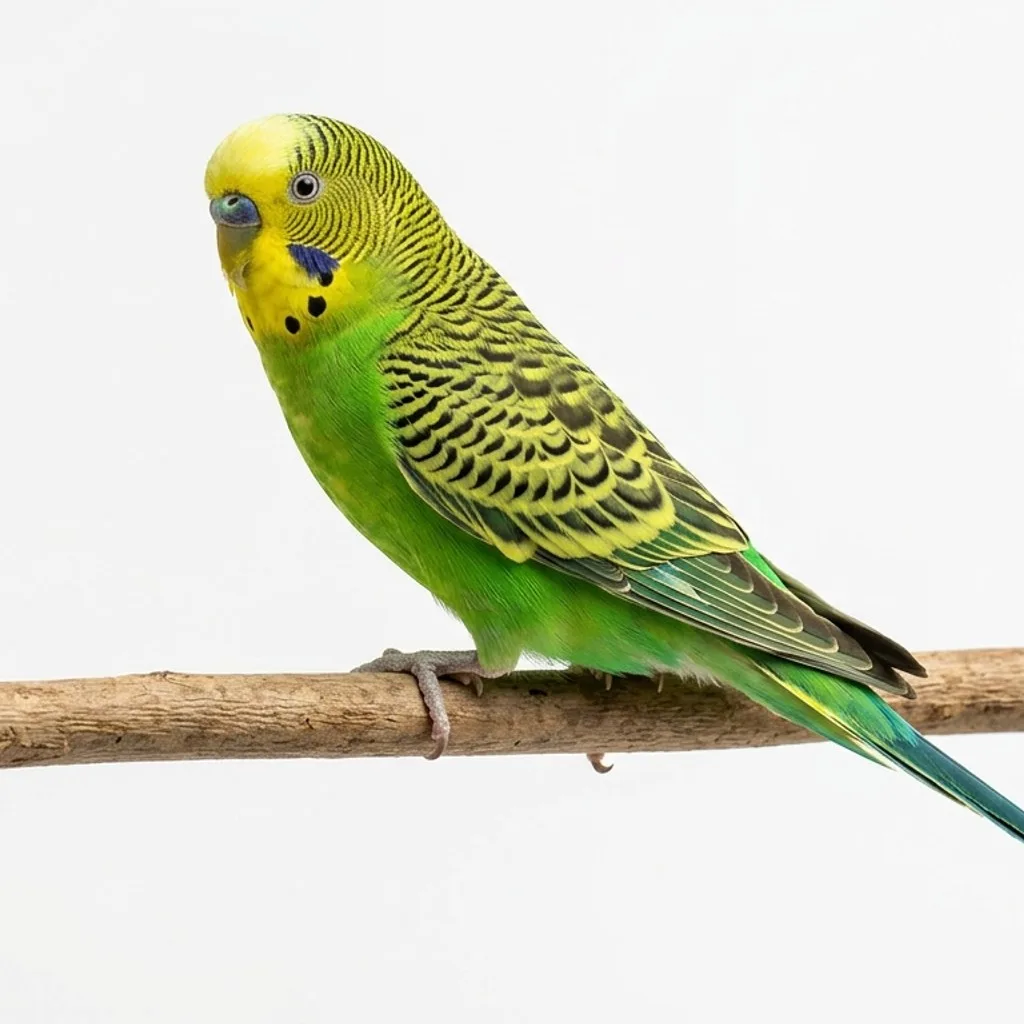
Budgerigar (Budgie)
The Budgerigar, or budgie, is a small long-tailed seed-eating parrot from Australia and one of the most widely kept companion birds in the world. It is lively, inquisitive and intensely social: budgies live in large flocks in the wild, so a single bird needs either a companion budgie or committed daily human interaction to stay settled. They are bright enough to learn to step up, perform simple tricks and mimic speech, males more readily than females. Wild birds are green and yellow with black scalloping on the wings, while selective breeding has produced blue, white, yellow, grey and pied colour mutations. Care is straightforward rather than trivial: fresh food and water twice daily, a pellet-based diet with seed as a treat, spot cleaning, and 30 to 60 minutes of supervised flight in a bird-safe room. Their small size suits apartments, though near-constant chirping makes them a poor match for a noise-sensitive household.
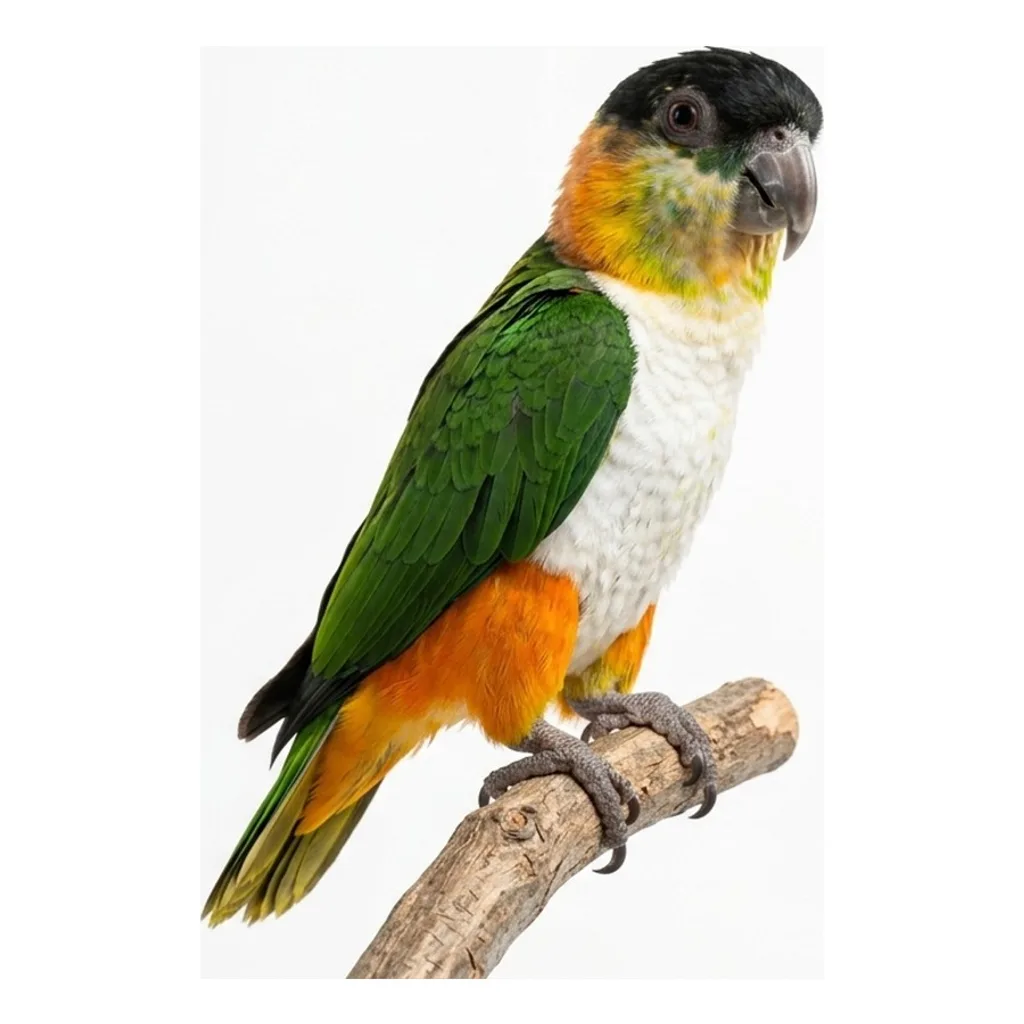
Caique
The Caique is a small, stocky South American parrot represented by two species, the Black-headed and the White-bellied, both bold, comical and relentlessly busy. Roughly 23 to 25 cm long and 150 to 170 grams, it carries a large personality in a compact frame and is better known for its hopping gait across flat surfaces than for talking, although it mimics sounds and chirps freely. Noise sits at a moderate level rather than a piercing one. A Caique needs at least two to four hours of supervised time out of the cage each day, the largest enclosure a home can fit, and a steady rotation of chewable and foraging toys, since a bored bird slides quickly into plucking or aggression. With a lifespan of 25 to 40 years, it fits an active, sociable household that is home often and ready for a decades-long companion.
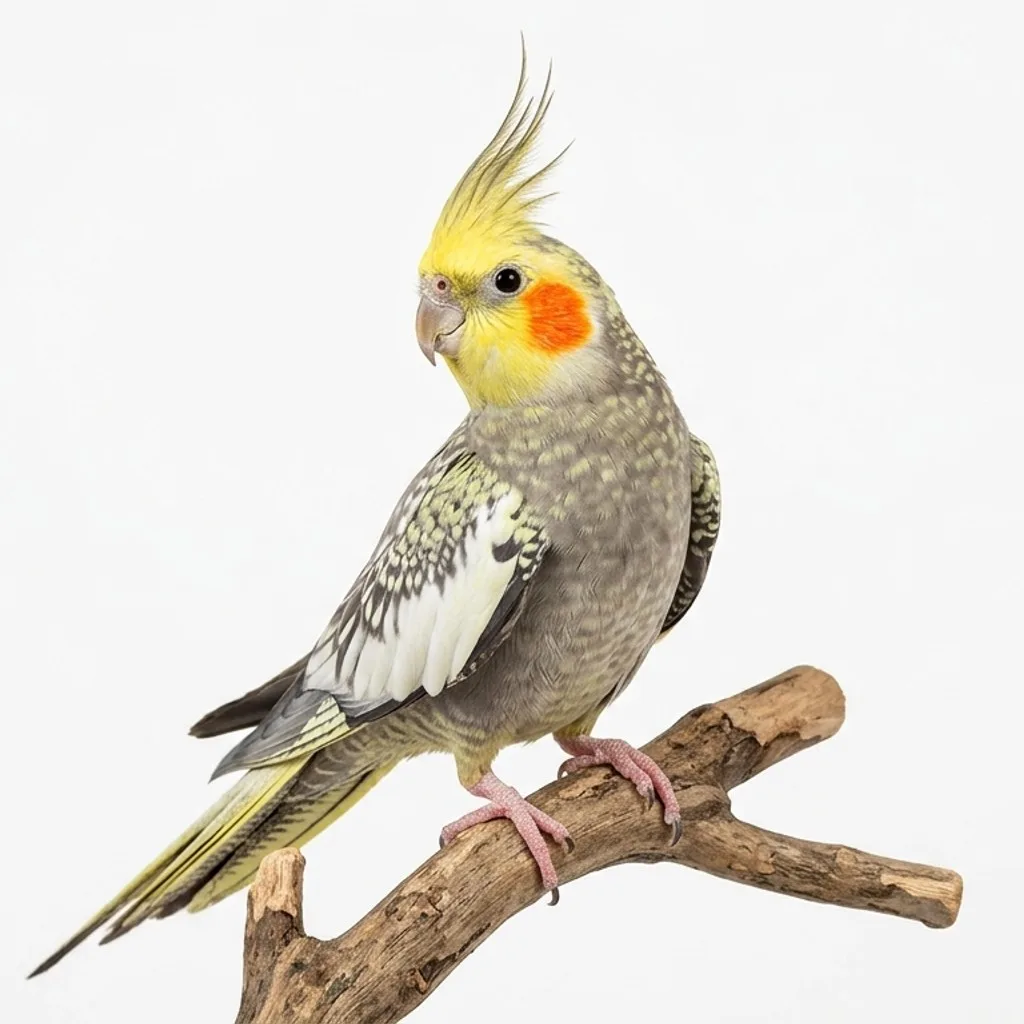
Cockatiel
The Cockatiel is a crested Australian parrot and a member of the cockatoo family, kept for its friendly manner, its moderate voice and its readiness to bond with the people around it. Its movable crest doubles as a mood signal, rising when the bird is excited and flattening when it relaxes. The familiar normal grey has a grey body, white wing patches and an orange cheek patch, with lutino, pearl, pied, cinnamon and white-faced mutations also common. Temperament is affectionate rather than boisterous: cockatiels often enjoy head scratches and shoulder perching, and males in particular pick up whistled tunes and simple mimicry. Noise is moderate and mostly whistling rather than harsh squawking. They need a spacious cage, a pellet-led diet with seed a small part of it, an hour or two of supervised flight daily, and company, since they cope badly when left alone for long stretches. A lifespan of 15 to 25 years makes them a long commitment for families and patient first-time bird owners.
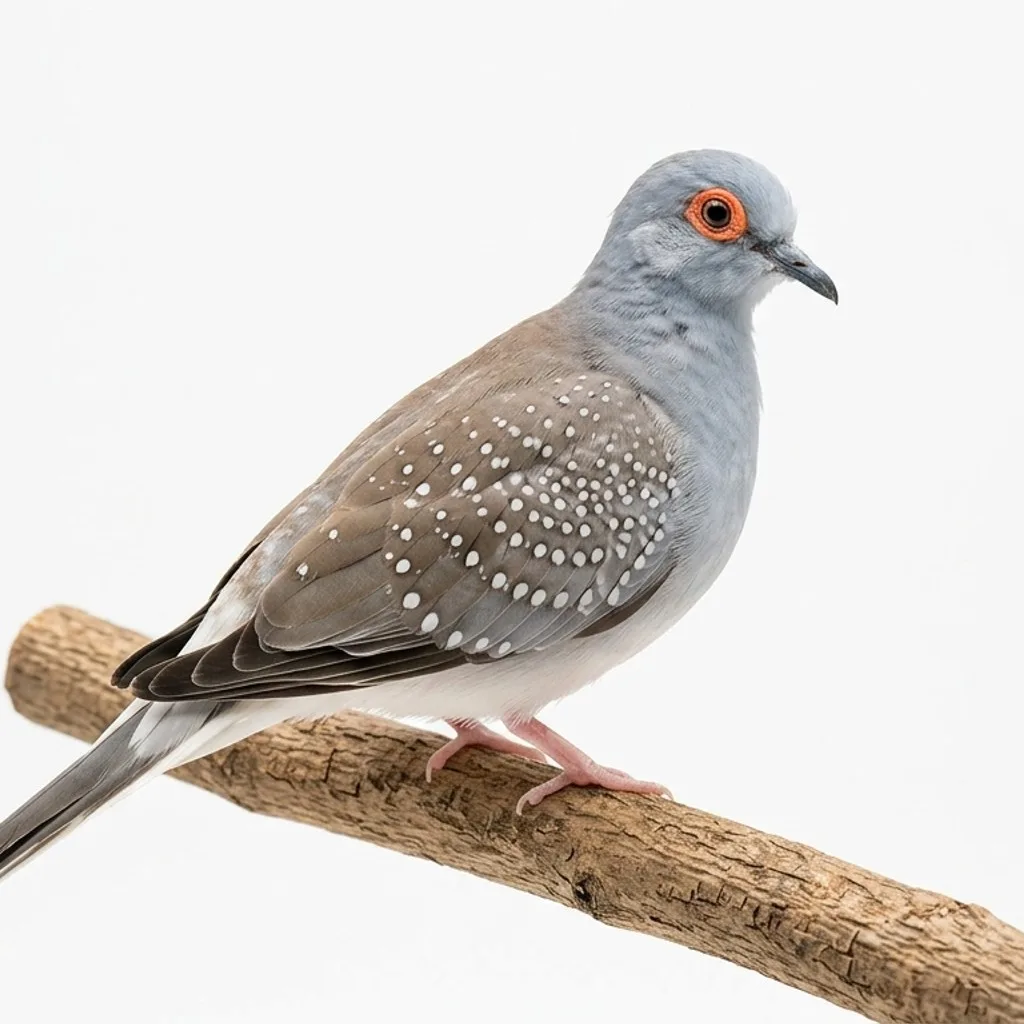
Diamond Dove
The Diamond Dove is one of the world's smallest doves, a slender grey bird from the arid interior of Australia, named for the white, black-edged spots scattered across its wings. A red or orange eye-ring is its most recognisable feature, set against soft grey plumage, a white belly and a long tapered tail with white outer edges; the sexes look much alike, though males tend to carry a bolder ring and head colour. Diamond doves are calm and notably quiet, communicating largely through a soft coo, and they settle with gentle, consistent handling without ever becoming a hands-on pet. They are social birds that do best in a pair or small group, and are peaceful enough for a mixed aviary of other non-aggressive small species. They are active fliers, so a flight cage or aviary allowing horizontal flight is essential, along with dust-bathing sand, a varied seed and pellet diet, and shelter from wind, rain and frost.