Budgerigar vs Cockatiel NZ: Which Pet Bird Is Right for You?
Choosing between a budgie and a cockatiel in New Zealand? Compare lifespan, personality, noise, care needs, and cost — the two most popular pet birds for NZ homes are more different than they look.
Budgerigars (budgies) and cockatiels are by far the two most popular pet birds in New Zealand. They're both small, available from NZ pet shops and breeders, and manageable in apartments. But they're meaningfully different birds — and choosing the wrong one for your lifestyle is a common mistake. Here's what actually distinguishes them.
At a glance
| Budgerigar | Cockatiel | |
|---|---|---|
| Adult size | ~30–40 g / ~18 cm | ~80–100 g / ~30–33 cm |
| Lifespan | 5–10 years | 15–25 years |
| NZ price | $30–$100 NZD | $80–$250 NZD |
| Friendliness | ★★★ | ★★★★ |
| Trainability | ★★ | ★★★ |
| Energy | ★★★ | ★★★ |
| Apartment suitability | ★★★★ | ★★★★ |
| With kids | ★★★ | ★★★ |
| With other pets | ★★ | ★★ |
The most important difference: lifespan
A budgie lives 5–10 years. A cockatiel lives 15–25 years. A cockatiel purchased for a young child may still be alive when that child is an adult. This is the single most practically significant difference between the two species, and it's the one most often overlooked by first-time bird owners.
A 25-year commitment is more than many dogs or cats. Before choosing a cockatiel, genuinely assess whether you're prepared for a bird that will outlive your current housing situation, relationship status, and lifestyle phase. Many cockatiels end up in SPCA care or rehoming when owners' lives change and they can no longer accommodate a long-lived bird.
Budgies represent a shorter, more manageable first-bird commitment. They are still long-lived compared to a hamster (~2 years) but are an accessible entry point for first-time bird owners.
Size and physical differences
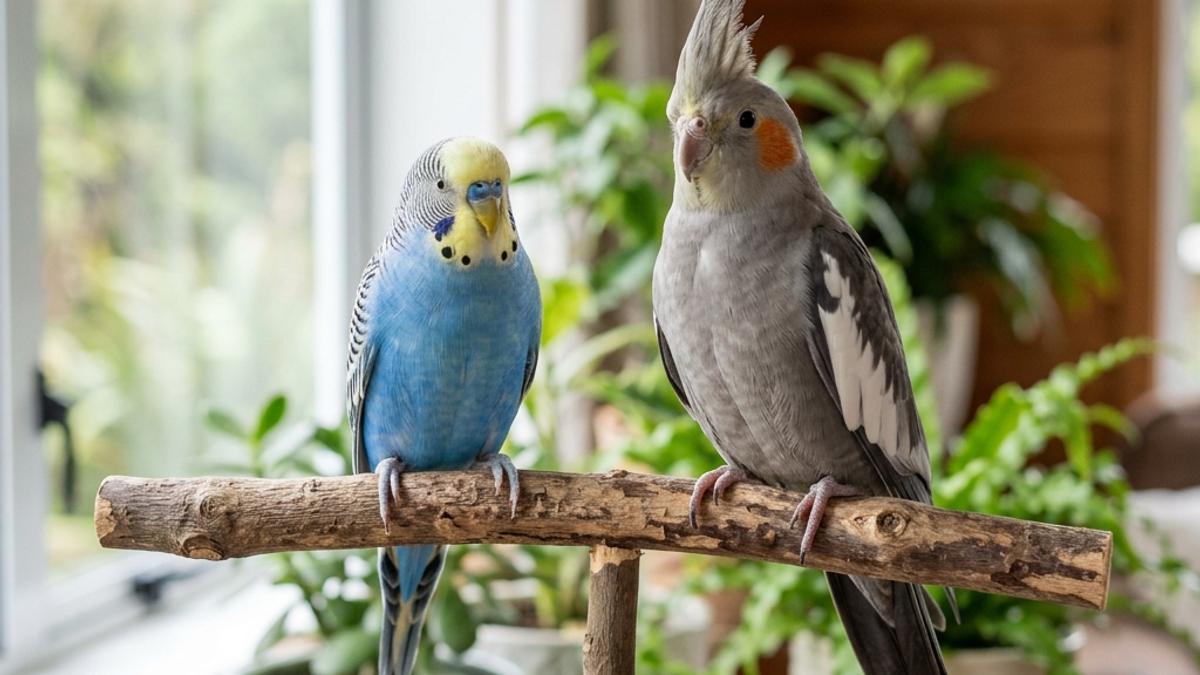
Budgies are small parakeets — roughly the size of your palm. Cockatiels are medium-sized parrots — noticeably larger, with a distinctive crest and long tail.
The size difference has practical implications:
- Cage size: Cockatiels need larger cages (minimum 60 × 50 × 75 cm for one bird; width more important than height so they can fly side to side)
- Mess: Cockatiels produce more dust from their feathers — this is noticeable in NZ apartments. Some people with dust sensitivities find cockatiels harder to live with; budgies produce less dust.
- Food: Cockatiels eat more and need a wider variety — seeds, pellets, and fresh vegetables. Budgies are also better on a varied diet, but their requirements are smaller-scale.
Personality and interaction
Budgies are social but more wary. They bond slowly and often prefer the company of other budgies to humans. A single budgie kept without adequate human interaction or a companion bird may develop stress behaviours. Many budgie owners keep them in pairs for this reason. With patient daily handling from a young age, budgies can become quite tame and some learn to talk — individual variability is high.
Cockatiels are noticeably more people-oriented. They are one of the most affectionate small parrots available, and many actively seek out human contact. A hand-reared cockatiel will often whistle, vocalise in response to conversation, and want to sit on shoulders or near people. They learn to mimic household sounds and some learn words. Male cockatiels in particular are enthusiastic whistlers and can pick up tunes.
The friendliness score difference (★★★ vs ★★★★) reflects this practical reality: for most NZ households wanting a bird that interacts with them, cockatiels tend to deliver a more rewarding experience.
Noise
Both species can be noisy, but in different ways:
- Budgies: Constant chattering and chirping throughout the day; high-pitched but not loud. Generally manageable in NZ apartments if neighbours aren't directly adjacent.
- Cockatiels: Can be louder, especially male cockatiels calling for contact. A cockatiel that has learned to whistle a melody will repeat it enthusiastically. Cockatiels have a "contact call" — a loud, persistent whistle they use when they can't see their flock (i.e., you) — that can be disruptive in small spaces.
Noise levels vary significantly by individual bird. Both can be managed by ensuring the bird gets adequate time out of the cage and feels secure.
Care requirements
Both birds need:
- Daily social interaction
- Fresh water daily
- Cage cleaning weekly (minimum)
- A varied diet (seeds alone are not nutritionally complete for either species)
- Vet access — an avian vet, not just a standard small-animal vet, is preferable
Cockatiels require more:
- Larger cage
- A more complex diet (fresh vegetables matter more for a bird with a 20+ year lifespan)
- Regular dusting of surfaces in a NZ home (their powder-down feathers produce noticeable dust)
- More mental stimulation — a bored cockatiel develops bad habits faster than a budgie
Budgies are slightly lower-maintenance for daily care but still require daily attention. Keeping two budgies together reduces the isolation risk if you have a busy schedule.
Cost
Initial cost: Budgies ($30–$100 NZD) are cheaper to purchase than cockatiels ($80–$250 NZD) from NZ pet shops or breeders. Hand-raised birds cost more than aviary birds in both species.
Ongoing cost: Cockatiels cost more over their lifetime due to longer lifespan, larger cage requirement, and greater food consumption. However, the per-year cost of either species is modest compared to dogs or cats.
Vet costs: Avian vet care in NZ is specialist care. Basic consultations start at $60–$100 NZD; treatment for illness can run higher. Pet insurance for birds is available in New Zealand but not widely used — factor this into your decision, particularly for the longer-lived cockatiel.
NZ regulations
Both budgies and cockatiels are lawfully kept as pet birds in New Zealand. Neither requires a permit. MPI does not permit the import of live birds from overseas — all pet birds must come from existing NZ stock. Breeders and pet shops are the primary sources.
Kakariki are a native NZ parrot that should not be confused with budgerigars — they are a separate species with separate legal status under the Wildlife Act 1953.
Which bird is right for you?
Choose a budgie if:
- This is your first bird and you want to start smaller
- You want a shorter commitment (5–10 years vs 15–25)
- You're on a tight budget
- You prefer a bird that often does well in a pair (less dependent on daily human interaction)
- You live in a small NZ apartment with noise-sensitive neighbours
Choose a cockatiel if:
- You want a more affectionate, people-oriented bird
- You're committed for the long term (15–25 years)
- You have space for a larger cage
- You want a bird that whistles, responds to conversation, and actively seeks interaction
- You're comfortable with more feather dust in your home
Neither is ideal if:
- You're away from home for long periods without providing adequate companionship for the bird
- You're unprepared to find avian vet care (both birds are small enough to decline health quickly if ill)
- You expect either bird to be a low-maintenance, independent pet — both require genuine daily attention
Related guides
- Bird cage setup guide NZ
- Budgie and cockatiel beginner setup NZ
- Bird toy types NZ
- Bird food types NZ
- Bird hub — all NZ bird guides
---
References
- Merck Veterinary Manual, Management of Pet Birds — housing, cage furnishing, enrichment and social management of companion psittacines, checked 2026-07-28: https://www.merckvetmanual.com/exotic-and-laboratory-animals/pet-birds/management-of-pet-birds
- RSPCA Knowledgebase, How should I house my bird? — most bird species are highly social and live in groups or at least pairs in the wild, so pet birds should be housed in compatible pairs or groups, checked 2026-07-28: https://kb.rspca.org.au/categories/companion-animals/other-pets/birds/how-should-i-house-my-bird
---
*Profile scores sourced from PetMall breed profiles. Lifespan ranges reflect typical outcomes in well-cared-for NZ homes. For health concerns or behaviour issues, consult a registered New Zealand avian veterinarian.*
Free PetMall tools
Related guides
petmall.co.nz
Shop at PetMall
The products below are practical support items for your pet. PetMall ships across New Zealand.
- Bird Food & TreatsA quality seed or pellet base plus fresh veg keeps cage birds healthier than seed alone.
- Bird ToysForaging and chew toys prevent boredom — rotate a few rather than crowding the cage all at once.
- Bird SuppliesA well-sized cage with the right perch variety helps long-term comfort — aim for space to fully stretch wings.