Best Reptiles for NZ Beginners: Legal Options & Getting Started
Best beginner reptiles and amphibians legal in New Zealand: Axolotl, Blue-Tongue Skink, Leopard Gecko and more. Compare care difficulty and setup costs for NZ keepers.
Kia ora, future exotic pet enthusiast! Are you dreaming of owning a slithering snake, a majestic bearded dragon, or a colourful chameleon? New Zealand, with its unique and precious biodiversity, has some of the strictest biosecurity laws in the world. This means that while many countries enjoy a wide variety of pet reptiles, the situation in Aotearoa is very different.
This guide will clarify what's legal, what's not, and introduce you to fantastic, beginner-friendly exotic pets that *are* permitted in New Zealand, offering a similar joy of ownership without breaking the law or endangering our native species.
The Hard Truth: You Cannot Import a Pet Reptile into NZ
Let's get straight to it: you cannot bring a reptile or amphibian into New Zealand for the pet trade. Anything not already here is a "new organism" under the Hazardous Substances and New Organisms Act, and that approval is not granted for pets. So the honest question isn't "what's legal overseas" — it's "what was already established in NZ captivity before the door closed", because that is the entire list you can choose from.
Not available here — no import pathway and no established captive population:
- All snakes: From corn snakes to pythons, no snakes are legal as pets in NZ.
- Chameleons, iguanas, monitors and tegus: not held in the NZ pet trade.
- Sulcata tortoises and common snapping turtles: not established here.
- Crocodilians: Absolutely not.
- Native NZ geckos and skinks: protected wildlife — held only under a Department of Conservation permit, never as ordinary pets.
Legally kept in NZ — the established captive species. The New Zealand Herpetological Society lists axolotls; red-eared slider, eastern snake-necked, box and Reeve's turtles; Greek spur-thighed and Hermann's tortoises; the Australian water dragon; bearded dragon; leopard gecko; Japanese and Chinese fire-bellied newts; blue-tongued skink and Cunningham's skink among the exotics held here. Those are the species this guide covers — and yes, that means bearded dragons and leopard geckos *are* legal in NZ, unlike snakes.
⚠️ One regional catch — red-eared sliders. They are the most commonly held turtle in the country, and you may keep one you already own anywhere in NZ. But Auckland Council's regional pest management plan states you "can not breed, distribute or sell any red-eared slider or other sub-species of *Trachemys scripta* within the Auckland region from 1 September 2022" — so Auckland residents cannot legally buy one, and rehoming an existing turtle is the only lawful route there. Releasing any turtle into the wild is an offence under the Biosecurity Act and the Animal Welfare Act, with fines up to $5,000.
Why the Strict Rules? MPI and Biosecurity
New Zealand's Ministry for Primary Industries (MPI) is responsible for protecting our country from pests and diseases. Our isolation has led to a unique ecosystem, and the introduction of exotic species, especially those that could become invasive or carry diseases, poses an enormous threat.
- Invasive Species Risk: Many reptiles can adapt to new environments. If they escape or are released, they could establish wild populations, predate on native wildlife (which often have no defences against such predators), compete for resources, or destroy habitats. Imagine a population of red-eared sliders outcompeting native freshwater species, or a snake preying on our flightless birds.
- Disease Risk: Exotic animals can carry diseases or parasites that could decimate our native wildlife, livestock, or even impact human health. MPI's regulations are designed to prevent these risks from ever reaching our shores.
Breaking these laws carries severe penalties, including hefty fines and imprisonment. It's simply not worth the risk to our environment or your freedom.
The Exception: Native Reptiles (Not Beginner Pets)
New Zealand *does* have its own incredible native reptiles: geckos, skinks, and the iconic tuatara. However, these are highly protected species under the Department of Conservation (DOC).
- Native Geckos and Skinks: There are numerous species of native geckos (e.g., forest geckos, common geckos) and skinks (e.g., common skinks, copper skinks). These are fascinating creatures, but they are not available as pets for the general public. Owning native reptiles requires a special permit from DOC, which is typically granted only to accredited conservation programmes, scientific research institutions, or highly experienced breeders with specific facilities and expertise. They are definitely not beginner pets, and collecting them from the wild is illegal.
- Tuatara: These ancient "living fossils" are unique to New Zealand and are critically endangered. They are under the strictest protection and are absolutely not pets.
So, if you're a beginner looking for a reptile companion, the answer for traditional reptiles in NZ is a resounding "no." But don't despair! There are wonderful, legal, and equally captivating exotic pets that thrive in New Zealand homes.
Legal "Exotic" Alternatives for NZ Pet Enthusiasts
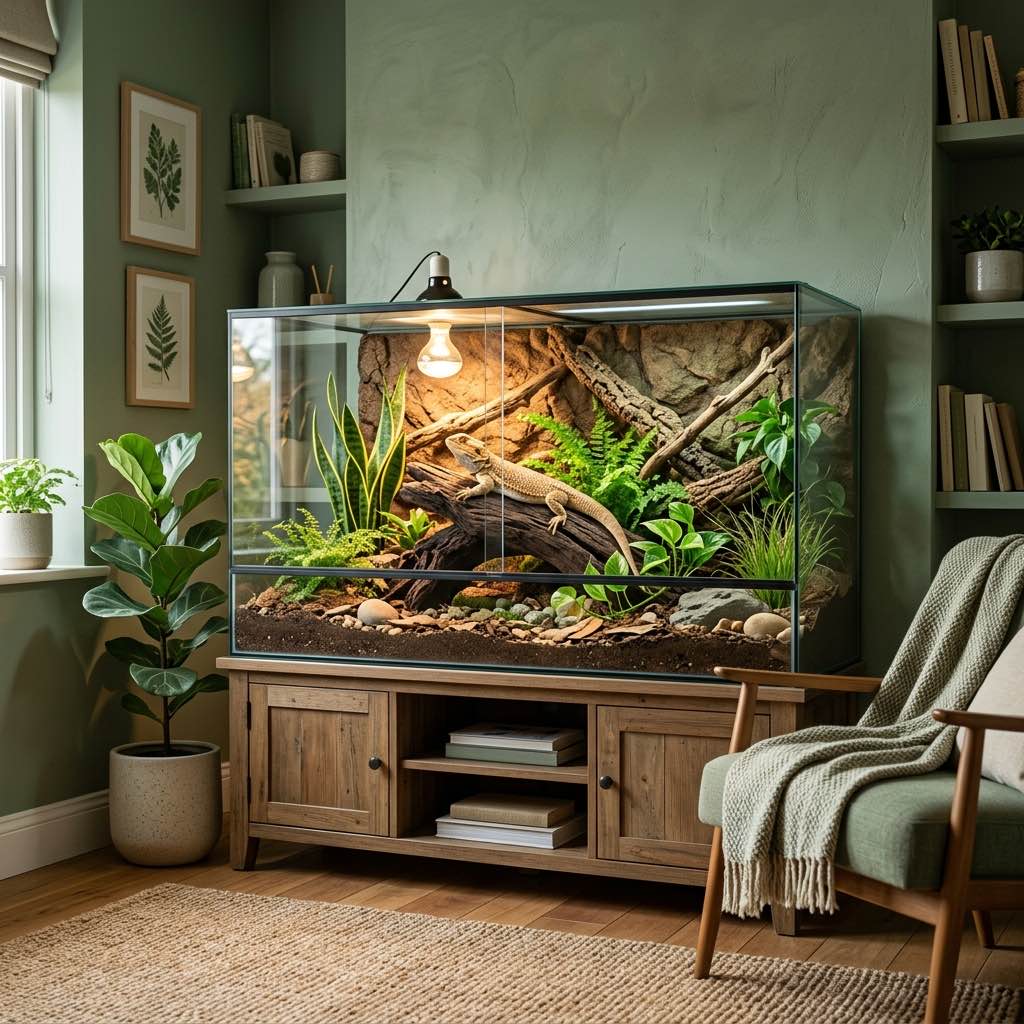
The list of species you can legally keep here is short, but it is not empty. Two stand out for beginners: the leopard gecko, the one true reptile widely and legally kept in New Zealand homes, and the axolotl, an entirely aquatic amphibian. Both are covered below.
---
Option 1: Leopard Geckos (Eublepharis macularius) – The Beginner's Reptile
Leopard geckos are the realistic answer for a New Zealander who wants an actual lizard. The New Zealand Herpetological Society lists them among the exotic species commonly held here, they are absent from the EPA's prohibited organisms list, and the Department of Conservation's captive-lizard permit regime covers native genera only — so no Wildlife Act authorisation is involved. The Merck Veterinary Manual notes they need less specialised lighting than most reptiles, which removes the single most common beginner failure point.
#### Leopard Gecko Setup: A Warm End and a Cool End
Leopard geckos are ground-dwelling and nocturnal, so floor area matters far more than height — the opposite of an arboreal species.
- Temperature: The Merck Veterinary Manual gives a husbandry range of 25–30°C (77–86°F). Provide this as a *gradient*, not a single temperature: a warm end the gecko can move onto to digest, and a cool end it can retreat to.
- Humidity: Merck lists 20–30% — this is an arid species — but adds that humidity requirements are substantially greater during ecdysis (shedding). In practice that means a small humid hide box available at all times, not a wetter enclosure.
- Lighting: Merck records no special lighting requirement for this species, though broad-spectrum lighting is still recommended. Keep a normal day/night cycle.
- Substrate: Beginners should avoid loose particulate substrates — ingested grit causes impaction. A solid, wipeable surface is the low-risk choice while you learn the animal.
- Hides: At least one hide at the warm end, one at the cool end, plus the humid hide.
- NZ climate notes: New Zealand houses run cold, and this matters more than the summer. A gecko below its temperature range stops digesting properly, so a thermostat-controlled heat source is not optional here — it is the difference between a healthy animal and a sick one, in Invercargill and in Auckland alike. In 2019 the SPCA prosecuted an Auckland pet retailer after finding that "the two leopard geckos were in an enclosure that had no temperature or humidity controls or gauges." Buy the thermostat before you buy the gecko.
#### Leopard Gecko Diet: Insects, Properly Supplemented
The Merck Veterinary Manual classes leopard geckos as insectivores, and flags that a diet of invertebrate prey requires regular calcium supplementation.
- Staple: Live insects — crickets and woodies are the usual New Zealand options. Gut-load them before offering.
- Supplementation: Dust insects with calcium. CareVets Mt Wellington's leopard gecko care guide additionally notes that "Vitamin A is particularly important to supplement in leopard geckos."
- Feeding frequency: This changes with age and body condition — juveniles eat far more often than adults. Set the schedule with your exotic vet or breeder for the specific animal rather than following a generic number.
- Water: A shallow dish of clean water, always available.
#### Leopard Gecko Health & Vet Access
- Common issues: Metabolic bone disease from inadequate calcium; dysecdysis (retained shed, often around the toes and eyes) when humidity is too low during shedding; impaction from ingested substrate.
- What to watch: Weight loss, a thinning tail (leopard geckos store fat there), retained shed, and refusal to eat over an extended period all warrant a vet visit rather than a husbandry tweak.
- Vet access in NZ: Exotic-competent vets are concentrated in the main centres. Find yours *before* you get the animal. CareVets Mt Wellington in Auckland publishes a clinical leopard gecko care guide, which is a reasonable starting point for what a vet will expect of you.
#### Getting One in NZ
Supply is seasonal and thin — New Zealand's reptile population is a closed historical set, with no importing, so every gecko sold here was bred here. Retailers routinely sell out and wait months for the next clutch, and captive-bred stock from a keeper who can tell you the animal's hatch date is worth waiting for. Our leopard gecko care guide goes deeper on sourcing and day-to-day care.
---
A note on Green Tree Frogs
Green tree frogs (*Litoria caerulea*) come up constantly in New Zealand beginner searches, and the answer is no: you cannot legally keep one as a pet here.
The species was released in Auckland and Canterbury in the 1890s but never established — NZ Frogs records none seen since the 1950s. That absence is what makes it a *new organism* under the HSNO Act 1996, and new organisms cannot be imported or held without EPA approval. We could find no EPA approval permitting them to be kept privately; the approvals on record are containment approvals, which is a different thing from a pet.
There is no legal grey area to work in here, so this guide gives no husbandry advice for the species. If you want an amphibian, the axolotl below is the legal choice.
---
Option 2: Axolotls (Ambystoma mexicanum) – The Smiling Salamander
Axolotls — legal to keep in New Zealand — are unique aquatic salamanders known for their perpetual "smile" and fascinating regenerative abilities. They are entirely aquatic and relatively low-maintenance once their specific water parameter needs are met, making them another excellent beginner-friendly exotic pet in New Zealand.
#### Axolotl Setup: The Aquatic Wonderland
Creating a stable aquatic environment is key for an Axolotl.
- Aquarium Size: A minimum of 40-60 litres (10-15 gallons) per individual Axolotl is recommended. A 60-litre tank is suitable for one, 100-120 litres for two. They grow quite large (up to 30cm!).
- Substrate: Bare bottom is best for beginners. If using substrate, it must be fine sand (e.g., play sand, pool filter sand) to prevent impaction if ingested. Gravel is a definite no-go as they will ingest it.
- Hides: Axolotls are shy and need plenty of dark hiding spots. PVC pipes, ceramic caves, or dense artificial plants work well.
- Water Parameters:
- Temperature: This is critical. Axolotls thrive in cool water, ideally 16-20°C. Temperatures above 22°C are stressful and can lead to health issues.
- pH: 6.5-8.0
- Ammonia, Nitrite: 0 ppm (parts per million)
- Nitrate: Below 20 ppm
- Filtration: A sponge filter or a low-flow hang-on-back (HOB) filter is ideal. Avoid strong currents, as Axolotls prefer still water. Ensure the filter is cycled before adding your Axolotl.
- NZ Climate Notes (Temperature Management is Key!):
- Summer: This is the biggest challenge in NZ, especially in warmer regions like Auckland, Northland, or even parts of the South Island during heatwaves. You must have a plan to keep the water cool.
- Cooling Options: Aquarium chillers are the most effective but expensive. Fans blowing across the water surface can provide evaporative cooling. Frozen water bottles (rotated throughout the day) can offer temporary relief. Keep the tank out of direct sunlight and away from heat sources.
- Winter: Generally less of an issue, as ambient room temperatures usually stay within their preferred range. No heater is typically needed.
- Lighting: Axolotls prefer dim conditions. Ambient room light is usually sufficient. If you use aquarium lighting, ensure it's low-intensity and provide plenty of shade.
#### Axolotl Diet: What to Feed Your Gilled Friend
Axolotls are carnivores.
- Staple Diet: High-quality sinking Axolotl pellets, bloodworms (frozen or live), and earthworms (e.g., dendrobaena, red wigglers – ensure they are free of pesticides and sourced safely).
- Variety: Occasional treats can include brine shrimp, small feeder fish (only if disease-free and appropriate size, use caution), or small pieces of lean meat.
- Feeding Frequency: Juveniles (under 10cm) daily, adults 2-3 times a week. Feed until they are no longer interested (usually 10-15 minutes). Remove any uneaten food promptly to maintain water quality.
#### Axolotl Health & Vet Access
- Common Issues: Fungal infections (often due to poor water quality or stress), ammonia/nitrite poisoning, impaction, limb regeneration issues (due to poor diet or water).
- Water Quality: Regular water changes (25-50% weekly) are essential. Test water parameters frequently with an aquarium test kit.
- Vet Access in NZ: As with any exotic, finding a vet experienced with amphibians can be difficult. Identify one in your area *before* getting an Axolotl.
#### Estimated Costs for Axolotls (NZD)
- Initial Setup:
- Aquarium (60L): $80 - $200
- Filter (sponge/HOB): $30 - $80
- Substrate (sand, if used): $20 - $40
- Decor (hides, plants): $30 - $100
- Thermometer: $15 - $30
- Water conditioner: $15 - $30
- Water test kit: $40 - $80
- Cooling (if needed): Fan $30-$80, Chiller $400-$1000+
- Total Initial Setup: $260 - $700 (without chiller) / $660 - $1700+ (with chiller)
- Axolotl Cost: $80 - $200 per Axolotl (from reputable breeders/stores).
- Ongoing Monthly Costs:
- Food (pellets, worms): $15 - $30
- Electricity (filter, fan/chiller): $10 - $50+
- Total Monthly: $25 - $80+
---
General Pet Care Principles for Exotic Pets in NZ
Whichever you choose, some fundamental principles apply to all exotic pet ownership in New Zealand.
Research, Research, Research!
Before bringing any pet home, do extensive research. Understand their natural habitat, specific needs, potential health issues, and lifespan. Don't rely solely on pet store advice; cross-reference information from multiple reputable sources.
Sourcing Your Pet Legally and Ethically
Always purchase your exotic pet from a reputable breeder or pet store in New Zealand. This ensures you are getting a legally sourced animal that has been bred responsibly. Never buy from unknown online sellers or individuals who cannot prove the animal's origin. Never attempt to import an animal yourself.
Housing & Environment: The Foundation of Health
- Appropriate Enclosure: Size matters. An enclosure that is too small will stress your pet and lead to health problems. Ensure it's secure to prevent escapes.
- Temperature & Humidity/Water Quality: These are non-negotiable. Invest in reliable thermometers, hygrometers, and water test kits. Consistency is key. Fluctuations cause stress and illness.
- Cleanliness: Regular cleaning prevents bacterial and fungal infections. Always use pet-safe disinfectants and rinse thoroughly.
Diet & Nutrition: Fueling a Healthy Life
- Species-Specific Diet: Never guess what your pet should eat. Provide the correct food items in the right quantities.
- Gut-Loading & Supplementation: For insectivorous pets, gut-loading feeder insects with nutritious food (e.g., fresh vegetables, commercial gut-load products) before feeding them to your pet is vital. Calcium and multivitamin supplements are crucial for preventing nutritional deficiencies.
- Fresh Water: Always provide access to clean, dechlorinated water.
Health & Vet Care: Being Prepared
- Find an Exotic Vet Early: As mentioned, vets experienced with exotic pets can be scarce in NZ. Locate one in your region *before* you need them in an emergency.
- Observe Your Pet: Learn your pet's normal behaviour, eating habits, and appearance. Any changes can be an early sign of illness.
- Quarantine: If you plan to get multiple pets, always quarantine new additions in a separate enclosure for several weeks to monitor for any signs of illness before introducing them to existing pets.
Common Mistakes to Avoid for NZ Beginners
- Impulse Buying: Exotic pets are a long-term commitment. Don't buy on a whim.
- Underestimating Costs: Initial setup is expensive, and ongoing costs (food, electricity, vet bills) add up.
- Ignoring Biosecurity: Never, ever own or attempt to import illegal species. The risks are too high for NZ's environment.
- Improper Heating/Cooling: NZ's climate can be variable. Ensure you have robust systems to maintain stable temperatures, especially cooling for Axolotls in summer and warm-end heating for leopard geckos in winter.
- Poor Water Quality (for Axolotls): This is the number one killer of aquatic amphibians. Invest in good filtration and test kits, and perform regular water changes.
- Getting Humidity Backwards (for Leopard Geckos): Leopard geckos need a *dry* enclosure (roughly 20–30% humidity) plus a humid hide to shed in — not a misted terrarium. Both errors show up as retained shed and skin problems. Monitor with a hygrometer.
- Feeding Wild-Caught Insects: These can carry parasites or pesticides. Stick to commercially bred feeder insects.
- Overhandling: Most exotic pets, especially amphibians, are not keen on being handled. Their skin is delicate, and oils/chemicals from our hands can be harmful. Handle only when necessary and with clean, damp hands.
Product Guidance
Petmall.co.nz offers a wide range of products to help you set up and maintain your exotic pet's habitat:
- Food: Find high-quality feeder insects, Axolotl pellets, and gut-loading foods in our food section.
- Housing: Explore terrariums, aquariums, substrates, decor, heating, and lighting solutions in our housing section.
- Health & Supplements: Discover essential calcium and multivitamin supplements, water conditioners, and cleaning supplies in our health-supplements section.
Quick Summary
- You cannot import a reptile or amphibian into NZ for the pet trade — anything not already here is a "new organism" under HSNO, and that approval is not granted for pets.
- All snakes are illegal in NZ, but bearded dragons, leopard geckos, blue-tongued skinks, and several turtles and tortoises from the long-established captive populations are legal to keep (NZ Herpetological Society).
- Native NZ reptiles (geckos, skinks, tuatara) are protected by DOC and not available as beginner pets.
- ⚠️ Green tree frogs are not an option. *Litoria caerulea* is a prohibited new organism here — you cannot legally keep one, whatever overseas care guides suggest.
- Best beginner-friendly choices in NZ:
- Leopard Geckos: Ground-dwelling, 25–30°C warm end, low humidity, insect diet.
- Axolotls: Aquatic, require cool water aquarium, specific water parameters, worms/pellets.
- NZ Climate Considerations:
- Leopard Geckos: Need reliable warm-end heating through a NZ winter.
- Axolotls: Crucially need cooling in summer (chillers, fans, frozen bottles).
- Red-eared sliders: legal to keep NZ-wide, but Auckland Council bans breeding, distributing or selling them within the Auckland region (from 1 September 2022) — in Auckland, rehoming an existing turtle is the only lawful route.
- Essential Gear: Terrarium/aquarium, substrate, heating/cooling, heat and UVB lighting (for leopard geckos), filtration (for Axolotls), thermometers, hygrometers, water test kits.
- Costs: Initial setup can be $300-$1000+, ongoing $30-$80+ monthly (excluding potential chiller costs).
- Vet Access: Research exotic vets in your area *before* getting a pet.
- Avoid: Impulse buying, underestimating costs, poor hygiene, improper temperatures, feeding wild-caught insects, and especially owning illegal species.
Embarking on the journey of exotic pet ownership in New Zealand is a rewarding experience, even with our unique legal landscape. By choosing a legal, appropriate pet and committing to thorough research and proper care, you can enjoy a fascinating and enriching companionship. Happy pet keeping!
Sources
- Department of Conservation (DOC), Keeping Protected Native Wildlife in Captivity Permits, checked 2026-07-21: https://www.doc.govt.nz/get-involved/apply-for-permits/keeping-native-wildlife-in-captivity/
- SPCA New Zealand, Welfare Guidelines for Caring for Axolotls, checked 2026-07-21: https://www.spca.nz/advice-and-welfare/article/caring-for-axolotls
- Merck Veterinary Manual, Important Husbandry Requirements for Selected Reptiles, checked 2026-09-08: https://www.merckvetmanual.com/multimedia/table/important-husbandry-requirements-for-selected-reptiles
- New Zealand Herpetological Society, Exotic pets kept in New Zealand, checked 2026-09-08: https://www.reptiles.org.nz/herpetofauna/exotic-pets
- Auckland Council, Pest search — red-eared slider turtle (regional pest management plan rules), checked 2026-09-10: https://www.tiakitamakimakaurau.nz/protect-and-restore-our-environment/pests-in-auckland/pest-search/trascr/
- Department of Conservation, Red-eared slider turtles (freshwater pests), checked 2026-09-10: https://www.doc.govt.nz/nature/pests-and-threats/freshwater-pests/red-eared-slider-turtles/
- SPCA New Zealand, SPCA prosecutes Petstop (leopard gecko enclosure findings), checked 2026-09-08: https://www.spca.nz/news-and-events/news-article/spcaprosecutespetstop
- CareVets Mt Wellington, Leopard Gecko Care Guide, checked 2026-09-08: https://bunnyvet.co.nz/leopard-gecko-care-guide
- NZ Frogs (New Zealand Frog Research Group), Introduced Frogs, checked 2026-09-08: https://nzfrogs.org/introduced-frogs/
- Environmental Protection Authority, Prohibited organisms in New Zealand, checked 2026-09-08: https://www.epa.govt.nz/industry-areas/new-organisms/prohibited-organisms-in-new-zealand/
- Department of Conservation, Holding lizards in captivity, checked 2026-09-08: https://www.doc.govt.nz/get-involved/apply-for-permits/interacting-with-wildlife/holding-lizards-in-captivity/
Related guides
petmall.co.nz
Shop at PetMall
The products below are practical support items for your pet. PetMall ships across New Zealand.
- Food & FeedingMatch diet to species — feeders, supplements, and the right calcium/D3 dusting keep NZ reptiles healthy.
- Heating & LightingUVB and a proper heat gradient are the foundation of reptile health — get this right before anything else.
- Reptile SuppliesSubstrate, hides, and enclosure gear — stable conditions are the foundation of reptile health in NZ.