Chinchilla Care NZ: $200–$600 Each, and They Must Never Get Wet
Chinchillas cost NZ$200–$600 each, need pairs, and must never get wet. The heat-plus-humidity rule for NZ summers, plus dust baths, housing and diet.
Chinchillas are small Andean rodents known for their extraordinarily soft, dense fur and surprisingly long lifespan of 15–20 years. They are increasingly kept as pets in New Zealand — but they have specific care requirements that many first-time owners don't anticipate. This guide covers the practical basics.
What you need to know before getting a chinchilla
Lifespan: 15–20 years. A chinchilla is a longer commitment than most people expect from a small pet. This is longer than many dogs and cats. Before purchasing, genuinely assess whether your household can accommodate a chinchilla for potentially two decades.
They must never get wet. Chinchilla fur is extraordinarily dense — approximately 80 hairs grow from each follicle compared to 1–3 in human hair. This density means the coat does not air-dry properly if soaked. A wet chinchilla can develop fungal skin infections or hypothermia. Bathing a chinchilla in water is not done — they clean themselves through dust baths instead.
They are crepuscular. Most active at dawn and dusk. A chinchilla in a bedroom may be disruptive in early morning hours.
They need pairs or groups. Chinchillas are social animals that experience significant stress when isolated. At minimum, keep two same-sex chinchillas. Bonded pairs or small groups are ideal.
NZ sourcing and legality
Chinchillas can be imported into New Zealand only from Great Britain, under MPI biosecurity requirements. In practice, most NZ pet chinchillas are domestically bred from established NZ populations. They are available from specialist small-animal breeders and some NZ pet shops.
Prices run NZD $200–$600 per animal. Budget for two (minimum) — you should not keep a single chinchilla.
For the full legal picture — the import health standard, why hamsters are unavailable while chinchillas are not, and whether any council permit applies — see are chinchillas legal in NZ.
Temperature: the critical NZ consideration
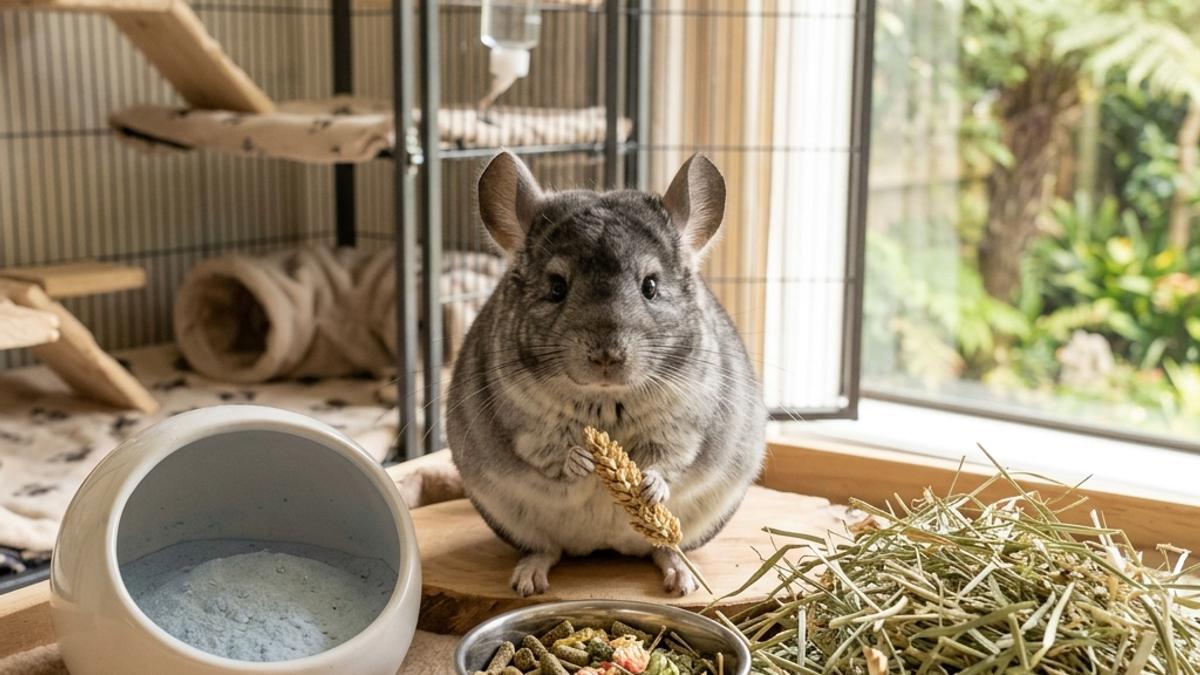
Chinchillas are cold-climate animals from the Andes Mountains. Their dense fur evolved for cold environments. In NZ conditions:
- The range they are adapted to is 18.3–26.7°C (Merck Veterinary Manual). Above about 26.7°C in a warm, humid room, chinchillas develop matted fur — and higher ambient temperatures, especially with high humidity, can cause heatstroke.
- Humidity is half the problem, and that is what catches NZ owners out. Merck's rule of thumb: add the temperature in degrees Fahrenheit to the relative humidity percentage, and treat any total above 150 as dangerous. A muggy 24°C Auckland afternoon (75°F) at 80% humidity totals 155 — dangerous by that measure even though the temperature on its own looks acceptable.
- Auckland, Northland and the Wellington coast combine warmth with high humidity in summer. In those regions a cool, dry, well-ventilated room — air conditioning or a dehumidifier if the room cannot stay cool and dry on its own — is not optional.
- South Island climate is more naturally suited to chinchilla keeping.
- Warning signs of heat stress: lying flat, drooling, rapid breathing, lethargy. These require immediate cooling and veterinary attention.
🚩 *Heat stress is a veterinary emergency. If your chinchilla shows these signs, contact a registered NZ vet immediately.*
Dust baths
Chinchillas clean their fur using volcanic ash dust (also called pumice or chinchilla dust), not water. Dust baths are essential for coat health — the dust absorbs oils and moisture from the dense fur.
How to provide dust baths:
- Use commercially produced chinchilla dust (available from NZ pet shops) — not sand, which has the wrong particle size
- Provide a bath container (a glass jar or ceramic pot wide enough for the chinchilla to roll in) filled 5–7 cm deep with dust
- Allow 10–15 minutes of bathing 2–3 times per week
- Remove the bath between sessions — chinchillas will use the container as a toilet if left in the cage
NZ humidity note: In high-humidity NZ environments (Auckland, Northland, Wellington coast), more frequent dust baths may be needed, as humidity reduces the dust's effectiveness. Monitor the coat condition — dull or matted patches suggest the coat isn't being cleaned adequately.
Housing
Cage requirements:
- Minimum 90 × 60 × 90 cm for a pair — tall multi-level cages are ideal as chinchillas are active climbers
- Solid metal floors with removable trays — wire mesh floors cause foot problems (bumblefoot) in chinchillas; ensure platforms are solid wood or smooth-edged metal
- Bar spacing: no more than 2 cm; chinchilla heads can get stuck in wider gaps
- Multiple levels with platforms, ramps, and hiding boxes at different heights
Bedding:
- Paper-based or compressed cardboard bedding is suitable
- Avoid cedar and pine shavings (aromatic oils harm respiratory systems)
- Spot clean daily; full change weekly
Location:
- Cool, shaded area of the house — away from direct sun and heat sources
- Away from kitchen (cooking fumes)
- Temperature-controlled environment essential — particularly in NZ summers
Diet
Wild chinchillas eat dry, fibrous grasses and plant material in the Andes. The captive diet should reflect this:
Hay (80–85% of diet): Unlimited timothy hay or orchard grass is the dietary foundation. Hay provides the fibre necessary for healthy gut motility. Insufficient hay causes digestive problems.
Chinchilla pellets (10–15% of diet): A small daily portion of quality timothy-based pellets (approximately 1–2 tablespoons per chinchilla). Not alfalfa-based pellets, which are too high in calcium and protein for adult chinchillas.
Fresh water: Always available via a water bottle (not an open bowl, which can be contaminated with droppings).
Treats — strictly limited:
- Small amounts of dried herbs (rose hips, chamomile, dried apple pieces) are safe as occasional treats
- Avoid: fresh fruit (too much sugar), nuts (too much fat), vegetables with high water content, anything sugary or processed
- Treats should be genuinely occasional — less than a teaspoon per day
Enrichment
Chinchillas are active and intelligent. They need:
- Solid-surface exercise wheel: at least 35 cm (14 inch) diameter, 38 cm (15 inch) preferred; solid, not mesh. A wheel smaller than this forces a chinchilla to arch its spine while running. Chinchillas use wheels regularly.
- Wood chews: Untreated wood (apple, pear, willow, kiln-dried pine) for gnawing. Their teeth grow continuously and require wear.
- Hiding boxes and tunnels: Ceramic hides or wooden boxes for security
- Out-of-cage time: 30–60 minutes daily in a chinchilla-proofed room (no cables, no toxic plants, no way for the chinchilla to get stuck)
Social requirements
Keep at minimum two same-sex chinchillas, or a bonded pair where at least the male is neutered (to prevent breeding). Introductions between unfamiliar chinchillas should be done gradually (separate cages near each other, then supervised time together).
A single chinchilla can develop depression-like behaviours, excessive vocalisations, and over-grooming. This is preventable with a companion.
Related guides
- First guinea pig or rabbit setup NZ
- Small animal bedding types NZ
- Fancy rat care NZ
- Best small pets for apartments NZ
- Low maintenance pets NZ
- Small pets hub
---
References
- Merck Veterinary Manual — Providing a Home for a Chinchilla (multi-level cage, side mesh no wider than 25 × 50 mm, solid resting areas to prevent foot sores, 5–10 cm dust bath for about 10 minutes daily), checked 2026-07-26: https://www.merckvetmanual.com/all-other-pets/chinchillas/providing-a-home-for-a-chinchilla
- MPI New Zealand — Bringing pets to NZ other than cats and dogs (chinchillas may be imported only from Great Britain), checked 2026-07-26: https://www.mpi.govt.nz/bring-send-to-nz/pets-travelling-to-nz/bringing-pets-to-nz-other-than-cats-and-dogs
- Merck Veterinary Manual — Chinchillas (ambient temperature range they are adapted to 18.3–26.7°C; heatstroke risk rises with high ambient temperature plus high humidity; add °F to relative humidity and treat totals over 150 as dangerous; matted fur above 26.7°C in humid conditions), checked 2026-09-05: https://www.merckvetmanual.com/exotic-and-laboratory-animals/rodents/chinchillas
---
*🚩 This guide provides general care information for NZ chinchilla owners. Heat stress is a veterinary emergency — contact a registered NZ vet immediately if you observe signs of overheating. Not a substitute for professional veterinary advice.*
Related guides
petmall.co.nz
Shop at PetMall
The products below are practical support items for your pet. PetMall ships across New Zealand.