Fancy Rat Care NZ: Housing, Diet, Enrichment and What NZ Owners Need to Know
Fancy rats are intelligent, social, and rewarding pets for NZ owners who understand their needs. Here's a practical guide to housing, diet, social requirements, and what to expect.
Fancy rats (domesticated *Rattus norvegicus*) are one of the most intelligent small pet species available in New Zealand. They are curious, trainable, and genuinely interactive — a well-socialised fancy rat recognises their owner, can learn tricks, and seeks interaction in ways most other small pets don't. They are also frequently misunderstood or underestimated by first-time owners.
This guide covers the practical basics for NZ rat owners.
What you need to know first
Lifespan is short: 2–3 years. This is the most important fact to understand before getting fancy rats. The joy of rat ownership is significant, but so is the grief that comes at the end of a short life. Many rat owners choose this knowingly and return to the species again — but if you're not prepared for a 2–3 year commitment that ends relatively quickly, consider a longer-lived small pet.
They must live in pairs or groups. A single rat is not appropriate. Rats are highly social animals that experience genuine distress when isolated. Keeping at least two same-sex rats (or desexed rats) is the minimum. Many experienced rat owners keep groups of 3 or more.
They are active at dawn and dusk. Rats are crepuscular — most active in the morning and evening. This generally aligns well with working owner schedules, but means a rat cage in a bedroom may disturb sleep with rustling and activity in the early morning.
Housing
Cage requirements
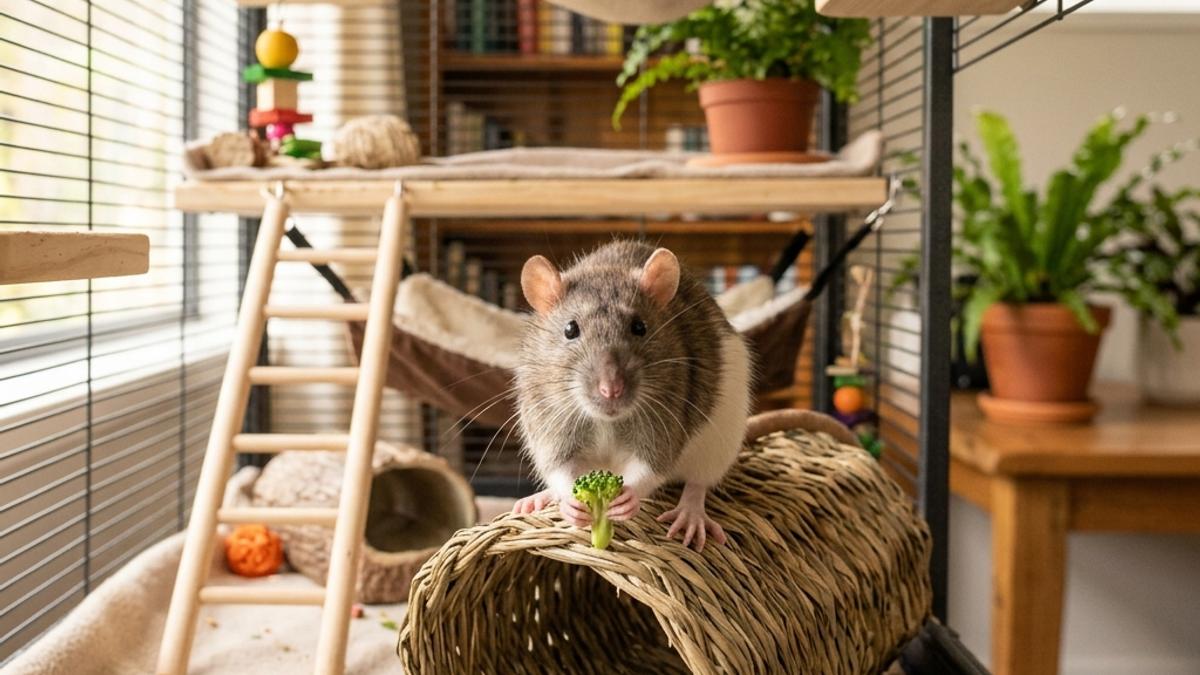
- Minimum size for two rats: 60 × 45 × 45 cm; multi-level cages with ramps and platforms are strongly preferred — height and climbing opportunities matter more than floor area
- Bar spacing: Maximum 1.2 cm — young rats can squeeze through surprisingly small gaps
- Material: Wire cages with solid metal trays (not wire mesh floors, which can injure feet) are the standard recommendation
- Avoid: Aquariums and other glass or plastic containers. Poor ventilation in enclosed spaces leads to respiratory problems — the single most common health issue in rats.
Bedding
- Unscented paper-based bedding (shredded paper, paper pellets) is the standard NZ recommendation
- Avoid cedar and pine wood shavings — the aromatic oils are harmful to rat respiratory systems
- Hemp or compressed cardboard bedding are safe alternatives
- Spot-clean daily; full cage change every 5–7 days minimum
Temperature and location
- Rats are comfortable at 18–24°C. They handle NZ's temperate climate well in most regions.
- Keep cages away from direct sun, drafts, and heat sources
- In South Island winters, ensure the room doesn't drop below 15°C for extended periods
Diet
A balanced fancy rat diet in NZ should include:
A quality rat-specific pellet or block food as the primary food source. This provides the nutritional foundation that seed mixes alone cannot. Plain rodent pellet mixes (not just seed mixes) are available from NZ pet shops.
Fresh vegetables and greens daily: broccoli, carrot, cucumber, peas, kale, and leafy greens are all suitable. Variety matters.
Occasional protein: Small amounts of cooked lean chicken, boiled egg, or plain cooked fish a few times per week. Rats are omnivores and do well with dietary protein.
Foods to avoid:
- Chocolate — toxic in meaningful quantities
- Avocado — toxic
- Onion and garlic — harmful
- Carbonated drinks
- Sticky foods (peanut butter in large amounts can cause choking)
- Citrus fruits (controversial, and known to cause kidney problems in intact male rats specifically)
- Uncooked dried beans or lentils
Provide fresh water daily — a water bottle attached to the cage is more hygienic than an open bowl.
Enrichment
Rats need enrichment every day. An under-stimulated rat develops stress behaviours and may become lethargic or overweight.
Essential enrichment:
- Solid-surface wheel: 28 cm diameter minimum — important that it has a solid running surface, not mesh. Rats need to run; an appropriately sized solid wheel is used consistently by most rats.
- Tunnels and hides: Cardboard tubes, wooden boxes, ceramic hides. Rats need covered areas to sleep in and retreat to.
- Hammocks: Cloth or fleece hammocks strung in the upper section of the cage are popular sleeping spots. Rats are climbers and prefer elevated resting places.
- Digging substrate: A tray of safe digging material (compressed soil, coconut coir) encourages foraging behaviour.
Training and interaction: Fancy rats are highly trainable using positive reinforcement. Common tricks include: name recognition, come, spin, stand up, retrieve a small object. Training sessions of 5–10 minutes provide significant mental enrichment. A tame, well-socialised rat actively seeks out interaction with their owner.
Out-of-cage time: At least 30–60 minutes daily in a rat-proofed area. Unsupervised free-roaming requires securing cables, blocking gaps behind furniture, and removing accessible plants.
Social needs
As noted above: rats require companions. Group composition options:
- Two or more same-sex males (desexed or intact — unneutered males can be kept together if introduced young)
- Two or more same-sex females
- Mixed groups where at least the males are desexed (to prevent breeding)
Introductions between unfamiliar rats should be done gradually (neutral territory, short sessions, increasing length over several days) to prevent fighting.
Health awareness
Rats are prone to certain health issues that NZ owners should be aware of so they can seek vet care promptly when needed:
- Respiratory signs (wheezing, clicking sounds, laboured breathing) warrant prompt veterinary attention — don't wait and see
- Lumps or tumours are common in older rats, particularly females. Regular gentle handling helps owners notice new lumps early
- Dental health: Overgrown or misaligned teeth (malocclusion) can affect eating — if a rat is losing weight or struggling to eat, teeth should be checked by a vet
For any health concerns, seek a small-animal vet with rodent experience. Not all vets have experience with rats — ask specifically about small mammal / exotic animal care when choosing a vet.
🚩 *This section provides owner-awareness information only. For any health concern, consult a registered New Zealand veterinarian. This guide does not provide treatment, dosage, or diagnostic advice.*
NZ sourcing
Fancy rats are available from NZ pet shops and specialist breeders. They are not subject to MPI import restrictions — they are domestically bred. Prices are typically $20–$50 per rat.
When sourcing: look for young rats that have been handled regularly (are curious rather than fearful when approached), and source from a seller who keeps them in groups rather than isolation.
Related guides
- First guinea pig or rabbit setup NZ
- Small pet hutch and cage guide NZ
- Small animal bedding types NZ
- Best small pets for kids NZ
- Low maintenance pets NZ
- Small pets hub
---
References
- Merck Veterinary Manual — Providing a Home for a Rat (solid cage floor rather than wire grid, wooden cages unsuitable because urine soaks in and ammonia builds up, 18–26°C, weekly cage clean and bedding changed twice weekly), checked 2026-07-26: https://www.merckvetmanual.com/all-other-pets/rats/providing-a-home-for-a-rat
- VCA Animal Hospitals — Owning Pet Rats (rats housed in groups rarely fight given enough space; paper-based bedding preferred and cedar shavings avoided because the aromatic oils irritate the respiratory tract; desexing females at 4–6 months reduces mammary and reproductive tumour risk), checked 2026-07-26: https://vcahospitals.com/know-your-pet/owning-a-pet-rat
---
*🚩 This guide provides general care information for NZ fancy rat owners. It does not provide medical, treatment, or dosage advice. For any health concern, consult a registered New Zealand veterinarian with small-animal or exotic-animal experience.*
Related guides
petmall.co.nz
Shop at PetMall
The products below are practical support items for your pet. PetMall ships across New Zealand.