Pet First Aid Kit NZ: What Every Kiwi Pet Owner Should Have at Home
Pet first aid kit NZ draft: build a safe home, car and emergency kit, know vet contacts, and avoid risky DIY treatment.
A good pet first aid kit NZ owners can keep at home is not a mini vet clinic. It is a tidy set of supplies, records and contact details that helps you keep yourself safe, transport your pet, and follow your vet's instructions quickly.
If your pet is collapsed, struggling to breathe, bleeding heavily, unable to stand, having seizures, showing severe pain, or you suspect poisoning, phone a vet or emergency clinic immediately.
The NZ Emergency Rule: P.E.T.
The New Zealand Veterinary Association uses a simple P.E.T. message for animal emergencies:
| Step | Meaning | What it means for owners |
|---|---|---|
| Pause | Think whether this is emergency care or normal-hours vet care | Do not panic-buy or guess treatment |
| Emergency call | Phone your vet clinic for advice if urgent or uncertain | Keep the number in your kit and phone |
| Take | Follow the advice and go where directed | Have a carrier, lead, towel and payment method ready |
That is the mindset for this whole guide. Your kit should make the P.E.T. steps easier. It should not tempt you into doing risky DIY treatment.
Quick Kit Checklist
| Category | Include | Why it helps |
|---|---|---|
| Contacts | Usual vet, after-hours vet, NZ Animal Poisons Helpline | You do not want to search while stressed |
| Records | Vaccination, medication, microchip, insurance, photos | Helps a new clinic identify the pet and history |
| Handling | Lead, spare collar, carrier, towel, soft muzzle for dogs | Safer transport for frightened animals |
| Cleaning | Gloves, poo bags, hand sanitiser, rubbish bags | Keeps people safer and contains mess |
| Dressings | Gauze, non-stick pads, cohesive bandage | For vet-directed temporary coverage only |
| Tools | Blunt scissors, tweezers, torch, tick remover | Practical handling and inspection tools |
| Comfort | Blanket, collapsible bowl, bottled water | Travel, evacuation and waiting-room basics |
| Information | First aid booklet or course notes | Use only within training and vet advice |
Contacts Matter More Than Gadgets
SPCA New Zealand's animals-in-emergencies guidance tells owners to prepare a get-away kit and a full survival kit for animals, including vet history, registration, microchip information, photos, medications, carriers, leads and an animal first aid kit.
Start there. Write these details on paper and store them in a zip bag:
- Your normal vet clinic.
- The clinic's after-hours number.
- The nearest emergency vet if you live near one.
- NZ Animal Poisons Helpline: 0800 869 738.
- Your pet's microchip number and registration details.
- Current medications and known allergies.
- A recent photo of you with the pet.
NZVA notes that larger cities may have emergency centres, while smaller areas may rely on a regular clinic's after-hours service. That matters for rural Northland, West Coast, Central Otago and holiday baches where the nearest open vet may not be close.
Handling and Transport Supplies
An injured or frightened pet may bite, scratch or bolt, even if they are normally gentle. Your first job is to avoid becoming the second patient.
Useful handling items:
- A secure carrier for cats, rabbits and small pets.
- A spare lead and collar for dogs.
- A towel or blanket for gentle containment and warmth.
- A soft dog muzzle, used only if safe and appropriate.
- A crate label with your name, phone and address.
- A collapsible bowl and bottled water for travel or evacuation.
Do not muzzle a vomiting pet, a pet struggling to breathe, or an animal you cannot handle safely. Phone the vet for instructions. For cats and small pets, a towel and carrier are often more useful than trying to restrain them by hand.
Dressings and Basic Supplies
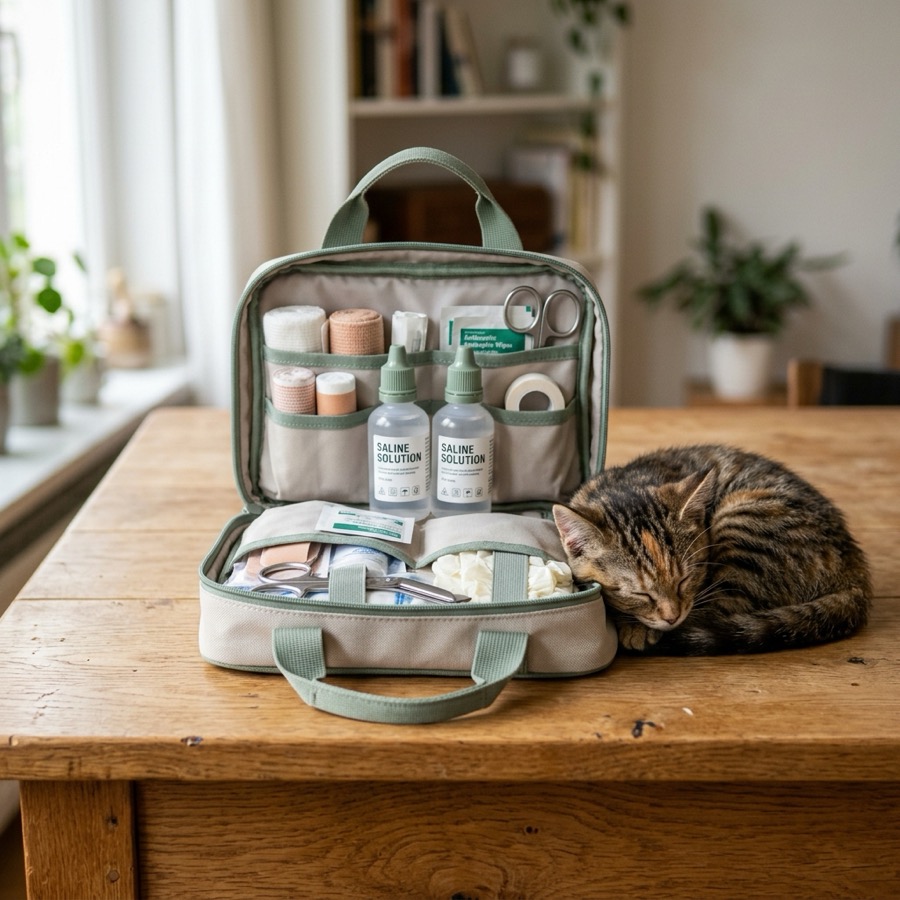
A pet first aid kit can include wound-covering supplies, but the key phrase is "temporary and vet-directed". You are buying time to reach help, not performing treatment at home.
Consider:
- Disposable gloves.
- Saline rinse labelled for wound/eye flushing.
- Gauze pads and rolls.
- Non-stick dressing pads.
- Cohesive bandage wrap.
- Blunt-ended scissors.
- Tweezers.
- Digital thermometer.
- Torch or headlamp.
- Instant cold pack wrapped before contact.
- Emergency blanket.
Do not apply human creams, antiseptics, painkillers, essential oils, leftover antibiotics or home remedies unless a vet specifically tells you to. Human medicines can be dangerous for pets.
Poisoning Preparation
The National Poisons Centre's pets article says owners should call a vet or the NZ Animal Poisons Helpline if a pet may be poisoned. It also notes that prevention advice for children applies to pets too.
Your kit should help you give accurate information:
- Keep product packaging or plant material if safe to do so.
- Note the time you noticed exposure.
- Estimate the amount if you can without delaying the call.
- Keep your pet away from more exposure.
- Do not induce vomiting unless specifically instructed by a vet or poison adviser.
Common NZ household risks include medications, cleaning products, rodent bait, garden chemicals, pest control products, chocolate, grapes/raisins, and unknown plants. At the bach, add fish hooks, bait, barbecue scraps, antifreeze, and garage chemicals to the mental checklist.
Home Kit, Car Kit and Go-Bag
Most Kiwi owners need three versions:
| Kit | Best location | Contents |
|---|---|---|
| Home kit | Laundry, garage shelf or hall cupboard | Full records, dressings, gloves, cleaning supplies |
| Car kit | Boot or dog travel bag | Lead, towel, water, bowl, gloves, poo bags, vet contacts |
| Go-bag | By the door for floods, fires or evacuations | Food, water, medication, records, carrier, bedding |
SPCA New Zealand's emergency guidance says animals need to be part of the household emergency plan and may need food, water, shelter, containment, records and medications during a disaster. That applies to earthquakes, floods, storms, wildfires and road closures.
For cats, keep the carrier visible or familiar before an emergency. A carrier stored behind Christmas decorations is not much use when the cat is already hiding.
Rural, Beach and Travel Scenarios
If you are 10 minutes from an Auckland emergency clinic, your kit can be simpler. If you are camping, farming, travelling inter-island, tramping to a hut, or staying at a remote bach, preparation matters more.
Add:
- Printed vet contacts for your destination.
- Extra medication if your pet has a prescription plan.
- Tick remover or tweezers for areas where ticks are possible.
- Spare towels for wet, sandy or muddy dogs.
- A muzzle and slip lead for dog travel, if appropriate.
- A waterproof bag for records.
For ferries and long car trips, pair the first aid kit with travel basics: crate or restraint, water, familiar bedding and a plan for toilet stops. Do not wait until a holiday weekend to learn which clinics are open.
What Not to Put in the Kit
Avoid anything that creates false confidence:
- Human painkillers.
- Old prescription medicines.
- Random antibiotics.
- Hydrogen peroxide for DIY vomiting.
- Essential oils.
- Unlabelled powders or tablets.
- Expired products.
- Tools you do not know how to use.
If a first aid course or vet has taught you to use a specific item, keep the course notes with the kit. Otherwise, the safest instruction is usually: call, contain safely, transport as advised.
NZD Cost Planning
You can build a useful starter kit without buying a giant medical box.
| Setup | Rough NZD planning range | Good first buy |
|---|---|---|
| Basic home starter kit | NZD $40-$90 | Gloves, gauze, saline, scissors, torch, records pouch |
| Car/travel add-on | NZD $25-$80 | Bowl, towel, lead, bags, water bottle |
| Full emergency go-bag | NZD $100-$250+ | Carrier, bedding, food, water, medication copies |
| Pet first aid course/book | NZD varies | Useful if you want skills, not just supplies |
Spend first on contacts, containment and transport. The most expensive item is not always the most useful in a real emergency.
Key takeaways
- A pet first aid kit NZ owners keep should support vet contact and safe transport, not DIY treatment.
- Keep vet, after-hours and NZ Animal Poisons Helpline details on paper and in your phone.
- Include records, photos, medication details, carrier/lead, towel, gloves and basic dressing supplies.
- Do not use human medicines, induce vomiting, or treat poisoning unless told by a vet or poison adviser.
- Rural, bach, ferry and travel plans need extra contact and transport preparation.
- This draft needs vet review before any publishing decision.
Related reading
- Dog Carriers & Travel in NZ
- Pet Bowls & Feeders NZ
- New Puppy Checklist NZ
- New Kitten Checklist NZ
- Cost of Owning a Dog in NZ
---
Reference sources
- NZVA, Animal emergency? Think P.E.T, checked 2026-06-04: https://nzva.org.nz/public/emergencycare/
- SPCA New Zealand, Animals in emergencies, checked 2026-06-04: https://www.spca.nz/advice-and-welfare/article/animals-in-emergencies
- SPCA New Zealand, Pets in Emergencies checklist, checked 2026-06-04: https://www.spca.nz/images/assets/153289/1/spca%20pets%20in%20emergencies.pdf
- National Poisons Centre, Pets get poisoned too, checked 2026-06-04: https://poisons.co.nz/articles-and-info/all-articles/view/pets-get-poisoned-too
- SPCA Pet Insurance, What to put in your pet first aid kit, checked 2026-06-04: https://www.spcapetinsurance.co.nz/pet-insurance/the-good-life/pet-first-aid-kit