Dog Carriers & Travel in NZ: Car, Ferry, Plane & Everything in Between
Dog travel carrier NZ guide: choose car crates, soft carriers, hard crates and ferry or flight gear for safe NZ trips.
A good dog travel carrier NZ setup is one your dog can stand, turn and lie down in naturally, that can be secured in the car, cleaned easily, and matched to the rules for ferries or domestic flights before you book. Buy for the trip, not just the photo.
Most travel stress starts before the trip: the carrier is too small, the dog has never practised being inside it, or the owner checks ferry or airline rules too late. NZ travel is easier when the carrier, booking and training plan all match.
Quick Match Table
| Trip type | Gear to consider | Key check |
|---|---|---|
| Vet visit or cafe stop | Soft carrier or car harness setup | Secure, ventilated, easy to lift |
| Road trip | Hard crate, travel crate or secured carrier | Stable in the vehicle and not in direct sun |
| Cook Strait ferry | Vehicle travel, booked kennel or approved cage | Check operator rules before booking |
| Domestic flight | Airline-suitable carrier | Air NZ size, weight and booking rules |
| Small dog day travel | Backpack or soft carrier | Dog can sit naturally and does not overheat |
| Puppy first trips | Light crate plus familiar blanket | Short practice sessions before real travel |
Car Travel: Secure Beats Loose
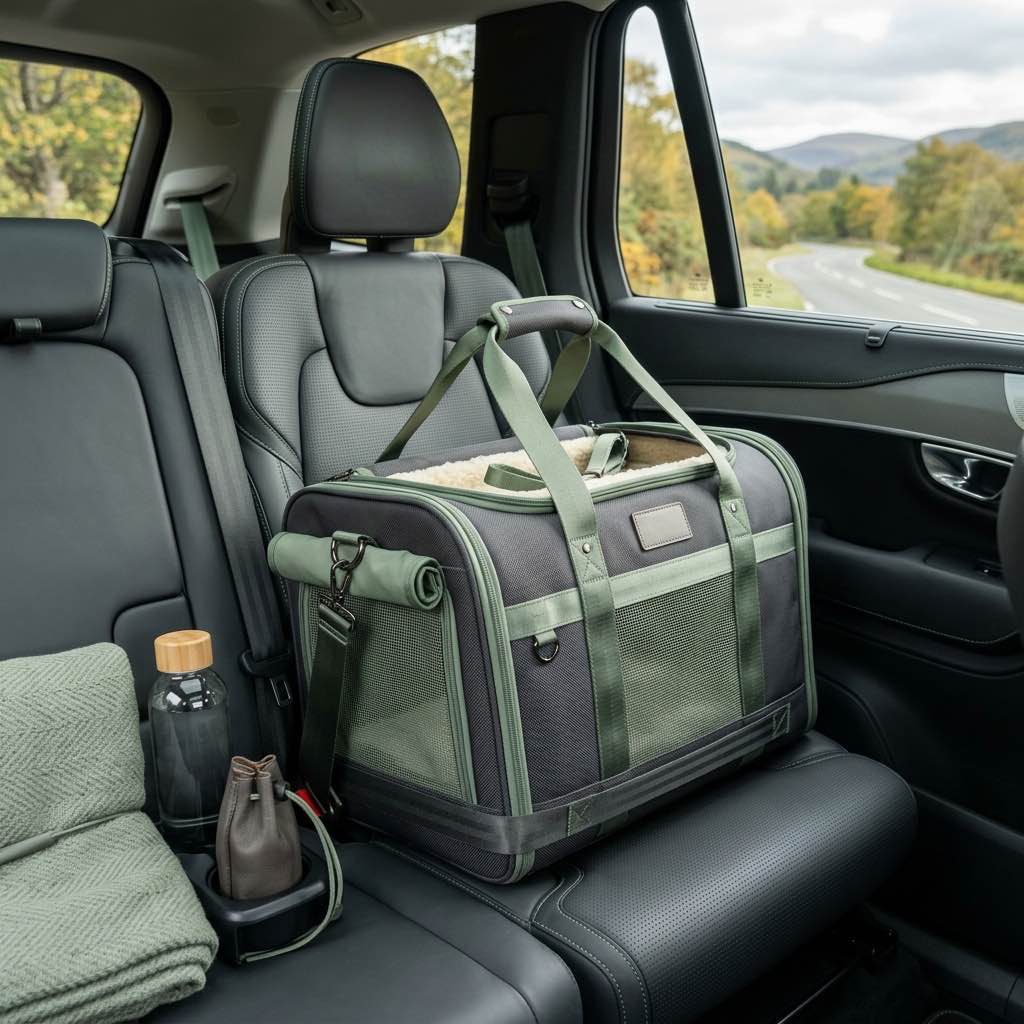
Loose dogs in cars are distracting and unsafe. Use a secured crate, a carrier that cannot slide, or a correctly fitted car harness attached as designed. The best setup depends on vehicle space, dog size and how often you travel.
A hard crate is useful for medium and large dogs, muddy beach trips and farm or tramping weekends. A soft carrier can work for small dogs and short urban trips, but it still needs structure and ventilation. Backpack carriers suit a few small dogs for short periods, not long hot walks.
Place the carrier where airflow is good and sun is not beating through glass. Do not put a dog in a closed boot. On summer road trips, plan shade, water breaks and toilet stops. Avoid leaving dogs in parked cars; NZ vehicles can heat quickly, and welfare rules around animals in vehicles are strict for good reason.
Carrier Fit
For travel, fit is not a guess. Your dog should be able to stand, turn around and lie down naturally. Air New Zealand's domestic pet travel page uses a similar practical test for carriers: pets need enough room to stand or sit without head or ears touching the top, turn around, and lie down with paws extended.
Measure your dog standing, sitting and lying down. Add space for movement, but do not choose a crate so huge that the dog slides around. For puppies, use dividers or buy for the near future while still keeping the actual travel area secure.
Inside the carrier, keep it simple. A familiar blanket or soft item can help. Avoid collars, loose leads and bulky clothing inside flight carriers if the carrier rules prohibit them.
Ferry Travel
For Cook Strait trips, read the operator's current pet rules before booking. Interislander says owners are responsible for pets' safety and comfort, and that most animals travel in the vehicle, a booked kennel, or a secure cage checked with the luggage team. Their guidance also says animals in crates or kennels need enough room to stand, lie down and turn naturally, ventilation and water.
That means the right gear is practical rather than fancy:
- a secure carrier or crate in good condition
- water bowl or bottle system that suits the operator's rules
- familiar bedding that does not overheat
- clear ID and booking details
- a plan for toilet and exercise before boarding
Ships can be noisy and unfamiliar. Practise carrier time at home and do not make the first long confinement the ferry crossing.
Domestic Air Travel
Air New Zealand allows domesticated cats, dogs and small caged birds to travel as checked-in baggage on some domestic flights, provided they fly in suitable carriers. Air NZ also says pets must be added to a booking, and at the time checked on 2026-06-04, the domestic pet carriage fee shown was NZD $120.
Air rules change and aircraft space is limited, especially on regional routes. Check the airline page before buying a carrier, because dimensions, weight limits and booking steps matter. If your dog is travelling alone or is outside standard domestic pet rules, you may need an approved pet transporter.
Do not assume a carrier labelled "airline approved" overseas is accepted in NZ. The airline's own requirements win.
Training the Carrier Before the Trip
Carrier training is simple but needs time. Leave the carrier open in the house. Feed treats near it, then inside it. Add a mat or blanket. Close the door for seconds, not minutes, then build up slowly. Short drives to nice places help more than one big stressful trip.
For puppies, pair the carrier with calm rest and safe car routines early. For older rescue dogs, go slower. If your dog panics, drools heavily, scratches to escape, or becomes unusually distressed, pause and ask a vet or qualified trainer for help.
What to Pack
For a typical NZ road or ferry trip, pack:
- lead, collar or harness and ID tag
- water and a bowl
- poo bags
- towel for rain, beach sand or muddy paws
- familiar blanket or mat
- food only if the trip timing needs it
- medication or vet documents if already prescribed or required
- booking confirmations for ferry or airline travel
Keep paperwork and essentials where you can reach them, not buried under suitcases.
Key takeaways
- A dog travel carrier NZ setup must fit the dog and the transport rules.
- For cars, secure the dog rather than letting them roam loose.
- Ferry and airline rules differ, so check before you buy or book.
- Air NZ domestic pet travel has booking, carrier and weight requirements.
- Interislander pet travel requires owner responsibility, ventilation, water and suitable containment.
- Practise carrier time before the real trip.
Related reading
- Travelling with Pets in NZ: Car, Ferry & Domestic Flights
- NZ Summer Pet Safety: Heat, UV & Beach Guide
- New Puppy Checklist NZ: Everything You Need
- Dog Registration NZ: Council Renewal Checklist
---
Reference sources
- Air New Zealand, Travelling with pets, checked 2026-06-04: https://www.airnewzealand.co.nz/travelling-with-pets
- Interislander, Travelling with pets or animals, checked 2026-06-04: https://www.interislander.co.nz/plan/travelling-with-pets
- MPI, Code of Welfare: Transport within New Zealand, checked 2026-06-04: https://www.mpi.govt.nz/animals/animal-welfare/codes/all-animal-welfare-codes/transport-within-new-zealand/
- MPI, Code of Welfare: Dogs, checked 2026-06-04: https://www.mpi.govt.nz/animals/animal-welfare/codes/all-animal-welfare-codes/code-of-welfare-dogs
- SPCA New Zealand, How to crate train your dog, checked 2026-06-04: https://www.spca.nz/advice-and-welfare/article/how-to-crate-train-your-dog
Related guides
petmall.co.nz
Shop at PetMall
The products below are practical support items for your pet. PetMall ships across New Zealand.
- Dog FoodStart with food that matches your dog's life stage and activity level — and change brands slowly over 7–10 days.
- Dog TreatsTraining rewards and everyday treats — small, soft pieces work best for consistent reinforcement.
- Dog ToysA small rotation of chew, fetch, and puzzle toys usually works better than buying a large variety at once.
- Dog GroomingA gentle brush and the right shampoo make maintenance easier — especially for dogs that get muddy on walks.
- Leads & HarnessesComfort matters: padded contact points and adjustable fit help reduce rubbing on longer walks or tramping weekends.
- Flea & Worm TreatmentFor NZ conditions, look for protection that fits your routine (monthly vs longer-lasting) and your dog's weight range.