Travelling with Pets in NZ: Car, Ferry & Domestic Flights
Planning to travel with pets in NZ? Get essential tips for car, ferry & domestic flights, including NZ-specific laws & pet-friendly spots.
Planning a trip with your furry friend in Aotearoa? Travelling with pets in NZ can be a rewarding experience, but it requires careful preparation to ensure a smooth and stress-free journey for both you and your animal companion. This comprehensive guide covers everything from car safety and ferry bookings to domestic flight regulations and pet-friendly accommodation, equipping you with the essential knowledge and practical tips to explore our beautiful country responsibly with your beloved pet by your side. From city breaks to bach getaways, we'll help you navigate the ins and outs of pet travel across the North and South Islands.
Getting Ready: Essential Pre-Trip Planning
Before you even think about hitting the road, water, or air, a solid plan is your best friend. Start by consulting your vet for a general health check-up, especially if your pet is older, has existing health conditions, or is prone to anxiety. They can advise on vaccinations, parasite control (flea, tick, and worming treatments are crucial, particularly if you're travelling to different regions), and potential motion sickness medication. It's also a good idea to ensure your pet's microchip details are up-to-date and registered with the New Zealand Companion Animal Register (NZCAR). A visible ID tag with your current mobile number is non-negotiable.
Consider your pet's temperament. Is your Labrador Retriever a seasoned traveller, or does your cat get stressed by car rides? Acclimatise them to carriers and car travel with short, positive experiences before a long journey. Pack a dedicated 'pet travel bag' with essentials: food, water, bowls, favourite toys, bedding, waste bags, any medications, a lead, and a harness. Having familiar items can significantly reduce stress in new environments. Always carry a recent photo of your pet, just in case.
Car Travel: Safety and Comfort on NZ Roads
Car travel is the most common way Kiwis explore with their pets, offering flexibility and convenience. However, safety is paramount. An unrestrained pet can be a dangerous distraction to the driver and a projectile in an accident. SPCA NZ strongly advocates for secure restraint systems. For dogs, this means a crash-tested harness that attaches to a seatbelt, or a sturdy, well-ventilated crate secured in the boot or on the back seat. Cats should always travel in a secure carrier.
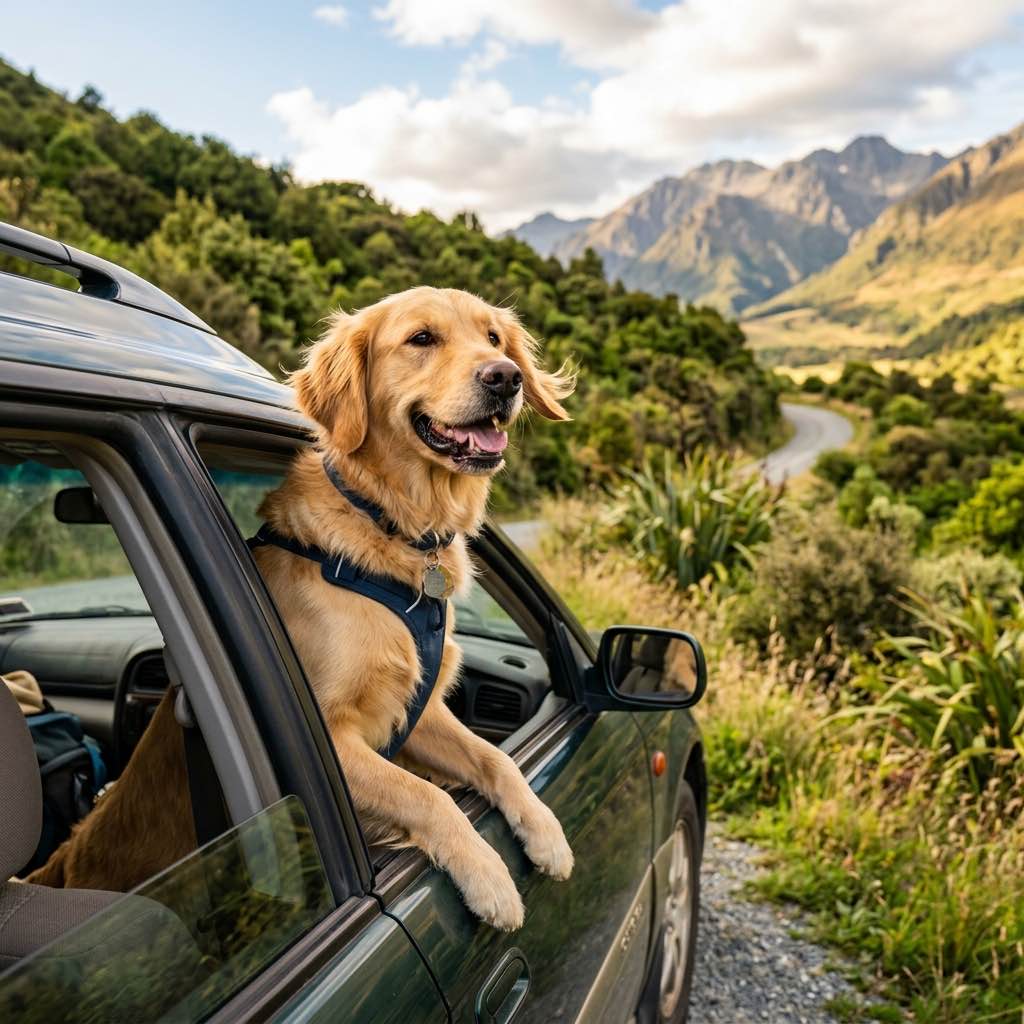
Never allow your pet to travel with their head out the window – this can lead to eye injuries, ear infections, or even being thrown from the vehicle. During long drives, plan regular stops every 2-3 hours for toilet breaks, water, and a quick stretch. Always keep your dog on a lead during stops, especially in unfamiliar areas. Avoid feeding a large meal just before or during travel to prevent car sickness.
Crucially, never leave your pet unattended in a parked car, especially on a warm day. Temperatures inside a car can rise rapidly, even with windows slightly ajar, leading to heatstroke, which can be fatal. If you need to stop, take your pet with you or ensure they are in a safe, cool, and supervised environment. A good rule of thumb: if it's too hot for you, it's too hot for your pet.
Ferry Travel: Crossing the Cook Strait with Your Companion
Crossing between the North and South Islands via the Cook Strait ferry (Interislander or Bluebridge) is a popular option for many travellers. Both services have specific policies for pets, and booking well in advance is essential, especially during peak seasons.
Interislander: Pets generally travel in kennels on the vehicle deck, or in your vehicle if you have booked a pet-friendly cabin (these are limited). Kennels come in various sizes and cost around $25-$35 NZD per pet, per sailing. You'll need to provide your own water bowl and bedding. Access to the vehicle deck is typically restricted during the sailing, so ensure your pet has had a toilet break and water before boarding. Some sailings allow brief visits to your pet under supervision, check with staff upon boarding. Assistance dogs are permitted in passenger areas.
Bluebridge: Similar to Interislander, Bluebridge offers kennels on the vehicle deck for a fee (typically around $20-$30 NZD). They also have a limited number of pet-friendly cabins available, which allow your pet to stay with you in the cabin. These are highly sought after, so book early. As with Interislander, ensure your pet is comfortable and has relieved itself before the journey. You will not have access to your pet during the sailing if they are in a kennel or your vehicle.
For both services, it's vital to ensure your pet is comfortable in their carrier or kennel. Consider a calming spray or a familiar blanket. Always check the most up-to-date pet policies on their respective websites before booking, as regulations can change.
Domestic Air Travel: Flying High with Your Pet
Flying with pets domestically in NZ is primarily handled by dedicated cargo services, as pets are generally not permitted in the cabin (with the exception of certified assistance dogs). The main carrier is Air New Zealand Cargo, but smaller regional airlines like Sounds Air and Stewart Island Flights also offer pet transport options.
Air New Zealand Cargo: This service transports pets as manifested cargo. You'll need an IATA-compliant travel crate, which must be the correct size for your pet to stand, turn around, and lie down comfortably. Bookings need to be made well in advance, and there are specific drop-off and pick-up times at the cargo terminals, not the passenger terminal. Costs vary significantly based on crate size, weight, and destination, often ranging from $150-$500+ NZD. Your vet will need to issue a 'fit to fly' certificate, usually within 10 days of travel. Air NZ Cargo has strict rules regarding breed types (e.g., brachycephalic breeds have restrictions due to breathing difficulties) and temperature limitations, so always check their detailed pet travel guide.
Sounds Air & Stewart Island Flights: These smaller airlines often provide a more personal service for pets on regional routes. Pets usually travel in the aircraft's hold within an approved carrier. It's crucial to contact them directly for their specific requirements, booking procedures, and pricing, as they differ from Air NZ Cargo. For example, travelling to Stewart Island often requires extra biosecurity considerations, and you might need to declare your pet's presence to MPI upon arrival to prevent the introduction of pests or diseases to the island's unique ecosystem.
Regardless of the airline, ensure your pet is accustomed to their crate before travel. Line it with absorbent bedding, attach a water dispenser, and label it clearly with your contact information. Avoid sedating your pet unless specifically advised by your vet, as it can interfere with their ability to regulate body temperature and balance at altitude.
Pet-Friendly Accommodation: Finding a Home Away From Home
Finding pet-friendly accommodation has become much easier in NZ, but it still requires planning. Many motels, holiday parks, and even some hotels now welcome pets, often for an additional fee (typically $10-$50 NZD per night). Websites like Bookabach, Holiday Houses, and even mainstream booking sites often have filters for 'pet-friendly' properties.
Always confirm directly with the accommodation provider about their specific pet policies before booking. Some might have restrictions on pet size, breed (though less common now), or where pets are allowed within the property (e.g., not on furniture, not left unattended). Be a responsible pet owner: clean up after your pet, prevent excessive barking, and respect property rules. Leaving your pet in a crate while you're out can be a good way to minimise potential damage or noise complaints.
Consider camping or staying at Department of Conservation (DOC) campsites. Many DOC sites allow dogs, but they must be kept on a lead at all times and are often restricted from specific conservation areas to protect native wildlife. Always check the individual DOC campsite's rules before arrival. Remember, our native birds and wildlife are vulnerable, so responsible pet ownership is vital in these areas.
Health & Safety on the Road: Keeping Your Pet Well
Beyond the travel itself, maintaining your pet's health and safety while away from home is crucial. Always carry a basic pet first-aid kit, including bandages, antiseptic wipes, tweezers (for removing splinters or ticks), and any specific medications your pet requires. Know the location of the nearest veterinary clinic at your destination – the New Zealand Veterinary Association (NZVA) website can help you locate one.
Be mindful of local hazards. In coastal areas, watch out for toxic algae in freshwater, shellfish poisoning risks, and sandflies. In rural areas, be aware of farm animals (always keep dogs on leads around livestock), bait stations, and potential exposure to diseases like leptospirosis. If your dog enjoys tramping, check for paraveterinary hazards like poisonous plants or rough terrain that could injure paws. Consider protective booties for long walks on challenging surfaces.
Ensure your pet stays hydrated, especially in warmer weather. Offer water frequently, and if you're out and about, carry a portable water bottle and bowl. Maintain their regular feeding schedule as much as possible to avoid digestive upset. If your pet seems unwell or exhibits unusual behaviour, don't hesitate to contact a local vet.
Legalities & Etiquette: Being a Responsible Pet Owner in Public Spaces
Navigating public spaces with your pet in NZ requires an understanding of local council bylaws. While the general rule is that dogs must be on a lead in public places, specific areas like beaches, parks, and footpaths often have designated on-leash, off-leash, or prohibited zones. For example, Auckland Council has detailed maps and rules regarding dog access in different areas, often varying by time of day or season. Always look for signage and respect local regulations.
Always pick up after your pet. Carrying waste bags is not just good etiquette; it's often a legal requirement. Failure to do so can result in fines from local councils. Be considerate of other people and animals. Not everyone is comfortable around dogs, and some dogs may not be friendly with others. Maintain control of your pet at all times.
When visiting friends or family, always ask permission before bringing your pet. If they agree, ensure your pet is well-behaved and doesn't cause damage or undue stress. Remember, being a responsible pet owner reflects positively on all pet owners and helps maintain access to public spaces for our animal companions.
What to Look For: Essential Travel Gear for Your Pet
When preparing for your pet's journey, investing in the right gear can make all the difference for their comfort and safety. Here's what to consider:
- Travel Crates & Carriers: For car, ferry, or air travel, a sturdy, well-ventilated, and appropriately sized crate is essential. Look for IATA-compliant models if flying. Ensure your pet can stand, turn around, and lie down comfortably. Soft-sided carriers are suitable for smaller pets in cars.
- Car Safety Harnesses & Seatbelt Attachments: For dogs travelling in cars, a crash-tested harness that clips into a seatbelt provides crucial protection. Avoid simple seatbelt clips that attach to a collar, as these can cause neck injuries in a sudden stop.
- Portable Water & Food Bowls: Collapsible silicone bowls are lightweight and easy to pack. Look for leak-proof water bottles designed for pets, often with an integrated dispenser.
- Absorbent Bedding & Pee Pads: Line crates with comfortable, absorbent bedding. For longer journeys or anxious pets, pee pads can be a lifesaver. Familiar bedding can also offer comfort.
- Calming Aids: For anxious travellers, consider natural calming sprays (e.g., pheromone-based), calming treats, or a thunder shirt. Always discuss these options with your vet first.
- First-Aid Kit: A basic kit with antiseptic wipes, bandages, medical tape, tweezers, and any prescribed medications is a must-have.
- Identification: Ensure your pet has an up-to-date ID tag on their collar with your mobile number. A microchip is also vital.
Quick Summary
- Plan Ahead: Vet check, updated microchip, and a packed 'pet travel bag' are crucial before any journey.
- Safety First: Always secure your pet in a car with a crash-tested harness or crate; never leave them unattended in a vehicle.
- Ferry & Flight Bookings: Book pet spaces well in advance for Interislander/Bluebridge and Air NZ Cargo; be aware of specific rules and costs.
- Pet-Friendly Accommodation: Research and confirm pet policies directly with providers, and be a responsible guest.
- Know the Rules: Understand local council bylaws for pet access in public spaces and always clean up after your pet.
Sources
- Interislander, Travelling with pets or animals, checked 2026-07-20: https://www.interislander.co.nz/plan/travelling-with-pets
- Bluebridge — Frequently asked questions: travelling with pets, checked 2026-07-30: https://www.bluebridge.co.nz/frequently-asked-questions/
- Air New Zealand Cargo, Shipping Pets Domestically and Internationally, checked 2026-07-20: https://www.airnewzealand.co.nz/travelling-with-pets
- Department of Conservation (DOC), Dog Access Rules on Conservation Land, checked 2026-07-20: https://www.doc.govt.nz/parks-and-recreation/know-before-you-go/dog-access/