NZ Summer Pet Safety: Heat, UV & Beach Guide
Keep your furry friend safe this NZ summer! Our comprehensive guide covers heatstroke, UV, beach hazards, and more with expert tips and NZ-specific advice.
Kiwi summers are legendary for their sunshine, stunning beaches, and outdoor adventures. But for our beloved pets, the season brings a unique set of challenges. From scorching pavements and intense UV rays to the hidden dangers of our beautiful coastlines and freshwater bodies, understanding how to protect your furry family member is paramount. This comprehensive guide, informed by over a decade of pet supplies expertise in NZ, will equip you with the knowledge to ensure your pet enjoys a safe, happy, and healthy summer, free from preventable risks like heatstroke, sunburn, and beach-related incidents. Your pet's well-being is our top priority, and with a little preparation, you can both make the most of the long, sunny days.
Heatstroke: The Silent Summer Killer
Heatstroke is a severe and potentially fatal condition that occurs when a pet's body temperature rises to dangerous levels, often above 40°C. Unlike humans, dogs and cats don't sweat efficiently through their skin; they primarily cool down by panting. When the ambient temperature is too high, or they've overexerted themselves, panting alone isn't enough, and their internal temperature can skyrocket. This can lead to organ damage, brain swelling, and even death if not treated promptly.
Recognising the Signs
Early detection is crucial. Look out for:
- Excessive panting, often with a loud or laboured sound.
- Drooling, sometimes thick and stringy.
- Reddened gums and tongue.
- Vomiting or diarrhoea.
- Wobbliness, disorientation, or collapse.
- Rapid heart rate.
- In severe cases, seizures or loss of consciousness.
Pets at Higher Risk
Certain pets are more susceptible to heatstroke:
- Brachycephalic breeds: Dogs with flat faces like Pugs, French Bulldogs, and Boston Terriers struggle to breathe and cool down due to their restricted airways. Even moderate exercise on a warm day can be dangerous for them.
- Elderly or very young pets: Their bodies are less efficient at regulating temperature.
- Overweight or obese pets: Excess fat acts as insulation, trapping heat.
- Pets with thick or dark coats: These absorb more heat.
- Pets with underlying health conditions: Heart or respiratory issues can exacerbate the risk.
Prevention is Key
- Never leave a pet in a parked car: This is the golden rule. Even on a mild 22°C day, the temperature inside a car can reach a deadly 47°C in just 60 minutes. Cracking a window offers minimal relief. SPCA NZ runs powerful campaigns highlighting this danger, and leaving an animal in distress can lead to significant fines under the Animal Welfare Act 1999. If you see a pet in distress in a car, contact the SPCA or local police immediately.
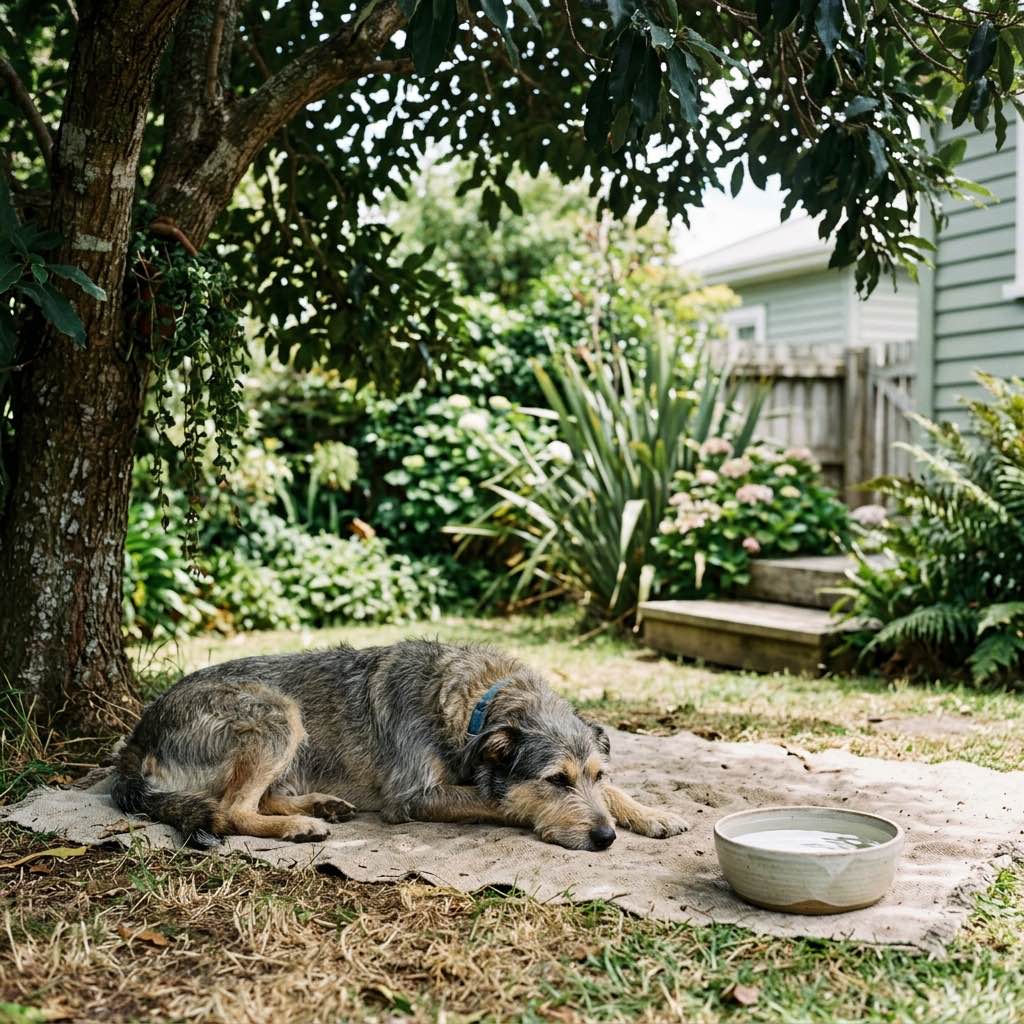
- Provide ample shade and fresh water: Ensure your pet always has access to a cool, shaded area outdoors and multiple sources of fresh, cool water, especially if you're out and about or at the bach.
- Limit exercise during peak heat: Walk your dog in the early morning or late evening when temperatures are lower. Avoid strenuous activity during the hottest parts of the day.
- Cooling aids: Consider cooling mats, vests, or bandanas for high-risk pets or during heatwaves.
- Grooming: Regular grooming can help remove excess undercoat, allowing for better airflow, but avoid shaving double-coated breeds as their coats provide insulation against heat and UV.
What to Do in an Emergency
If you suspect heatstroke, act fast:
- Move your pet to a cool area immediately.
- Apply cool (not ice-cold) water: Soak towels and place them on your pet's head, neck, armpits, and groin. You can also gently hose them down with cool water.
- Offer small amounts of water if they are conscious and able to drink.
- Do NOT overcool: Once their temperature starts to drop, remove the wet towels to prevent hypothermia.
- Seek veterinary attention immediately. Even if your pet appears to recover, internal damage may not be obvious. Call your local vet clinic (e.g., a typical emergency vet consultation in NZ might cost upwards of $150-$250 NZD, not including treatment) while en route to advise them you're coming.
UV Radiation: Sunburn & Skin Cancer
New Zealand's high UV index, particularly during summer, isn't just a concern for humans; our pets are also vulnerable to sunburn and the long-term risks of skin cancer. The ozone layer over NZ is naturally thinner, leading to higher UV levels, making sun protection for pets just as important as it is for us Kiwis.
Who's at Risk?
- Pets with short, thin, or white coats: Breeds like Dalmatians, Boxers, and white Bull Terriers are particularly susceptible.
- Hairless breeds: Sphynx cats and Chinese Crested dogs need constant sun protection.
- Areas with sparse hair: Noses, ear tips, bellies, inner thighs, and areas with scars are common spots for sunburn.
Signs of Sunburn
Sunburn in pets looks similar to humans: reddened skin, tenderness, flaking, and in severe cases, blistering. Repeated sunburns significantly increase the risk of squamous cell carcinoma and other skin cancers, which can be aggressive and require extensive treatment.
Sun Protection Strategies
- Shade is your best friend: Ensure your pet always has access to natural or artificial shade when outdoors.
- Pet-safe sunscreen: Apply a pet-specific sunscreen (zinc-free is crucial, as zinc oxide can be toxic if ingested) to vulnerable areas like the nose, ear tips, and belly before sun exposure. Reapply regularly, especially after swimming.
- Protective clothing: UV-protective shirts or rash vests designed for pets can be a great option for extended outdoor activities, particularly for very sensitive or short-haired breeds.
- Limit peak sun exposure: Just like with heatstroke, avoid letting your pet bask in the sun during the hottest, most UV-intense parts of the day (typically 10 am to 4 pm).
Beach & Water Safety: A Kiwi Summer Staple
Our stunning beaches, lakes, and rivers are a huge part of the Kiwi summer experience, and many of us love sharing them with our dogs. However, these environments come with their own set of hazards that require careful attention.
Saltwater Ingestion & Water Intoxication
- Saltwater poisoning: While a few gulps of saltwater are usually harmless, excessive ingestion can lead to hypernatremia (salt poisoning). Symptoms include vomiting, diarrhoea, lethargy, wobbliness, and in severe cases, seizures and brain swelling. Always provide plenty of fresh water for your dog to drink at the beach to discourage them from drinking seawater.
- Water intoxication: Less common but equally dangerous, this occurs when a dog ingests too much freshwater too quickly, often during enthusiastic play with sprinklers or retrieving toys in the water. This dilutes their body's electrolytes, leading to brain swelling. Monitor play and ensure your dog takes breaks.
Rip Currents & Strong Tides
New Zealand's coastal waters can be unpredictable. Even strong swimmers can be caught in rip currents, especially on West Coast beaches like Piha or Muriwai. Always be aware of local conditions, look for warning signs, and never let your dog swim unsupervised or too far from shore. Consider a dog life vest for added safety, especially for breeds not naturally strong swimmers, like Bulldogs, or if you're boating.
Marine Hazards
- Shellfish & sharp objects: Broken shells, glass, and other debris can cause painful cuts to paws. Inspect your dog's paws regularly after beach trips.
- Jellyfish: Stings can be painful and cause allergic reactions. Keep your dog away from washed-up jellyfish.
- Toxic algae (Cyanobacteria): This is a significant concern in many NZ freshwater lakes and rivers, particularly during warmer months. Blue-green algae can produce toxins that are deadly to pets if ingested. MPI (Ministry for Primary Industries) and local councils frequently issue warnings about toxic algae blooms. Always check for warning signs at swimming spots, and if the water looks discoloured (green, brown, or like pea soup) or has a strange odour, keep your pet out. Symptoms of toxic algae poisoning are severe and rapid, including vomiting, diarrhoea, weakness, tremors, seizures, and collapse. Seek emergency vet care immediately.
- Fish hooks & lines: These are common hazards on fishing beaches. Always supervise your dog and prevent them from investigating discarded fishing gear.
Paw Protection on Hot Surfaces
Sand, asphalt, and concrete can reach dangerously high temperatures under the NZ sun, easily burning paw pads. If you can't comfortably hold your hand on the surface for seven seconds, it's too hot for your pet's paws. Walk your dog during cooler times of the day or use protective booties. This applies to city footpaths as much as it does to the beach.
Hydration: Keeping Thirsty Paws Quenched
Proper hydration is critical during summer. Pets can quickly become dehydrated, especially with increased activity and warmer temperatures. Dehydration can lead to lethargy, organ stress, and exacerbate the risk of heatstroke.
Ensuring Adequate Water Intake
- Constant access: Always provide multiple bowls of fresh, clean water at home. If you have an outdoor pet, ensure their water bowl is in the shade to keep it cool.
- On the go: When heading out for a walk, tramping, or a long drive to the bach, always carry a portable water bottle and collapsible bowl for your pet. Don't rely on finding water sources, as they may be contaminated or unavailable.
- Recognising dehydration: Signs include sunken eyes, lethargy, dry gums, and a loss of skin elasticity (gently pinch the skin on their back; if it doesn't snap back quickly, they may be dehydrated).
Food and Hydration
While not a primary source of hydration, some wet foods have higher moisture content, which can contribute to overall water intake. Ensure your pet's diet is balanced and appropriate for their activity level to support their general health and resilience in warmer weather.
Parasites & Pests: Summer's Unwanted Guests
Warmer temperatures often mean an increase in fleas, ticks, and other biting insects. While NZ is fortunate to be free of some of the more dangerous tick-borne diseases found overseas, fleas are a year-round nuisance that can multiply rapidly in summer.
Fleas and Ticks
- Fleas: These tiny pests cause itching, skin irritation, and can transmit tapeworms. A heavy infestation can even lead to anaemia, especially in young or vulnerable pets. Regular flea treatment, as recommended by your vet, is essential. Remember to treat your home environment too, as fleas spend most of their life cycle off the host.
- Ticks: While not widespread across all of NZ, certain areas (e.g., parts of the Northland, Coromandel) do have populations of native ticks. These can cause local irritation and, in rare cases, transmit diseases. If you find a tick, remove it carefully with tweezers or a tick removal tool, ensuring you get the head. Consult your vet if you're unsure.
- Mosquitoes: While primarily an annoyance, mosquitoes can transmit heartworm in some parts of the world. Fortunately, heartworm is extremely rare in NZ, but it's still good practice to minimise mosquito exposure where possible.
Prevention is Best
Discuss with your veterinarian the best year-round parasite prevention programme for your pet, considering their lifestyle and local risks. There are many effective spot-ons, oral treatments, and collars available.
Toxic Plants & Algae: Hidden Dangers
Summer brings lush growth, but some plants and natural phenomena can be highly toxic to curious pets.
Common Toxic Plants
- Karaka Berries: These bright orange berries, common in coastal and lowland forests throughout NZ, are highly toxic if ingested, causing convulsions and paralysis. Keep pets away from Karaka trees, especially when berries are ripening and falling.
- Lilies: Extremely toxic to cats, even small ingestions can cause kidney failure.
- Rhododendrons and Azaleas: All parts are toxic, causing vomiting, diarrhoea, and heart problems.
- Oleander: Highly toxic, affecting the heart.
- Foxglove: Contains cardiac glycosides that can be fatal.
Always supervise your pet in new environments and remove any suspicious plants from your garden. If you suspect your pet has ingested a toxic plant, contact your vet immediately.
Blue-Green Algae (Cyanobacteria)
As mentioned in the beach safety section, this is a critical NZ-specific hazard. Found in freshwater bodies like lakes, ponds, and slow-moving rivers, toxic algae blooms are more prevalent in warm, still conditions. They can look like green slime, scums, or discoloured water. Always heed local council and MPI warnings. If your pet has been exposed, rinse them thoroughly with fresh water and seek emergency veterinary care.
Travel & Bach Safety
Many Kiwis head away for summer, often taking their pets. Planning ahead ensures a smooth and safe trip.
Car Safety
- Restraints: Always secure your pet in the car using a seatbelt harness, crate, or carrier. This protects them in case of an accident and prevents driver distraction. An unrestrained pet can become a projectile in a crash, posing a danger to themselves and passengers.
- Ventilation: Ensure good airflow, especially on long drives. Never leave a pet unattended in a parked car, even for a few minutes, as temperatures can rise rapidly.
- Breaks: Plan regular stops for toilet breaks and water, especially for long journeys to the bach or holiday flat.
Pet First-Aid Kit
A well-stocked pet first-aid kit is invaluable for summer adventures. Include:
- Antiseptic wipes or solution (e.g., diluted Betadine)
- Sterile gauze and bandages
- Adhesive tape
- Scissors
- Tweezers (for splinters or tick removal)
- Pet-safe pain relief (ONLY as directed by a vet)
- Emergency contact numbers (your vet, local emergency vet clinic at your destination)
- Any regular medications your pet needs.
What to Look For
When preparing for summer, consider these natural and effective products to enhance your pet's safety and comfort:
- Cooling Mats & Vests: Look for non-toxic, pressure-activated cooling mats or vests that don't require refrigeration. These provide a cool surface for pets to lie on, helping to regulate their body temperature naturally.
- Pet-Safe Sunscreen: Opt for sunscreens specifically formulated for pets, free from zinc oxide and PABA, which can be toxic if ingested. Natural ingredients like titanium dioxide can be safer alternatives. Always check the ingredient list carefully.
- Paw Protection Balms & Booties: Natural paw balms made with ingredients like beeswax, shea butter, and coconut oil can help moisturise and protect paw pads from heat and rough surfaces. For extreme heat or tramping, consider durable, breathable dog booties.
- Portable Water Bottles & Bowls: Collapsible silicone bowls and water bottles with integrated dispensers are essential for ensuring your pet stays hydrated on walks, beach trips, or long car rides.
- Life Vests for Dogs: Choose a brightly coloured, well-fitting life vest with a sturdy handle for easy retrieval. Look for good buoyancy and comfortable straps that don't chafe.
- Natural Flea & Tick Prevention: While vet-prescribed treatments are often the most effective, some pet owners explore natural repellents like essential oil sprays (e.g., diluted cedarwood, lavender – *always research and use with caution, ensuring they are safe for pets*) or diatomaceous earth for home use. Always consult your vet before relying solely on natural alternatives, especially in high-risk areas. For grooming tools, a good deshedding brush can help manage thick coats, improving airflow and reducing the risk of overheating.
Quick Summary
- Prioritise heatstroke prevention: Never leave pets in cars, provide constant shade and water, and limit exercise during peak heat. Recognise symptoms and act fast in an emergency.
- Protect against NZ's strong UV: Use pet-safe sunscreen on vulnerable areas and ensure access to shade to prevent sunburn and long-term skin cancer risks.
- Master beach and water safety: Be vigilant for saltwater ingestion, rip currents, marine hazards, and especially toxic blue-green algae in freshwater. Always check local warnings.
- Hydration and paw care are crucial: Carry water for your pet on outings and protect their paws from hot surfaces like sand and pavement.
- Stay ahead of parasites and toxins: Maintain year-round flea/tick prevention and be aware of common toxic plants (like Karaka berries) and dangerous algae blooms in NZ's natural environments.
Sources
- Merck Veterinary Manual — What to Do in a Dog or Cat Emergency: heat-stroke signs, cooling with cool (not ice-cold) water, and why short-nosed breeds overheat on mild days
- SPCA New Zealand — "Dogs die in hot cars. If you love them, don't leave them.": a car can exceed 50°C in under 15 minutes, and owners can be fined $300
- DOC — Dog access on public conservation land (beach and coastal access rules vary by site)