Dog Registration NZ: Council Renewal Checklist
Dog registration NZ 2026/27 guide: 1 August late-fee warning, council fee examples, renewal checklist, microchip checks and owner admin.
Dog registration in New Zealand is one of the easiest owner jobs to leave too late. For the 2026/27 renewal season, the practical date to remember is 1 August: many councils apply late fees from 1 August or after 31 July, and the Dog Control Act allows councils to set an additional late registration fee of up to 50 percent.
The safest owner rule is simple: check your own council page in June, pay by 31 July, and do not wait for the first week of August. If your dog is not registered, the Dog Control Act also lists a $300 infringement fee for failure to register a dog, and the Act treats failing to register a dog over three months old as an offence.
This guide uses official 2026/27 council pages as examples. Fees vary by district, dog category, desexing status, working dog status, responsible owner schemes, disability assist dog status, and late-payment rules. Use the examples below to understand the pattern, then confirm the exact amount with your own council before paying.
Quick answer for 2026/27
Most NZ dog owners should treat the renewal season like this:
- In June, find your council's dog registration renewal page or invoice.
- Check the fee category that applies to your dog.
- Check whether your council gives an early-payment, responsible-owner, desexed, working dog, farm dog, or disability assist dog rate.
- Pay by 31 July unless your own council clearly gives a different deadline.
- If you are close to 1 August, do not wait. Late fees can be material.
- Keep your contact, address, ownership and microchip details current.
The exact fee is local, but the admin habit should be national: renew early, keep records current, and assume your council can charge more once the renewal deadline passes.
The national baseline
New Zealand's Dog Control Act 1996 sets the broad registration framework. Section 36 says dog owners apply to the territorial authority where the dog is ordinarily kept. The Act also covers puppies and newly acquired unregistered dogs: registration must be handled before the dog reaches three months of age, or promptly when an unregistered dog is acquired.
Councils then set local fees under the Act. That is why a dog registration article should not tell owners there is one single NZ fee. Auckland, Wellington, South Taranaki, Hauraki and Waikato all use different categories and price points.
The important national warning is that late registration has consequences. The Act allows councils to set an additional late fee, and Schedule 1 lists a $300 infringement fee for failure to register a dog. Some councils also warn that outstanding registrations can affect responsible-owner discounts or lead to enforcement follow-up.
Why 1 August matters
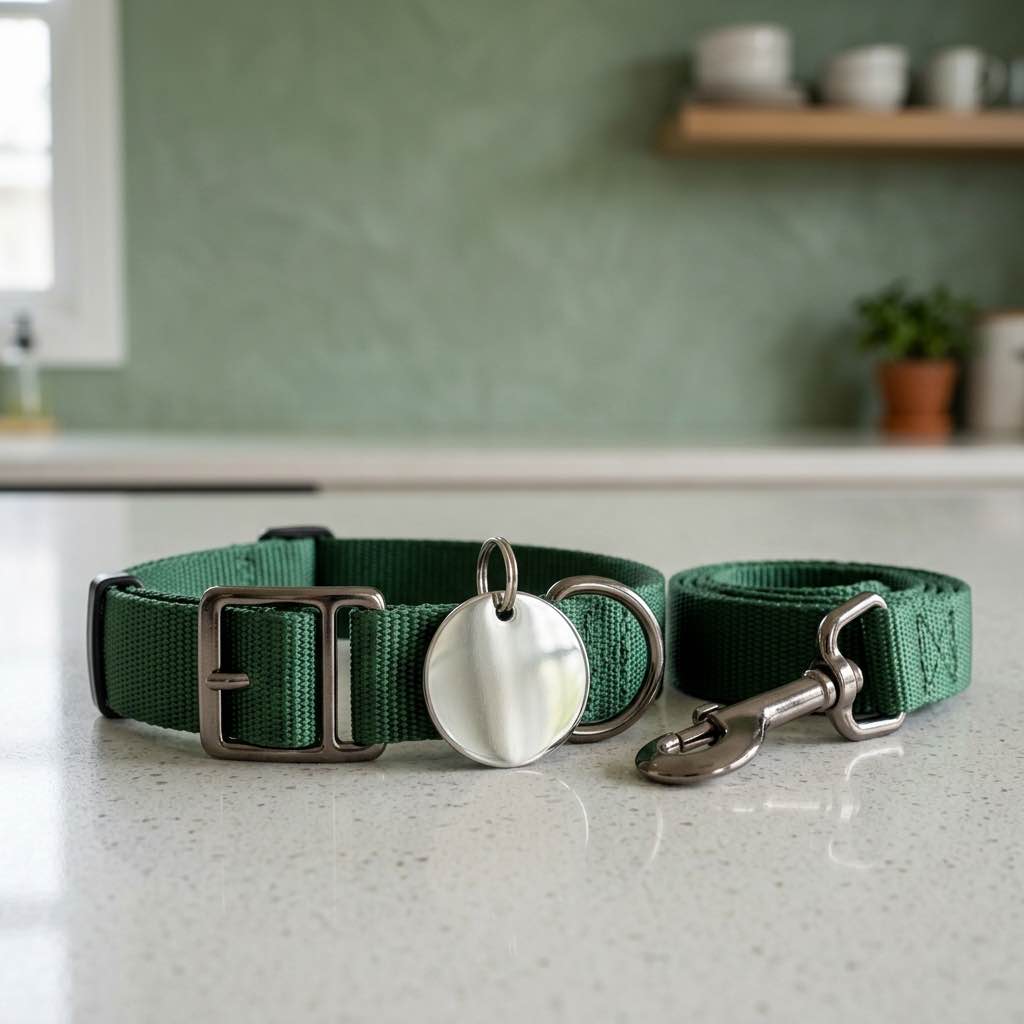
Dog registration years run from 1 July to 30 June. In practice, many councils invoice or open renewals in May or June, ask owners to pay by 31 July, then apply late fees from 1 August or after 31 July.
Examples from official council pages:
- Auckland Council lists standard and late dog registration fees, with the standard rate applying when paid before 1 August and the late rate applying on or after 1 August.
- Wellington City Council says dog registration fees are due on 1 July and that a 50 percent late payment fee applies if payment is made after 31 July.
- South Taranaki District Council says 2026/27 dog registration opens on 1 June and lists 2026/27 fees for payment before 31 July 2026.
- Hauraki District Council lists 2026/27 fees and separate higher fees if paid after 31 July 2026.
- Waikato District Council's 2025-2027 fees schedule lists discounted payment by 31 July and full-rate fees after 31 July.
So the practical advice is: use 31 July as your payment deadline and treat 1 August as the late-fee trigger unless your own council says otherwise.
2026/27 council fee examples
These are examples only. They are not a national price list.
| Council | Official 2026/27 examples checked | Late-fee signal |
|---|---|---|
| Auckland Council | Standard dog: $182 before 1 August, $225 on or after 1 August. Desexed dog: $131 before 1 August, $171 late. RDOL standard dog: $92 before 1 August, $225 late. RDOL desexed dog: $78 before 1 August, $171 late. Working dog: $41 before 1 August, $50 late. | Auckland uses "pay before 1 August" versus "pay on or after 1 August" fee columns. |
| Wellington City Council | Entire dog: $204 before 1 August, $306.50 late. Desexed dog: $148 before 1 August, $222 late. Working dog: $62.50 before 1 August, $94 late. | Wellington adds a 50 percent surcharge to fees paid on or after 1 August (2026/27 fees, checked 29 Sep 2026). |
| South Taranaki District Council | Urban: $211. Rural first two dogs: $82 per dog. Urban spayed/neutered: $182. Selected Owner Policy spayed/neutered: $97. Disability assist dog: free. | Page lists 2026/27 dog registration opening on 1 June and fees if paid before 31 July 2026; it warns of a late payment penalty after the due date. |
| Hauraki District Council | General dog entire: $145, or $217.50 after 31 July. General dog de-sexed: $110, or $165 late. ROL dog entire: $85, with loss of ROL and $217.50 late total. ROL dog de-sexed: $70, with loss of ROL and $165 late total. Dangerous dog entire: $217.50, or $326.25 late. | Hauraki's official fees page gives a specific "Fee if paid after 31 July" column. |
| Waikato District Council | General owner: $120 discounted by 31 July, $140 after 31 July. Approved owner: $95 discounted, $115 after 31 July. Farm owner: $54 discounted, $74 after 31 July. Selected owner: $60 discounted, $80 after 31 July. Dangerous dog: $210 full rate. | Waikato's official fees schedule separates "Payment by 31 July (discounted rate)" from "Basic registration fee (after 31 July)". |
The pattern is more useful than any one price: councils commonly reward early payment, desexing, approved/responsible-owner status, selected-owner status, farm/working dog status, or disability assist dog status. They also use different names for similar categories. Check the wording on your own council page before assuming you qualify for a discount.
Fee-source check log:
- Auckland Council: checked against the official Renew your dog's registration fee table on 2026-06-04.
- Wellington City Council: checked against the official Dog fees page on 2026-06-04.
- South Taranaki District Council: checked against the official Fees and Charges page on 2026-06-04.
- Hauraki District Council: checked against the official Fees for Dogs and Other Animals page on 2026-06-04.
- Waikato District Council: checked against the official Fees and Charges 2025-2027 PDF on 2026-06-04.
Auckland example
Auckland Council says registrations for the 2026/27 season open on 1 June, with owners encouraged to complete renewal before 1 August. Its 2026 update says Auckland has more than 132,000 dogs known to council and notes that nearly 90 percent of known dogs were registered last year.
For Auckland owners, the immediate checklist is:
- Find your dog registration reference number.
- Check your myAUCKLAND details and update any changed contact information.
- Renew before 1 August to avoid late fees.
- Watch for the 2026/27 bright green tag after payment.
- Contact council if the tag does not arrive within the expected window.
Auckland also has separate first-time registration guidance for dogs that have not previously been registered with the council.
Waikato example
Waikato District Council published a 2026 registration update about durable tags. Its new approach is different from Auckland's: Waikato says it is introducing a durable metal tag designed to last for the dog's lifetime, replacing the previous annual plastic tag model.
That does not remove the annual registration responsibility. Waikato says owners still need to renew dog registration each year, but will not receive a new physical tag every year under the new system.
This is a useful example of why owners should check local council instructions rather than relying on what another district does. One council may issue a new colour each year; another may move toward lifetime tags while annual renewal still applies.
Microchipping and identification
Registration and microchipping are connected but not identical. Registration is the council record and annual responsibility. Microchipping is a permanent identification method that helps link a dog back to its owner if the dog is lost, transferred, impounded, or involved in an incident.
Under the Dog Control Act, dogs registered for the first time on or after 1 July 2006 must be microchipped unless a specific exemption applies. Auckland Council's first-time registration page says a dog should be registered from the month it turns three months old or arrives in New Zealand, and its guidance warns there is a fine if you do not register your dog.
If your dog is new to your household, do not assume a previous owner, breeder, shelter, or family member has completed every record correctly. Confirm the microchip number, council registration, ownership details, and address yourself.
When owners get caught out
Most registration problems are ordinary admin problems:
- The dog is registered to an old address.
- The renewal reminder went to an old email.
- A family member moved out and the dog record was never changed.
- A puppy was microchipped but never registered with council.
- A rehomed dog still has the previous owner listed.
- The dog moved between council areas.
- The tag is missing, but nobody noticed until renewal season.
- The owner assumed a breeder, rescue, landlord, or vet had handled council registration.
A quick annual check prevents most of this:
- Is your current address on the council record?
- Is your phone number current?
- Is the dog listed under the correct owner?
- Has your dog moved between council areas?
- Is the dog microchipped where required?
- Is the collar tag readable and safely attached?
- Do you know your council renewal deadline?
- Do you know whether your council applies a late fee from 1 August?
If you recently adopted or rehomed a dog
Do not treat adoption or rehoming as a purely private handover. Council and microchip records matter. If the dog is lost, injured, impounded, or involved in a complaint, those records help identify who is responsible and who should be contacted.
For a newly adopted dog, check whether you need first-time registration, ownership transfer, address update, microchip confirmation, or annual renewal. If the dog came from another council area, ask your current council what applies. Registration can extend across New Zealand for the current registration year, but councils still need correct ownership and address details.
If you are still planning whether a dog fits your household budget, read The True Cost of Owning a Dog in NZ before you commit. Registration is only one recurring cost; food, vet care, insurance, grooming, training, desexing, fencing, boarding and equipment can matter more over a full year.
PetMall renewal checklist
Use this checklist before 31 July each year:
- Search your council website for dog registration renewal.
- Confirm the fee category for your dog.
- Check whether desexing, working dog, approved owner, responsible owner, selected owner, farm dog, disability assist dog, or SuperGold/Community Services discounts apply.
- Check whether proof is required before payment.
- Update your address, phone and email.
- Confirm ownership details if the dog was adopted, rehomed or transferred.
- Check microchip status and ask your council or vet if anything is unclear.
- Replace unsafe collars or unreadable tags before they become a problem.
- Pay by 31 July unless your own council clearly gives a different deadline.
- Save your receipt and watch for any tag or confirmation instructions.
New puppy owners should also use the New Dog Owner First 30 Days NZ guide and the New Puppy Checklist NZ so registration, microchipping, vet visits, food, training and home setup are handled together.
Sources
- New Zealand Legislation: Dog Control Act 1996 - verified 2026-06-04
- Auckland Council: Renew your dog's registration - official Auckland fee source, verified 2026-06-04
- Auckland Council: From Bellas to border collies - Auckland dogs go green for the 2026/27 registration season - season-open context only, verified 2026-06-04
- Auckland Council: Register your dog with us for the first time - verified 2026-06-04
- Wellington City Council: Dog fees - official Wellington fee source, verified 2026-06-04
- South Taranaki District Council: Fees and Charges - official South Taranaki fee source, verified 2026-06-04
- Hauraki District Council: Fees for Dogs and Other Animals - official Hauraki fee source, verified 2026-06-04
- Waikato District Council: Fur-ever tags are here - renewal-process context only, verified 2026-06-04
- Waikato District Council: Fees and Charges 2025-2027 - official Waikato fee source, verified 2026-06-04
Free PetMall tools
Related guides
petmall.co.nz
Shop at PetMall
The products below are practical support items for your pet. PetMall ships across New Zealand.
- Dog FoodStart with food that matches your dog's life stage and activity level — and change brands slowly over 7–10 days.
- Dog TreatsTraining rewards and everyday treats — small, soft pieces work best for consistent reinforcement.
- Dog ToysA small rotation of chew, fetch, and puzzle toys usually works better than buying a large variety at once.
- Dog GroomingA gentle brush and the right shampoo make maintenance easier — especially for dogs that get muddy on walks.
- Leads & HarnessesComfort matters: padded contact points and adjustable fit help reduce rubbing on longer walks or tramping weekends.
- Flea & Worm TreatmentFor NZ conditions, look for protection that fits your routine (monthly vs longer-lasting) and your dog's weight range.