New Dog Owner NZ: Your First 30 Days Survival Guide
A week-by-week NZ guide for new dog owners covering settling in, toilet training, walks, vet checks, gear, and routines.
Bringing a new dog into your home is an incredibly exciting time, filled with wagging tails, playful antics, and the start of a beautiful companionship. However, it's also a period of significant adjustment for both you and your new furry family member. This guide is designed to help new dog owners in New Zealand navigate those crucial first 30 days, establishing good habits, building a strong bond, and ensuring a smooth transition for everyone. We'll cover everything from preparing your home to their first vet visit, all with a practical, vet-aware, and distinctly Kiwi approach.
Before They Arrive
Preparation is the cornerstone of a successful start. Getting everything ready before your new dog steps paw inside will reduce stress for both of you and allow you to focus on bonding.
1. Dog-Proof Your Home: Just like baby-proofing, dog-proofing is essential. Get down on their level and look for potential hazards:
- Toxic Plants: Several common house and garden plants are toxic to dogs. Sago palm is among the most dangerous — the ASPCA lists it as toxic to dogs, with liver damage and death among the reported effects — and oleander is also toxic. (True lilies are the severe risk to *cats*, so they matter if you have both.) Remove these or place them completely out of reach; the ASPCA plant-toxicity database can be filtered to show plants toxic to dogs.
- Chemicals & Medications: Store all cleaning products, medications (human and pet), and garden chemicals securely in high, locked cupboards.
- Small Objects: Pick up small items like coins, jewellery, batteries, rubber bands, and children's toys that could be swallowed.
- Electrical Cords: Secure or cover electrical cords to prevent chewing, which can cause burns or electrocution.
- Rubbish Bins: Ensure all bins have secure lids, especially kitchen bins, to prevent rummaging.
- Secure Fencing: If you have a garden, check your fences for any gaps or weaknesses. A secure outdoor space is vital for safety and toilet training.
2. Essential Supplies Checklist: Head to PetMall or your local pet store to stock up on these must-haves:
- Food & Water Bowls: Stainless steel or ceramic are hygienic choices. Consider a slow feeder bowl if your dog tends to gobble their food too quickly, which can aid digestion and provide mental enrichment.
- Appropriate Dog Food: Ask the breeder or shelter what food your dog has been eating and buy a supply of the same. Any sudden dietary changes can cause an upset tummy.
- Collar, Lead & Harness: Choose a comfortable, well-fitting collar with an ID tag (including your phone number). A lead (1.5-2m is a good length) and a harness can offer better control and comfort, especially for puppies or strong pullers.
- ID Tag: Even if microchipped, an ID tag with your contact details is the quickest way for a lost dog to be returned.
- Dog Bed or Crate: A comfortable, secure spot for your dog to sleep and retreat. A crate, when introduced correctly, can become a safe den and aid in toilet training.
- Toys: A variety of toys is great – chew toys for dental health and mental stimulation, puzzle toys for enrichment, and soft toys for comfort.
- Grooming Supplies: A brush suitable for their coat type, dog-specific shampoo, nail clippers, and a toothbrush/toothpaste.
- Cleaning Supplies: An enzymatic cleaner is crucial for effectively neutralising urine odours and discouraging repeat accidents in the same spot (our pet urine smell and stain guide has the full method).
- Poop Bags: Essential for responsible dog ownership, both at home and when out and about.
- Car Restraint/Carrier: For safe travel, a seatbelt harness, crate, or carrier is a must.
3. Family Discussion & Rules: Before your dog arrives, sit down with everyone in the household to establish consistent rules. Who will feed them? Where will they sleep? What commands will be used? Consistency is key for a dog to understand expectations.
4. Vet Research: Find a local veterinary clinic that you're comfortable with. Check their opening hours, emergency procedures, and get their contact details. Schedule their first check-up within a few days of arrival.
5. Microchipping & Registration: In New Zealand, all dogs must be microchipped by three months of age (unless exempt by a vet) and registered with your local council by three months or within 14 days of acquiring them. Ensure these details are up to date. Council registration fees vary by region but typically range from $80-$150 annually for a desexed dog, often more for an entire dog.
Day 1
The first day is all about calm and comfort. Your new dog will be experiencing a lot of new sights, sounds, and smells.
1. Quiet Arrival: Avoid a big, boisterous welcome. Keep the atmosphere calm and quiet. If possible, have only immediate family present.
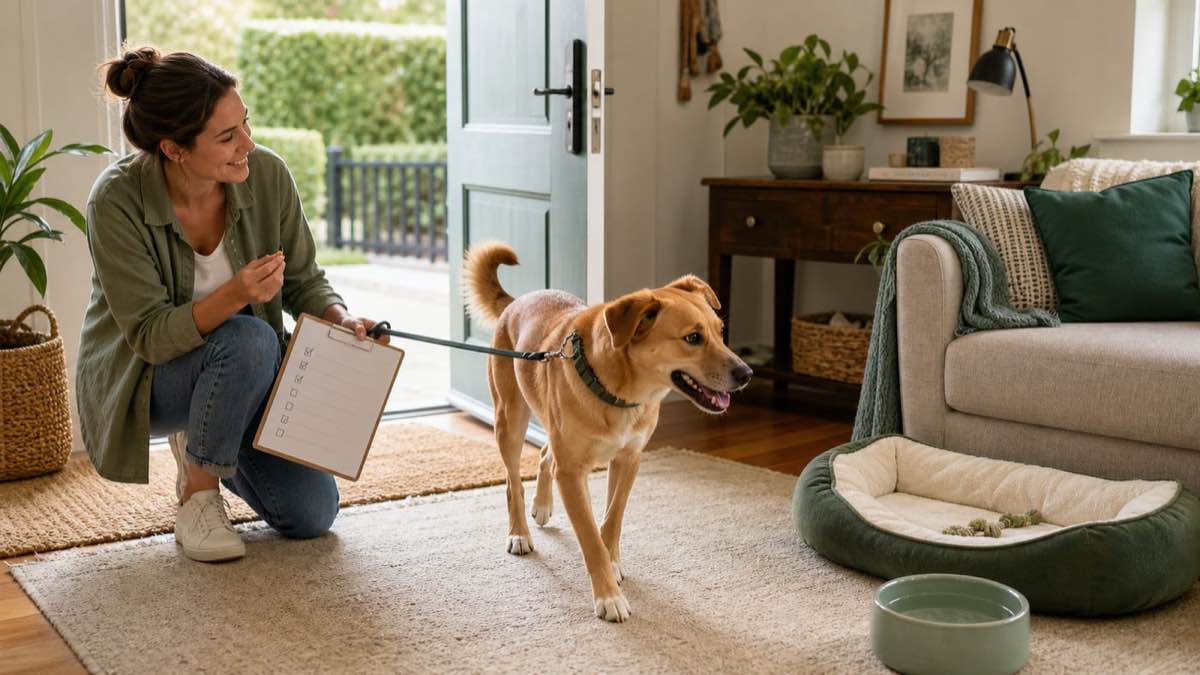
2. First Toilet Break: As soon as you arrive home, take your dog straight to the designated toilet spot in your garden. Praise them calmly if they go. This immediately starts establishing good habits.
3. Designated Space: Show your dog their bed or crate. Let them explore it on their own terms. Don't force them in, but encourage them with a treat or a favourite toy. This is their safe haven.
4. Initial Exploration (Supervised): Allow your dog to explore their new surroundings on a lead, especially if they are a puppy or prone to anxiety. This allows them to sniff and investigate without getting into trouble or feeling overwhelmed.
5. Food and Water: Offer a small meal of the food they're used to, along with fresh water. Don't be concerned if they don't eat much on the first day; stress can affect appetite.
6. Minimise Visitors: Resist the urge to invite friends and family over immediately. Your dog needs time to bond with their core family and adjust to their new environment without excessive stimulation.
7. Night 1: The first night can be challenging, especially for puppies or dogs who have never been alone.
- Crate Sleep: If using a crate, place it in your bedroom initially so they can hear and smell you. Cover it with a blanket to make it den-like.
- Comfort Items: A blanket or toy with the scent of their previous home (if available) can provide comfort.
- Whining: Expect some whining or crying. Often, a gentle reassurance or placing your hand near the crate is enough. Only take them out for a toilet break if you suspect that's the reason. Avoid reinforcing crying for attention.
Week 1
The first week is all about establishing a predictable routine and building trust. Consistency is your best friend.
1. Routine, Routine, Routine: Dogs thrive on predictability. Establish a consistent schedule for:
- Feeding: 2-3 times a day for puppies, 1-2 for adult dogs.
- Toilet Breaks: Immediately after waking, after eating, after playing, and before bed.
- Playtime: Short, structured play sessions.
- Rest: Ensure plenty of quiet time for naps.
2. Gentle Socialisation (Internal): Focus on positive interactions with immediate family members. Let them approach your dog, offer treats, and engage in gentle play. Avoid overwhelming them with too many new people or situations outside the home just yet.
Puppy First Weeks Checklist NZGet a personalised checklist for your puppy's first weeks — organised by timeline and category, print-friendly, free.Build my checklist →3. Handling Practice: Start getting your dog used to being handled. Gently touch their paws, ears, tail, and mouth. This makes future grooming and vet visits much less stressful. Pair it with positive reinforcement (treats and praise).
4. Playtime & Enrichment: Engage in short, positive play sessions. Use appropriate toys for their age and size. Puzzle toys and chew toys are excellent for mental stimulation and preventing boredom.
Not sure why your dog is behaving this way? Try our free Dog Behaviour Decoder5. Crate Training Reinforcement: Continue making the crate a positive space. Feed meals in the crate, offer high-value treats when they go in, and never use it for punishment.
6. Leash Introduction: For puppies or dogs new to leads, start indoors. Let them wear their collar and lead for short periods, supervised, so they get used to the feeling. Then, practice walking around the house or a secure garden.
7. Observation is Key: Pay close attention to your dog's eating habits, water intake, toilet habits (frequency, consistency of wee and poo), and energy levels. Any significant changes could indicate a health issue and warrant a call to your vet.
Week 2-3
As your dog settles in, you can gradually expand their world and introduce more training.
1. Expanding Socialisation (Controlled): Once your vet confirms your dog is fully vaccinated and it's safe to do so, start introducing them to new, positive experiences.
- New Sights & Sounds: Take them for short car rides, walk them on a lead in quiet parks (avoiding dog parks initially), or sit on a bench and let them observe the world go by.
- New People: Arrange controlled introductions to calm, dog-savvy friends or family members.
- Other Dogs: If you know a calm, vaccinated, and friendly dog, arrange a supervised, on-leash introduction in a neutral space. Always ensure interactions are positive.
2. Basic Training Begins: This is a great time to start teaching fundamental commands. Keep sessions short (5-10 minutes), fun, and positive. Use high-value treats as rewards. Focus on one command at a time.
3. Grooming Routine: Establish a regular grooming schedule. Daily brushing helps remove loose hair, prevents matting, and strengthens your bond. Get them used to nail trims – start by just touching their paws and clippers, gradually working up to a trim.
4. Chewing Management: Puppies and young dogs explore the world with their mouths. Provide a variety of appropriate chew toys. If they chew something they shouldn't, redirect them immediately to an approved chew toy with a firm "no" or a distraction.
5. Alone Time (Gradual Introduction): To prevent separation anxiety, start leaving your dog alone for very short periods. Begin with 5-10 minutes, gradually increasing the time. Ensure they have appropriate chew toys or puzzle feeders to keep them occupied. Don't make a big fuss when you leave or return.
6. Short Walks: Once vaccinations are complete and your vet gives the all-clear, begin short, positive walks in quiet areas. Focus on loose-leash walking and exploring new smells. These aren't just for toilet breaks; they're vital for mental stimulation.
Toilet Training in NZ Homes
Toilet training requires patience, consistency, and understanding, especially for puppies.
1. The Golden Rule: Frequent Trips Outside: Take your dog outside to their designated toilet spot:
- Immediately after waking up.
- After every meal or drink.
- After playing.
- Before bedtime.
- Every 1-2 hours for young puppies.
2. Praise and Reward: When your dog toilets outside, praise them enthusiastically and immediately give them a high-value treat. This positive reinforcement teaches them that going outside is a good thing.
3. Designate a Spot: Always take your dog to the same spot in the garden. The familiar scent will encourage them to go there.
4. Supervise Indoors: Keep a close eye on your dog when they're inside. Look for signs they need to go (sniffing, circling, whining, heading for the door). If you see these signs, immediately take them outside.
5. Crate Training for Toilet Training: Dogs are naturally clean animals and generally won't soil their sleeping area. A correctly sized crate can be an invaluable tool. They'll learn to hold their wee and poo until they're let out.
6. Accidents Happen – Clean Up Properly: If an accident occurs inside, don't scold or punish your dog – they won't understand why. Clean it up thoroughly with an enzymatic cleaner to eliminate all odour. If they can still smell it, they're more likely to go in the same spot again.
7. NZ Home Considerations:
- Backyards: Many Kiwi homes have a backyard, making toilet training easier. Ensure it's secure.
- Apartments/Townhouses: If you don't have direct garden access, be prepared for more frequent trips outside to a communal grass area. Puppy pads can be used as an interim solution, but be aware that some dogs can become confused and struggle to transition to outdoor toileting if pads are used extensively.
- Weather: New Zealand weather can be unpredictable. Don't let a bit of rain deter you from taking your dog out. Invest in a doggy raincoat if needed!
Basic Commands
Starting with a few basic commands sets the foundation for good behaviour and strengthens your bond. Keep it positive, fun, and use high-value treats.
1. "Sit": This is often the first command taught.
- Hold a treat near your dog's nose.
- Slowly move the treat up and back over their head. Their nose will follow, and their bottom will naturally lower into a sit.
- As their bottom touches the ground, say "Sit!" and immediately give the treat and praise.
- Practice in short, frequent sessions.
2. "Come" (Recall): Crucial for safety and control.
- Start in a quiet, enclosed area.
- Get down to their level, sound excited, and say "Come!" (or "Here!").
- As they approach, reward them with a super high-value treat and praise.
- Never use "Come" to do something unpleasant (e.g., give medicine) or scold them. You want them to associate "Come" with good things.
3. "Stay": Builds on "Sit".
- Have your dog in a "Sit".
- Say "Stay" and take one step back.
- If they remain, step forward, reward, and praise.
- Gradually increase distance and duration. If they break the "Stay," calmly put them back in position and try again.
4. "Down": Useful for settling and relaxation.
- Start with your dog in a "Sit".
- Hold a treat at their nose and slowly move it towards the floor and then directly away from them, creating an 'L' shape.
- As they lie down, say "Down!" and reward.
5. "Leave It": An essential safety command to prevent them from picking up dangerous items.
- Place a low-value treat on the floor and cover it with your hand.
- When your dog tries to get it, say "Leave It!" and keep your hand over the treat.
- The moment they look away from the treat, even for a second, praise them and reward them with a *different*, higher-value treat from your other hand.
- Gradually increase the difficulty, moving to uncovered treats, then objects.
First Vet Visit
Your first vet visit is a critical step in establishing your dog's long-term health plan. Schedule it within the first week of bringing your dog home.
1. What to Expect:
- Full Health Check: The vet will perform a thorough physical examination, checking their eyes, ears, teeth, coat, heart, lungs, and palpating their abdomen.
- Vaccination Schedule: If your dog is a puppy, the vet will discuss their vaccination schedule (typically a series of initial shots, followed by boosters). If an adult, they'll ensure their vaccinations are up to date. Core vaccinations in NZ typically cover Distemper, Hepatitis, Parvovirus, and Leptospirosis.
- Worming & Flea Treatment: The vet will advise on appropriate worming (roundworm, hookworm, tapeworm) and flea/tick prevention for NZ conditions. They'll often provide the first dose.
- Microchip Check: They'll scan for a microchip and confirm the details are registered correctly.
- Diet Discussion: Discuss your dog's current diet, and the vet can offer advice on appropriate nutrition for their age, breed, and activity level.
- Desexing (Neutering/Spaying): The vet will discuss the benefits and ideal timing for desexing your dog.
- Pet Insurance: They may provide information about pet insurance options, which can be invaluable for unexpected vet bills.
- Ask Questions! This is your opportunity to ask any questions you have about your dog's health, behaviour, or care. Don't be shy!
2. Preparation for the Visit:
- Bring Records: Take any health records, vaccination certificates, or microchip details provided by the breeder or shelter.
- Fasting: Ask the vet if your dog needs to be fasted before the appointment (usually not for a routine check-up, but good to confirm).
- Toilet Break: Take your dog for a toilet break just before entering the clinic to avoid accidents.
- On-Leash: Always keep your dog on a lead in the waiting room.
3. Cost Examples (Estimates in NZD):
- Vet Consultation: $70 - $100
- Initial Puppy Vaccination (per shot in series): $80 - $150
- Adult Dog Annual Booster: $80 - $120
- Microchipping (if not already done): $50 - $80
- Flea/Worm Treatment (monthly/quarterly): $20 - $50 per dose, depending on product and dog size.
These are estimates and can vary significantly between clinics and regions. Always get a quote from your chosen vet.
Month 1 Milestones
By the end of the first month, you should start seeing some wonderful progress and a deepening bond with your new dog.
- Settled Routine: Your dog should be familiar with the daily schedule for feeding, toilet breaks, and sleep.
- Improved Toilet Habits: Fewer accidents indoors, and a clearer understanding of where to go outside.
- Responding to Name & Basic Commands: Your dog should consistently respond to their name and understand basic commands like "Sit" and "Come" in a quiet environment.
- Comfortable with Handling: They should be more accustomed to being touched, making grooming and vet checks easier.
- Positive Social Interactions: They should be comfortable with immediate family and have had some positive, controlled introductions to new people, sights, and sounds.
- Eating & Sleeping Well: A good appetite and restful sleep are signs of a healthy, adjusting dog.
- Bonding: You'll notice clear signs of affection, trust, and attachment, like following you around, seeking cuddles, and responding happily to your presence.
Remember, every dog is an individual, and some may take longer to adjust than others. Be patient, consistent, and shower them with positive reinforcement. The first 30 days lay the groundwork for a lifetime of companionship. Enjoy the journey!
Sources
- Ministry for Primary Industries, Code of Welfare: Dogs, checked 2026-07-22: https://www.mpi.govt.nz/animals/animal-welfare/codes/all-animal-welfare-codes/code-of-welfare-dogs/
- SPCA New Zealand, Dog Behaviour and Training Advice, checked 2026-07-22: https://www.spca.nz/advice-and-welfare/article/dog-behaviour-and-training
- Dogs New Zealand, Accredited Breeders and Registered Pedigree Dogs, checked 2026-07-22: https://www.dogsnz.org.nz/breeders/registered-dogs
- ASPCA Animal Poison Control, Toxic and Non-Toxic Plants (filterable by dogs), checked 2026-09-05: https://www.aspca.org/pet-care/animal-poison-control/toxic-and-non-toxic-plants
- ASPCA Animal Poison Control, Sago Palm (toxic to dogs; cycasin, liver failure), checked 2026-09-05: https://www.aspca.org/pet-care/animal-poison-control/toxic-and-non-toxic-plants/sago-palm
Free PetMall tools
Related guides
petmall.co.nz
Shop at PetMall
The products below are practical support items for your pet. PetMall ships across New Zealand.
- Dog FoodStart with food that matches your dog's life stage and activity level — and change brands slowly over 7–10 days.
- Dog TreatsTraining rewards and everyday treats — small, soft pieces work best for consistent reinforcement.
- Dog ToysA small rotation of chew, fetch, and puzzle toys usually works better than buying a large variety at once.
- Dog GroomingA gentle brush and the right shampoo make maintenance easier — especially for dogs that get muddy on walks.
- Leads & HarnessesComfort matters: padded contact points and adjustable fit help reduce rubbing on longer walks or tramping weekends.
- Flea & Worm TreatmentFor NZ conditions, look for protection that fits your routine (monthly vs longer-lasting) and your dog's weight range.