Pet Bowls & Feeders NZ: Stainless Steel, Ceramic, Slow Feeder & More
Pet food bowls NZ guide: compare stainless steel, ceramic, slow feeders, fountains and travel bowls for clean Kiwi feeding routines.
The best pet food bowls NZ homes can choose are easy to clean, stable on your floor, correctly sized for the animal, and suited to how you feed. Stainless steel is the safest everyday default for many dogs and cats, while ceramic, slow feeders, fountains and travel bowls solve more specific problems.
A bowl is not just a container. It affects hygiene, hydration, meal speed, floor mess and whether your pet can eat comfortably every day.
Quick Match Table
| Bowl or feeder type | Best for | Watch-outs |
|---|---|---|
| Stainless steel bowl | Everyday food and water | Choose non-slip bases and dishwasher-safe designs |
| Ceramic bowl | Cats, small dogs, tidy indoor feeding | Avoid chipped glaze and heavy drops on tile |
| Plastic bowl | Travel, short-term use, lightweight setup | Scratches and chewing damage make cleaning harder |
| Slow feeder | Dogs that inhale meals, enrichment feeding | Not a medical fix; supervise strong chewers |
| Raised bowl | Tall dogs or pets that prefer less bending | Ask your vet if your dog has bloat risk or medical needs |
| Water fountain | Cats and pets that drink more from moving water | Needs filter changes and regular cleaning |
| Travel bowl | Car trips, beaches, tramping, camping | Must fold flat and dry quickly |
| Automatic feeder | Routine dry-food meals | Needs backup checks during power or Wi-Fi issues |
Start With Hygiene
Food and water bowls need to be cleaned like feeding equipment, not decorative furniture. MPI's Code of Welfare for Dogs says food and water containers must be kept clean of contamination that could threaten a dog's health or welfare. MPI's companion cat code says cat food and water bowls must be washed regularly for the same reason.
For day-to-day homes, that means:
- Wash wet-food bowls after each meal.
- Wash dry-food bowls often, especially if saliva and crumbs build up.
- Refill and wash water bowls daily, more often in hot weather.
- Use a dedicated scoop instead of the bowl itself.
- Keep outdoor bowls away from dirt, bird droppings and lawn spray.
The FDA advises washing pet food bowls and scooping utensils with soap and hot water after each use, and not using the pet bowl as a scoop. CDC guidance also says hard pet items such as bowls can be cleaned with soapy water, or in a dishwasher if labelled dishwasher-safe.
NZ tip: in Auckland humidity or damp coastal homes, water bowls can get slimy faster. In Canterbury heat or a Northland bach over summer, water bowls need more frequent checks, especially for dogs on dry food.
Stainless Steel Bowls
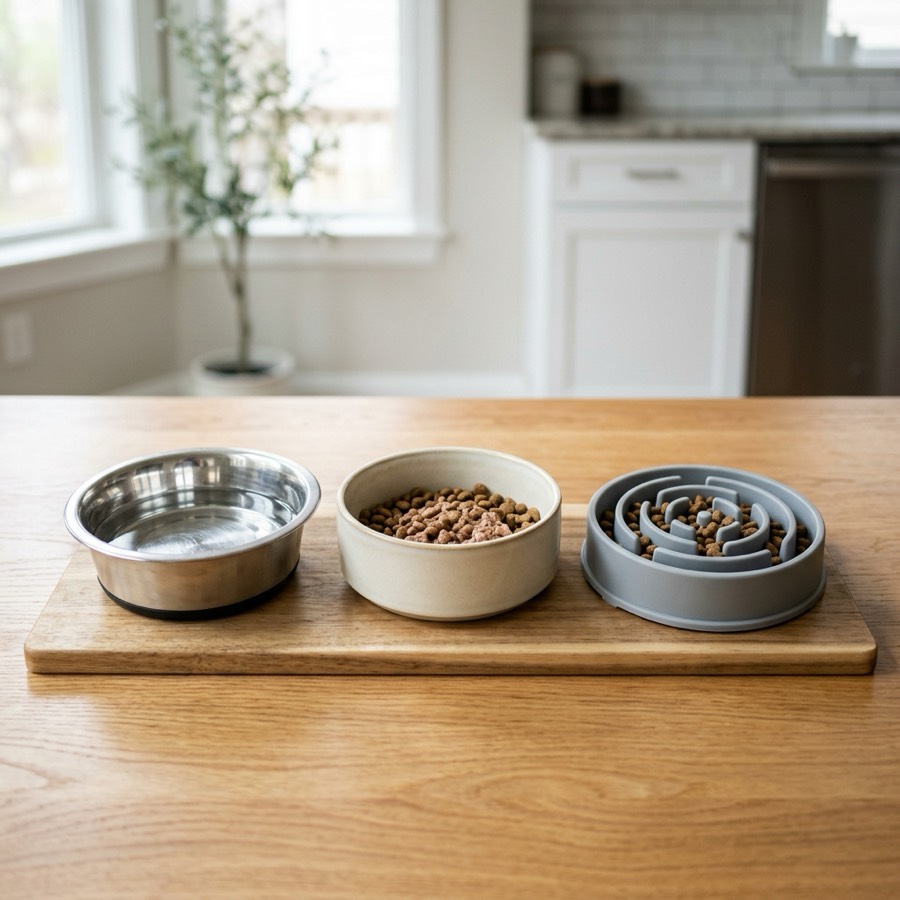
Stainless steel is the best first pick for many households because it is durable, light enough to handle, and easy to wash. It also tends to survive enthusiastic dogs better than ceramic.
Look for:
- A broad non-slip base.
- Smooth seams with no hidden food traps.
- Dishwasher-safe labelling.
- A size that lets whiskers, muzzles or ears sit comfortably.
- Enough weight that the bowl does not skate across vinyl or tiles.
For puppies, buy a sensible starter size, not a giant adult bowl. A huge bowl encourages over-serving and can make a tiny puppy climb into dinner rather than eat neatly.
Ceramic Bowls
Ceramic bowls suit indoor cats, small dogs and owners who want a heavier bowl that stays put. They can be excellent for cats that dislike light bowls moving under their whiskers.
The trade-off is damage. If a ceramic bowl chips, cracks or loses glaze, retire it. Rough edges can hold residue and be unpleasant for the pet. In earthquake-prone homes or busy family kitchens, keep ceramic bowls away from shelf edges and places where kids, dogs or vacuum cleaners clip them.
For cats, wide shallow ceramic bowls are often nicer than deep narrow dishes because the cat can eat without pushing whiskers hard against the sides.
Plastic Bowls
Plastic bowls are useful for travel, temporary setups and budget spares. They are not my first choice for a permanent indoor feeding station if your pet chews, scratches, or leaves oily food residue behind.
Replace plastic when it is deeply scratched, chewed, cloudy or holding smells after washing. A scratched bowl is harder to clean well. If you use plastic for camping or the car, let it dry fully before folding it into a bag.
Slow Feeders
Slow feeders are bowls or mats with ridges that make a pet work around obstacles to get food. They can help dogs that gulp dinner and then burp, cough or vomit from eating too fast. They also add a little enrichment to everyday feeding.
Choose ridge height for your dog's muzzle. A French Bulldog, Labrador and Greyhound will not enjoy the same pattern. Start easy, then increase difficulty if your dog handles it calmly.
Slow feeders are not chew toys and not medical treatment. If your dog repeatedly vomits, retches, looks bloated, or seems distressed after eating, call your vet. For deep-chested breeds or dogs with known gastric risk, ask your vet before changing bowl height or feeding routine.
For cats, puzzle feeders and lick mats can work better than deep slow bowls. They are more about enrichment than speed control.
Raised Bowls
Raised bowls can be useful when a pet clearly prefers less bending, when a tall dog is spilling everything from a floor bowl, or when an older pet has a vet-guided comfort plan. The important word is "guided".
Do not buy a raised bowl because the internet promises it prevents a health problem. For some dogs, especially large or deep-chested dogs, feeding setup should be discussed with a vet if bloat risk is a concern.
If you choose raised bowls, make sure the stand is stable, washable and not so high that your pet has to reach upward. The pet should stand naturally, not crane.
Water Bowls and Fountains
Water access matters in New Zealand summers. MPI's dog code says dogs must have frequent access to palatable water in quantities sufficient for vital bodily functions, and that water needs vary with workload, weather and temperature. Cats must have continuous access to palatable water under the MPI companion cat code.
For dogs, use a wide bowl that cannot tip easily. Add a second bowl outside in shade if the dog has access to a section, and never rely on one bowl that can be knocked over while you are at work.
For cats, try more than one water station. Many cats drink more when water is away from food and litter. A fountain can help, but only if you clean it and change filters. A neglected fountain is just a complicated dirty bowl.
Automatic Feeders
Automatic feeders are useful for measured dry-food meals, early breakfasts and households where work shifts change. They are less useful if your pet is anxious around moving parts, if you feed wet food without chilling, or if the pet can pry the lid open.
Before trusting one for a full day, test it for a week while you are home. Check portion accuracy, battery backup, how it behaves after a power cut, and whether your cat or dog can raid the hopper.
For multi-pet homes, watch who actually eats. The bold cat may get two dinners while the quiet one gets a polite smell of biscuits.
Travel Bowls for Kiwi Routines
A collapsible travel bowl is a small thing that saves many bad decisions. Keep one in the car for beach walks, ferry queues, summer sports grounds, dog-friendly campsites and tramping track car parks.
Look for a bowl that:
- Clips to a lead, bag or crate.
- Is big enough for your dog's muzzle.
- Stands flat when full.
- Dries quickly before packing away.
- Is easy to rinse at a public tap.
After beach trips, rinse sand and salt out before it dries. After muddy walks, wash the bowl properly at home rather than leaving it in the boot until next weekend.
NZD Cost Planning
Pet bowls do not need to be expensive, but they should be replaceable and cleanable.
| Item | Rough NZD planning range | Best first buy |
|---|---|---|
| Basic stainless bowl | NZD $8-$25 | Most dogs and cats |
| Ceramic cat or small dog bowl | NZD $12-$35 | Indoor feeding station |
| Slow feeder | NZD $15-$45 | Fast-eating dogs |
| Water fountain | NZD $35-$120+ | Cats that prefer moving water |
| Automatic feeder | NZD $60-$250+ | Measured dry-food routine |
| Travel bowl | NZD $6-$25 | Car, beach and bach kit |
If you are starting from scratch, buy two washable food bowls and two water options before buying gadgets. Clean basics beat fancy feeders that are hard to wash.
Key takeaways
- Pet food bowls NZ homes use daily should be easy to wash, stable and correctly sized.
- Stainless steel is the best default for many dogs and cats.
- Ceramic can work well indoors, but retire chipped or cracked bowls.
- Slow feeders help meal pace, but they are not medical treatment.
- Water bowls need more checks in hot weather, dry-food routines and outdoor setups.
- Automatic feeders and fountains only work well if you clean and test them.
Related reading
- Dog Food NZ: Dry, Wet, Raw & Freeze-Dried
- Best Cat Food NZ Guide
- How to Read Pet Food Labels NZ
- New Puppy Checklist NZ
- New Kitten Checklist NZ
---
Reference sources
- MPI, Code of Welfare: Dogs, checked 2026-06-04: https://www.mpi.govt.nz/animals/animal-welfare/codes/all-animal-welfare-codes/code-of-welfare-dogs
- MPI, Code of Welfare: Companion Cats, checked 2026-06-04: https://www.mpi.govt.nz/animals/animal-welfare/codes/all-animal-welfare-codes/code-of-welfare-companion-cats
- CDC, About Cleaning and Disinfecting Pet Supplies, checked 2026-06-04: https://www.cdc.gov/healthy-pets/about/cleaning-and-disinfecting-pet-supplies.html
- CDC, Hygiene Practices Around Animals, checked 2026-06-04: https://www.cdc.gov/hygiene/about/hygiene-practices-around-animals.html
- FDA, Tips for Safe Handling of Pet Food and Treats, checked 2026-06-04: https://www.fda.gov/animal-veterinary/animal-health-literacy/tips-safe-handling-pet-food-and-treats