Cat Food NZ: Wet, Dry, Raw & How to Choose the Right Food for Your Cat
Cat food NZ guide: choose wet, dry, raw and life-stage food, read labels, manage hydration and compare realistic NZD costs.
The best cat food NZ owners can choose is a complete, balanced food matched to your cat's life stage, body condition, health needs and daily routine. Wet, dry and mixed feeding can all work — see our best cat food NZ comparison for specific picks. The wrong choice is usually food that is incomplete, badly portioned, or chosen only because the front of the bag sounds premium.
Cats are obligate carnivores, but that does not mean every meat-heavy marketing claim is automatically better. A useful food decision starts with the label, your cat's age, how much water they drink, and whether they are staying at a healthy body condition.
Quick Match Table
| Food type | Best for | Watch-outs |
|---|---|---|
| Wet food | Hydration, fussy eaters, portioned meals | Higher cost per day, opened food needs fridge care |
| Dry food | Budget control, puzzle feeders, grazing routines | Cats on dry food need reliable water access |
| Mixed feeding | Most adult household cats | Easy to overfeed unless you measure both foods |
| Kitten food | Growth up to about 12 months | Adult food is usually not enough for young kittens |
| Senior food | Older cats, often 7+ years | Choose with vet input if weight, kidneys or teeth are changing |
| Raw or homemade | Owners prepared to plan carefully | Higher safety and balance risk; ask your vet first |
Start With Life Stage, Not Flavour
Kittens, adults and senior cats do not have the same nutrition needs. SPCA New Zealand advises kitten food for growth, adult food after about 12 months, and senior diets for cats over seven years. That is a better starting point than flavour, packet colour or whether a food says "natural".
For a kitten, look for a food labelled for kittens or growth. For a healthy adult, look for a complete adult maintenance food. For an older cat, choose a senior formula only if it suits the cat in front of you; some older cats need more calories, not fewer. If your cat has kidney disease, diabetes, urinary issues, allergies, dental pain or unexplained weight loss, that becomes a vet conversation, not a shopping comparison.
NZ tip: if you adopt from a rescue, breeder or friend, ask what food the cat is already eating and buy enough for a slow transition. A sudden food switch is one of the easiest ways to create a messy first week.
Wet Food vs Dry Food
Wet food has a higher water content, which can help cats that do not drink much. It also comes in easy meal portions, so it suits cats that need measured feeding. The trade-off is cost and storage. Opened wet food should be covered, chilled and used promptly.
Dry food is usually more convenient and easier to use in puzzle feeders. It also suits households where a cat prefers several tiny meals. MPI's Code of Welfare for Companion Cats notes that cats eating dry food require more water than cats eating canned food or pet rolls, so a dry-food household needs fresh water in more than one spot. If you're going the dry route, our best dry cat food NZ guide ranks the options.
Mixed feeding is often the most practical Kiwi compromise: wet food for one or two meals, measured dry food for enrichment or grazing. The trick is to count both. A half pouch of wet food plus a "small handful" of biscuits can quietly become too much.
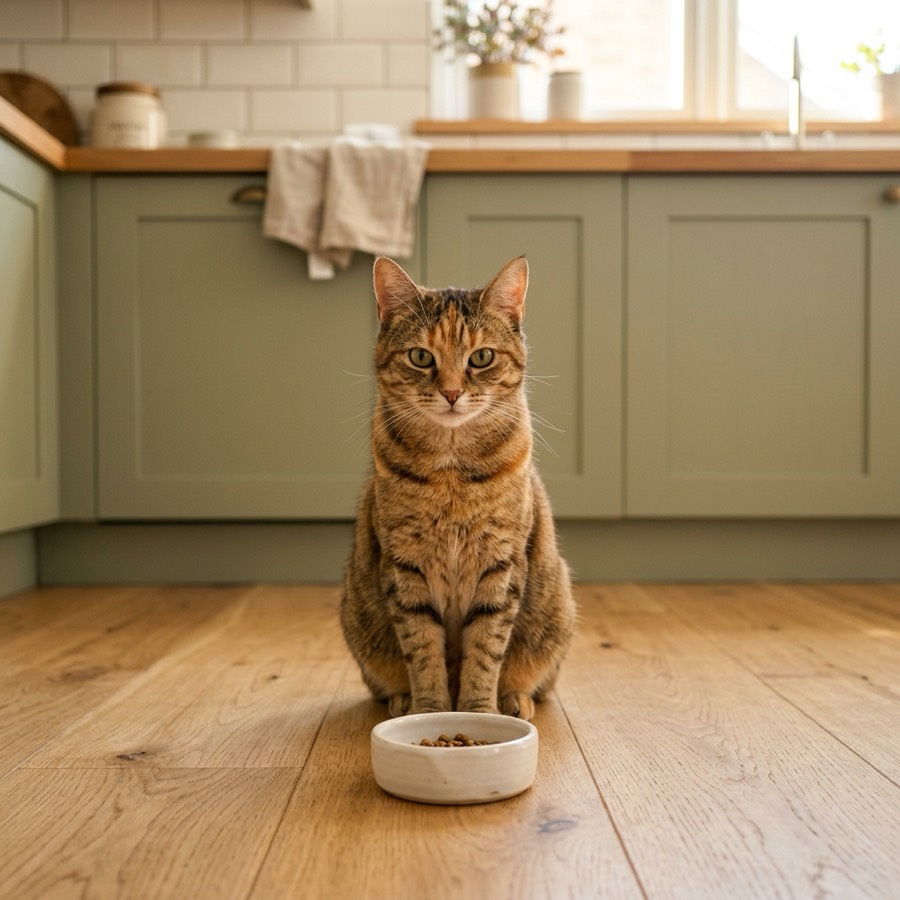
Hydration Matters in NZ Homes
MPI says cats must have continuous access to water that is palatable and not harmful to health. That sounds basic, but it matters in warm Auckland apartments, sunny Northland kitchens, and South Island homes where the heat pump can dry the air in winter.
Use wide bowls, keep water away from the litter tray, and wash bowls daily. Some cats prefer ceramic or stainless bowls. Others drink more from a fountain. If your cat eats mostly dry food, consider extra water stations near resting spots.
Do not use milk as a main drink. SPCA New Zealand warns that many cats are lactose intolerant and can get diarrhoea from dairy. Fresh water is the default.
Raw Feeding: Be Careful, Not Casual
Raw feeding is popular in parts of New Zealand, especially among owners who want a less processed diet. The risk is that raw or homemade diets can be unbalanced, contaminated, or unsafe around children, elderly family members and immune-compromised people. SPCA New Zealand advises avoiding bones and raw meat or fish, noting both bone and food-borne pathogen risks.
If you want to feed raw, do not build a diet from online ratios alone. Talk to your vet or a qualified veterinary nutrition professional, keep strict food hygiene, and choose a complete commercial option if appropriate. For most cat owners, a complete wet, dry or mixed diet is a safer baseline.
Reading Cat Food Labels
The label should answer three questions before you worry about fancy ingredients:
- Is it complete food or a treat/supplement?
- Is it for the right life stage?
- How much should you feed for your cat's ideal weight?
WSAVA's nutrition guidance warns that ingredient lists can be misleading if owners use them as the main measure of food quality. Ingredients matter, but they do not tell you whether the recipe is properly balanced, tested, or suitable for your cat.
Also check feeding guides carefully. They are starting points, not a contract. Use the guide for your cat's ideal weight, then adjust with body condition. MPI describes an ideal adult cat as having a visible waist and ribs that can be felt with a light fat covering.
NZD Cost Planning
Cat food costs vary wildly by brand, cat size and whether you feed wet, dry or mixed. For planning, think in weekly NZD bands rather than a single "right" number:
| Feeding style | Rough weekly planning range | Best fit |
|---|---|---|
| Mostly dry | NZD $8-$20 | Budget control, puzzle feeders, multi-cat homes |
| Mixed wet and dry | NZD $18-$40 | Most adult cats, better meal variety |
| Mostly wet premium | NZD $35-$70+ | Hydration focus, fussy cats, portion control |
| Raw or speciality | NZD $30-$80+ | Owners with vet guidance and strict hygiene |
These are shopping-planning ranges, not medical advice. Multi-cat homes, large cats, kittens and senior cats with special needs can sit outside them. If the cheapest food leads to overfeeding, wasted meals or stomach upsets, it may not be the cheapest real option.
Portion Control and Body Condition
Some cats self-regulate; many do not. SPCA New Zealand suggests using the daily feeding guide for your cat's ideal weight, not an overweight current weight. Divide food into several small meals if you can, because this is closer to a cat's natural pattern than one large bowl.
Food toys and puzzle feeders help indoor cats work for part of their meal. SPCA's enrichment advice recommends splitting meals into smaller portions and using puzzle feeders so food provides mental and physical stimulation, not just calories.
Keep treats small and count them. Treats, tuna toppers and "just a bit of chicken" can undo careful portioning, especially for an indoor cat in a Wellington apartment or a catio-only Auckland townhouse.
Indoor Cats and Local Wildlife
More NZ cats are being kept indoors, in catios, or under night curfews to protect the cat and reduce wildlife impact. SPCA's position statement supports keeping companion cats at home with enrichment, secure outdoor areas or supervised time.
Food choice fits that lifestyle. Indoor cats often need lower calories, more enrichment feeding, and predictable meals. If your cat has less outdoor roaming and hunting, keep an eye on weight after desexing or after moving from a section to an apartment.
For a home near bush, wetlands or native bird areas, enrichment feeding helps reduce boredom without relying on roaming. It is not a replacement for cat containment, but it supports the same goal: a healthy cat and less pressure on local wildlife.
How to Switch Cat Food
Change food gradually over one to two weeks. SPCA recommends mixing the new food with the old and slowly changing the proportions. A simple plan is:
| Days | Old food | New food |
|---|---|---|
| 1-3 | 75% | 25% |
| 4-6 | 50% | 50% |
| 7-9 | 25% | 75% |
| 10+ | 0% | 100% |
Slow down if your cat is fussy or has a sensitive stomach. If your cat refuses food completely, seems unwell, loses weight, vomits repeatedly or has diarrhoea, stop guessing and call your vet.
What to Avoid
Do not feed dog food as a cat's main diet. SPCA New Zealand says dog food does not contain all the nutrients cats need. Avoid regular human leftovers too; salt, spices and rich sauces are not cat nutrition.
Do not choose by protein percentage alone. A kitten formula, senior diet, weight-control food and high-meat treat may all look "high protein" in different ways, but they solve different problems.
Do not let neighbours feed your cat if weight is creeping up. It is a very Kiwi problem: the cat eats at home, visits next door for biscuits, then everyone blames the bag.
Key takeaways
- The best cat food NZ choice is complete, balanced and matched to life stage.
- Wet food helps hydration; dry food can work well with reliable water and measured portions.
- Raw feeding needs vet guidance and strict hygiene, not internet ratios.
- Use feeding guides for ideal weight, then adjust by body condition.
- Indoor cats often need enrichment feeding and careful calorie control.
- Change food slowly over one to two weeks.
Related reading
- Best Cat Food NZ Guide
- How to Read Pet Food Labels NZ
- New Kitten Checklist NZ
- Cost of Owning a Cat in NZ
- Indoor Cat Enrichment NZ
---
Reference sources
- MPI, Code of Welfare: Companion Cats, checked 2026-06-04: https://www.mpi.govt.nz/animals/animal-welfare/codes/all-animal-welfare-codes/code-of-welfare-companion-cats
- SPCA New Zealand, What to feed your cat or kitten, checked 2026-06-04: https://www.spca.nz/advice-and-welfare/article/what-to-feed-your-cat-or-kitten
- SPCA New Zealand, Enrichment tips for cats, checked 2026-06-04: https://www.spca.nz/advice-and-welfare/article/enrichment-tips-for-cats
- SPCA New Zealand, Keeping Cats Safe at Home, checked 2026-06-04: https://www.spca.nz/advocacy/position-statements/article/keeping-cats-safe-at-home
- WSAVA, Global Nutrition Guidelines, checked 2026-06-04: https://wsava.org/Global-Guidelines/Global-Nutrition-Guidelines/
Related guides
petmall.co.nz
Shop at PetMall
The products below are practical support items for your pet. PetMall ships across New Zealand.
- Cat FoodStart with food that matches your cat's life stage — change brands slowly over 7–10 days to avoid digestive upset.
- Cat LitterClumping or crystal, most cats prefer an unscented litter and a clean tray — one tray per cat plus one spare is the NZ rule of thumb.
- Cat TreatsGreat for bonding and training — keep treats under 10% of daily calories to protect your cat's waistline.
- Cat ToysA small rotation of toys (feather wand, puzzle feeder, and comfort toy) usually works better than buying many at once.
- Cat GroomingRegular brushing cuts hairballs and shedding — essential for long-haired breeds like Ragdolls and British Longhairs.
- Flea & Worm TreatmentFor NZ conditions, choose protection that fits your cat's weight and lifestyle (indoor vs outdoor) and keep it regular.