Bird Perch Types NZ: Natural Branches, Rope, Platforms and What to Avoid
Bird perch types NZ guide: compare natural branches, rope, platform and grooming perches for budgies, cockatiels and other companion birds.
Bird perch types in NZ should give companion birds safe variety, not just one smooth dowel from end to end. For most budgies and cockatiels, the best setup is several perches of different safe diameters and textures, including natural non-toxic branches, placed so droppings do not fall into food and water. Avoid sandpaper covers, loose fibres and anything that traps toes.
Quick comparison
| Perch type | Look for | Avoid |
|---|---|---|
| Natural branch perch | Non-toxic wood, varied diameter, scrubbed and replaced when damaged | Sprayed garden branches or unknown wood |
| Plain wooden dowel | Only as one perch among others | Using one uniform dowel as the whole setup |
| Rope perch | Firm weave, supervised condition checks | Frayed fibres that catch toes or get chewed |
| Platform perch | Rest option for older or less mobile birds | Blocking flight paths in a small cage |
| Grooming / mineral perch | Short-use extra perch, gentle texture | Main sleeping perch, rough sandpaper sleeves |
Natural branches: the best starting point
Natural branches are often the most useful perches because they vary in width and texture. That variation exercises the feet more naturally than a single smooth dowel. SPCA NZ's cockatiel boredom advice recommends plenty of perching places at different heights, with natural non-toxic branches of different sizes, replaced when soiled or chewed.
Use only bird-safe wood you can identify. Wash and dry branches before use, and avoid branches from roadsides, sprayed orchards, treated timber, painted wood or unknown plants. When unsure, buy a purpose-made bird perch.
Wooden dowels: fine, but not alone
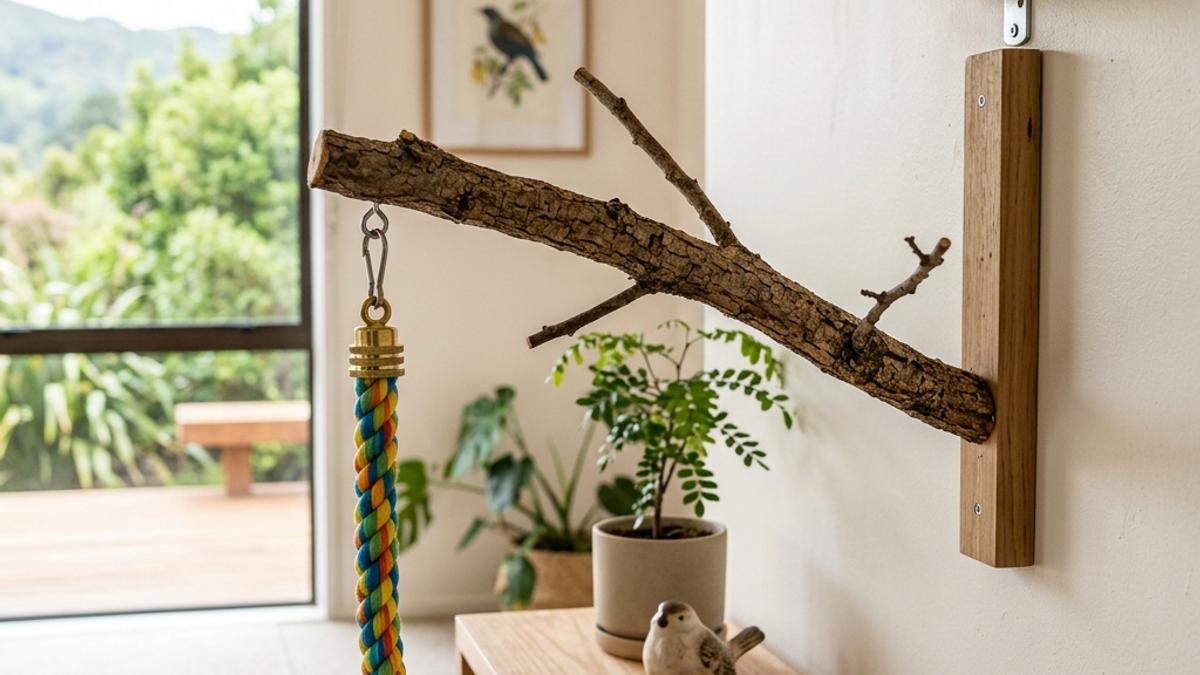
The dowel that comes with many cages is not automatically bad, but it should not be the only perch. A cage with two identical smooth dowels makes the bird's feet hold the same position all day. Keep one if it fits well, then add natural branches or varied perches.
Place perches so the bird can move, stretch and access food without sitting directly above bowls. For the full setup, use Bird Cage Setup Guide NZ and Bird Cage Types NZ.
Rope and flexible perches
Rope perches can add gentle texture and flexible routes through a cage. They are useful for birds that like climbing and for creating movement between levels. The risk is fraying. Loose fibres can catch toes or be chewed and swallowed.
Look for firm, tidy rope, check it weekly, and remove it as soon as it frays. If your bird chews rope obsessively, choose wood or platform options instead.
Platform and rest perches
Flat platform perches can help older birds, birds with foot issues under vet guidance, or birds that like a rest spot. They should not replace varied round perches, because gripping is still part of normal bird movement.
Use platforms where they do not crowd the cage. A perch that makes the cage feel full but reduces flight, climbing and wing-stretching space is not an upgrade.
Grooming perches and sandpaper covers
Grooming perches are often marketed for nail wear. Use them cautiously, if at all, and never as the main sleeping perch. Rough surfaces can irritate feet when birds stand on them for long periods. Sandpaper perch covers are a common avoid: they do not replace proper nail care and can be abrasive.
If nails seem overgrown, talk to an avian-savvy NZ vet or experienced bird groomer rather than trying to solve everything with one rough perch.
What to look for
- Several perch diameters so feet change position.
- Non-toxic natural branches from safe sources.
- Secure fittings that do not wobble or pinch toes.
- Placement that keeps droppings out of food and water.
- Easy removal for cleaning and replacement.
What to avoid
- One smooth dowel as the whole perch plan.
- Sandpaper sleeves or very rough main perches.
- Frayed rope, loose fibres and sharp hardware.
- Unknown garden branches, treated timber or sprayed wood.
- Overcrowding the cage until the bird cannot move naturally.
Related buying guides
Shop category
Quick takeaways
- Variety matters more than one "perfect" perch.
- Natural non-toxic branches are excellent when safely sourced.
- Rope must be checked for fraying.
- Sandpaper covers and rough main perches are best avoided.
- Perch placement should protect food, water and movement space.
References
- SPCA NZ, Caring for budgies, checked 2026-06-13: https://www.spca.nz/advice-and-welfare/article/caring-for-budgies
- SPCA NZ, How to stop my cockatiel from getting bored, checked 2026-06-13: https://www.spca.nz/advice-and-welfare/article/how-to-stop-my-cockatiel-from-getting-bored
- IVIS, Pododermatitis (Bumblefoot): Diagnosis, Treatment, Resolution and Prevention, checked 2026-08-04: https://www.ivis.org/library/avian-health-and-disease/pododermatitis-bumblefoot-diagnosis-treatment-resolution-and-prevention
Free PetMall tools
Related guides
petmall.co.nz
Shop at PetMall
The products below are practical support items for your pet. PetMall ships across New Zealand.
- Bird Food & TreatsA quality seed or pellet base plus fresh veg keeps cage birds healthier than seed alone.
- Bird ToysForaging and chew toys prevent boredom — rotate a few rather than crowding the cage all at once.
- Bird SuppliesA well-sized cage with the right perch variety helps long-term comfort — aim for space to fully stretch wings.