Dog Leads, Harnesses & Collars NZ: Which Is Right for Your Dog?
Dog harness vs collar NZ guide: choose the right lead, collar or harness for council walks, pullers, puppies, beaches and Kiwi routines.
The simplest dog harness vs collar NZ answer is this: use a flat collar for ID and calm everyday walks, a well-fitted harness for comfort and pulling control, and a standard lead for most council paths, beaches and parks. The gear should match your dog, not the other way round.
Most Kiwi owners get one thing wrong: they buy the strongest-looking item first. Fit, control and the place you walk matter more. A calm older dog in a quiet suburb may be fine on a flat collar and lead. A teenage Labrador on an Auckland beach, a nervous rescue near traffic, or a small dog with a delicate neck usually needs a different setup.
Quick Match Table
| Dog or situation | Best starting point | Why it helps |
|---|---|---|
| Calm adult dog on neighbourhood footpaths | Flat collar plus standard lead | Simple, light and easy for ID tags |
| Dog that pulls ahead | Front-clip harness plus standard lead | Redirects the shoulders instead of loading the neck |
| Small dog or long-backed dog | Padded harness | Spreads pressure over the chest and body |
| Puppy learning lead manners | Light harness, light collar for ID, short lead | Lets you train without heavy hardware |
| Beach, bush or tramping walks | Secure harness or collar plus a durable lead | Better control around wildlife, bikes and other dogs |
| Escape-prone or narrow-headed dog | Properly fitted martingale collar or secure harness | Reduces slipping when used correctly |
Collar, Harness or Both?
A flat collar is still useful for most dogs because it can carry ID and registration tags. Choose one that sits high enough not to slide over the head, with room for about two fingers between collar and neck. It should not rub, twist or sit so loose that the dog can reverse out of it.
A harness is often the kinder everyday walking choice for dogs that surge, zig-zag, cough on a collar, or get overexcited around people and dogs. A back-clip harness is easy for polite walkers and small dogs. A front-clip harness is better when the dog pulls because it gently turns the chest back towards you — our best dog harnesses NZ guide compares specific no-pull models.
Some dogs wear both: collar for tags, harness for the lead. That is often the tidy setup for council walks, puppy class, vet visits and bach weekends where you want ID visible but the lead attached to the body.
Lead Types That Work in NZ Day to Day
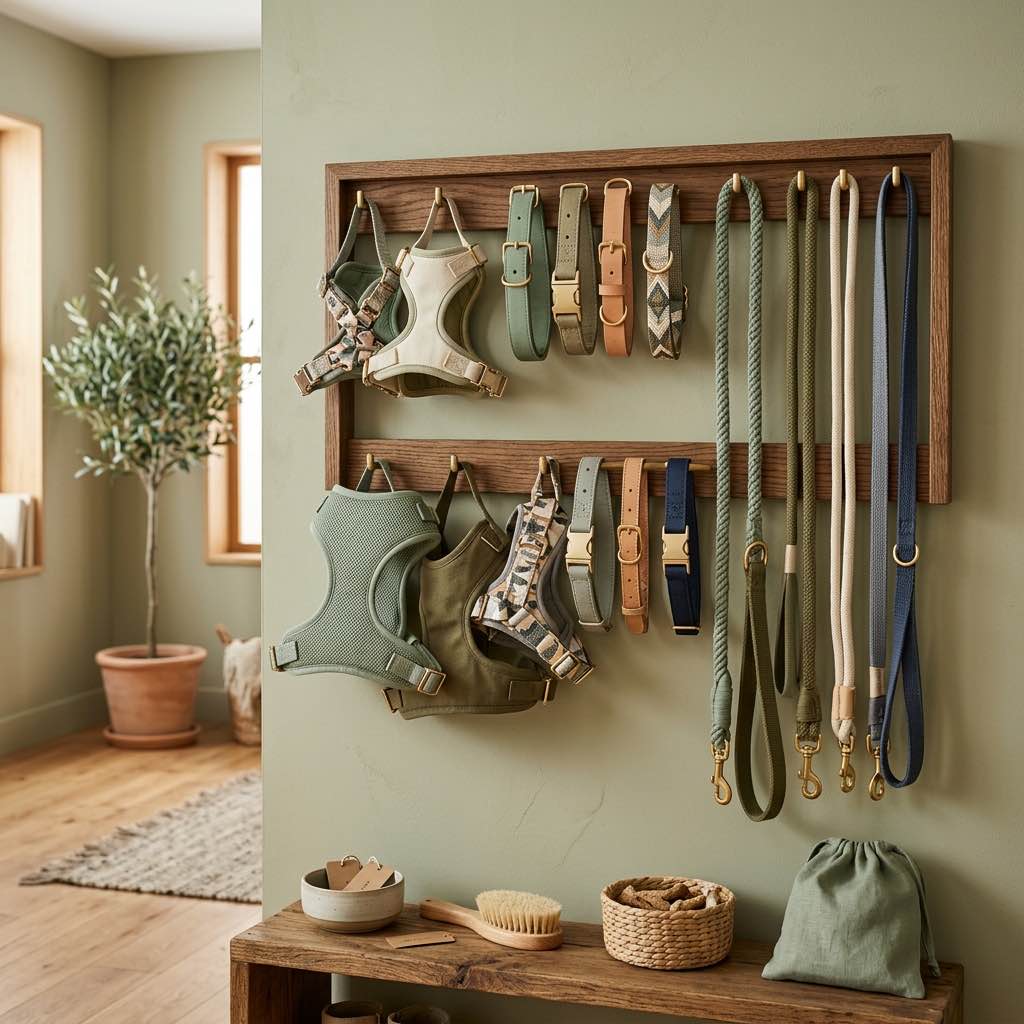
A standard lead is the default for most owners. It gives predictable control near roads, cafes, school gates, shared paths and council-controlled parks. A two-metre lead is long enough for sniffing but short enough to gather quickly.
A long line is useful for recall practice in a quiet open area, but it needs supervision. Do not use it near roads, wildlife, horses, cyclists or busy off-leash zones. A long line is a training tool, not a licence to let a dog run into other people.
Retractable leads suit fewer situations than owners expect. They can be handy in open, quiet spaces for a calm dog, but they are awkward on narrow footpaths and near other dogs. In Auckland-style shared parks, beach access tracks or weekend markets, a fixed lead is usually easier for everyone.
The Pulling Decision Flow
If your dog pulls, start here:
- Is the dog physically comfortable? Check the harness or collar is not rubbing under the front legs, across the throat, or behind the elbows.
- Is the lead too long for the setting? Shorten it near roads, playgrounds, wildlife and narrow paths.
- Does the dog know what you want? Pair the gear with reward-based loose-lead training, not just stronger hardware.
- Is the dog pulling into pressure? Try a front-clip harness and reward every check-in beside you.
- Is the dog lunging, fearful or hard to hold? Work with a qualified trainer or vet behaviour professional. Gear can help safety, but it does not replace behaviour work.
Avoid using pain or fear to control pulling. A dog that is scared of the lead may look quieter for a moment, but the underlying behaviour usually gets worse.
NZ Rules: Under Control Comes First
New Zealand dog access rules vary by council and even by beach, park and time of year. Auckland Council says owners should keep dogs under control, carry a leash, clean up after the dog, and use a leash when needed. The practical takeaway is simple: check the sign where you are, carry a lead even in off-leash areas, and choose gear that lets you act quickly.
DOC also asks owners to protect wildlife when taking dogs onto beaches and coastal trails. That matters in places where dotterels, penguins, seals or sea lions may be present. A secure harness and reliable lead are not just about your dog; they are about sharing public spaces well.
For tramping tracks, farm stays and rural sections, think about what happens when the unexpected appears: livestock, mountain bikes, rabbits, a neighbour's dog, or a sudden southerly. The right setup is the one you can hold confidently without yanking or panicking.
Fit Checks Before You Buy
Measure your dog standing up, not curled on the couch. For harnesses, measure the girth around the widest part of the ribcage and check the brand's size chart. For collars, measure the neck where the collar actually sits.
Look for:
- adjustment at the neck and chest, not just one sliding strap
- hardware that is smooth, not sharp-edged
- padding only where it helps, because bulky padding can rub in summer
- reflective stitching or bright colour if you walk early in winter
- washable materials for beach sand, mud and Auckland humidity
After the first walk, check under the front legs, around the neck, and over the shoulders for rubbing. If the coat is flattened but the skin is calm, that is usually fine. If the skin is red, damp or broken, stop using that item and refit or replace it.
Common Buying Mistakes
Do not buy a collar or harness with room to grow and expect it to be safe today. Puppies need light, properly fitted gear now, then a larger size later.
Do not choose a heavy lead for a tiny dog. The clip weight alone can change how the dog moves.
Do not assume a harness fixes pulling by itself. It gives you a better starting point; training does the rest.
Do not leave walking gear on all day if it rubs, catches on furniture or traps damp fur after beach swims. Walking gear is for walks. Rest time should be comfortable.
Key takeaways
- For most NZ dogs, collar for ID plus harness for walking is the safest everyday setup.
- A front-clip harness is usually the first gear change to try for pulling.
- Standard leads beat retractable leads in busy council spaces, near roads and around other dogs.
- Auckland and other councils set local dog access rules, so check signs and carry a lead.
- DOC beach guidance makes control important around wildlife, not just around people.
- Fit after the first real walk matters more than fit in the shop.
Related reading
- Dog Training in NZ: From Puppy Classes to Advanced
- Dog Registration NZ: Council Renewal Checklist
- Pet-Friendly Beaches in NZ: Rules, Best Spots & Safety Tips
- New Puppy Checklist NZ: Everything You Need
---
Reference sources
- MPI, Code of Welfare: Dogs, checked 2026-06-04: https://www.mpi.govt.nz/animals/animal-welfare/codes/all-animal-welfare-codes/code-of-welfare-dogs
- Auckland Council, Rules for dogs in public places, checked 2026-06-04: https://new.aucklandcouncil.govt.nz/en/dogs-animals/guide-for-dog-owners/rules-dogs-public-places.html
- Auckland Council, Control your dog, checked 2026-06-04: https://www.aucklandcouncil.govt.nz/dogs-animals/problems-dogs/Pages/control-your-dog.aspx
- DOC, Dogs on beaches, checked 2026-06-04: https://www.doc.govt.nz/dogs-on-beaches
- SPCA New Zealand, Exercise and enrichment for dogs, checked 2026-06-04: https://www.spca.nz/advice-and-welfare/article/exercise-and-enrichment-for-dogs?cat=&subcat=
Related guides
petmall.co.nz
Shop at PetMall
The products below are practical support items for your pet. PetMall ships across New Zealand.
- Leads & HarnessesComfort matters: padded contact points and adjustable fit help reduce rubbing on longer walks or tramping weekends.
- Dog FoodStart with food that matches your dog's life stage and activity level — and change brands slowly over 7–10 days.
- Dog TreatsTraining rewards and everyday treats — small, soft pieces work best for consistent reinforcement.
- Dog ToysA small rotation of chew, fetch, and puzzle toys usually works better than buying a large variety at once.
- Dog GroomingA gentle brush and the right shampoo make maintenance easier — especially for dogs that get muddy on walks.
- Flea & Worm TreatmentFor NZ conditions, look for protection that fits your routine (monthly vs longer-lasting) and your dog's weight range.