Dog Training in NZ: From Puppy Classes to Advanced — Complete Guide
Embarking on the journey of dog training in NZ is one of the most rewarding experiences you can share with your canine companion. From the playful...
Embarking on the journey of dog training in NZ is one of the most rewarding experiences you can share with your canine companion. From the playful antics of a new puppy to the refined obedience of an advanced learner, effective training builds a strong bond, ensures your dog's safety, and helps them integrate happily into your family and the wider Kiwi community. This comprehensive guide provides New Zealand dog owners with everything they need to know, from finding local puppy schools and understanding positive reinforcement to navigating NZ-specific laws and exploring advanced training opportunities.
The Importance of Dog Training in NZ
Training isn't just about teaching your dog tricks; it's about fostering a well-adjusted, confident, and happy companion. In New Zealand, responsible dog ownership is highly valued, and a well-trained dog is a joy to live with and a welcome member of society. Without proper training, dogs can develop behavioural issues that lead to stress for both pet and owner, and potentially infringe on local bylaws regarding noise or public conduct.
Effective training:
- Enhances Safety: A dog that reliably comes when called or stays when told is safer in public spaces, around roads, and during outdoor adventures across New Zealand's diverse landscapes.
- Strengthens Your Bond: Training sessions are opportunities for positive interaction, building trust and mutual understanding between you and your dog.
- Promotes Good Manners: Prevents common nuisances like excessive barking, jumping on guests, or pulling on the lead, making your dog a more pleasant companion at home and in public.
- Boosts Confidence: A trained dog understands expectations and feels secure, leading to a more confident and less anxious temperament.
- Ensures Compliance with NZ Laws: Helps you meet the responsibilities outlined in the Dog Control Act 1996 and local council bylaws, avoiding potential fines or issues.
- Provides Mental Stimulation: Dogs thrive on mental challenges, and training offers an excellent outlet for their intelligence and energy.
Starting Young: Puppy Training in NZ
The first few months of a puppy's life are critical for their development and future behaviour. Early intervention with training and socialisation sets the foundation for a well-adjusted adult dog.
The Critical Socialisation Window
From approximately 3 to 16 weeks of age, puppies are highly receptive to new experiences. During this "socialisation window," it's vital to expose your puppy to a wide variety of sights, sounds, people, and other vaccinated, friendly dogs in a positive and controlled manner. This helps them develop into confident adults who are comfortable in different environments, from bustling city streets to quiet beach walks.
Puppy Preschools: Your First Step
Puppy preschools are widely available across New Zealand and are an excellent starting point for new puppy owners. These classes typically cater to puppies between 8 and 16 weeks old (after their first vaccination) and focus on:
- Socialisation: Safe, supervised play with other puppies to learn appropriate dog-to-dog interactions.
- Basic Obedience: Introduction to fundamental commands like 'sit', 'stay', 'come', 'down', and walking on a loose lead.
- Handling: Getting puppies used to being touched, examined, and groomed, which is crucial for vet visits and home care.
- Problem Prevention: Addressing common puppy issues like nipping, jumping, and toilet training.
- Owner Education: Teaching owners about canine behaviour, positive reinforcement techniques, and responsible dog ownership in NZ.
What to look for in an NZ Puppy Preschool:
- Positive Reinforcement: Ensure the school uses only reward-based, force-free methods.
- Qualified Trainers: Look for trainers with certifications or experience in canine behaviour and training.
- Small Class Sizes: Allows for individual attention and prevents puppies from becoming overwhelmed.
- Clean and Safe Environment: A hygienic space is essential for young, vulnerable puppies.
- Vaccination Requirements: All puppies should be up-to-date on their vaccinations to protect against illness.
- Open Communication: Trainers should be approachable and willing to answer your questions.
Expect to pay around \$120 - \$200 for a typical 4-6 week puppy preschool course in NZ.
Essential Puppy Training at Home
Even before puppy preschool, you can start laying the groundwork at home.
- Toilet Training: Establish a consistent routine. Take your puppy out frequently (every 1-2 hours, after waking, eating, and playing) and reward them immediately when they eliminate outside.
- Crate Training: A crate can be a safe den for your puppy, aiding in toilet training and providing a secure space. Introduce it positively with treats and toys.
- Bite Inhibition: Puppies learn bite inhibition from their littermates. If your puppy bites too hard, yelp loudly, withdraw attention, and then redirect to an appropriate chew toy.
- Name Recognition: Use your puppy's name frequently in a positive tone, followed by a treat, to create a positive association.
- Handling: Gently touch your puppy's paws, ears, mouth, and tail daily, rewarding them for calm acceptance.
Core Principles of Effective Dog Training
Regardless of your dog's age or the specific command you're teaching, adherence to a few core principles will significantly enhance your training success.
Positive Reinforcement: The Cornerstone
Positive reinforcement is the most humane, effective, and scientifically proven method for dog training. It involves adding something desirable (a "positive") to increase the likelihood of a behaviour recurring (a "reinforcement").
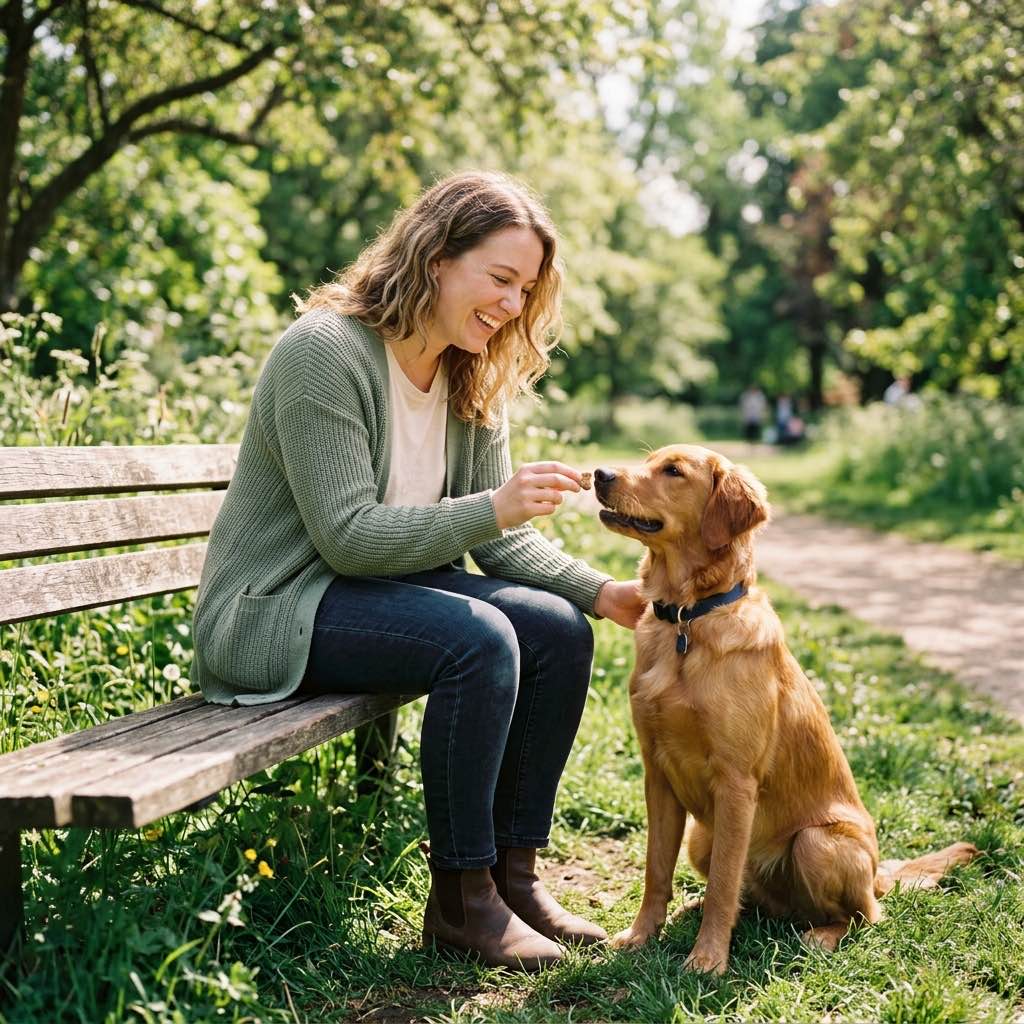
- How it works: When your dog performs a desired action (e.g., sits), you immediately reward them with something they value – a tasty treat, verbal praise ("Good dog!"), a favourite toy, or a quick game. This teaches the dog that performing the action leads to good things.
- Why it's effective: It builds a positive association with training, makes learning enjoyable, and strengthens the human-animal bond without resorting to fear, intimidation, or pain. Dogs are more likely to repeat behaviours that earn them rewards.
- Avoidance of Punishment: Aversive methods (e.g., yelling, leash corrections, shock collars) can suppress behaviour temporarily but often lead to fear, anxiety, aggression, and can damage your relationship with your dog. They don't teach the dog what *to* do, only what *not* to do, and often create negative associations with the owner or the training environment.
Consistency is Key
Everyone in the household needs to be on the same page regarding commands, rules, and rewards. If one person allows jumping on the couch and another doesn't, your dog will become confused. Use the same verbal cues (e.g., always "sit," not "sit down" sometimes and "bums up" others) and hand signals consistently.
Patience and Understanding
Training takes time. Dogs learn at different paces, and there will be good days and challenging days. Frustration can be counterproductive; if you're feeling impatient, take a break. Remember that your dog isn't being "stubborn" or "dominant"; they might be confused, overstimulated, or simply not understand what you're asking.
Keep Sessions Short and Fun
Dogs have relatively short attention spans, especially puppies. Aim for 5-10 minute training sessions, 2-3 times a day. End each session on a positive note, even if it's just by asking for an easy command your dog knows well and rewarding them generously.
Understanding Dog Body Language
Learning to read your dog's signals – tail wags, ear position, gaze, posture, lip licks, yawns – is crucial. It helps you understand their emotional state, identify signs of stress or fear, and adjust your training approach accordingly. A relaxed, happy dog is much more receptive to learning.
DIY Dog Training for Kiwi Owners
Many fundamental training behaviours can be taught effectively at home using positive reinforcement. This is a great way to start, especially if you're waiting for puppy preschool or want to reinforce lessons learned in class.
Basic Commands and How to Teach Them
- Sit:
- Hold a treat near your dog's nose.
- Slowly move the treat upwards and slightly backwards over their head. As their nose follows the treat, their rear end will naturally lower into a sit.
- As soon as their bottom touches the ground, say "Sit!" and give the treat and praise.
- Repeat, gradually fading the lure (treat) until you can give the verbal cue or hand signal alone.
- Stay:
- Ask your dog to 'Sit'.
- With an open palm facing your dog, say "Stay!"
- Take one step back. If they remain, immediately step forward and reward them.
- Gradually increase the distance and duration before rewarding. If they break the stay, calmly lead them back to their original spot and start again.
- Come (Recall):
- Start in a quiet, enclosed area.
- Get down to your dog's level, sound excited, and say "Come!" while showing a high-value treat or toy.
- As they come towards you, praise them enthusiastically and reward them when they reach you.
- Never punish your dog for a slow recall; always make coming to you a positive experience. Practice frequently in various environments.
- Down:
- Ask your dog to 'Sit'.
- Hold a treat near their nose and slowly move it downwards towards the floor and then away from them, in an "L" shape. This should encourage them to lie down.
- As they lie down, say "Down!" and reward.
- Leave It:
- Place a low-value treat on the floor or in your hand, then cover it with your hand.
- When your dog tries to get it, say "Leave it!"
- Wait until they look away or stop trying to get the treat. Immediately reward them with a *different*, high-value treat from your other hand.
- Gradually increase the temptation and duration before they get the reward.
Troubleshooting Common Issues DIY
- Jumping Up: Ignore jumping (turn your back, don't make eye contact). Reward only when all four paws are on the ground. You can also teach an alternative behaviour like 'Sit' to greet.
- Excessive Barking: Identify the cause (boredom, attention-seeking, anxiety, alerting). Address the root cause. For attention-seeking, ignore barking and reward quiet. For boredom, increase exercise and mental stimulation.
- Pulling on Leash: Use a comfortable, well-fitting harness (front-clip harnesses are often effective). Reward loose-leash walking. Stop walking every time the leash goes taut; only resume when the leash is slack.
- Chewing: Provide plenty of appropriate chew toys. Redirect inappropriate chewing to a designated toy. Ensure your dog isn't bored or anxious.
Beyond the Basics: Intermediate & Advanced Training in NZ
Once your dog has mastered basic obedience, a world of exciting training opportunities opens up. These classes build on foundational skills, provide mental and physical enrichment, and further strengthen your bond.
Obedience Classes
Many local dog training clubs throughout New Zealand offer intermediate and advanced obedience classes. These typically focus on:
- Refining Commands: Increasing duration, distance, and distractions for 'Sit', 'Stay', 'Come', 'Down'.
- Loose-Leash Walking: Perfecting polite walking in various environments.
- Heel Work: Walking precisely beside you.
- Off-Leash Control: Building reliable recall and control in open spaces.
- Proofing Behaviours: Practising commands in increasingly distracting environments to ensure reliability.
Specialty Dog Sports and Activities in NZ
New Zealand boasts a vibrant dog sport community, offering something for almost every temperament and energy level — and most of it runs through local clubs rather than expensive private trainers. Dogs New Zealand is the national body, and its affiliated clubs run the bulk of organised training and competition around the country.
- Agility: Dogs NZ describes agility as being to dogs what show jumping is to horses — a set course of obstacles against the clock, graded Starters, Novice, Intermediate and Seniors. Best suited to fit, motivated dogs; check with your vet before jumping a young dog at full height.
- Rally-O: A more forgiving cousin of formal obedience. You and your dog work through a course of signposted exercises — turns, position changes, halts, heelwork around cones. Commands may be repeated and retries are allowed, which makes it a friendly first competitive sport, and many obedience clubs now offer training for it.
- Obedience: The classic club pathway, from domestic obedience classes through to competitive titles. This is where most Kiwi owners start.
- Tracking: Uses the dog's nose rather than its speed. Dogs NZ notes that all dogs can track and many enjoy it, which makes it a good option for older dogs or breeds that find jumping hard on the joints.
- Dances with Dogs: A choreographed routine performed to music — demanding on rapport and creativity rather than raw athleticism.
- Lure coursing: Chasing a mechanical lure around a course. Dogs NZ describes it as pure fun with no competitive side, which makes it a controlled outlet for sighthounds and high-prey-drive dogs.
- Gundog trials: Field work for retrieving breeds, run by Dogs NZ affiliated clubs, with championship titles available.
- Therapy dog work: For calm, people-loving dogs. Canine Friends Pet Therapy coordinates volunteer teams visiting hospitals, rest homes and hospices nationwide.
To find something near you, start with the Dogs New Zealand club listing and events calendar. Most clubs run beginner intakes at the start of each term — contact the club directly to check what your dog is eligible for before you enrol.
A Note on Training Methods
Whatever you train, how you train matters more than which sport you pick. The American Veterinary Society of Animal Behavior (AVSAB) recommends that only reward-based methods are used for all dog training, including for behaviour problems, and states there are no exceptions — not even for dogs showing aggression. AVSAB names prong collars, electronic shock collars, shake cans, shouting, alpha rolls and lead jerks as aversive methods, and notes the evidence that these cause stress and damage both animal welfare and the relationship between dog and owner, with no evidence that they work better than reward-based training in any context.
If a trainer you are considering uses any of those tools, that is a reason to keep looking. Ask any prospective trainer what they do when a dog gets something wrong — the answer tells you more than any certificate on the wall.
Sources
- Dogs New Zealand, *Other Activities* — descriptions and eligibility for agility (graded Starters, Novice, Intermediate, Seniors), Rally-O (commands may be repeated, retries allowed), tracking ("all dogs can track and many enjoy this sport"), lure coursing ("pure fun … no competitive side"), gundog trials, Dances with Dogs, and therapy dog work via Canine Friends Pet Therapy, checked 2026-07-24: https://www.dogsnz.org.nz/dogs/other-activities
- American Veterinary Society of Animal Behavior (AVSAB), *Why You Need To Reward Your Dog in Training, According to the Experts* — AVSAB recommends "only reward-based training methods are used for all dog training, including the treatment of behavior problems", with "no exceptions" even for aggression; names prong collars, electronic shock collars, shake cans, shouting, alpha rolls and leash jerks as aversive, and states there is "no evidence that aversive methods are more effective than reward-based methods in any context", checked 2026-07-24: https://avsab.org/why-you-need-to-reward-your-dog-in-training-according-to-the-experts/
Related guides
petmall.co.nz
Shop at PetMall
The products below are practical support items for your pet. PetMall ships across New Zealand.
- Dog TreatsTraining rewards and everyday treats — small, soft pieces work best for consistent reinforcement.
- Dog FoodStart with food that matches your dog's life stage and activity level — and change brands slowly over 7–10 days.
- Dog ToysA small rotation of chew, fetch, and puzzle toys usually works better than buying a large variety at once.
- Dog GroomingA gentle brush and the right shampoo make maintenance easier — especially for dogs that get muddy on walks.
- Leads & HarnessesComfort matters: padded contact points and adjustable fit help reduce rubbing on longer walks or tramping weekends.
- Flea & Worm TreatmentFor NZ conditions, look for protection that fits your routine (monthly vs longer-lasting) and your dog's weight range.