Pet-Friendly Beaches in NZ: Rules, Best Spots & Safety Tips
New Zealand's stunning coastline offers unparalleled opportunities for outdoor adventures with our beloved canine companions. From expansive sandy...
New Zealand's stunning coastline offers unparalleled opportunities for outdoor adventures with our beloved canine companions. From expansive sandy stretches perfect for a spirited run to calm coves ideal for a gentle paddle, there's a beach for every dog and owner. However, navigating the rules and ensuring a safe, enjoyable experience for everyone requires a bit of homework. This comprehensive guide provides everything you need to know about pet-friendly beaches in NZ, covering regional regulations, top spots in major cities, and crucial safety advice to make your beach trips memorable and worry-free. Understanding local council bylaws, respecting wildlife, and prioritising your dog's well-being are key to enjoying our beautiful shores responsibly, ensuring a harmonious experience for all beachgoers, two-legged and four-legged alike.
Understanding Pet-Friendly Beach Rules in NZ
Unlike some countries, New Zealand doesn't have a single, nationwide set of rules governing dogs on beaches. Instead, each local council (city or district) is responsible for creating and enforcing its own bylaws regarding animal management, including where and when dogs are permitted on beaches, and whether they need to be on-leash or can roam off-leash. This decentralised approach means that rules can change significantly even between neighbouring council areas, or sometimes even within different sections of the same beach.
These bylaws are put in place for several important reasons, aiming to balance the enjoyment of dog owners with the rights and safety of other beach users, as well as the protection of the environment:
- Public Safety and Nuisance Prevention: To ensure dogs don't pose a threat or nuisance to other beach users, especially children, elderly individuals, or those who may be fearful of dogs. This includes preventing aggressive behaviour, excessive barking, or dogs jumping on people. Rules also aim to prevent dogs from interfering with activities like swimming, picnicking, or sunbathing.
- Wildlife Protection: New Zealand is home to a unique array of native wildlife, many of which are vulnerable and rely on coastal environments for survival. Dogs, even well-behaved ones, can pose a significant threat to:
- Native Birds: Critically endangered species like the New Zealand dotterel (tūturiwhatu), variable oystercatcher (tōrea pango), and fairy tern (tara-iti) nest directly on beaches, often camouflaged amongst driftwood and shells. Disturbance by dogs can cause adults to abandon nests, expose eggs or chicks to predators, or lead to exhaustion.
- Marine Mammals: Seals (kekeno), sea lions (rāpoka), and even penguins (kororā, hoiho) often haul out on beaches to rest, moult, or breed. Dogs can harass, injure, or even kill these animals. It's crucial to keep dogs well away from any marine mammal, even if they appear to be sleeping or injured.
- Other Coastal Fauna: Lizards, insects, and other small creatures that form part of the delicate coastal ecosystem can also be disturbed or harmed.
- Environmental Health: Dog waste, if not properly collected and disposed of, can contaminate sand and water, posing health risks to humans and wildlife. It can also contribute to nutrient pollution in waterways. Bylaws often mandate immediate removal of dog faeces.
- Minimising Conflict: Rules help to reduce potential conflicts between dogs, or between dogs and other animals (e.g., horses, livestock near coastal farms). They also mitigate disputes between dog owners and non-dog owners.
Common types of restrictions you'll encounter on NZ beaches include:
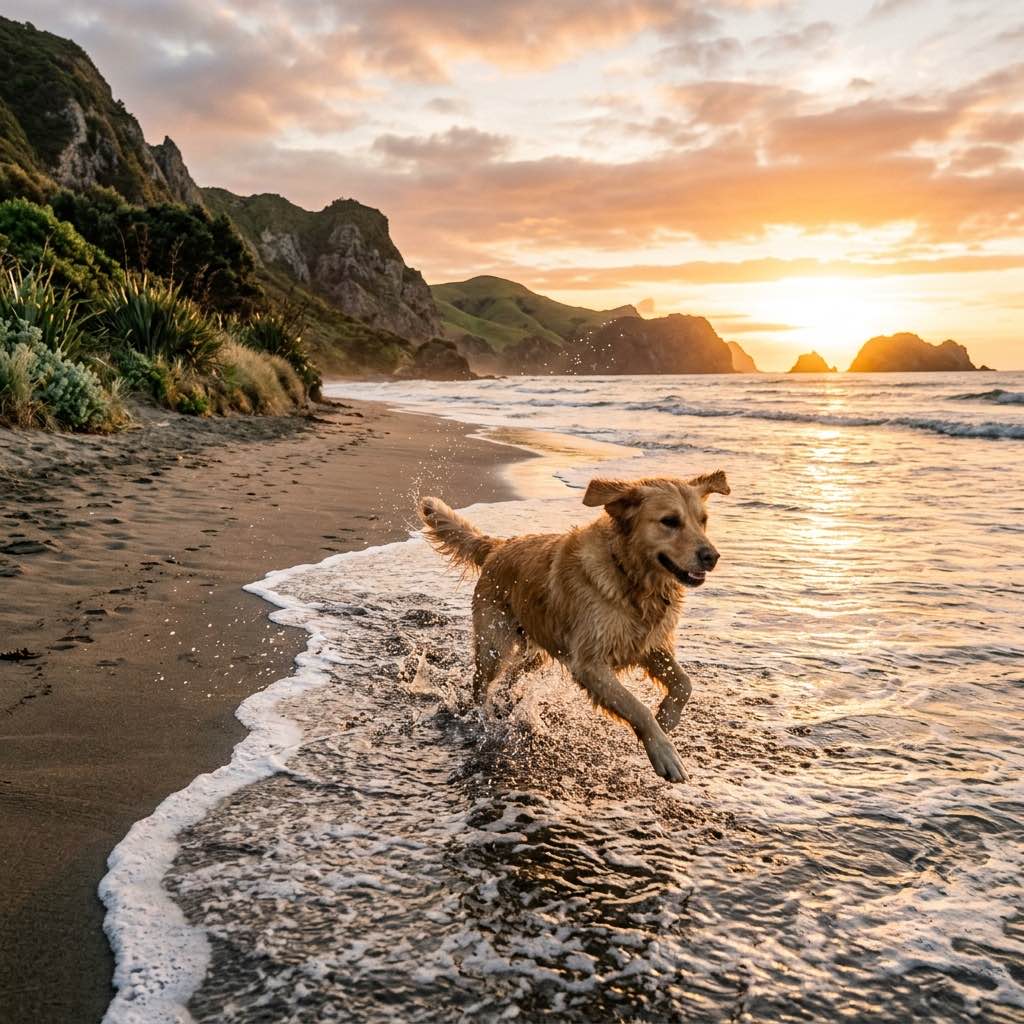
- Time-of-Day Restrictions: Many popular beaches, particularly those in urban areas or with high recreational use, allow dogs off-leash only during specific hours. These are often early mornings (e.g., before 9 am) and late evenings (e.g., after 7 pm), especially during the busy summer months. During peak daytime hours, dogs might be required to be on-leash or entirely prohibited. This helps manage crowds and ensures everyone can enjoy the beach safely.
- Seasonal Restrictions: Rules frequently change between summer (Daylight Saving period, typically late September/early October to early April) and winter (non-Daylight Saving). A beach that is off-leash friendly throughout the day in winter might become on-leash only or even prohibited during summer when visitor numbers, including families and swimmers, are much higher. Always check the specific dates for seasonal changes.
- Designated Areas (Zoning): Beaches are often zoned into specific areas, clearly marked by signage:
- Prohibited Areas: Dogs are not allowed at all. These are typically around sensitive wildlife habitats (e.g., bird nesting sites, seal haul-out areas), playgrounds, highly populated swimming zones, or marine reserves. Respecting these zones is paramount for wildlife conservation.
- On-Leash Areas: Dogs are permitted but must be kept on a leash at all times. This provides immediate control over your dog, preventing them from approaching other people or animals, and is common in areas with moderate foot traffic or adjacent to sensitive zones.
- Off-Leash Areas: Dogs are allowed to roam freely, provided they are under effective control. "Effective control" generally means your dog will immediately return to you when called, stay within sight, and not harass other beach users or wildlife. Owners are still responsible for their dog's behaviour.
- Breed Restrictions: While less common for general beach access, some councils may have specific rules for dangerous dog breeds (e.g., requiring them to be muzzled even in off-leash areas) as part of broader animal management bylaws. Always check your local council's specific requirements if you own a restricted breed.
How to Check Local Rules: The most crucial step before heading to any beach with your dog is to always check the local council's website. Do not rely on outdated information or assumptions. Look for their "Animal Management," "Dogs," "Bylaws," or "Parks and Recreation" sections. Most councils provide:
- Interactive Maps: These are incredibly useful, showing different zones (prohibited, on-leash, off-leash), specific times, and seasonal variations for each beach.
- Detailed Lists: Written descriptions of rules for individual beaches or coastal areas.
- PDF Bylaw Documents: The official legal texts, which can be very detailed.
On arrival at the beach, always look for signage. These signs are legally binding and will confirm the local rules in place for that specific stretch of beach. They often use clear symbols and text to indicate dog access, leash requirements, and prohibited areas. Ignoring signs can lead to significant fines, and more importantly, can put your dog, other people, or wildlife at risk. It's also good practice to observe what other dog owners are doing, but always verify with official sources.
Navigating Regional Beach Rules for Dogs
Understanding the general framework is a good start, but actual rules vary significantly by region. Here's a look at the common approaches in NZ's main centres and other popular regions:
Auckland Region
Auckland Council manages a vast and diverse coastline, from the wild west coast to the calmer Hauraki Gulf, leading to a complex set of dog access rules. The general approach is often seasonal and time-based, particularly on popular swimming beaches.
- Summer (Daylight Saving): Many popular beaches, especially those with high visitor numbers or sensitive ecological areas (e.g., inner Waitematā Harbour beaches like Mission Bay, Kohimarama, St Heliers), become either on-leash only or prohibited during peak daytime hours (typically 10 am to 5 pm). Off-leash access is usually restricted to early mornings or late evenings.
- Winter (Non-Daylight Saving): Rules often relax significantly, with many beaches allowing off-leash access throughout the day.
- West Coast Beaches (e.g., Muriwai, Bethells, Piha, Te Henga/Bethells): These typically have more expansive dog access, but specific zones and wildlife protection areas (especially near gannet colonies, dotterel nesting sites, or around estuaries) will have strict on-leash or prohibited rules. Vehicle access on these beaches also adds another layer of complexity and danger, requiring dogs to be secured. Always check signage, particularly around river mouths and dune systems.
- East Coast Beaches (e.g., Orewa, Long Bay, Takapuna): Similar to inner-city beaches, these often have time-of-day and seasonal restrictions, with off-leash access usually limited to early mornings/late evenings in summer.
- Regional Parks (e.g., Shakespear, Tawharanui, Āwhitu): These parks are often critical habitats for native birds and other wildlife. Dogs are generally prohibited from many parts of these parks, especially within pest-free sanctuaries. Where dogs are allowed, they are almost always strictly on-leash and often restricted to specific areas like carparks or public access roads. Always check the specific park rules before visiting.
- Inner-City/Urban Beaches: Many smaller beaches within residential areas have varying rules, but often lean towards on-leash or time-restricted off-leash due to proximity to houses and other public amenities.
Wellington Region
Wellington City Council and surrounding councils (e.g., Porirua, Hutt City, Kāpiti Coast) also have detailed bylaws. Wellington's unique geography, with its rugged coastline and close proximity to wildlife, heavily influences these rules.
- Wellington City Beaches (e.g., Oriental Bay, Lyall Bay, Scorching Bay): Many of these popular beaches have seasonal and time-of-day restrictions. Lyall Bay, for instance, is a popular surf spot and often has off-leash areas but also designated on-leash zones and restrictions near the airport runway. Oriental Bay is generally on-leash only or prohibited in certain sections due to its high use.
- South Coast (e.g., Island Bay, Owhiro Bay): These areas are known for their rugged beauty and marine life, including seals. Dogs are often required to be on-leash, especially near seal haul-out areas, and some sections may be prohibited.
- Porirua and Kāpiti Coast Beaches (e.g., Titahi Bay, Raumati Beach, Waikanae Beach): These tend to offer more expansive off-leash opportunities, but still with seasonal and time restrictions. Titahi Bay is a popular spot for dog walking, often with generous off-leash hours. However, areas around river mouths or estuaries will have stricter controls for bird protection.
- Regional Parks (e.g., East Harbour Regional Park, Belmont Regional Park): Dogs are generally welcome in many parts of these parks, but usually on-leash to protect livestock, native bush, and wildlife. Specific rules apply to different tracks and areas.
Christchurch and Canterbury Region
Christchurch City Council's rules cover a diverse range of coastal environments, from the long sandy beaches of the Pegasus Bay to the volcanic bays of Banks Peninsula.
- Christchurch City Beaches (e.g., New Brighton, Sumner, Southshore): These long, sandy beaches are very popular with dog owners. Generally, dogs are allowed off-leash during winter months. In summer, time restrictions apply (e.g., off-leash only before 9 am and after 7 pm), with on-leash or prohibited zones during peak hours. Some areas, particularly near estuaries (e.g., Avon-Heathcote Estuary), have strict on-leash or prohibited rules due to significant birdlife.
- Banks Peninsula (e.g., Akaroa, Lyttelton Harbour bays): Rules vary considerably between the smaller bays and settlements. Many beaches are dog-friendly, but often with on-leash requirements due to smaller beach sizes, proximity to residential areas, or presence of wildlife (e.g., Hector's dolphins in Akaroa Harbour, penguins). Always check local signage in each bay.
- Waimakariri and Selwyn Districts: Beaches north and south of Christchurch often have more relaxed rules, but still require vigilance for wildlife and adherence to seasonal changes.
Other Key Regions
- Bay of Plenty (Tauranga, Mount Maunganui, Papamoa): This region is incredibly popular in summer. Many beaches have strict seasonal and time-of-day restrictions, with dogs often prohibited or on-leash during peak summer hours and in high-traffic areas like the main Mount Maunganui beach. Papamoa Beach often has more off-leash opportunities further down the coast, but always check the specific zones. Wildlife protection, especially for dotterels, is a major concern here.
- Hawke's Bay (Napier, Hastings): Beaches along the Hawke's Bay coastline (e.g., Westshore Beach, Ocean Beach) often have designated off-leash areas, but also on-leash and prohibited zones, particularly near river mouths and popular swimming spots. Seasonal
Sources
- Wellington City Council, Dog Exercise Areas Map and Regulations, checked 2026-07-24: https://wellington.govt.nz/dogs-and-other-animals/dogs/dog-exercise-areas
- SPCA New Zealand, Is a Dog the Right Companion Animal for You, checked 2026-07-24: https://www.spca.nz/advice-and-welfare/article/is-a-dog-the-right-companion-animal-for-you