Best Cat Litter NZ (2026): Clumping, Crystal & Natural Compared
Best cat litter in NZ compared: clumping clay, crystal, tofu & recycled paper — odour control, cost, dust, and what most NZ cats actually prefer.
Finding the right cat litter is one of the most critical aspects of cat ownership. It is not just about keeping your home smelling fresh; it is also about your cat’s comfort, hygiene, and overall well-being. Cats are clean animals by nature and are highly sensitive to the texture, scent, and cleanliness of their litter tray. Using a litter your cat dislikes can lead to inappropriate elimination behaviour, where they begin urinating on carpet or furniture.
When choosing the best cat litter in New Zealand, you must balance four key factors: odour control, clumping ability, dust levels, and lifetime cost. This guide compares the most popular cat litters available on the NZ market to help you make an informed decision for your feline friend. If you are still choosing the tray itself, see our guide to cat litter box types.
---
Types of Cat Litter Compared
Cat litter has evolved significantly beyond basic clay. Today, New Zealand pet parents can choose from clumping clay, silica crystal, tofu, recycled paper, and wood pellets. Each has unique properties, price points, and environmental impacts.
1. Clumping Clay Litter
Clay is the most traditional and widely used cat litter. It is made from bentonite clay, which swells and forms solid clumps when it comes into contact with moisture.
- Pros: Outstanding clumping makes it easy to scoop out urine, leaving the rest of the tray clean. It offers excellent odour control, particularly in multi-cat NZ homes.
- Cons: Clay is very heavy, non-biodegradable, and often generates dust when poured. It also "tracks" easily, meaning fine clay dust and grains will stick to your cat's paws and spread across your floors.
2. Silica Crystal Litter
Crystal litter is made from silica gel beads. It works by absorbing moisture and trapping liquid waste and odours inside the crystals, allowing the water content to evaporate.
- Pros: Extremely lightweight and virtually dust-free. You do not need to scoop out wet clumps daily; you only scoop solid faeces and stir the crystals to distribute the liquid absorption. It provides excellent long-term odour control.
- Cons: It is not biodegradable. Some cats dislike the hard, rough texture of the crystals on their sensitive paw pads, and others are startled by the crackling noise it makes when wet.
3. Tofu Cat Litter
Tofu litter is a modern, eco-friendly option made from natural pea or soy fibers. It forms soft, scoopable clumps and is highly water-soluble.
- Pros: Plant-based, biodegradable and low-tracking. It generates very little dust. Even if the packaging says it is flushable, don't flush used litter — put it in the rubbish (see the disposal section below).
- Cons: Soft clumps are slightly less durable than clay clumps. If kept in highly humid environments (such as a damp laundry room), natural fibers can occasionally attract mold.
4. Recycled Paper Litter
Recycled paper litter is made from compressed waste paper formed into pellets.
- Pros: Biodegradable and highly absorbent.
- Cons: It is non-clumping. Liquid waste quickly sinks to the bottom of the tray, making spot-cleaning difficult. You must replace the entire tray contents frequently to manage odour.
5. Wood Pellet Litter
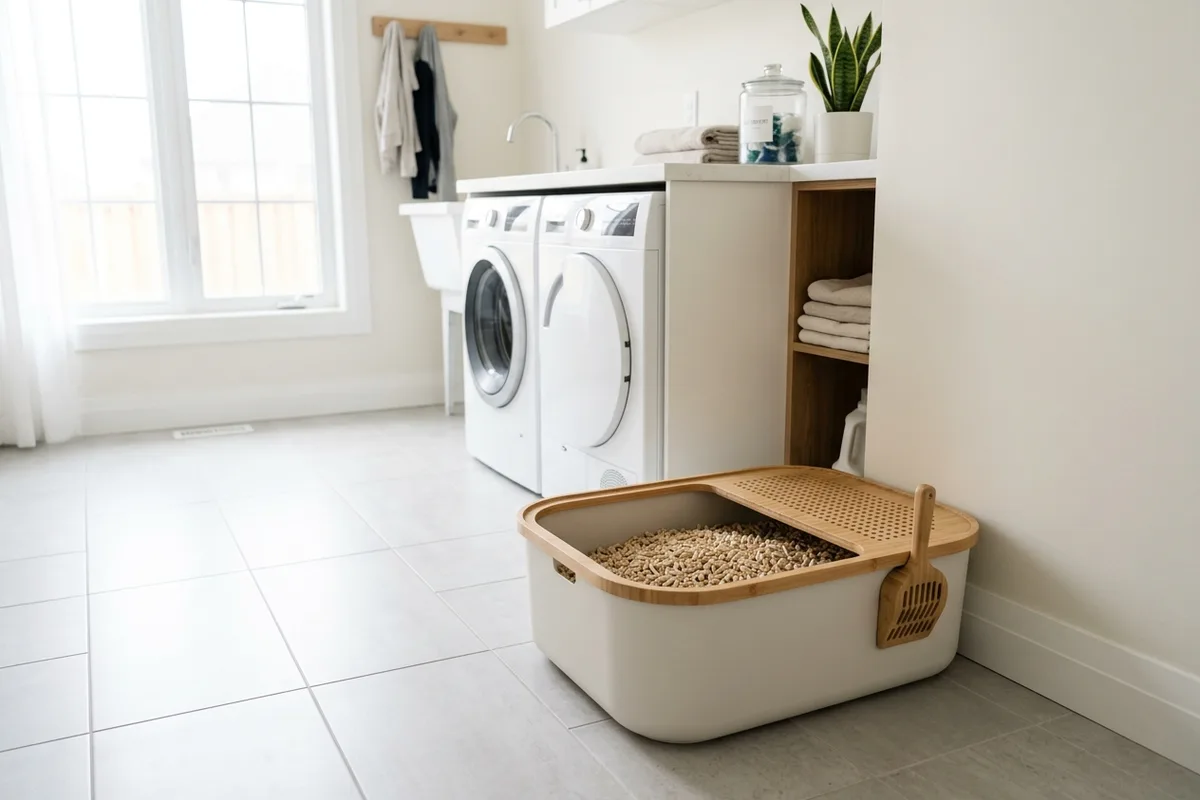
Made from compressed pine or cedar sawdust, wood pellets disintegrate into loose sawdust when they absorb liquid.
- Pros: Pine has a natural scent without artificial fragrances.
- Cons: Requires a double-layered sifting litter box to separate the clean pellets on top from the disintegrating wet sawdust below. Non-clumping.
---
What to Look For (Key Buying Factors)
To find the best litter for your specific home environment, evaluate these four primary performance pillars:
- Odour Control: Look for natural odour neutralisers (like activated carbon or pine) rather than synthetic perfumes. Strong chemical scents can irritate a cat’s sensitive respiratory system, causing them to reject the tray.
- Clumping Power: High-quality clumping litter locks liquid waste into firm, dry balls. Weak clumps break apart during scooping, leaving behind contaminated crumbs that quickly smell bad.
- Dust Levels: Heavy dust is a health hazard for cats with feline asthma and can trigger allergies in human owners. Look for litters labeled "99% dust-free."
- Tracking Prevention: Fine sand-like litters stick to paws easily. If you want to minimise sweep-up times, larger pellet shapes (like tofu or paper) and a litter mat outside the box help — but International Cat Care notes that a fine, sand-like litter is likely closest to what cats instinctively prefer, so weigh tracking against your cat's comfort.
---
Comparing Cat Litter Costs
Litter is a recurring cost, and the cheapest bag upfront is not always the most economical long-term choice. Prices vary with brand, bag size and specials, so compare the price per litre or kilogram rather than per bag. How quickly you get through it depends on the litter type: International Cat Care suggests a complete change every 2–4 weeks with clumping litter and weekly with non-clumping litter, on top of scooping out waste at least twice a day.
---
Litter Box Setup Tips (NZ Homes)
Even the best litter will fail if your tray setup is poor. Follow these golden rules for litter tray harmony:
Strategic Placement
Place litter trays in quiet, low-traffic areas of your home where your cat has a clear line of sight to see approaching threats. Keep trays away from your cat’s food and water bowls, as International Cat Care advises. If you want to keep your indoor cat happy and active in other ways, consult our guide on indoor cat enrichment.
---
Common Litter Problems & Fixes
- Litter Box Avoidance: If your cat suddenly stops using the tray, it is often a sign of stress, a dirty tray, or a dislike of a new litter type. First, ensure there is no medical issue (like a urinary tract infection) by taking them to a vet. Then, try cleaning the tray more frequently or reverting to their previous litter.
- High Tracking: If you find litter all over your NZ hardwood floors, switch to a larger pellet litter (like tofu) and place a textured litter mat under the box exit to trap loose grains.
- Dust Clouds: If pouring your clay litter causes a dust cloud, switch immediately to paper or tofu litter, which are virtually dust-free.
---
Switching Litter Without Upsetting Your Cat
Cats are creatures of habit and dislike sudden changes. If you swap their litter overnight, they may refuse to use the tray. To prevent accidents, transition to a new litter gradually over 7 to 10 days using this mixing schedule:
- Days 1–3: Mix 75% of your cat’s old litter with 25% of the new litter.
- Days 4–6: Mix 50% old litter and 50% new litter.
- Days 7–9: Mix 25% old litter and 75% new litter.
- Day 10+: Fill the tray with 100% of the new litter.
If your cat hesitates at any stage, pause the transition and keep the ratio the same for a few extra days until they are comfortable.
---
How Many Litter Trays Do You Need?
A common mistake in New Zealand households is providing too few trays for the feline population. Two different standards apply here, and they are worth keeping separate. The Ministry for Primary Industries (MPI) Code of Welfare for Companion Cats sets the minimum standards: cats kept indoors must have access to a litter tray containing absorbent material, and the code recommends one deep tray for each indoor cat, checked daily. Feline behaviour guidance goes further — International Cat Care recommends one tray per cat plus one extra (the "n+1" rule), spread across separate locations rather than lined up in one room.
For a single cat, having two trays provides choice and security, particularly in multi-storey Kiwi homes where stairs can present a barrier for ageing or sleepy pets. In multi-cat households, distribution is as critical as numbers. Placing three trays side-by-side in a single laundry room is likely to be seen by your cats as a single litter resource. Spreading trays across quiet, distinct rooms ensures that a timid cat is never cornered or blocked from relieving itself by a more dominant household companion.
---
Tray Types: Open, Hooded, Top-Entry
Selecting the right container structure is just as influential on feline compliance as the substrate itself. New Zealand homes typically utilise three primary tray styles:
- Open-Top Trays: These standard, uncovered trays represent the safest baseline choice for most cats. They offer 360-degree visibility, excellent air circulation, and unobstructed entry. They are particularly suitable for kittens, large breeds, and arthritic senior cats who struggle to step over elevated thresholds.
- Hooded (Covered) Trays: Featuring an enclosed dome or flap door, hooded trays offer human owners privacy and contain scattered litter particles. However, they trap ammonia odour internally if not scooped diligently. Furthermore, the single exit point can induce anxiety in multi-pet homes where another cat or dog might ambush the occupant.
- Top-Entry Trays: Designed with access on the roof, top-entry boxes drastically cut down on floor tracking and prevent inquisitive dogs from accessing waste. While ideal for agile adult cats in compact apartments, they are entirely unsuitable for mobility-impaired seniors or young kittens unable to leap upward.
---
Cleaning Rhythm That Actually Works
Maintaining an uncompromising cleaning schedule prevents tray aversion before behavioural issues become ingrained habits:
- Daily Maintenance: Scoop urine clumps and solid faeces at least twice a day, as International Cat Care recommends — the SPCA lists a dirty tray as one of the reasons a cat may stop using it. Top up fresh litter to maintain a consistent depth of about 3 centimetres, the depth International Cat Care reports most cats prefer.
- Routine Full Changes: Complete substrate replacement cycles depend entirely on your chosen litter category. International Cat Care suggests a complete empty and wash every 2–4 weeks with clumping litter (such as clay or tofu) and weekly with non-clumping litter (such as paper or wood pellets).
- Washing Protocol: Discard all used contents and wash the plastic tray thoroughly using hot water and a mild, unscented detergent. Rinse completely and allow the tray to air dry before refilling. Avoid disinfectants that go cloudy in water (such as chloroxylenol products like Dettol), which International Cat Care warns are toxic to cats, and avoid heavily scented detergents. If you want to disinfect the tray, MPI’s Code of Welfare suggests diluted household bleach, followed by a thorough rinse and dry.
---
Disposing of Used Cat Litter in NZ
Cat waste is not garden compost: DOC advises putting cat faeces in the rubbish bin rather than the toilet, and the national kerbside standard excludes animal waste from council food scraps and food-and-garden-waste collections.
Most critically, pet owners must never flush cat litter down the toilet, regardless of whether manufacturer packaging labels the product as flushable or water-soluble. Cats are the only definitive hosts of the parasite *Toxoplasma gondii*: an infected cat sheds microscopic oocysts in its faeces — according to the Merck Veterinary Manual usually only once in its life, for up to about 20 days — and the oocysts can remain viable in the environment for several months. The Department of Conservation notes that oocysts reach waterways both through rainwater and stormwater run-off and through wastewater when cat faeces or litter have been flushed down the toilet — and that once they are in the sea, dolphins pick them up from contaminated water or prey. Toxoplasmosis is a confirmed cause of death in Hector's and Māui dolphins and, in DOC's words, is likely to be a significant human-caused threat to those populations.
To dispose of cat litter responsibly across New Zealand:
- General rubbish: Bag all soiled litter and faeces securely and put them out with your general (landfill) rubbish. Bin colours and collection rules differ between councils, so check yours. Never put cat waste or litter in your recycling, and keep it out of food scraps and food-and-garden-waste bins — the national kerbside standard lists animal waste as an excluded material for those food and garden collections.
---
Conclusion
Choosing the best cat litter in New Zealand depends on your cat's specific preferences and your household's daily routine. While clumping clay provides traditional convenience, natural alternatives like tofu and wood pellets offer eco-friendly benefits and minimal dust. To continue your research, compare the trays themselves in cat litter box types, or visit our cats channel for more feline care guides.
---
Sources
- SPCA New Zealand. Understanding your cat's behaviour — a dirty tray, a changed litter type and illness such as cystitis as reasons a cat toilets outside the tray, checked 2026-09-28: https://www.spca.nz/advice-and-welfare/article/understanding-your-cats-behaviour
- International Cat Care. Choosing a litter tray for your cat — cats tend to prefer fine, sand-like unscented litter and many prefer clumping litter; research shows a preferred depth of about 3cm; the tray should be about one and a half times the length of the cat from nose to base of tail and be scooped at least twice a day, checked 2026-07-29: https://icatcare.org/articles/choosing-a-litter-tray-for-your-cat
- International Cat Care. Multi-cat households — one resource per cat plus one extra, spread across separate locations, checked 2026-09-14: https://icatcare.org/articles/multi-cat-households
- Ministry for Primary Industries (MPI). Code of Welfare: Companion Cats — standards for hygienic litter provision and indoor cat environment, checked 2026-09-13: https://www.mpi.govt.nz/animals/animal-welfare/codes/all-animal-welfare-codes/code-of-welfare-companion-cats/
- Department of Conservation (DOC). Toxoplasmosis and Hector's and Māui dolphin — impact of terrestrial feline parasite transmission on native marine mammals and responsible pet waste management, checked 2026-09-13: https://www.doc.govt.nz/nature/pests-and-threats/diseases/toxoplasmosis-and-hectors-and-maui-dolphin/
- Merck Veterinary Manual. Toxoplasmosis in Animals — clinical etiology, feline oocyst shedding, and environmental persistence of Toxoplasma gondii, checked 2026-09-13: https://www.merckvetmanual.com/infectious-diseases/toxoplasmosis/toxoplasmosis-in-animals
- New Zealand Gazette. Standard Materials for Kerbside Collections Notice 2023 — animal waste is an excluded material for food organics and FOGO (food and garden organics) collections, checked 2026-09-28: https://gazette.govt.nz/notice/id/2023-go4222
Related guides
petmall.co.nz
Shop at PetMall
The products below are practical support items for your pet. PetMall ships across New Zealand.
- Cat LitterClumping or crystal, most cats prefer an unscented litter and a clean tray — one tray per cat plus one spare is the NZ rule of thumb.
- Cat FoodStart with food that matches your cat's life stage — change brands slowly over 7–10 days to avoid digestive upset.
- Cat TreatsGreat for bonding and training — keep treats under 10% of daily calories to protect your cat's waistline.
- Cat ToysA small rotation of toys (feather wand, puzzle feeder, and comfort toy) usually works better than buying many at once.
- Cat GroomingRegular brushing cuts hairballs and shedding — essential for long-haired breeds like Ragdolls and British Longhairs.
- Flea & Worm TreatmentFor NZ conditions, choose protection that fits your cat's weight and lifestyle (indoor vs outdoor) and keep it regular.