Kitten Litter Training NZ: Set Up the Tray, Routine and Clean-Up
Kitten litter training NZ guide: tray setup, litter choice, small-room routine, accident clean-up, multi-cat rules and local disposal tips.
Kitten litter training in NZ is usually about good setup, not forcing a kitten to learn something unnatural. Give your kitten an easy-to-find tray, suitable unscented litter, a quiet starting room, praise for success and calm clean-up after accidents. Never punish toileting mistakes; it can make kittens stressed and less confident about the tray.
The quick answer
Start your kitten in one safe room with food, water, bed, scratching post and a litter tray. Place them in the tray after eating, drinking, playing and waking. Praise calmly when they use it. Keep the tray clean, use pet-safe enzymatic cleaner for accidents, and expand the house slowly once they reliably return to the tray.
Most kittens have a strong natural instinct to dig and bury. SPCA New Zealand notes that cats and kittens adopted from SPCA are usually already trained to use a litter tray, but a new home can still cause one or two accidents. The job is to make the right place obvious and stress-free.
Set up one kitten room first
Before giving a kitten the whole house, create a starter room. In many NZ homes that might be a spare bedroom, office, laundry, bathroom, warm hallway nook or enclosed sleep-out room. Choose somewhere quiet, draught-free and easy to clean.
Include:
- Litter tray and scoop.
- Food and water away from the tray.
- Bed or blanket.
- Scratching post.
- Safe toys.
- A hiding spot.
- Kitten-safe cleaning supplies outside the kitten's reach.
Animates NZ recommends preparing a hazard-free room with essentials before bringing a kitten home. This makes litter training easier because the kitten does not have to cross a whole open-plan house to find the tray.
Choose the right tray
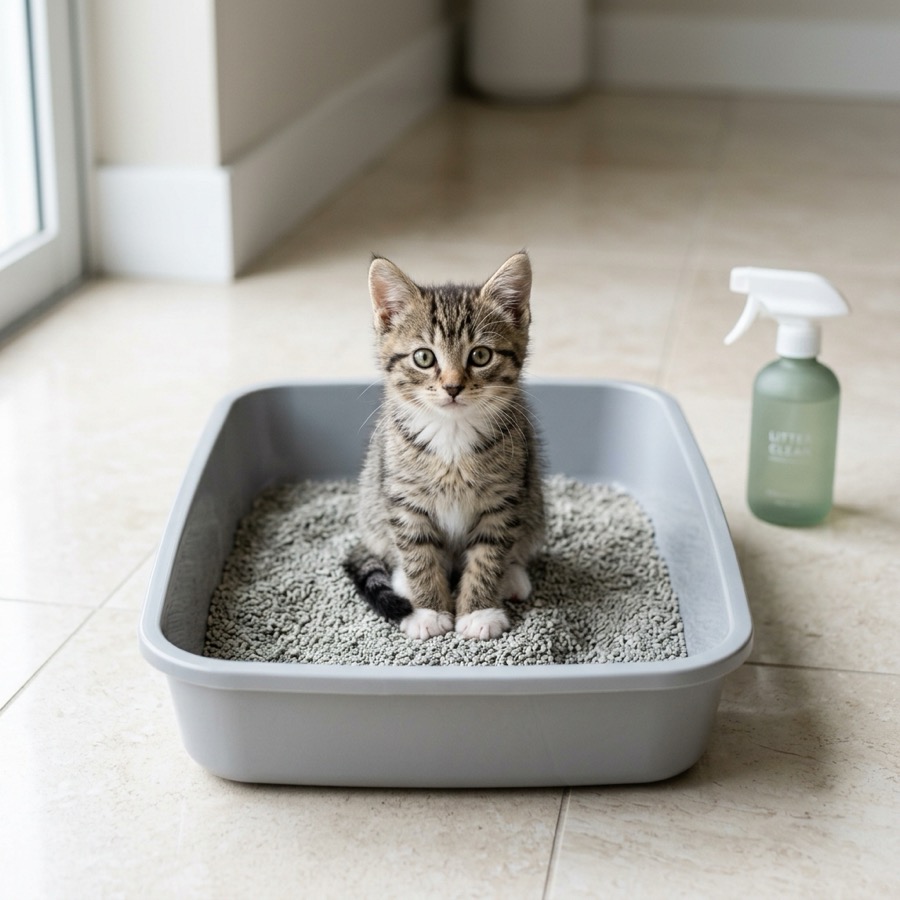
For small kittens, the tray must be easy to enter. A tray with one lower side can help short legs. High sides are useful for enthusiastic diggers, but only if the kitten can climb in without effort.
RSPCA guidance is practical: the tray should give the cat enough space to turn freely, and multi-cat homes need enough trays. A good rule is one tray per cat plus one spare. That means one kitten can benefit from two trays while learning, especially in a two-storey home or larger rental.
Covered trays can help with smell and privacy for some cats, but some kittens prefer open trays because they feel less trapped. If your kitten is avoiding a covered tray, remove the hood and see if confidence improves.
Pick a kitten-friendly litter
SPCA New Zealand suggests unscented litter because many cats dislike strong perfumes. That is a good starting point for kittens too. Avoid sudden changes in litter type during the first week unless the kitten clearly dislikes it.
Common NZ litter options include clay, clumping clay, crystals, recycled paper and wood pellets. Animates notes that some garden-disposal options should not be used on vegetable gardens. Always follow the litter bag instructions, but do not flush cat litter or cat faeces down the toilet, even if the product says it is flushable: the Department of Conservation advises putting cat faeces in the rubbish bin, not the toilet, because the Toxoplasma parasite in cat waste can reach the sea through wastewater and infect Hector's and Māui dolphins.
Bunnings NZ listed cat litter examples from about NZD $4.57 for basic bags through to larger multi-litre options, checked on 4 June 2026. Price matters less than whether your kitten will use it reliably.
Teach the routine
Put your kitten gently in the tray:
- After meals.
- After drinking.
- After waking.
- After active play.
- Before bedtime.
- When you see sniffing, circling or pawing.
If they use the tray, praise softly. Keep the reward calm. A tiny food treat can help, but do not startle them with loud celebration while they are toileting.
If they hop straight out, do not hold them in the tray. Let them leave, then try again later. The tray should feel safe, not like a trap.
Clean tray, clean habits
Many cats avoid dirty trays. Scoop solids quickly and remove wet clumps or soaked areas often. Wash the tray during full litter changes with mild detergent and water, then dry before refilling.
Place the tray away from food and water. Keep it away from noisy appliances if possible. Some kittens dislike washing machines, dryers, heat pumps turning on, garage doors, or heavy foot traffic.
In damp NZ winters, watch for musty litter areas in bathrooms and laundries. Ventilation matters. In hot, humid northern weather, scoop often so smell does not build up.
Accident clean-up
Accidents happen. Do not rub a kitten's nose in it, smack, shout or chase. SPCA warns that punishing inappropriate toileting can make stress worse.
Instead:
- Move the kitten calmly to another safe spot.
- Clean solids or liquid thoroughly.
- Use an enzymatic pet cleaner where possible.
- Block access to the repeat spot until smell is gone.
- Add a second tray near the accident area if needed.
Do not use strong ammonia smells, as they can make urine-marked areas more interesting.
Multi-pet homes
Dogs, toddlers and older cats can all affect litter training. Put the tray where the kitten can enter safely without being followed or cornered. A baby gate with a cat-sized gap, an elevated route, or a quiet spare room can help.
If you already have a cat, do not expect the kitten to share one tray immediately. Sharing can create subtle pressure. Use separate trays in separate areas while everyone settles.
For dogs who find litter trays fascinating, manage access from day one. The tray is not a toy box, snack station or place for kids to investigate.
Indoor-only kittens
Indoor cats need a long-term litter setup, not just a temporary kitten tray. If you live in an apartment, townhouse or rental without outdoor access, choose a spot you can keep clean year-round.
Think about:
- Easy daily scooping.
- Space for a mat to catch tracked litter.
- Privacy without isolation.
- Night access.
- Distance from food and water.
- Ventilation.
- Landlord-friendly flooring protection.
The Best Cat Litter NZ can help compare litter types and tray accessories before you buy too much of one option.
When to ask for help
Ask your vet, SPCA or a qualified cat behaviour professional for advice if your kitten repeatedly avoids the tray, strains, cries while toileting, has diarrhoea, has blood in urine or faeces, or suddenly changes toileting habits after being reliable. This guide is general training information and cannot replace individual veterinary advice.
For normal settling-in accidents, review the basics first: tray access, tray size, litter type, cleanliness, stress level and how much house freedom the kitten has.
Key takeaways
- Start in one safe room so the litter tray is easy to find.
- Use unscented litter and a tray your kitten can enter easily.
- Place the kitten in the tray after meals, drinks, play and sleep.
- Praise calmly for success; never punish accidents.
- Scoop often and clean accidents with pet-safe enzymatic cleaner.
- In multi-cat homes, use one tray per cat plus one spare.
Related reading
- Cat Behaviour Decoder
- Best Cat Litter NZ
- Cat Toys Guide NZ
- Cat Scratching Posts Guide NZ
- Cat Food Guide NZ
- New Kitten Checklist NZ
---
Reference sources
- SPCA New Zealand: Bringing your new cat home, checked 2026-06-04. https://www.spca.nz/advice-and-welfare/article/bringing-your-new-cat-home?cat=pets&subcat=cats
- SPCA New Zealand: Understanding your cat's behaviour, checked 2026-06-04. https://www.spca.nz/advice-and-welfare/article/understanding-your-cats-behaviour
- Animates NZ: Teaching your kitten the basics, checked 2026-06-04. https://www.animates.co.nz/articles/teaching-your-kitten-the-basics
- Animates NZ: Settling in your kitten, checked 2026-06-04. https://www.animates.co.nz/articles/settling-in-your-kitten
- RSPCA: How to train a cat to use a litter tray, checked 2026-06-04. https://www.rspca.org.uk/adviceandwelfare/pets/cats/environment/litter
- Scottish SPCA: Cat litter training, checked 2026-06-04. https://www.scottishspca.org/advice/cats/cat-litter-training/
- Bunnings New Zealand: Cat litter, price examples checked 2026-06-04. https://www.bunnings.co.nz/products/pet-supplies/cats/cat-litter
Free PetMall tools
Related guides
petmall.co.nz
Shop at PetMall
The products below are practical support items for your pet. PetMall ships across New Zealand.
- Cat LitterClumping or crystal, most cats prefer an unscented litter and a clean tray — one tray per cat plus one spare is the NZ rule of thumb.
- Cat TreatsGreat for bonding and training — keep treats under 10% of daily calories to protect your cat's waistline.
- Cat FoodStart with food that matches your cat's life stage — change brands slowly over 7–10 days to avoid digestive upset.
- Cat ToysA small rotation of toys (feather wand, puzzle feeder, and comfort toy) usually works better than buying many at once.
- Cat GroomingRegular brushing cuts hairballs and shedding — essential for long-haired breeds like Ragdolls and British Longhairs.
- Flea & Worm TreatmentFor NZ conditions, choose protection that fits your cat's weight and lifestyle (indoor vs outdoor) and keep it regular.