How Much to Feed a Kitten NZ: Meals, Growth and Easy Portion Checks
How much to feed a kitten NZ: use kitten food labels, split small meals, monitor body condition and avoid common feeding mistakes.
How much to feed a kitten in NZ depends on their age, the food's calories, body condition and whether you feed wet, dry or both. Start with the kitten food label, divide the daily amount into small meals, keep fresh water available, and review growth weekly rather than guessing by bowl size.
The quick answer
Kittens are not small adult cats. They need kitten food designed for growth, and many do best with several small meals or measured grazing while they are young. SPCA New Zealand says kittens need special high-energy kitten food for growth and that daily amounts should be calculated from the food packet. Royal Canin NZ also says kitten nutrition changes across the first year, with solid food introduced during weaning and kitten food used through growth.
The simple routine:
- Feed a complete kitten food, not adult cat food.
- Read the daily feeding guide on the packet.
- Split the daily amount into small meals or a measured daily allowance.
- Keep water available inside and outside.
- Use body condition and weekly growth checks to adjust.
- Change food gradually over one or two weeks.
Read the packet before the bowl
Kitten foods vary a lot. A pouch, a tray and a scoop of dry food may look comparable, but they can deliver very different energy. The packet should tell you the total daily amount by age and sometimes weight. Use that as the baseline, then divide it across the day.
| Label question | Why it matters | Practical action |
|---|---|---|
| How old is your kitten? | Growth speed changes month by month | Recheck the guide every few weeks |
| Is it kitten food? | Kittens need growth-stage nutrition | Avoid adult maintenance food for young kittens |
| Is the amount daily or per meal? | Many owners accidentally double-feed | Divide daily grams or pouches into meals |
| Are you mixing wet and dry? | Full portions of both can overfeed | Use a mixed-feeding guide or reduce each side |
If the label gives a range, start in the middle for a bright, active kitten with normal body condition. Move slowly from there. Tiny adjustments are easier to read than big changes every few days.
Kitten feeding table by age
This table is a practical guide for healthy kittens. Your kitten's food label and vet advice still come first.
| Kitten age | Feeding pattern | What to watch |
|---|---|---|
| 4-8 weeks | Weaning; soft kitten food offered often | Stay with foster, breeder, rescue or vet guidance |
| 8-12 weeks | Several small meals or measured grazing | New-home stress, litter routine, steady appetite |
| 3-6 months | Small meals across the day | Rapid growth, play bursts, treat creep |
| 6-12 months | Measured daily allowance, often split into meals | Body condition, desexing timing, indoor activity |
| Around 12 months | Transition towards adult cat food | Ask your vet if your cat is still growing or very large |
SPCA New Zealand says kittens need to refuel often and may graze through the day and night. That does not mean the bag should stay endlessly full. A measured daily allowance helps you know whether your kitten is eating enough without turning the bowl into a bottomless snack station.
Wet, dry or mixed feeding
Wet food can help with variety and moisture, while dry food can be convenient for measured grazing and puzzle feeders. Many NZ homes use both. The important bit is not the format; it is the total daily intake and whether the food is suitable for kittens.
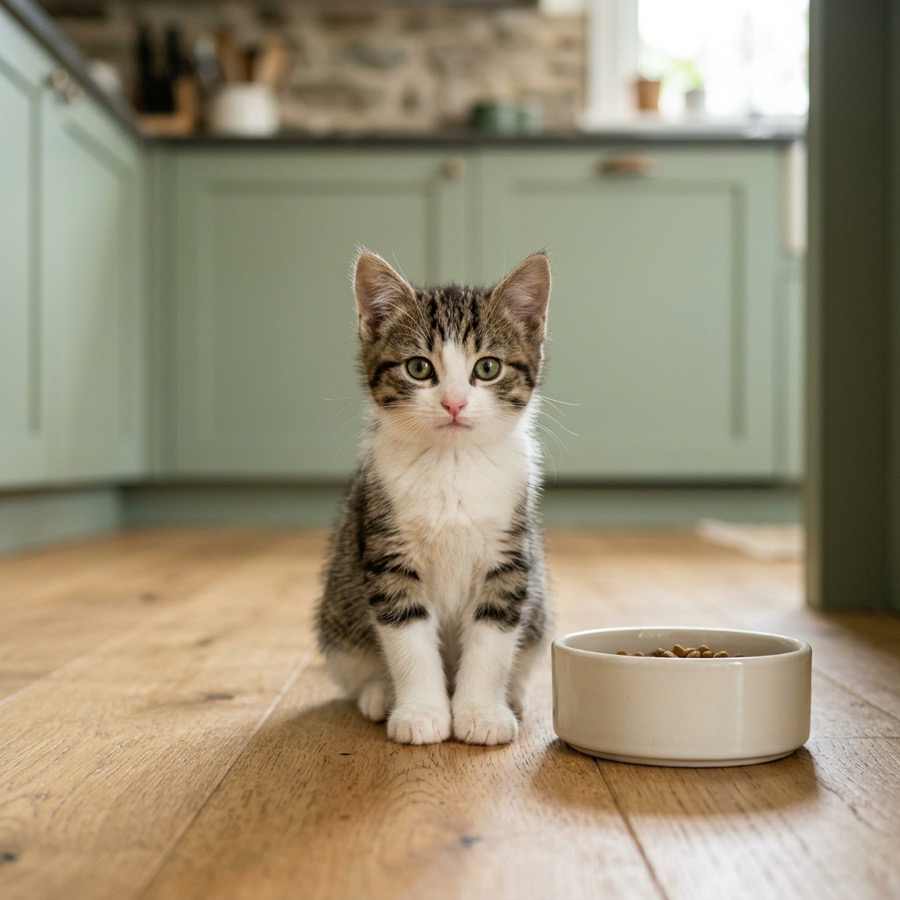
For mixed feeding:
- Decide the total daily wet amount.
- Decide the total daily dry amount.
- Do not feed the full dry allowance plus the full wet allowance unless the label says that exact combination is appropriate.
- Keep a note on the fridge if multiple people feed the kitten.
This matters in flatting houses and busy families. One person gives breakfast, someone else tops up before work, a child adds "just a bit", and by evening no one knows what the kitten actually ate.
Body condition beats guesswork
Kittens should grow steadily, play, rest, eat, use the litter tray and keep a healthy body shape. Because breeds and mixed-breed cats vary, body condition is more useful than chasing one "perfect" weight.
Use the WSAVA cat body condition score chart as a check:
- You should be able to feel ribs gently without pressing hard.
- Your kitten should have a waist when viewed from above, though fluffy coats can hide it.
- A small belly pouch is normal in many cats and is not the same as overall condition.
- Sudden changes deserve a vet check.
Do not put a growing kitten on a casual diet because they look round after a meal. Kittens need enough energy for growth. If you are worried about size, growth or appetite, ask your vet clinic to check body condition at vaccination or desexing visits.
Treats and milk
Treats can be useful for handling practice, carrier games and recall-to-name training, but they should stay small. You can also use part of the kitten's daily dry food allowance for training and enrichment.
Milk is a common Kiwi myth. SPCA New Zealand says not to give cats milk because many cats are lactose intolerant. Use fresh water instead.
Human leftovers are another trap. Salty, spicy or rich foods are not a kitten feeding plan. Keep the base diet simple and complete, especially while your kitten is settling into a new home.
Food, litter and routine are linked
Feeding is not separate from the rest of kitten life. A consistent food routine makes litter training easier because you can see patterns. It also helps you spot when a kitten is hiding, guarding food, overeating from boredom or missing meals because the bowl is in a scary spot.
SPCA New Zealand recommends safe, familiar feeding locations and separate bowls for cats. In multi-cat homes, this matters. A bold adult cat can quietly steal kitten food, while a shy kitten may avoid the bowl if it is in a busy hallway.
Pair this article with Kitten Litter Training NZ, the New Kitten Checklist NZ and the Cat Behaviour Decoder if eating or toileting patterns change after a move.
NZ budget and shopping notes
Kitten food costs vary in NZD depending on brand, wet/dry mix, bag size and how many cats are in the house. Dry food often looks cheaper per day, while wet food can be easier to portion by pouch or tray. Compare daily cost using the feeding guide, not just shelf price.
Look for:
- Food labelled for kittens or growth.
- Clear feeding instructions by age or weight.
- Practical packaging you can seal in humid Auckland weather.
- A texture your kitten can manage.
- A plan you can keep consistent when weekends, visitors or holidays disrupt routine.
Avoid swapping food every time a special appears. If you do change food, SPCA New Zealand advises introducing the new food gradually over one or two weeks.
Indoor kittens and enrichment feeding
Many NZ cats live indoors, indoors at night, or with catios to reduce roaming and protect wildlife. Indoor life changes energy use. Food puzzles, lick mats, scatter feeding and small training sessions can make meals last longer while keeping portions measured.
Use enrichment gently. A nervous new kitten may need easy bowls first. Once settled, try a shallow puzzle feeder or a few pieces of kibble hidden near a scratching post or toy. The goal is confidence, not frustration.
For setup ideas, read New Kitten Checklist NZ, Cat Food Guide NZ, Cat Toys Guide NZ and Best Cat Litter NZ.
Common mistakes
The first mistake is feeding adult cat food too early. Kitten food supports growth through the first year for most cats.
The second mistake is free-feeding without measuring. Grazing can work, but only if the daily amount is still known.
The third mistake is letting neighbours feed your kitten. SPCA New Zealand specifically notes neighbours can affect feeding amounts. Keep young kittens supervised and do not rely on outdoor snacks.
The fourth mistake is ignoring water. The MPI Code of Welfare for Cats includes food and water expectations, and fresh water should be easy to access.
Key takeaways
- Start with kitten food, not adult cat food.
- Use the packet's daily guide, then split or measure it across the day.
- Kittens often need small, frequent meals while young.
- Wet, dry or mixed feeding can work if the total amount is controlled.
- Track body condition weekly and ask your vet if growth worries you.
- Keep water available and change foods gradually.
Related reading
- New Kitten Checklist NZ
- Cat Food Guide NZ
- Kitten Litter Training NZ
- Cat Behaviour Decoder
- Cat Toys Guide NZ
- Best Cat Litter NZ
---
Reference sources
- SPCA New Zealand: What to feed your cat or kitten, checked 2026-06-04. https://www.spca.nz/advice-and-welfare/article/what-to-feed-your-cat-or-kitten
- SPCA New Zealand: Preparing for your new cat, checked 2026-06-04. https://www.spca.nz/advice-and-welfare/article/preparing-for-your-new-cat
- Royal Canin NZ: What to feed kittens, checked 2026-06-04. https://www.royalcanin.com/nz/cats/kitten/what-to-feed-kittens
- Royal Canin NZ: Kittens product and feeding guidance, checked 2026-06-04. https://www.royalcanin.com/nz/cats/products/kittens
- WSAVA: Global Nutrition Guidelines, checked 2026-06-04. https://wsava.org/global-guidelines/global-nutrition-guidelines/
- WSAVA: Cat Body Condition Scoring, checked 2026-06-04. https://wsava.org/wp-content/uploads/2020/01/Cat-Body-Condition-Scoring-2017.pdf
- MPI New Zealand: Code of Welfare - Cats, checked 2026-06-04. https://www.mpi.govt.nz/animals/animal-welfare/codes/all-animal-welfare-codes/code-of-welfare-cats/
Free PetMall tools
Related guides
petmall.co.nz
Shop at PetMall
The products below are practical support items for your pet. PetMall ships across New Zealand.
- Cat FoodStart with food that matches your cat's life stage — change brands slowly over 7–10 days to avoid digestive upset.
- Cat LitterClumping or crystal, most cats prefer an unscented litter and a clean tray — one tray per cat plus one spare is the NZ rule of thumb.
- Cat TreatsGreat for bonding and training — keep treats under 10% of daily calories to protect your cat's waistline.
- Cat ToysA small rotation of toys (feather wand, puzzle feeder, and comfort toy) usually works better than buying many at once.
- Cat GroomingRegular brushing cuts hairballs and shedding — essential for long-haired breeds like Ragdolls and British Longhairs.
- Flea & Worm TreatmentFor NZ conditions, choose protection that fits your cat's weight and lifestyle (indoor vs outdoor) and keep it regular.