Cat Grooming at Home NZ: Brushing, Mats and Low-Stress Handling
Cat grooming at home NZ guide: brushing frequency, mat prevention, bath boundaries, tools and low-stress handling.
Cat grooming at home in NZ is mostly about short, calm brushing sessions, mat prevention, nail and paw checks, and noticing coat changes early. Most cats do not need regular baths. Start gently, use cat-appropriate tools, stop before stress builds, and ask a vet or groomer for help with tight mats or a cat who suddenly stops grooming.
The quick answer
Short-haired cats often cope with a weekly brush, while many long-haired cats need daily combing to prevent knots. RSPCA says short, regular grooming sessions are best and that long-haired cats may need daily grooming, while short-haired cats still benefit from at least weekly sessions. Animates NZ and Purina NZ both emphasise brushing to reduce loose hair and matting.
The goal is not a salon finish. It is a comfortable cat, fewer hairballs, fewer mats, and a human who can notice changes before they become a bigger problem.
A practical grooming table
| Cat situation | Grooming rhythm | Useful tool |
|---|---|---|
| Short-haired adult | Weekly quick brush | Grooming mitt or soft brush |
| Long-haired cat | Daily short comb | Wide-tooth comb plus slicker if tolerated |
| Kitten | Tiny handling sessions | Soft brush, treats, calm lap time |
| Senior cat | More frequent gentle checks | Soft brush, comb, vet/groomer help for mats |
| Indoor cat in moult | Several short sessions weekly | Mitt, comb, lint roller nearby |
| Cat who hates brushing | Seconds at a time | Treats, towel surface, stop early |
Your cat's coat, age, body shape and tolerance matter more than the calendar. A calm two-minute session done regularly beats one dramatic 30-minute battle.
Brush before mats form
Mats are easier to prevent than fix. RSPCA recommends teasing knots gently with a comb and warns against cutting matted fur with scissors because of the risk of cutting skin. That is important: cat skin can be loose and hidden under fur.
Focus on mat-prone areas:
- behind ears;
- armpits;
- chest;
- belly if tolerated;
- back of legs;
- base of tail;
- collar area.
If the mat is tight, close to skin, painful or your cat is distressed, stop. A cat groomer or vet clinic can remove it more safely.
Choose the right tool
Do not buy the sharpest-looking tool first. Start with the gentlest tool your cat will accept, then add a comb if needed.
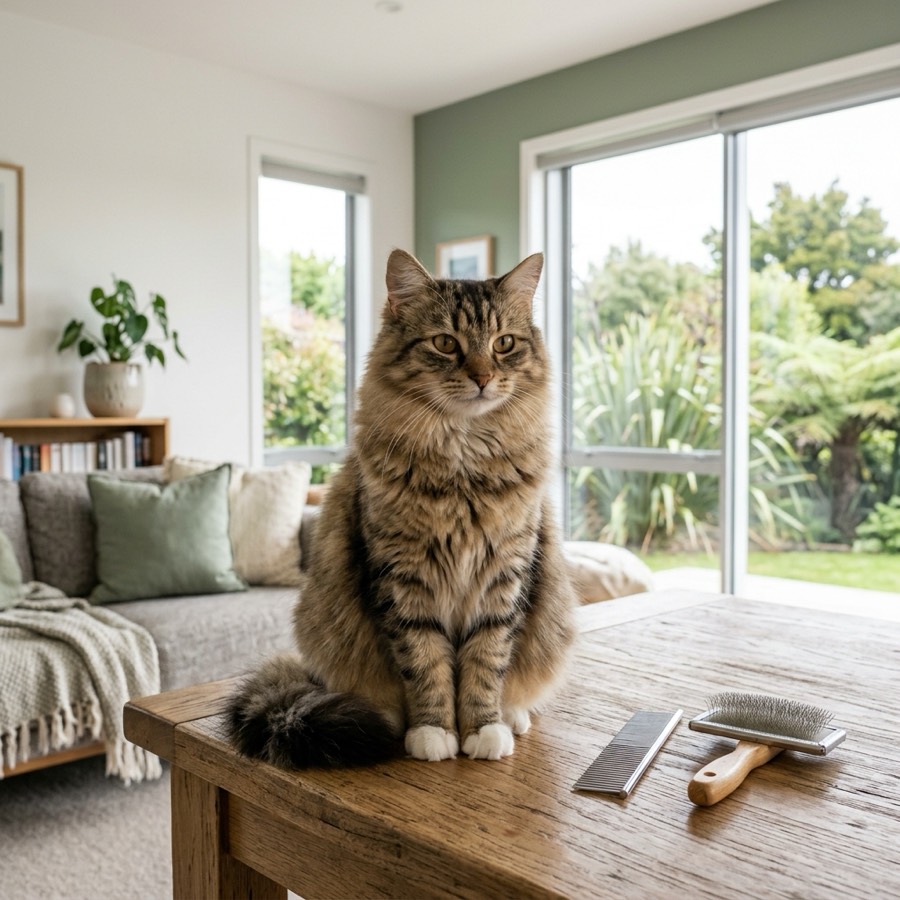
| Tool | Best for | Watch out for |
|---|---|---|
| Grooming mitt | Short coats, nervous cats | May not reach undercoat |
| Soft brush | Kittens, quick tidy-ups | Limited detangling |
| Wide-tooth comb | Long coats, checking knots | Go slowly, do not yank |
| Slicker brush | Loose hair and some tangles | Use light pressure |
| Flea comb | Fine checks around face and coat | Not a full grooming plan |
For a new kitten, pair grooming with New Kitten Checklist NZ. Handling habits are much easier to build before your cat learns that brushes mean a chase.
Low-stress handling
Cats are excellent at telling you when the session is too much, but humans often miss the early signs. Watch for tail swishing, skin twitching, ears turning, head whipping around, growling, hissing, freezing or leaving.
Use this pattern:
- Put the brush down where your cat can sniff it.
- Offer a treat or gentle praise.
- Brush one stroke in an easy area.
- Stop.
- Repeat later.
The first week may look silly because you are barely grooming. That is fine. You are teaching consent and predictability.
Use the Cat Behaviour Decoder if your cat changes from tolerant to defensive, or if grooming suddenly becomes hard.
Do cats need baths?
Most cats do not need routine baths. Purina NZ says cats generally do a good job cleaning themselves and baths are usually only needed in specific situations. SPCA's grooming position is cautious about bathing cats and says cats should not be bathed unless it is in their best interest.
Better first steps:
- Brush out loose fur.
- Wipe a small dirty spot with a damp cloth.
- Trim soiled fur only with safe professional help if needed.
- Improve litter setup if coat soiling is linked to toileting.
- Ask a vet if grooming habits change suddenly.
If a bath is truly needed, keep it short, warm and calm, use cat-safe products, and dry thoroughly. Many cats are safer with a professional groomer or vet clinic for difficult cases.
NZ home realities
New Zealand homes create their own grooming problems. Damp Auckland winters can make long coats feel clumpy. South Island cold snaps mean a wet cat needs proper drying. Outdoor cats may collect grass seeds, burrs or sticky plant matter. Indoor cats may shed more visibly on dark furniture and bedding.
Practical NZ setup:
- Keep a towel near the door for wet paws.
- Brush long-haired cats before mats form in winter.
- Check collars do not create neck mats.
- Use washable throws on favourite sunny spots.
- Keep litter trays clean so long fur does not collect mess.
Keep grooming tools simple and clean. Loose fur, litter dust and old food treats can build up in brushes, so remove hair after each session and store tools somewhere dry. In multi-cat homes, separate tools can reduce arguments over scent and make it easier to notice which cat is shedding more than usual. A small basket beside the sofa often works better than a perfect grooming station hidden in a cupboard, because the best routine is the one you actually repeat.
For litter setup, see Best Cat Litter NZ. For feeding and coat condition context, see Cat Food Guide NZ.
Scratching and grooming are connected
Scratching helps cats maintain claws, stretch and mark territory. Grooming sessions are easier when your cat has normal outlets for claws and stress.
Use scratching posts, mats and climbing spaces. Pair grooming with a calm play session or food puzzle, not after a stressful chase around the house. Related guides:
Senior and overweight cats
Some cats groom less as they age or if they cannot comfortably reach certain areas. This does not automatically mean one thing, but it is useful information. Help with gentle brushing and ask your vet if grooming changes are sudden, severe or paired with appetite, weight, toileting or behaviour changes.
Do not shame an older cat for a messy coat. Make the environment easier: low-entry litter boxes, accessible beds, non-slip mats and short grooming sessions.
Common mistakes
The first mistake is forcing it. A cat who is pinned down for grooming may avoid you and the brush.
The second mistake is cutting mats with scissors. Use a comb, groomer or vet help instead.
The third mistake is bathing because the cat looks dusty. Brush first.
The fourth mistake is buying one harsh tool for every coat. A Ragdoll, domestic shorthair, Persian and senior rescue cat may need different tools.
The fifth mistake is ignoring sudden coat changes. Grooming is a useful check-in, not just a beauty task.
Key takeaways
- Most cats need brushing more than bathing.
- Short-haired cats often benefit from weekly brushing; long-haired cats may need daily combing.
- Prevent mats early and do not cut tight mats with scissors.
- Keep sessions short, calm and reward-based.
- Watch stress signals and stop before your cat escalates.
- Ask a vet or groomer for sudden grooming changes, tight mats or distressed handling.
Related reading
- Cat Food Guide NZ
- Cat Toys Guide NZ
- Stop Cat Scratching Furniture NZ
- Cat Scratching Posts Guide NZ
- Cat Behaviour Decoder
- New Kitten Checklist NZ
- Best Cat Litter NZ
---
Reference sources
- RSPCA UK: Grooming your cat, checked 2026-06-04. https://www.rspca.org.uk/adviceandwelfare/pets/cats/health/grooming
- Animates NZ: How to groom your cat at home, checked 2026-06-04. https://www.animates.co.nz/articles/how-to-groom-your-cat-at-home
- Purina NZ: How to groom your cat properly, checked 2026-06-04. https://www.purina.co.nz/articles/cats/health/daily-care/grooming-your-cat
- Purina NZ: Do cats need baths?, checked 2026-06-04. https://www.purina.co.nz/articles/cats/health/daily-care/do-cats-need-baths
- SPCA New Zealand: Grooming position statement, checked 2026-06-04. https://www.spca.nz/advocacy/position-statements/article/grooming
- MPI New Zealand: Code of Welfare - Cats, checked 2026-06-04. https://www.mpi.govt.nz/animals/animal-welfare/codes/all-animal-welfare-codes/code-of-welfare-cats/
Free PetMall tools
Related guides
petmall.co.nz
Shop at PetMall
The products below are practical support items for your pet. PetMall ships across New Zealand.
- Cat GroomingRegular brushing cuts hairballs and shedding — essential for long-haired breeds like Ragdolls and British Longhairs.
- Cat FoodStart with food that matches your cat's life stage — change brands slowly over 7–10 days to avoid digestive upset.
- Cat LitterClumping or crystal, most cats prefer an unscented litter and a clean tray — one tray per cat plus one spare is the NZ rule of thumb.
- Cat TreatsGreat for bonding and training — keep treats under 10% of daily calories to protect your cat's waistline.
- Cat ToysA small rotation of toys (feather wand, puzzle feeder, and comfort toy) usually works better than buying many at once.
- Flea & Worm TreatmentFor NZ conditions, choose protection that fits your cat's weight and lifestyle (indoor vs outdoor) and keep it regular.