Dog Grooming at Home NZ: Tools, Step-by-Step & When to See a Pro (2026)
Professional grooming in NZ costs $60-$180 per session. Learn brushing, bathing, nails, ears, and coat-specific care.
Kia ora, fellow Kiwi pet parents! Grooming your dog at home isn't just about keeping them looking sharp; it's a vital part of their overall health and wellbeing. Regular grooming helps prevent skin issues, detect lumps or parasites early, and strengthens the bond between you and your furry whānau member. Plus, who doesn't love a fresh-smelling, well-cared-for pup?
As expert pet care writers for wiki.petmall.co.nz, we're here to guide you through the ins and outs of home grooming in Aotearoa. This comprehensive guide will equip you with the knowledge and confidence to tackle most grooming tasks yourself, saving you a few dollars and making your dog feel like a pampered prince or princess.
Let's dive in!
---
1. Coat Types & Grooming Routine
Understanding your dog's coat type is the first step to a successful grooming routine. Different coats have different needs, and using the wrong tools or techniques can do more harm than good. Here in NZ, we see a huge variety of breeds, each with their unique fur-sonality!
Here's a rundown of common coat types and their general grooming requirements:
- Smooth/Short Coats (e.g., Labrador Retriever, Beagle, Boxer, Greyhound): These dogs have short, flat hair close to their body.
- Grooming Needs: Minimal brushing, mainly to remove loose hair and stimulate skin oils. They benefit from regular bathing to keep their skin healthy and free of dirt, especially after a roll in the mud at the local park or a swim at the beach.
- Frequency: Weekly brushing, bathing every 4-8 weeks or as needed.
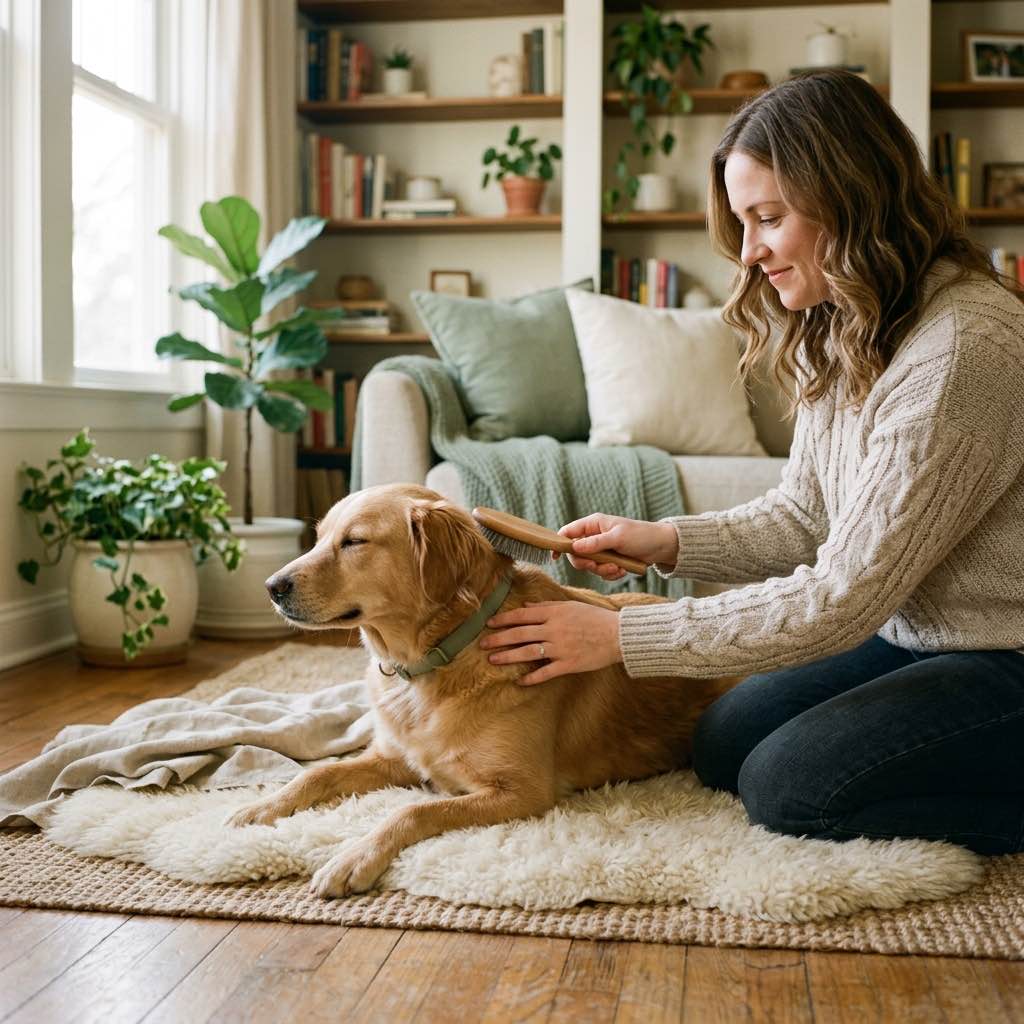
- Double Coats (e.g., German Shepherd, Husky, Golden Retriever, Border Collie, Bernese Mountain Dog): Characterised by a soft, dense undercoat for insulation and a coarser, water-repellent topcoat. These breeds are notorious for "blowing their coat" seasonally.
- Grooming Needs: Regular, thorough brushing is crucial to remove dead undercoat, prevent matting, and reduce shedding around your home. De-shedding tools are a game-changer. Never shave a double-coated dog unless advised by a vet, as it can damage their natural insulation.
- Frequency: 2-3 times a week, daily during shedding seasons (often spring and autumn in NZ). Bathing every 6-12 weeks.
- Long/Silky Coats (e.g., Afghan Hound, Yorkshire Terrier, Maltese, Shih Tzu, Cavalier King Charles Spaniel): These breeds have long, flowing hair that can be fine or coarse.
- Grooming Needs: Prone to tangles and mats if not brushed daily. Requires gentle but thorough brushing, often with a pin brush and comb, to keep the coat free-flowing and prevent painful knots. Regular trims might be needed around the face, paws, and sanitary areas.
- Frequency: Daily brushing, bathing every 3-6 weeks.
- Wiry Coats (e.g., Terriers like Fox Terrier, Schnauzer, Airedale Terrier): These coats are harsh, coarse, and dense, often with a softer undercoat. They are designed to protect the dog from harsh elements and brambles.
- Grooming Needs: Traditional grooming involves "hand-stripping" to remove dead hairs and maintain the coat's texture and colour. Clipping can soften the coat and change its texture over time. Regular brushing helps remove loose hair and dirt.
- Frequency: Weekly brushing. Professional hand-stripping every 8-12 weeks, or clipping every 6-12 weeks.
- Curly/Woolly Coats (e.g., Poodle, Bichon Frise, Portuguese Water Dog, Labradoodle, Cavapoo): These coats are typically non-shedding or low-shedding but grow continuously and are highly prone to matting.
- Grooming Needs: Daily brushing with a slicker brush and comb is essential to prevent mats from forming close to the skin. Regular clipping is required to keep the coat at a manageable length.
- Frequency: Daily to every other day brushing, professional clipping every 4-8 weeks.
- Hairless Breeds (e.g., Chinese Crested, Xoloitzcuintli): While not furry, these breeds still require grooming.
- Grooming Needs: Skin care is paramount. Regular bathing, moisturising, and sun protection (especially under the strong NZ sun!) are crucial. For the coated varieties, brushing is needed for the areas with hair.
- Frequency: Weekly bathing, daily skin checks.
No matter the coat type, consistency is key. Getting your dog used to grooming from a young age, with plenty of positive reinforcement (treats!), will make the experience much more enjoyable for both of you.
---
2. The Essential Home Grooming Kit
Having the right tools makes all the difference. Think of these as your investment in your dog's health and happiness. You can find all these quality products right here at PetMall!
Here's what you'll need, with approximate NZD price ranges for 2026:
- Brushes & Combs:
- Slicker Brush: Essential for most coat types, especially medium, long, and curly. Helps remove loose hair and detangle. (NZD $20 - $50)
- Pin Brush: Great for long, silky, and curly coats, gently detangles without pulling. (NZD $15 - $40)
- Bristle Brush: Best for short, smooth coats to remove loose hair and add shine. (NZD $15 - $35)
- Undercoat Rake/De-shedding Tool (e.g., Furminator-style): Crucial for double-coated breeds to remove dense undercoat. (NZD $30 - $80)
- Metal Comb (wide & fine-toothed): For checking for tangles after brushing and for precision work around sensitive areas. (NZD $10 - $30)
- Flea Comb: A fine-toothed comb to check for fleas and flea dirt. (NZD $8 - $20)
- Bathing Supplies:
- Dog-Specific Shampoo & Conditioner: Always use products formulated for dogs, as human products can irritate their skin. Look for hypoallergenic or sensitive skin options if your dog has allergies. (NZD $15 - $45 per bottle)
- Plenty of Towels: Old bath towels work perfectly for drying your dog.
- Non-Slip Mat: For the bath or shower to prevent slips and make your dog feel more secure. (NZD $10 - $30)
- Pet Hair Dryer (optional): A low-heat, high-velocity dryer can significantly cut drying time, especially for double or curly coats, preventing hot spots. A human hairdryer on a cool setting can work for smaller dogs. (NZD $30 - $100 for basic pet dryers)
- Nail Trimming Tools:
- Nail Clippers: Choose between guillotine-style (good for medium to large dogs) or scissor-style (often preferred for smaller dogs or puppies). (NZD $20 - $45)
- Nail Grinder (Dremel-style): An alternative to clippers, especially for dogs who dislike the clipping sensation. Creates smoother edges. (NZD $40 - $70)
- Styptic Powder: Essential to have on hand in case you accidentally cut too far and hit the quick. (NZD $15 - $25)
- Ear & Eye Care:
- Dog-Specific Ear Cleaner: Helps break down wax and dirt. (NZD $15 - $35)
- Cotton Balls/Pads: For wiping ears and eyes. (NZD $5 - $15)
- Eye Wipes/Gentle Cloth: For cleaning around the eyes and tear stains. (NZD $10 - $25)
- Miscellaneous:
- High-Value Treats: Crucial for positive reinforcement during all grooming steps. (NZD $5 - $30 per bag)
- Grooming Table (optional but recommended for larger dogs): Elevates your dog to a comfortable working height and often comes with a grooming arm to secure them. (NZD $50 - $200+)
- Scissors (blunt-nosed): For carefully trimming hair around paws or eyes, but *only* if you're confident and your dog is calm. (NZD $15 - $40)
Investing in good quality tools will make grooming easier, safer, and more effective for both you and your dog.
---
3. Brushing by Coat Length
Brushing is the cornerstone of any good grooming routine. It removes loose hair, prevents matting, distributes natural oils, and allows you to check for skin issues or parasites. Always start your grooming sessions when your dog is calm and relaxed.
General Brushing Tips for all Dogs:
- Start Young: Introduce brushes and combs to puppies early to build a positive association.
- Positive Reinforcement: Keep grooming sessions short and positive, especially initially. Use praise, gentle strokes, and plenty of high-value treats.
- Work in Sections: Don't try to brush your whole dog at once. Work methodically through small sections.
- Be Gentle: Never yank or pull through tangles. This can be painful and make your dog fear grooming.
- Check for Lumps & Bumps: Use brushing as an opportunity to feel for any unusual lumps, bumps, ticks (especially if you've been travelling in areas with ticks, though less common in mainland NZ) or skin irritations.
Here's how to approach brushing based on coat type:
| Coat type | Tools that suit it | How often | Technique notes |
|---|---|---|---|
| Smooth / short (Staffy, Beagle, Boxer) | Rubber curry or grooming glove, soft bristle brush | Weekly | Short, firm strokes with the lie of the coat. Lifts loose hair and spreads skin oils; the curry doubles as a skin massage |
| Double coat (Huntaway, Golden Retriever, Husky) | Undercoat rake, slicker, steel comb | 2–3× a week, daily through a moult | Work in sections right down to the skin. It is the loose undercoat that mats, not the topcoat |
| Long / silky (Cavalier, Shih Tzu, Afghan) | Pin brush, slicker, steel comb | Daily | VCA advises daily brushing for long, silky or curly coats. Check behind the ears, in the armpits, the groin and the backs of the legs — that is where mats start |
| Curly / woolly (Poodle, Cavoodle, Bichon) | Slicker plus steel comb | Daily | Always comb through after brushing. A slicker alone rides over the top and leaves mats forming at skin level |
| Wiry (Schnauzer, most terriers) | Stiff bristle brush, steel comb, stripping knife if the coat is hand-stripped | About twice a week | Brush with the lie of the coat; clipping a wiry coat instead of stripping it softens the texture over time |
On mats, one rule matters more than the rest: do not use scissors. The Merck Veterinary Manual is explicit — don't use scissors to remove mats, because it is easy to accidentally cut the skin; use electric clippers made for pets instead. A dog's skin is thinner and more mobile than most owners expect, and it lifts into the mat as you pull. Small tangles can be brushed or combed out gently. When the matting is severe or extensive, VCA's advice is to hand it to a professional groomer or your vet rather than tackling it yourself.
Bathing is the other place owners overdo it. Merck suggests bathing with a pet shampoo about once a month, depending on the season, or whenever the coat is genuinely dirty or smelly — over-bathing strips the coat's oils and is a common cause of the itchy, flaky skin that then gets blamed on food.
Sources
- Merck Veterinary Manual, *Routine Health Care of Dogs* — regular brushing to remove loose hair and prevent mats is especially important for thick or long coats, and "matted hair can irritate the skin and lead to infections"; explicitly advises "Don't use scissors to remove mats, because it's easy to accidentally cut the skin. Instead, use electric clippers made for clipping pets' hair"; bathe with pet shampoo about once a month depending on season or when the coat is very dirty, checked 2026-07-24: https://www.merckvetmanual.com/dog-owners/routine-care-and-breeding-of-dogs/routine-health-care-of-dogs
- VCA Animal Hospitals, *Grooming and Coat Care for Your Dog* — dogs with long, silky or curly coats "require daily brushing to keep their hair from becoming tangled or matted, especially around the ears, in the armpits, and along the back of their legs"; when tangles are severe or extensive "it is strongly recommended that you seek professional care from a dog groomer or your veterinarian"; tool guidance by coat type (slicker for curly non-shedding coats, comb or stiff bristle brush for medium shedding coats, glove or short bristles for smooth coats, long-toothed comb for long coats and undercoat), checked 2026-07-24: https://vcahospitals.com/know-your-pet/grooming-and-coat-care-for-your-dog
Related guides
petmall.co.nz
Shop at PetMall
The products below are practical support items for your pet. PetMall ships across New Zealand.
- Dog GroomingA gentle brush and the right shampoo make maintenance easier — especially for dogs that get muddy on walks.
- Dog FoodStart with food that matches your dog's life stage and activity level — and change brands slowly over 7–10 days.
- Dog TreatsTraining rewards and everyday treats — small, soft pieces work best for consistent reinforcement.
- Dog ToysA small rotation of chew, fetch, and puzzle toys usually works better than buying a large variety at once.
- Leads & HarnessesComfort matters: padded contact points and adjustable fit help reduce rubbing on longer walks or tramping weekends.
- Flea & Worm TreatmentFor NZ conditions, look for protection that fits your routine (monthly vs longer-lasting) and your dog's weight range.