Long-Haired Cat Grooming NZ: Preventing Mats, Shedding & Hairballs
Persians, Maine Coons, and Ragdolls need regular grooming. Learn mat prevention, de-shedding, detangling, and grooming costs.
Nau mai, haere mai, fellow Kiwi cat lovers! If you share your home with a magnificent long-haired feline, you'll know their luxurious coats are a sight to behold. From the majestic Maine Coon to the elegant Ragdoll, these floofy friends bring immense joy. However, with great floof comes great responsibility – specifically, a consistent grooming routine.
Here in Aotearoa, our unique climate and lifestyle can sometimes pose challenges for long-haired cats. High humidity, seasonal shedding, and even just the sheer amount of beautiful fur can lead to common issues like painful mats, excessive shedding around the whare (house), and dreaded hairballs. But fear not! As your expert pet care writer from wiki.petmall.co.nz, I'm here to guide you through everything you need to know to keep your long-haired companion happy, healthy, and looking their best. Think of me as your knowledgeable friend, sharing practical tips with a uniquely Kiwi flavour.
Long-Haired Breeds Common in NZ
New Zealand homes are blessed with a wonderful array of long-haired cat breeds, each with their own unique coat characteristics that influence their grooming needs. Understanding your cat's specific coat type is the first step in developing an effective grooming routine.
- Persian: Known for their extremely long, dense, and flowing coats, often with a thick undercoat. Persians require daily grooming to prevent mats, especially around their ruff, armpits, and 'britches'. Their flat faces can also lead to tear staining, which needs regular cleaning.
- Maine Coon: These gentle giants boast a shaggy, water-resistant coat that is longer on their underside, tail, and ruff. While generally less prone to matting than Persians, their dense double coat still needs regular attention, particularly during seasonal shedding.
- Ragdoll: Famous for their semi-long, silky coats that are soft and rabbit-like, often lacking a dense undercoat. This makes them somewhat less prone to matting than other breeds, but regular brushing is still essential to maintain their beautiful fur and prevent tangles.
- Siberian: Hailing from colder climates, Siberians have a triple coat that is dense, water-repellent, and designed for warmth. Their coat sheds seasonally, requiring more intensive grooming during these periods to manage the undercoat.
- Birman: With a medium-long, silky coat that doesn't mat easily due to the lack of an undercoat, Birmans are relatively low-maintenance among long-haired breeds. However, regular brushing helps maintain their coat's health and shine.
- [Norwegian Forest Cat](/cats/breeds/norwegian-forest-cat): Similar to Maine Coons, these cats have a dense, double coat that is water-resistant and shaggy. Their coats are designed to protect them from harsh weather, so regular brushing is needed to manage shedding and prevent knots, especially around the neck and hindquarters.
- [British Longhair](/cats/breeds/british-longhair): The longhaired equivalent of the British Shorthair, with a dense, plush semi-long coat. Less prone to matting than Persians, but the thick undercoat builds up quickly — weekly brushing around the ruff, chest, and tail is essential to prevent shedding and minor knots. A calm, increasingly popular choice for NZ households.
It's also important to remember that many of our beloved rescue cats from the SPCA or local shelters are mixed breeds that inherit beautiful long coats. Regardless of pedigree, any cat with hair longer than a few centimetres will benefit immensely from a consistent grooming schedule.
Daily vs. Weekly Routine
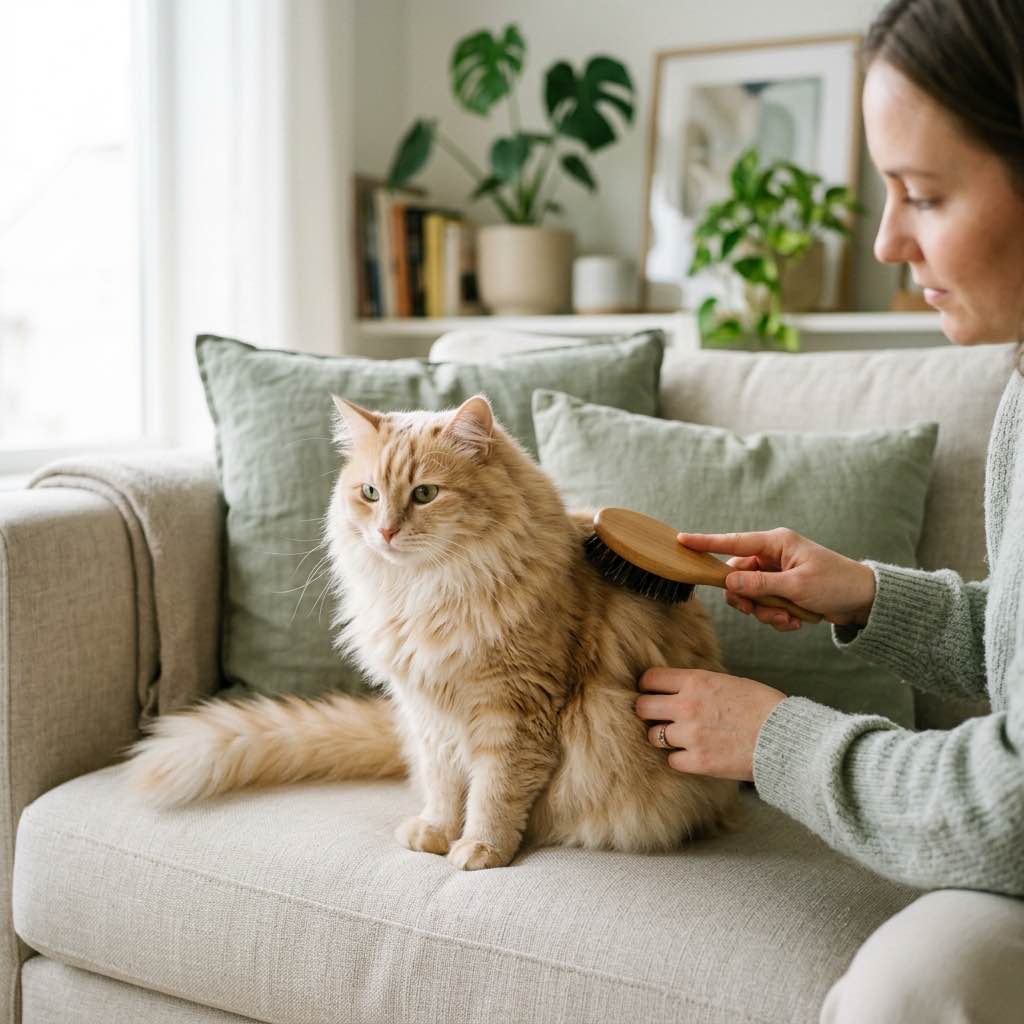
Consistency is key when it comes to grooming long-haired cats. A regular routine not only keeps their coat in top condition but also strengthens the bond between you and your feline friend. Plus, it makes the entire process less stressful for everyone involved.
The Daily Dash (5-10 minutes)
Think of this as a quick "once-over" to catch any potential tangles before they become full-blown mats. This daily ritual is especially crucial for breeds like Persians or during shedding seasons.
- Spot Check: Gently run your hands over your cat's entire body, paying close attention to common matting areas: behind the ears, under the chin, in the armpits, on the belly, and around the 'britches' (the fluffy fur on their hindquarters).
- Wide-Toothed Comb: Use a wide-toothed metal comb to gently comb through these high-risk areas. If you encounter a small snag, try to tease it out with your fingers or the very tips of the comb.
- Positive Reinforcement: Keep sessions short and sweet. Reward your cat with a small, delicious treat from PetMall's range of cat treats, or some gentle praise and cuddles afterwards. This helps them associate grooming with positive experiences.
The Weekly Whisk (20-30 minutes)
This is your more thorough grooming session, designed to remove loose fur, stimulate the skin, and ensure the coat is free of any developing mats.
- Gather Your Tools: Have all your grooming supplies ready: a wide-toothed comb, a slicker brush, a finer-toothed comb, and if appropriate, a de-shedding tool. Don't forget the treats!
- Start with the Comb: Begin with the wide-toothed comb to gently work through the entire coat, section by section. This helps to find and gently loosen any tangles. Always comb in the direction of hair growth.
- Slicker Brush: Follow up with a slicker brush. Use short, gentle strokes, working from the head towards the tail. The slicker brush is excellent for removing loose undercoat and smoothing the topcoat. Be especially careful around bony areas and sensitive skin.
- Targeted Combing: Use a finer-toothed comb for areas that need extra attention, such as the ruff, tail, and 'britches'.
- Paw & Pad Check: While you're at it, gently check their paw pads for any trapped debris or overgrown fur between the toes, which can cause discomfort. You can also do a quick nail check and trim if needed – just the very tip of the clear part, avoiding the quick. If unsure, your vet or a professional groomer can show you how.
- Full Body Inspection: Use this time to check for any skin irritations, lumps, bumps, or signs of external parasites. Early detection of any issues means a quicker trip to your vet for assessment.
- Reward & Relax: End the session with plenty of praise, play, and those special treats. Making it an enjoyable routine from a young age will make future grooming sessions much easier.
By integrating these daily and weekly routines, you'll significantly reduce the chances of mats, keep shedding manageable, and contribute to your cat's overall well-being.
Mat Prevention
Mats are arguably the biggest headache for long-haired cat owners. These tight clumps of fur can pull on the skin, causing pain, discomfort, and even skin infections if left untended. Prevention is always better than cure, and it primarily revolves around consistent, correct brushing.
The Right Tools for the Job
Investing in good quality grooming tools is essential. You can find a wide range of effective tools at PetMall's cat grooming section.
| Tool type | What it does | Best for |
|---|---|---|
| Long-toothed metal comb (offset tines) | Reaches through the coat to the skin and smooths minor tangles | The single most useful tool for a long-haired cat — VCA specifically recommends combs with rows of offset tines |
| Fine/coarse dual comb | Coarse end opens the coat, fine end finds what you missed | Daily maintenance combing on Persians, Ragdolls, Maine Coons |
| Undercoat comb / de-shedding comb | Lifts clumps of loose undercoat | Seasonal moults, and gently teasing out small mats behind the ears or along the back legs |
| Slicker brush | Removes loose surface hair and light tangles | Finishing after combing — on its own it rides over the top and leaves mats forming at skin level |
| Mat splitter | Cuts a mat into smaller sections so it can be combed apart | Small, accessible mats only — see the safety note below |
| Pet clippers | Removes matting without cutting skin | Extensive matting, ideally done by a groomer or vet |
⚠️ Never use scissors on a mat. VCA is explicit: only use clippers to remove mats, never scissors. Cat skin is thin, loose and lifts into the mat as you pull it away from the body — this is one of the most common ways owners send a cat to the vet for stitches. ASPCA suggests teasing knots apart with your fingers, with a little talcum powder to help them slide, and moving to a mat-splitter only if that fails. Anything severe or extensive goes to a professional.
How often is often enough? VCA advises daily brushing for cats with long, silky or curly coats; ASPCA puts the minimum at grooming sessions every few days. Either way, the practical Kiwi answer is little and often — a five-minute comb every evening beats a forty-minute fight on Sunday, and it is far easier to keep a coat mat-free than to rescue one. Check the four places mats start first: under the armpits, in the groin, behind the ears and along the backs of the legs.
Daily combing also has a payoff beyond the coat: VCA notes it reduces the amount of hair a cat swallows while self-grooming, which means fewer hairballs, and noticeably less loose hair and dander around the house.
On bathing: most healthy cats rarely need one. If you do bathe, brush the coat out thoroughly first — VCA warns that tangles can become impossible to remove after a bath. ASPCA advises cat shampoo rather than human shampoo, which dries the skin, thorough rinsing, and towel-drying (or a blow dryer on its lowest heat setting if your cat tolerates it, which most do not).
Sources
- VCA Animal Hospitals, *Grooming and Coat Care for Your Cat* — "Cats with long, silky, or curly coats require daily brushing to keep their hair from becoming tangled or matted"; recommends "long-toothed metal combs or brushes, especially those with rows of offset tines" and undercoat combs for "gently teasing out smaller mats behind the ears or along the back legs"; check "under the armpits, in the groin, or behind the ears"; "Only use clippers to remove mats — never scissors"; daily brushing reduces swallowed hair and hairballs; brush before bathing because "tangles can become impossible to remove after a bath", checked 2026-07-24: https://vcahospitals.com/know-your-pet/grooming-and-coat-care-for-your-cat
- ASPCA, *Cat Grooming Tips* — long-haired cats need "grooming sessions every few days" (short-haired cats one or two brushings per week); suggests sprinkling talcum powder over knots and teasing them apart by hand, moving to a mat-splitter only if that fails; use cat shampoo because "human shampoo can dry out her skin", rinse thoroughly, and dry with a towel or a blow dryer "on the lowest heat setting", checked 2026-07-24: https://www.aspca.org/pet-care/cat-care/cat-grooming-tips
Related guides
petmall.co.nz
Shop at PetMall
The products below are practical support items for your pet. PetMall ships across New Zealand.
- Cat GroomingRegular brushing cuts hairballs and shedding — essential for long-haired breeds like Ragdolls and British Longhairs.
- Cat FoodStart with food that matches your cat's life stage — change brands slowly over 7–10 days to avoid digestive upset.
- Cat LitterClumping or crystal, most cats prefer an unscented litter and a clean tray — one tray per cat plus one spare is the NZ rule of thumb.
- Cat TreatsGreat for bonding and training — keep treats under 10% of daily calories to protect your cat's waistline.
- Cat ToysA small rotation of toys (feather wand, puzzle feeder, and comfort toy) usually works better than buying many at once.
- Flea & Worm TreatmentFor NZ conditions, choose protection that fits your cat's weight and lifestyle (indoor vs outdoor) and keep it regular.