Why Does My Cat Wag Its Tail? NZ Guide to Cat Tail Language
Why does your cat wag, flick or thump its tail? Unlike dogs, a cat's tail swish often means irritation. Here's how to read cat tail language, NZ owner's guide.
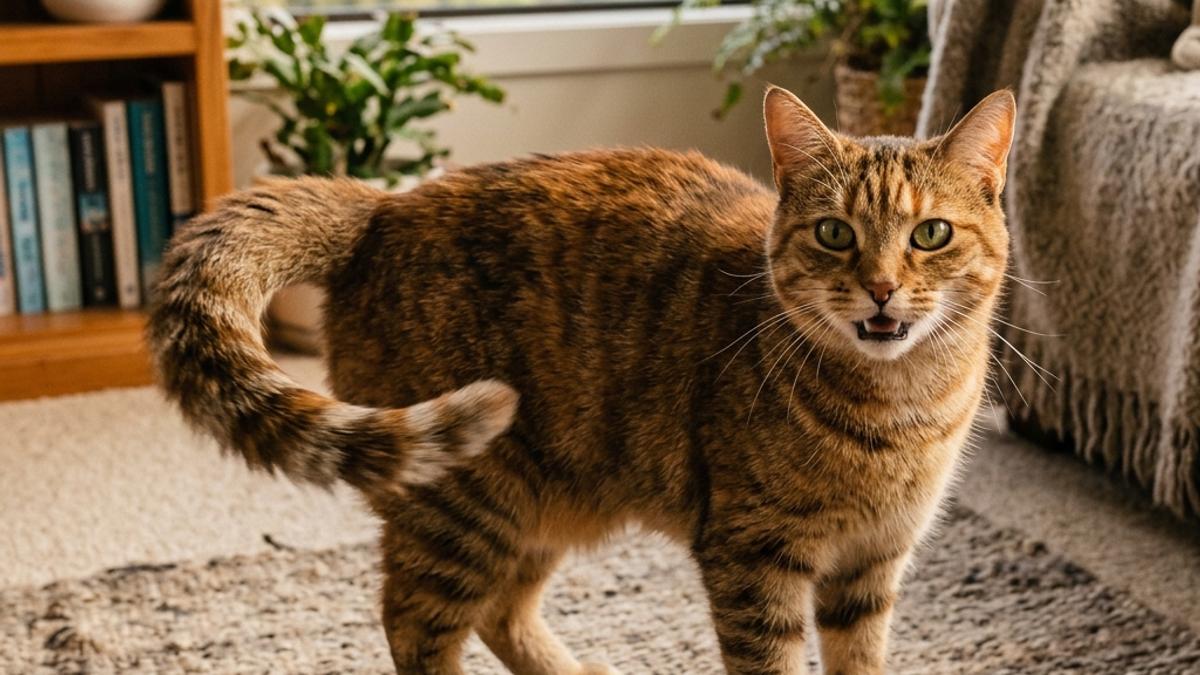
The quick answer: a cat's tail is one of its clearest mood signals — and crucially, it's almost the opposite of a dog's. While a dog's wag often means friendliness, a cat swishing, flicking or thumping its tail usually signals irritation, agitation or focus — not happiness. Learning to read the cat tail saves a lot of "why did my cat suddenly bite me?" moments.
Cat tail language, decoded
- Tail up, tip curled → confident, friendly greeting.
- Slow swish / gentle flick → mild interest or mild annoyance — pay attention.
- Fast thrashing or thumping (often lying down) → irritated or overstimulated; back off.
- Puffed-up "bottlebrush" tail → frightened or startled; making themselves look bigger.
- Tail tucked or low → anxious, unsure or unwell.
- Quivering tail held upright → excited greeting (sometimes linked to scent-marking).
- Twitching tip while hunting/playing → intense focus on "prey".
Use the Cat Behaviour Decoder to combine the tail with ears and posture.
Why this matters
Because a swishing cat tail signals irritation, it's an early warning that often prevents the petting-induced nip — stop patting when you see the tail start to thrash. This ties directly into why does my cat bite me NZ. Compare it with relaxed signals like purring to learn your cat's contented baseline.
When to take note
Tail *language* is normal. But if your cat's tail is injured, held at an odd angle, limp, or your cat reacts in pain when it's touched (a tail injury can affect nerves and even toileting), see a vet. A suddenly low, tucked tail with other changes is also worth a check.
Quick takeaways
- A cat's swishing/thrashing tail usually means irritation — almost the opposite of a dog's wag.
- Tail up with a curl = friendly; puffed = scared; thrashing = back off.
- A thrashing tail is your cue to stop patting before a nip.
- A limp, painful or oddly-held tail → vet check.
Shop related categories at PetMall
Looking for wand toys and enrichment to read and channel your cat's moods in New Zealand? Browse the PetMall cat range for current options and nationwide delivery.
Related reading
References
- VCA Animal Hospitals, How does your young cat communicate with their tail? (kitten tail meanings), checked 2026-07-12: https://vcahospitals.com/pediatric/kitten/behavior-training/kitten-tail-meanings
- International Cat Care, Cat Communication, checked 2026-07-12: https://icatcare.org/articles/cat-communication
Important notice
*General behaviour information for NZ owners. A limp, painful or oddly-held tail can signal injury — see a registered NZ vet.*
Free PetMall tools
Related guides
petmall.co.nz
Shop at PetMall
The products below are practical support items for your pet. PetMall ships across New Zealand.
- Cat FoodStart with food that matches your cat's life stage — change brands slowly over 7–10 days to avoid digestive upset.
- Cat LitterClumping or crystal, most cats prefer an unscented litter and a clean tray — one tray per cat plus one spare is the NZ rule of thumb.
- Cat TreatsGreat for bonding and training — keep treats under 10% of daily calories to protect your cat's waistline.
- Cat ToysA small rotation of toys (feather wand, puzzle feeder, and comfort toy) usually works better than buying many at once.
- Cat GroomingRegular brushing cuts hairballs and shedding — essential for long-haired breeds like Ragdolls and British Longhairs.
- Flea & Worm TreatmentFor NZ conditions, choose protection that fits your cat's weight and lifestyle (indoor vs outdoor) and keep it regular.