Why Does My Cat Bite Me? NZ Guide to Cat Biting
Why does your cat bite you during pats or play? Usually overstimulation, play, or a 'that's enough' signal — not spite. Here's how to read it and reduce it, NZ guide.
The quick answer: most cat biting isn't aggression or spite — it's communication. The common causes are overstimulation during patting ("petting-induced" nips), play biting (especially when hands have been used as toys), a "that's enough" warning, or kitten teething. Reading your cat's signals and changing how you interact usually fixes it.
Common reasons cats bite
- Overstimulation ("petting-induced") nips — a cat enjoys pats, then suddenly bites. They have a threshold; pats tip from pleasant to too-much.
- Play biting — natural hunting/play, worse if hands or feet were ever used as toys.
- "Stop now" signal — a clear request to end the interaction.
- Kitten teething and learning bite inhibition — young cats explore with their mouths.
- Fear or pain — a normally gentle cat that suddenly bites may be scared or sore.
Use the Cat Behaviour Decoder and watch for the warning signs below.
Read the warning signs
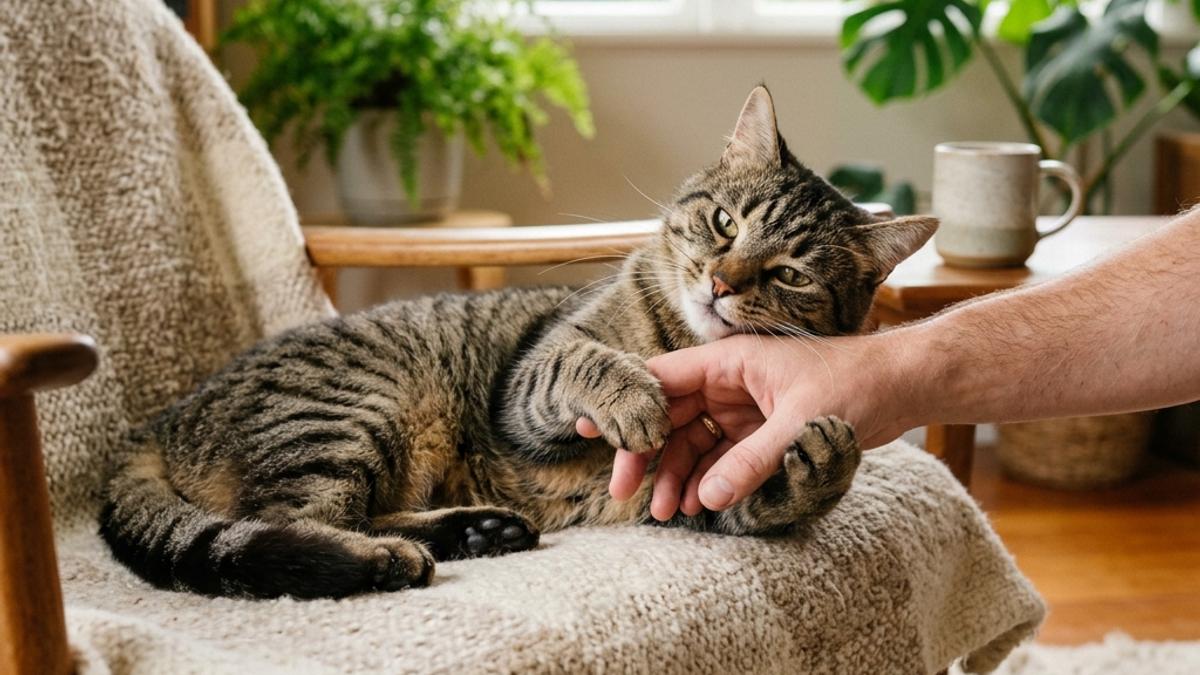
Cats usually signal *before* they bite. Stop patting if you see:
- Tail flicking or thrashing
- Ears turning back or flattening
- Skin twitching/rippling along the back
- A sudden still, tense body, or a hard stare
Stopping at these signs prevents most "out of nowhere" bites — they're rarely actually out of nowhere.
How to reduce biting
- Never use hands or feet as toys — always play with wand toys or kickers so prey-biting is aimed at toys, not you.
- Pat for shorter sessions and stop before the threshold; learn your cat's limit.
- Don't punish — yelling or smacking increases fear and biting. Calmly end the interaction and walk away instead.
- Redirect play energy with daily wand-toy hunts; a satisfied cat is a calmer one. A purring, relaxed cat (see why do cats purr NZ) is in a very different state from an overstimulated one.
When to take note (see a vet/behaviourist)
- A normally gentle cat that suddenly starts biting — pain or illness can cause it; see a vet.
- Biting that draws blood, is escalating, or is driven by clear fear/aggression — work with a vet or qualified feline behaviourist. (Any bite that breaks human skin should be cleaned well; see a doctor if it's deep or becomes red and sore — cat bites can get infected.)
Quick takeaways
- Most cat biting = overstimulation, play, or a "that's enough" signal — not spite.
- Watch for tail flicks, back-turned ears and skin twitches; stop patting then.
- Never use hands/feet as toys; redirect to wand toys; never punish.
- Sudden biting in a gentle cat, or escalating/fearful biting → vet or behaviourist.
Shop related categories at PetMall
Looking for wand toys, kickers and enrichment to redirect play in New Zealand? Browse the PetMall cat range for current options and nationwide delivery.
Related reading
References
- Merck Veterinary Manual, "Behavior Problems in Cats" (play & petting-induced aggression), checked 2026-07-08: https://www.merckvetmanual.com/cat-owners/behavior-of-cats/behavior-problems-in-cats
- VCA Animal Hospitals, "Cat Behavior Problems – Aggression – Petting Aggression", checked 2026-07-08: https://vcahospitals.com/know-your-pet/cat-behavior-problems---aggression---petting-aggression
Important notice
*General behaviour information for NZ owners. Sudden biting in a usually gentle cat can signal pain or illness — see a registered NZ vet. Cat bites that break human skin can become infected; seek medical advice if needed.*
Free PetMall tools
Related guides
petmall.co.nz
Shop at PetMall
The products below are practical support items for your pet. PetMall ships across New Zealand.
- Cat FoodStart with food that matches your cat's life stage — change brands slowly over 7–10 days to avoid digestive upset.
- Cat LitterClumping or crystal, most cats prefer an unscented litter and a clean tray — one tray per cat plus one spare is the NZ rule of thumb.
- Cat TreatsGreat for bonding and training — keep treats under 10% of daily calories to protect your cat's waistline.
- Cat ToysA small rotation of toys (feather wand, puzzle feeder, and comfort toy) usually works better than buying many at once.
- Cat GroomingRegular brushing cuts hairballs and shedding — essential for long-haired breeds like Ragdolls and British Longhairs.
- Flea & Worm TreatmentFor NZ conditions, choose protection that fits your cat's weight and lifestyle (indoor vs outdoor) and keep it regular.