Dog Training and Behaviour NZ: A Practical Starting Hub
Dog training and behaviour NZ hub: recall, lead walking, barking, puppy biting, crate training, enrichment and behaviour explanations.
The quick answer: good dog training and behaviour work in NZ starts with reward-based training, enough enrichment, clear routines and reading the dog in front of you. Teach the basics first - recall, loose-lead walking, settling, toilet routines and polite greetings - then use behaviour clues to decide whether your dog needs more exercise, confidence, management or professional help.
Start with reward-based training
SPCA New Zealand advocates reward-based methods for training and behaviour, and AVSAB's humane dog training position supports reward-based learning as the least harmful and most welfare-friendly approach. In everyday terms: reward the behaviour you want, set the dog up to succeed, and avoid relying on fear, pain or intimidation.
That matters on real Kiwi walks. A dog learning to ignore scooters, school traffic, off-lead dogs, gulls at the beach or livestock behind a fence needs practice at the right distance, not a bigger correction. Keep sessions short, repeatable and calm.
The core skills most dogs need
Build these before chasing clever tricks:
- Recall: Start with How to Teach a Dog to Come When Called NZ, then use Dog Recall Training NZ for a deeper plan.
- Loose lead: If walks are a tug-of-war, read How to Stop a Dog Pulling on the Lead NZ and Stop Dog Pulling Lead NZ.
- Puppy foundations: Use Puppy Toilet Training NZ, Puppy Socialisation NZ and How to Stop Puppy Biting NZ.
- Calm confinement: Start with Crate Training a Puppy NZ, or Crate Training an Adult Dog NZ if your dog is older.
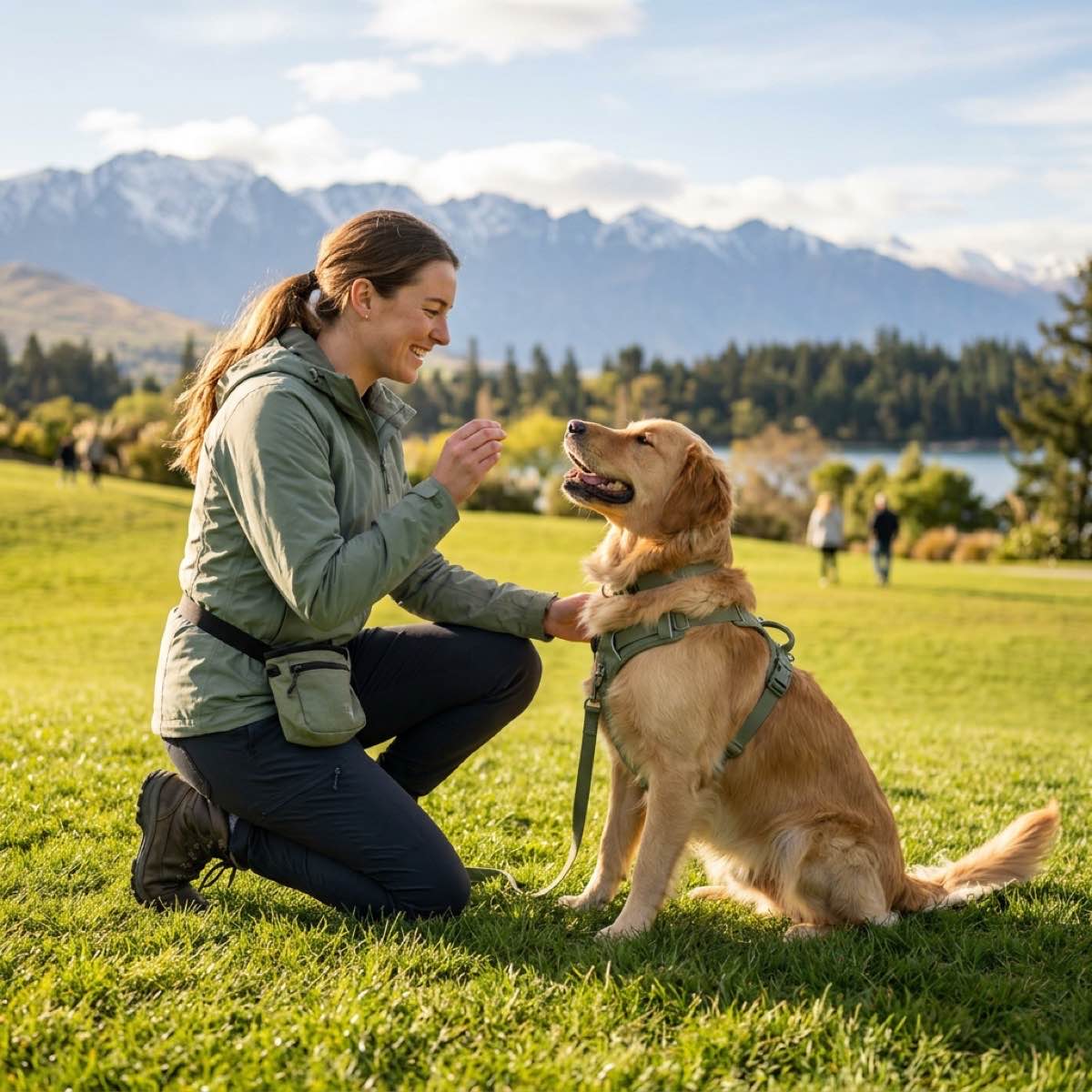
Do not try to fix everything in one week. Pick one routine, make it easy, and reward heavily.
Barking, jumping and high-energy dogs
Barking is information before it is a nuisance. It may be alerting, excitement, boredom, fear, frustration, attention-seeking or separation-related stress. For a practical starting point, read How to Stop a Dog Barking NZ. If barking is intense, sudden, paired with panic, or causing complaints, involve a qualified force-free trainer or vet early.
Jumping is usually greeting enthusiasm plus a history of attention. How to Stop a Dog Jumping Up NZ helps you teach a calmer greeting. If your dog is physically full of beans, How to Tire Out a High Energy Dog NZ and Dog Puzzle Feeders NZ show how mental work can help without turning every evening into a marathon.
Behaviour clues: what is your dog saying?
Behaviour pages are not party trivia; they help you notice patterns. Use them when something makes you pause:
- Why Does My Dog Bark at the Doorbell NZ
- Why Does My Dog Chase Its Tail NZ
- Why Does My Dog Tilt Its Head NZ
- Why Does My Dog Lean on Me NZ
- Why Does My Dog Howl NZ
- Why Does My Dog Wag Its Tail NZ
- Why Does My Dog Sleep So Much NZ
- Why Does My Dog Stare at Me NZ
If you are unsure where to start, use the Dog Behaviour Decoder to sort everyday behaviour questions from red-flag situations.
Training around family life
Dogs do not learn in isolation. They learn in houses with children, neighbours, visitors, tradies, couriers, cats, livestock smells and rainy-day boredom. If a baby is coming, read How to Introduce a Dog to a Baby NZ before the due date, not once the dog is already overwhelmed.
Set up simple rules: children do not climb on dogs, dogs have a safe resting place, food and chews are managed, visitors are coached, and walks happen at a level the dog can handle.
Gear helps, but it does not train the dog
A harness, long line, puzzle feeder or crate can make training easier, but the plan still matters. For walking gear, start with Front-Clip vs Back-Clip Harness NZ. For crate choice, read Dog Crate Types NZ and pair it with the puppy or adult crate-training guides above. For enrichment, read Dog Toys Guide NZ.
Shop related categories at PetMall
Looking for dog training and enrichment basics in New Zealand? Browse the PetMall dog range for current options and nationwide delivery.
Quick takeaways
- Reward-based training is the safest default for NZ pet dogs.
- Teach recall, lead walking, toileting, settling and greetings before worrying about tricks.
- Behaviour is communication; look for patterns before reacting.
- Enrichment and rest matter as much as exercise.
- Sudden behaviour change, aggression, panic or pain signs need professional help.
Related reading
- How to Teach a Dog to Come When Called NZ
- How to Stop a Dog Pulling on the Lead NZ
- How to Stop Puppy Biting NZ
- Crate Training a Puppy NZ
- How to Stop a Dog Jumping Up NZ
- How to Tire Out a High Energy Dog NZ
- How to Stop a Dog Barking NZ
- Dog Behaviour Decoder
References
- SPCA New Zealand, Dog behaviour and training, checked 2026-06-10: https://www.spca.nz/advice-and-welfare/article/dog-behaviour-and-training
- SPCA New Zealand, Training methods and devices position statement, checked 2026-06-10: https://www.spca.nz/advocacy/position-statements/article/training-methods-and-devices
- SPCA New Zealand, Exercise and enrichment for dogs, checked 2026-06-10: https://www.spca.nz/advice-and-welfare/article/exercise-and-enrichment-for-dogs
- SPCA New Zealand, Excessive barking in dogs, checked 2026-06-10: https://www.spca.nz/advice-and-welfare/article/excessive-barking-in-dogs
- AVSAB, Position Statements and Humane Dog Training, checked 2026-06-10: https://avsab.org/resources/position-statements/
- AVSAB, Humane Dog Training Position Statement PDF, checked 2026-06-10: https://avsab.org/wp-content/uploads/2021/08/AVSAB-Humane-Dog-Training-Position-Statement-2021.pdf
Important notice
*General training and behaviour information for NZ dog owners. If your dog shows aggression, panic, sudden behaviour change, pain signs, compulsive behaviour or unsafe reactions around children, pets, livestock or the public, contact a NZ vet and qualified force-free behaviour professional.*
Free PetMall tools
Related guides
petmall.co.nz
Shop at PetMall
The products below are practical support items for your pet. PetMall ships across New Zealand.
- Dog TreatsTraining rewards and everyday treats — small, soft pieces work best for consistent reinforcement.
- Dog FoodStart with food that matches your dog's life stage and activity level — and change brands slowly over 7–10 days.
- Dog ToysA small rotation of chew, fetch, and puzzle toys usually works better than buying a large variety at once.
- Dog GroomingA gentle brush and the right shampoo make maintenance easier — especially for dogs that get muddy on walks.
- Leads & HarnessesComfort matters: padded contact points and adjustable fit help reduce rubbing on longer walks or tramping weekends.
- Flea & Worm TreatmentFor NZ conditions, look for protection that fits your routine (monthly vs longer-lasting) and your dog's weight range.