Crate Training an Adult Dog: NZ Step-by-Step Guide
Crate training an adult dog in NZ: choose the right crate, build positive associations, avoid common mistakes, and know when crating is not the answer.
The quick answer: crate training an adult dog works best when the crate becomes a safe, voluntary resting place, not a place your dog is shut in to "deal with it". Start with the door open, feed near and inside the crate, build short calm sessions, and never use the crate as punishment. Go slower for rescue dogs or dogs with confinement worries.
Is crate training right for your adult dog?
A crate can help with settling, travel, recovery routines and giving a dog a quiet den. It is not a fix for separation anxiety, exercise needs, barking, destructive distress or lack of toilet breaks.
If you are choosing a style, see dog crate types NZ. If your dog already barks when confined, read how to stop a dog barking NZ before adding crate time.
Set up the crate
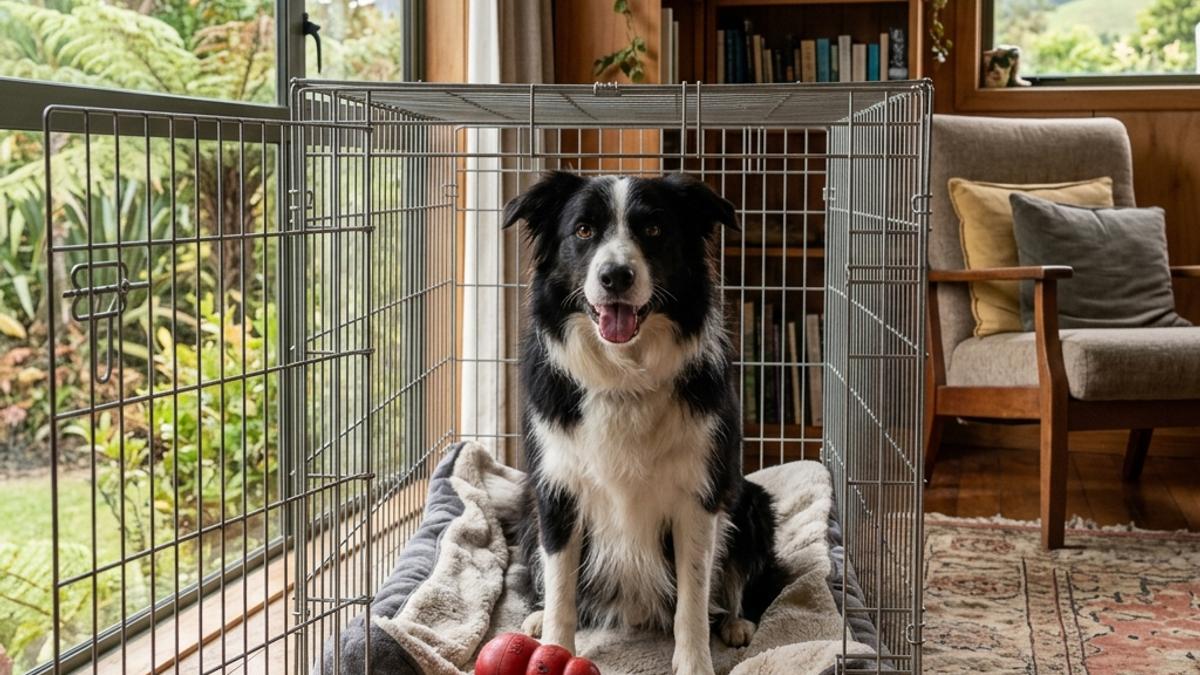
- Big enough for your dog to stand, turn around and lie naturally.
- In a living area at first, not isolated in the garage.
- Soft bedding if your dog does not chew bedding.
- Door secured open during the first stage.
- Water available when appropriate for the length and timing of the session.
- Away from heat pumps blasting hot air or cold draughts in winter.
Step-by-step
- Crate equals good things. Drop treats near the crate, then inside the doorway.
- Feed meals nearby. Move the bowl gradually inside only if your dog stays relaxed.
- Add a cue. Say "crate" or "bed" as your dog chooses to enter, then reward.
- Close the door briefly. Start with seconds while you sit nearby.
- Build duration slowly. Open the door before your dog panics.
- Add normal movement. Stand, sit, walk a few steps away, return and reward calm.
- Practise at different times. Do not make the crate predict only you leaving.
SPCA NZ notes properly crate-trained adult dogs may be comfortable for about three hours during the day, but they should not be shut in for longer than that. Many dogs need much shorter sessions while learning.
What not to do
- Do not force, drag or shove your dog into the crate.
- Do not crate all day while you are at work.
- Do not crate a dog who is panicking, self-injuring or trying to escape.
- Do not use the crate as punishment.
- Do not use it instead of walks, toileting, company and enrichment.
For enrichment options, see dog toy types NZ, and for reward setup see dog training tools guide NZ.
Adult rescue dogs
Go especially slowly if you do not know your dog's history. Some adult dogs arrive with past confinement stress. Leave the door open for days if needed, reward any voluntary approach, and use baby gates or pens while the crate is still being trained.
Quick takeaways
- The crate should feel like a safe den, not a punishment.
- Start door-open, then build short closed-door sessions.
- Go slower for adult rescue dogs and dogs with confinement worry.
- Do not use a crate to solve separation anxiety.
- Properly trained adult dogs still should not be crated for long periods.
Shop related categories at PetMall
Looking for training treats, enrichment and calm-settling gear in New Zealand? Browse the PetMall dog training range for current options and nationwide delivery.
Related reading
References
- SPCA New Zealand, how to crate train your dog, checked 2026-06-05: https://www.spca.nz/advice-and-welfare/article/how-to-crate-train-your-dog
- MPI, Code of Welfare: Dogs, checked 2026-06-05: https://www.mpi.govt.nz/animals/animal-welfare/codes/all-animal-welfare-codes/code-of-welfare-dogs
- AVSAB, humane dog training position statement, checked 2026-06-05: https://avsab.org/resources/position-statements/
Important notice
*General reward-based training information for NZ dog owners. Panic, self-injury, destructive escape attempts, severe distress when left alone, or sudden behaviour change should be discussed with a NZ vet and qualified force-free behaviour professional.*
Free PetMall tools
Related guides
petmall.co.nz
Shop at PetMall
The products below are practical support items for your pet. PetMall ships across New Zealand.
- Dog TreatsTraining rewards and everyday treats — small, soft pieces work best for consistent reinforcement.
- Dog FoodStart with food that matches your dog's life stage and activity level — and change brands slowly over 7–10 days.
- Dog ToysA small rotation of chew, fetch, and puzzle toys usually works better than buying a large variety at once.
- Dog GroomingA gentle brush and the right shampoo make maintenance easier — especially for dogs that get muddy on walks.
- Leads & HarnessesComfort matters: padded contact points and adjustable fit help reduce rubbing on longer walks or tramping weekends.
- Flea & Worm TreatmentFor NZ conditions, look for protection that fits your routine (monthly vs longer-lasting) and your dog's weight range.