Types of Dog Toys NZ: Chew, Puzzle, Tug, Fetch & Floating Explained
Not sure which dog toy type to get? Compare chew toys, puzzle feeders, tug toys, fetch toys and water toys — what each does and how to match it to your dog.
The short answer: different toy types serve different jobs. Match the toy to what your dog actually needs — a bored dog needs a puzzle feeder, not another tennis ball. A teething puppy needs a chew toy, not a tug rope. Getting this right means fewer ignored toys collecting dust and less destructive chewing around your home.
The main types of dog toys and what each does
1. Chew toys — for teeth, jaws and boredom relief
Chew toys are designed to be gnawed, not chased or shaken. They satisfy a dog's natural urge to chew and can help keep teeth cleaner between vet check-ups. They're especially useful for:
- Puppies that are teething (2–6 months) and need something safe to bite
- Power chewers (Staffies, Rottweilers, Labradors) that destroy fabric toys in minutes
- Dogs left alone for stretches who need something to settle with
Look for chews rated for your dog's size and chewing strength. If a toy is labelled for "light chewers" and you have a Boxer, it won't last. Rubber and nylon chew toys sized for your dog are a safer option than very hard bones, which can crack molars. For context on chewing behaviour in puppies, see our guide on how to stop a puppy biting NZ.
2. Puzzle toys & slow feeders — for mental stimulation
Puzzle toys make a dog work for a reward (kibble, a treat or peanut butter without xylitol). They range from simple lick mats to multi-step puzzle boards. Mental exercise tires a dog out more efficiently than physical exercise alone — a 10-minute puzzle session can equal 30 minutes of walking for some dogs.
When to use them:
- High-energy or working breeds (Border Collies, German Shepherds, Kelpies) that get bored and destructive
- Dogs on restricted exercise post-surgery
- Meal time enrichment: put part of the kibble ration in a slow feeder instead of a bowl
Start simple — overly complex puzzles frustrate a dog rather than engage them. Build up difficulty as they learn. See our dog training tools guide NZ for more enrichment options.
3. Tug toys — for interactive play and impulse control
Tug-of-war is a healthy, normal play behaviour when done with rules. Tug toys are ropes, rubber rings or bite-sleeve style toys made for you and your dog to pull against each other. Benefits:
- Burns energy quickly in a short session
- Builds focus and engagement with you as the handler
- Great for teaching impulse control ("drop it", "leave it", "tug on cue")
One NZ misconception: letting a dog win at tug does not make them dominant. It's fine — and often keeps play going longer. The important rule is: if teeth touch skin, the game stops immediately. This is especially useful to teach with puppies. For puppies, keep tug sessions short and gentle to avoid over-exciting a teething dog.
4. Fetch toys — for outdoor exercise and retrieval instinct
Classic tennis balls, rubber balls and launchers fall into this category, along with flying discs and retrieve dummies. Fetch toys are best for:
- High-energy breeds that need vigorous aerobic exercise (Vizslas, Weimaraners, active Labs)
- Off-leash-access areas — NZ councils vary widely on off-leash zones, so check yours first. See our dog recall training guide for tips on reliable recall in public spaces.
- Swimming breeds: a floating retrieve toy is ideal for beaches and lakes
One NZ safety note: standard tennis balls wear down faster than you'd expect in enthusiastic chewers and the fuzz can be swallowed. Rubber or natural rubber fetch toys last much longer and are safer for heavy chewers.
5. Floating / water toys — for beach and lake play
Water toys are buoyant, brightly coloured and usually made from a foam or rubber core so they don't waterlog. They're made for retrieving in water and are especially popular in NZ where many dogs have beach or river access over summer.
Look for toys that are easy to spot in the water, sized so your dog can comfortably carry them, and rinse them after salt-water use to extend their life.
6. Squeaky & plush toys — for sensory satisfaction
Squeaky toys trigger a dog's prey instinct — the squeak mimics the sound of small prey — which is why many dogs "kill" squeaky toys within minutes. That's normal behaviour, not aggression. Use plush and squeaky toys for:
- Gentle or elderly dogs who want something soft to carry or cuddle
- Short interactive play sessions (not for unsupervised chewing if your dog will destroy and ingest the stuffing)
Always check the stuffing and squeaker type — some cheaper toys use filling that could be a choking hazard if swallowed.
Matching toy to dog type
| Dog type | Best toy categories | Notes |
|---|---|---|
| Puppy (under 6 months) | Soft chew toys, gentle tug | Teething; avoid very hard chews |
| Power chewer (Staffy, Lab, Rottweiler) | Heavy-duty rubber chew, rope tug | Light-duty toys won't survive |
| Working/high-energy breed | Puzzle feeder, tug, fetch | Needs mental + physical outlets |
| Calm or senior dog | Soft plush, lick mat | Gentler play; enrichment over speed |
| Apartment dog with less outdoor time | Puzzle toys, indoor tug | Mental stimulation without a yard |
| Water-loving breed | Floating retrieve toy | Retrieve in water; rinse after saltwater |
How many toys does a dog actually need?
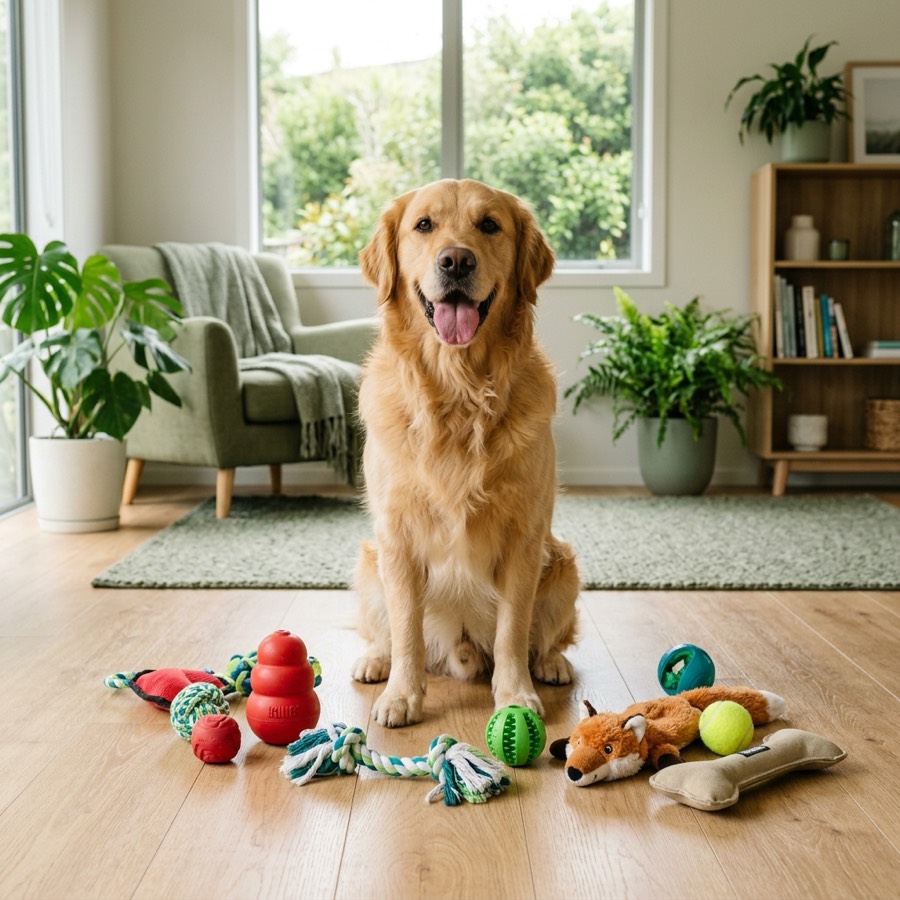
More toys is not always better — dogs often engage more with two or three toys rotated weekly than with a pile of toys always available. Rotation keeps novelty high. Store a few, swap them out every few days.
A practical NZ starter kit: one chew toy, one puzzle or lick mat, one fetch toy, one tug rope. Rotate the plush/squeaky options so they stay interesting.
Quick takeaways
- Match the toy to the job: chew / puzzle / tug / fetch / water — each serves a different need
- Power chewers need heavy-duty toys specifically rated for their chew strength
- Puzzle toys provide mental exercise that can be as tiring as physical exercise
- Rotate toys weekly to keep novelty high; a small rotation beats a big pile
- Supervise with any new toy until you know how your dog interacts with it
- Squeaky and plush toys are fine for gentle dogs; supervision needed for destroyers
Related reading
- Dog Toys Guide NZ
- Dog Training Tools Guide NZ
- How to Stop a Puppy Biting NZ
- Dog Recall Training NZ
- Dog breeds in NZ
Shop dog toys at PetMall
Looking for dog toys in New Zealand? PetMall stocks a range with nationwide delivery.
---
References
- Pet Poison Helpline, Xylitol Is Toxic To Dogs, checked 2026-08-08: https://www.petpoisonhelpline.com/poison/xylitol/
- MPI New Zealand, Code of Welfare for Dogs (behaviour and environment), checked 2026-06-05: https://www.mpi.govt.nz/animals/animal-welfare/codes/all-animal-welfare-codes/code-of-welfare-dogs/
---
*This guide provides general information for New Zealand dog owners. For advice specific to your dog's health or behaviour, consult a registered New Zealand vet or qualified dog trainer.*
Related guides
petmall.co.nz
Shop at PetMall
The products below are practical support items for your pet. PetMall ships across New Zealand.
- Dog ToysA small rotation of chew, fetch, and puzzle toys usually works better than buying a large variety at once.
- Dog FoodStart with food that matches your dog's life stage and activity level — and change brands slowly over 7–10 days.
- Dog TreatsTraining rewards and everyday treats — small, soft pieces work best for consistent reinforcement.
- Dog GroomingA gentle brush and the right shampoo make maintenance easier — especially for dogs that get muddy on walks.
- Leads & HarnessesComfort matters: padded contact points and adjustable fit help reduce rubbing on longer walks or tramping weekends.
- Flea & Worm TreatmentFor NZ conditions, look for protection that fits your routine (monthly vs longer-lasting) and your dog's weight range.